 Ver en contexto
 Enviar
 Compartir
 Detalles

 Descargar
 Similares
 Radiografía
 Presentación de diapositivas
PORTRAIT DE L'ARTISTE EN CHASSEUR


 Ver más
Giclée / Impresión de arte
Impresiones giclée o en lienzo de calidad de museo con producción rápida y opciones de acabado flexibles. ( Comprar pintura hecha a mano Comprar imagen)




P118B $10

P118H $10

P118W $10

P438Z $10

P508JH $12

P508YH $12

P805H $10

P805Z $10

P919BZ $10

P919G $10

P919XJ $10

P959ZH $10

P968JZ $12

W106C $8

W218G $10

W218JH $8

W218Y $10

W307PJ $10

W316G $10

W316PJ $8

W316Y $10

W398PJ $8

W4111J $10

W500HY $15

W500JH $15

W692G $12

W849H $8

W940BG $15

W953PJ $8




Elija entre nuestros tamaños predefinidos que respetan las proporciones originales de la obra.

Puede introducir sus propias dimensiones para adaptarse a un marco o espacio específico. Si el tamaño seleccionado no coincide con las proporciones de la imagen original, recortaremos la obra de arte o extenderemos la imagen con un borde con efecto espejo o de color sólido. Se enviará una maqueta digital para su aprobación antes de que comience la producción.
Tenga en cuenta que la vista previa en pantalla no refleja el recorte o la extensión real. Solo la maqueta mostrará con precisión la composición final.
Aunque existen tamaños personalizados, recomendamos seleccionar una dimensión de la lista predefinida para preservar las proporciones originales.
Envío a todo el mundo () en 2 semanas en lugar de las 4/5 semanas estándar. (3 septiembre)

Envío exprés gratuito a todo el mundo

Lienzo de lino de alta calidad

Seguro de envío total

Garantía de reembolso de impuestos aduaneros

Garantía de fidelidad cromática exacta

Política de devolución de 60 días (solo por defectos)

Garantía de devolución del 100% del dinero

Descuento por cantidad
 La opción de vidrio solo está disponible en tamaños inferiores a 110 cm.

PORTRAIT DE L'ARTISTE EN CHASSEUR
Giclée / Impresión de arte
Dimensiones de la reproducción
-


Precio total final
$ 62
Portrait de l'artiste en chasseur: A Celebration of Skill and Patronage
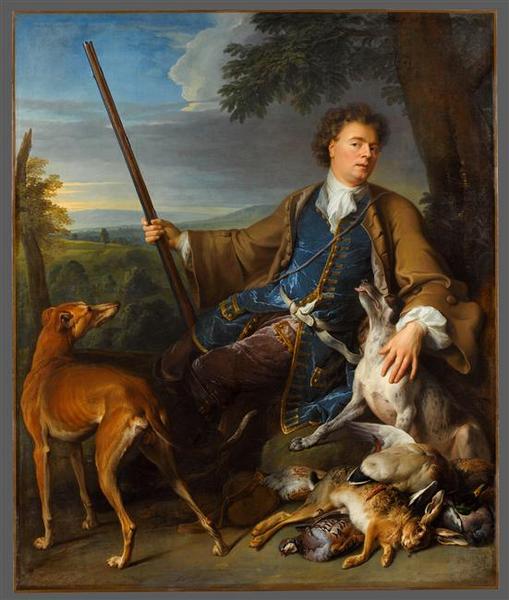
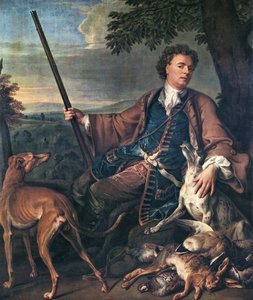
Alexandre François Desportes’s “Portrait of the Artist as a Huntsman,” completed in 1699, stands as a quintessential example of Rococo painting—a style characterized by elegance, ornamentation, and an idealized depiction of aristocratic life. Commissioned for the Académie Royale de Peinture et de Sculpture during Louis XIV's reign, this artwork embodies the grandeur of Versailles and reflects the fascination with naturalism that permeated French art at the time. More than just a likeness of Desportes himself, it’s a carefully crafted statement about artistic ambition and royal patronage.- Subject Matter: The painting portrays Alexandre François Desportes seated beneath a tree, dressed in sumptuous attire—a velvet jacket adorned with embroidery—and accompanied by a hunting dog. At his feet lie trophies of the hunt: a hare, a mallard duck, and pigeons – symbols of success and mastery over nature.
- Composition & Style: Desportes adheres to classical compositional principles, centering the artist’s figure while utilizing diagonal lines created by the rifle held aloft to inject dynamism into the scene. The overall style is distinctly Rococo, prioritizing delicate brushstrokes, luminous glazing techniques, and an emphasis on capturing fleeting moments of beauty.
- Technique: Desportes employed oil paint on canvas with meticulous attention to detail. Glazes were skillfully applied to achieve subtle color gradations and enhance the illusion of depth—a hallmark of Rococo artistry. The artist’s masterful rendering of textures—the smooth skin of Desportes' face, the rough bark of the tree trunk, the soft fur of the dogs—contributes significantly to the artwork’s realism.
- Historical Context: This portrait reflects the prevailing artistic tastes of Louis XIV’s court, where hunting was considered a noble pastime and an emblem of royal power. The Académie Royale championed naturalistic depictions of animals and landscapes as vehicles for conveying moral virtue and demonstrating artistic prowess.
- Symbolism & Emotional Impact: Beyond its formal beauty, “Portrait of the Artist as a Huntsman” carries symbolic weight. Desportes’s depiction as a hunter symbolizes his pursuit of excellence—both in art and in life—while the presence of loyal hunting dogs underscores themes of companionship and honor. The trophies represent achievement and abundance, reinforcing the painting's celebratory mood.
Detailed Examination: Color Palette & Lighting
The artwork’s color palette is dominated by earthy tones – browns, greens, ochres—creating a warm and inviting atmosphere reminiscent of the French countryside. Accents of blue in Desportes’s jacket add visual interest and contribute to the painting's overall elegance. Light falls primarily on Desportes’s face and upper body, drawing attention to his expression and illuminating the textures of his clothing. Atmospheric perspective is skillfully employed in the background landscape—distant hills appearing paler and less detailed than the foreground elements—enhancing depth and creating a sense of spaciousness.Influence & Legacy
Desportes’s “Portrait of the Artist as a Huntsman” exemplifies the artistic ideals of its era, aligning with the stylistic conventions established by masters like Hyacinthe Rigaud and Jean-Baptiste Pater. It remains an enduring testament to Rococo artistry—a genre celebrated for its refined beauty and its ability to capture the spirit of aristocratic culture. Its meticulous technique and evocative imagery continue to inspire artists and collectors alike, securing its place as a cornerstone of French Baroque art history.Further Research & Resources
For more information on Alexandre François Desportes and his artistic achievements, explore these resources:- Louvre Museum Website: Portrait de l'artiste en chasseur
- Wikipedia Article: Alexandre-François Desportes
- Web Gallery of Art: File:François Desportes - Self portrait.jpg
Obras relacionadas
Biografía del artista
Alexandre-François Desportes: El Pintor de las Cazas Reales
Nacido en la región de los Ardennes, Francia, en 1661, Alexandre-François Desportes emergió como una figura singular del arte del siglo XVIII – un maestro de la pintura animal y el diseño decorativo cuya obra ofrecía una rara visión al mundo opulento de la realeza francesa. Su trayectoria vital estuvo marcada por una confluencia de factores: una crianza privilegiada, una formación temprana bajo la tutela de un pintor flamenco arraigado en las tradiciones de Amberes, y una fascinación profunda con el mundo natural, particularmente los rituales y la estética de la caza real.
El viaje artístico de Desportes comenzó modestamente. Enviado a París a los doce años para estudiar bajo Nicasius Bernaerts, un discípulo del renombrado Frans Snyders, inicialmente perfeccionó sus habilidades en el retrato. Sin embargo, una experiencia crucial durante una breve estancia en Polonia entre 1695 y 1696 – pintando retratos para el Rey Juan III Sobieski – encendió una pasión vitalicia por la representación de animales, especialmente aquellos involucrados en la caza. Esta experiencia transformó profundamente su enfoque artístico, llevándolo a regresar a Francia con una renovada determinación de especializarse en este cautivador tema.
El Patrocinio Real y una Nueva Dirección Artística
Al regresar a París, Desportes rápidamente se estableció como un artista solicitado por la corte francesa. Fue admitido formalmente en la Academia de Pintura y Escultura en 1699, un logro que consolidó su posición dentro del establecimiento artístico. Crucialmente, obtuvo encargos tanto de Luis XIV como de Luis XV, involucrándose íntimamente en la documentación de sus perros favoritos de caza – un privilegio concedido a pocos artistas de la época. Estos retratos no eran meras representaciones; sino narrativas cuidadosamente construidas que reflejaban el estatus del rey, su conexión con la naturaleza y la grandeza de la caza real.
El papel de Desportes se extendía más allá de la simple pintura de retratos. Se le encomendó crear paneles decorativos elaborados para varios de los châteaux más emblemáticos de Francia: Versalles, Marly-le-Roi, Meudon, Compiègne y Choisy – cada uno reflejando un estilo arquitectónico distinto y mostrando la versatilidad del artista. Su trabajo en Choisy, encargado en 1742 para Luis XV, es un ejemplo particularmente significativo, ofreciendo una visión rara de los interiores lujosos de la corte real. También se encargó de pinturas decorativas para el Duque de Borbón en Chantilly, demostrando aún más su capacidad para adaptar su estilo a diversos mecenas y entornos.
Un Enfoque Único: Estudios de Paisaje y Naturalezas Muertas
Lo que realmente distinguió a Desportes de sus contemporáneos fue su enfoque innovador en la composición. A diferencia de muchos artistas que se basaban únicamente en la memoria o en representaciones idealizadas, Desportes estudió meticulosamente el mundo natural *in situ*, llevando consigo un pequeño cuaderno de bocetos durante las cacerías reales. Dibujaba directamente de observación, capturando el movimiento de los animales, la danza de la luz y la sombra, y el paisaje circundante – elementos que luego informarían sus pinturas terminadas.
Sus pinturas a menudo combinaban estos escenarios de caza dinámicos con naturalezas muertas meticulosamente representadas que mostraban exhibiciones de vajilla de plata ostentosa—una práctica que reflejaba las costumbres culinarias opulentas de la corte francesa. Estos arreglos no eran meramente decorativos; servían como documentos visuales, ofreciendo una visión del patrimonio perdido y la extravagancia de los reinados de Luis XIV. La inclusión de estas vajillas de plata tan elaboradas ha resultado ser invaluable para los historiadores que buscan reconstruir la cultura material de la época.
Cartones para Tapices y Legado Duradero
La influencia de Desportes se extendió más allá de la pintura, ya que también fue encargado de crear cartones para tapices producidos por las talleres de Savonnerie y Gobelins. Sus diseños para “Las Nuevas Indias” (ocho tapices magníficos tejidos en el taller de Gobelins en París), son entre sus logros más celebrados. Estas obras demuestran su maestría en la composición, el color y el detalle – habilidades que tradujo hábilmente en los intrincados patrones del tejido de tapices.
Desportes dejó un importante cuerpo de trabajo en su estudio al morir en 1743, incluyendo numerosos estudios de animales y plantas junto con bocetos de caza de jabalí por Jan Fyt. Su sobrino, Nicolas Desportes, continuó desarrollando las tradiciones artísticas que había establecido, asegurando que su legado perdurara. El Conde d'Angiviller, director general de las Residencias Reales, adquirió estos recursos para los pintores del Sèvres, demostrando una notable capacidad para adaptarse e inspirar a generaciones de artistas.
Características Clave e Influencia
El arte de Desportes se caracteriza por su detalle meticuloso, la iluminación dramática y una profunda comprensión del comportamiento animal. Sus composiciones son a menudo dinámicas y atractivas, capturando la energía y el entusiasmo de la caza. Combinó hábilmente las tradiciones artísticas flamenco con su propio enfoque innovador en los estudios de paisaje, creando obras que son tanto visualmente impresionantes como históricamente significativas. Su trabajo sigue siendo estudiado por historiadores del arte y coleccionistas hoy en día, ofreciendo una valiosa ventana al mundo de la realeza francesa del siglo XVIII y al arte de Alexandre-François Desportes.
Alexandre-François Desportes
1661 - 1743 , Francia
Datos clave
- Artistic Movement Or Style: Animalier, Barroco
- Artists Or Movements Influenced By This Artist:
- Oudry
- Barroco
- Artists Who Influenced This Artist:
- Nicasius Bernaerts
- Frans Snyders
- Date Of Birth: 24 Feb 1661
- Date Of Death: 20 Apr 1743
- Full Name: Alexandre-François Desportes
- Nationality: Francés
- Notable Artworks:
- Autorretrato en vestido de caza
- Cartones para tapices
- Place Of Birth: Champigneulle, Francia
Artículos relacionados
Animalia: Explorando la Presencia Duradera de los Animales en el Arte y el Diseño de Interiores
Descubre la fascinante historia de los animales en el arte y cómo inspirar tu hogar con su simbolismo. Expertos en reproducciones y asesoramiento artístico.
From Grandeur to Grace: Exploring the Evolution of Baroque & Rococo Art
Explore the captivating evolution from Baroque's drama to Rococo's grace! Discover key artists, characteristics & lasting influence of these art movements with expert insights at ArtsDot.

La Estética Rococó: Opulencia, Rebelión y Placer en el Arte del Siglo XVIII
Descubre la fascinante estética rococó: su historia, características clave y los artistas más influyentes del siglo XVIII. Un análisis profundo para amantes del arte y coleccionistas.

Rococó: 10 Obras Maestras que Definieron una Época | Arte y Decoración en
Descubre las 10 obras maestras del Rococó que marcaron una época. Explora la elegancia de Fragonard, Boucher y Watteau en . Reproducciones de arte de calidad museo para decorar tu hogar con estilo.
Simon Vouet: A Baroque Master's Journey from Italian Influence to French Classicism
Explore the life & art of Simon Vouet, a pivotal French Baroque painter who introduced Italian styles to France. Discover his masterpieces and lasting influence on 17th-century art.