 Ver en contexto
 Enviar
 Compartir
 Detalles

 Descargar
 Similares
 Radiografía
 Presentación de diapositivas
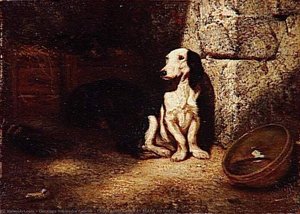
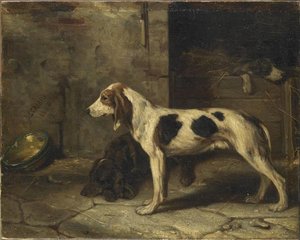
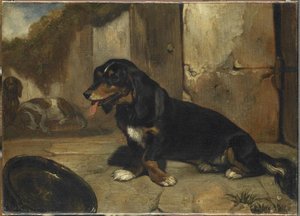
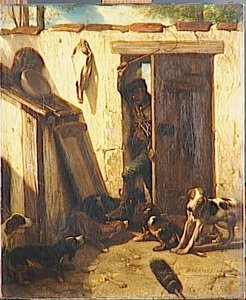
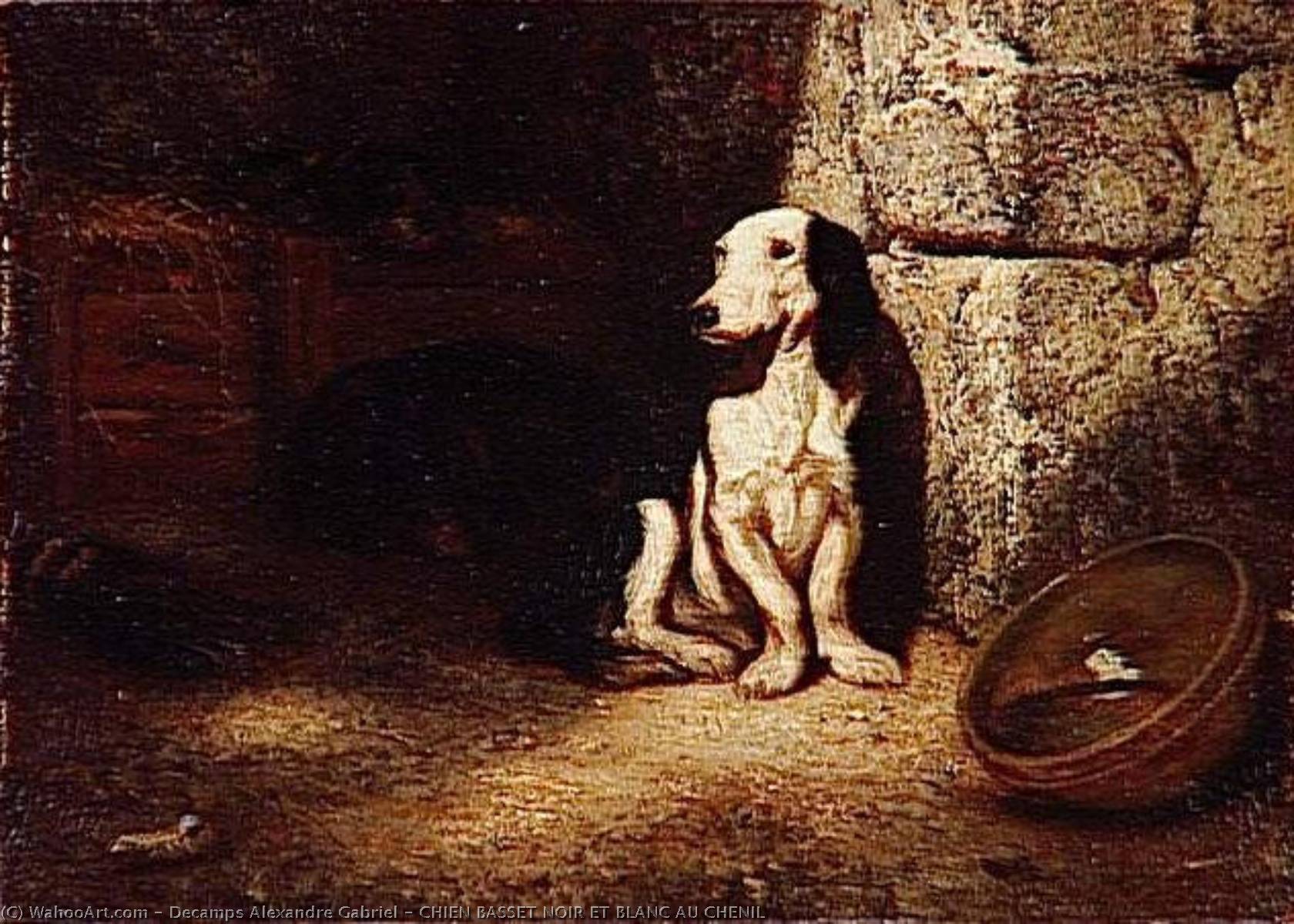
CHIEN BASSET NOIR ET BLANC AU CHENIL


 Ver más
Reproducción al óleo hecha a mano
Óleo sobre lienzo pintado a mano en el tamaño y marco de su elección, realizado por encargo por nuestros artistas. ( Comprar impresión Comprar imagen)




P118B $10

P118H $10

P118W $10

P438Z $10

P508JH $12

P508YH $12

P805H $10

P805Z $10

P919BZ $10

P919G $10

P919XJ $10

P959ZH $10

P968JZ $12

W106C $8

W218G $10

W218JH $8

W218Y $10

W307PJ $10

W316G $10

W316PJ $8

W316Y $10

W398PJ $8

W4111J $10

W500HY $15

W500JH $15

W692G $12

W849H $8

W940BG $15

W953PJ $8




Elija entre nuestros tamaños predefinidos que respetan las proporciones originales de la obra.

Puede ingresar sus propias dimensiones para adaptarse a un marco o espacio específico. Si el tamaño seleccionado no coincide con las proporciones de la imagen original, recortaremos la obra o extenderemos la pintura con elementos adicionales pintados a mano. Se le enviará una maqueta digital para su aprobación antes de comenzar la producción.
Tenga en cuenta que la vista previa en pantalla no refleja el recorte o la extensión reales. Solo la maqueta mostrará con precisión la composición final.
Si bien existen tamaños personalizados, recomendamos seleccionar una dimensión de la lista predefinida para preservar las proporciones originales.
Tras realizar el pedido, el equipo de ArtsDot.com enviará un correo electrónico al cliente para solicitar instrucciones y proporcionarle una vista previa del boceto.
Envío a todo el mundo () en 3-4 semanas en lugar de las 5 semanas estándar. (24 agosto). Sin comprometer la calidad.

Envío exprés gratuito a todo el mundo

Lienzo de lino de alta calidad

Seguro de envío total

Garantía de reembolso de impuestos aduaneros

Garantía de fidelidad cromática exacta

Política de devolución de 60 días (solo por defectos)

Garantía de devolución del 100% del dinero

Descuento por cantidad
 La opción de vidrio solo está disponible en tamaños inferiores a 110 cm.

CHIEN BASSET NOIR ET BLANC AU CHENIL
Técnica de reproducción
Dimensiones de la reproducción
-


Precio total final
$ 263
Descripción de la obra
A Romantic Echo in Stone and Shadow
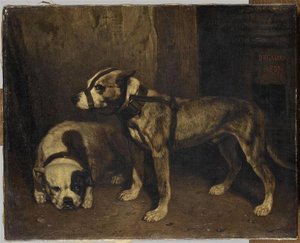
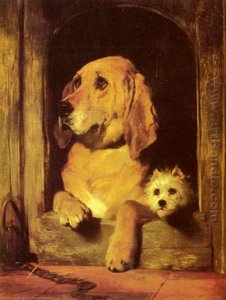
Alexandre Gabriel Decamps’ “CHIEN BASSET NOIR ET BLANC AU CHENIL” (1849) stands as a poignant testament to the Romantic spirit—a movement that prioritized emotion, imagination, and an immersive engagement with the natural world. More than just a depiction of a Basset Hound nestled within a kennel, this painting delves into themes of solitude, melancholy, and the quiet dignity of animal life, rendered with remarkable sensitivity.
- Artist’s Vision: Decamps belonged to a generation captivated by Orientalism—a fascination for exotic cultures and landscapes that challenged academic conventions. However, unlike many contemporaries who sought grandeur and spectacle, Decamps focused on capturing the essence of everyday life with profound psychological depth.
- Style & Technique: The artwork leans heavily into Impressionistic principles, prioritizing atmosphere over precise detail. Visible brushstrokes create a textured surface—particularly evident in the rough stone walls and scattered straw—suggesting an artist intent on conveying feeling rather than replicating reality. Oil paint was skillfully blended to achieve subtle gradations of color and luminosity, enhancing the overall mood.
- Composition & Perspective: The central placement of the dog draws immediate attention, while the circular wooden object adds a secondary focal point and contributes to spatial depth. Despite limited perspective—characteristic of the period—Decamps utilizes layering to create a convincing illusion of space, guiding the viewer’s gaze into the darkened interior.
Color Palette & Texture: Earth Tones Embraced
The painting's color palette is deliberately muted, dominated by earthy hues—browns, grays, and ochres—that evoke a sense of stillness and introspection. Stark contrasts between black and white accentuate the dog’s form against the backdrop of stone and straw, amplifying its visual impact. Decamps expertly employs texture to heighten emotional resonance; the rough surface of the walls juxtaposes with the soft fur of the hound, mirroring the duality of vulnerability and resilience.
Symbolism & Emotional Resonance: Loneliness Amidst Decay
The posture of the Basset Hound—slightly slumped, gazing downwards—immediately communicates a feeling of melancholy. Coupled with the dimly lit kennel setting—a symbol of confinement and perhaps abandonment—the artwork speaks to universal themes of isolation and longing. Decamps’ masterful rendering captures not merely an animal but also its inner state, inviting contemplation on the complexities of existence.
Historical Context & Legacy
Created during the Second Empire, “CHIEN BASSET NOIR ET BLANC AU CHENIL” reflects the Romantic preoccupation with emotion and memory. Decamps’ work aligns with broader artistic trends of his time—a desire to move beyond idealized representations toward a more honest portrayal of human experience. Its enduring appeal lies in its ability to evoke empathy and contemplation, cementing Decamps' place as one of the most influential artists of the era.
Obras relacionadas


Biografía del artista
Alexandre Gabriel Decamps (1803-1860): A Pioneer of Orientalist Visions
Alexandre Gabriel Decamps, a name resonating with the vibrant hues of exotic landscapes and the dramatic flair of Romanticism, emerged as a pivotal figure in 19th-century French painting. Born in Paris on March 3, 1803, his artistic journey was one of bold innovation, challenging academic conventions and forging a path toward what would become known as Orientalism. While contemporaries like Delacroix and Ingres also held prominent positions within the French art world, Decamps distinguished himself through an intensely personal style—a blend of meticulous observation, dramatic composition, and a captivating narrative quality that drew viewers into worlds both familiar and utterly foreign. His early recognition as a talented artist foreshadowed a career marked by critical acclaim, culminating in the grand or council medal at the Paris Exhibition of 1855, a testament to his exceptional skill and unique vision. Beyond the canvas, Decamps was a man deeply connected to nature, finding solace and inspiration in the countryside surrounding Paris, where he indulged his passion for animals and field sports—a fondness that would subtly permeate much of his artistic output.Early Life and Artistic Formation
Decamps’s formative years were steeped in Parisian intellectual life, fostering an appreciation for classical ideals alongside a burgeoning fascination with the natural world. His father, Jean-Baptiste Decamps, was a professor of mathematics at École Polytechnique, instilling in Alexandre a disciplined mind and a love for scientific inquiry—a duality that would inform his artistic approach. Despite familial expectations favoring a career in academia, Decamps’s innate talent for painting compelled him to pursue his passion independently, honing his skills through self-study and experimentation. His early works demonstrated an aptitude for capturing atmospheric effects and conveying emotion with remarkable sensitivity, hinting at the stylistic breakthroughs to come.The Influence of Orientalism: Travels and Inspiration
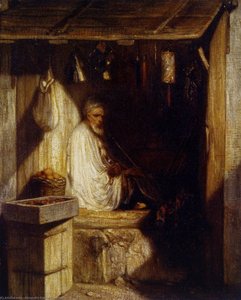
A transformative experience occurred during Decamps’s travels to Egypt in 1831-1832. Unlike many artists of his time who relied on secondhand accounts or idealized depictions, Decamps undertook a meticulous expedition, documenting the landscapes, people, and customs of the Nile Valley with unwavering dedication. This immersive encounter profoundly impacted his artistic sensibilities, fueling his desire to portray Oriental life with unprecedented realism—a departure from prevailing academic conventions that prioritized decorative elegance over psychological depth. The resulting paintings captured not merely what he saw but also the very essence of Egyptian culture, imbued with a palpable sense of atmosphere and emotional resonance.Notable Works: Biblical Narratives and Historical Dramas
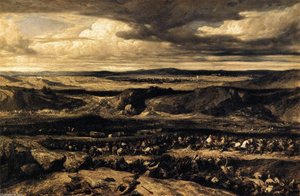
Decamps’s artistic output spanned diverse genres, ranging from biblical scenes to historical dramas—each infused with his distinctive stylistic hallmarks. “Joseph Sold by His Brethren,” for example, stands as a masterful illustration of the Old Testament narrative, skillfully grounding it in authentic Egyptian settings while conveying profound psychological insight. Similarly, “The Defeat of the Cimbri” exemplifies Decamps’s ability to handle large-scale compositions with dynamic energy and dramatic flair—capturing the chaos and brutality of battle with unflinching honesty. His meticulous attention to detail and expressive brushwork cemented his reputation as a leading figure in the Barbizon school, influencing generations of painters who sought to emulate his artistic vision.A Legacy of Bold Vision and Artistic Innovation
Alexandre Gabriel Decamps’s contribution to French art history is undeniable—he established Orientalism as a viable aesthetic direction, challenging academic dogma and paving the way for new artistic explorations. His unwavering commitment to realism, combined with his masterful command of composition and color, secured his place among the most influential artists of his era. Recognized by contemporaries like Maxime du Camp as “Christopher Columbus of the Orient,” Decamps’s legacy continues to inspire admiration for his pioneering spirit and enduring artistic achievements. His paintings—particularly “Incendie d'un village italien” and “A Bedouin and a Camel Resting in a Desert”—remain treasured masterpieces, embodying the Romantic ideal of capturing both beauty and truth with uncompromising conviction. They are currently housed in prestigious institutions such as the Musée du Louvre in Paris, ensuring that Decamps’s vision persists across time. Platforms like ArtsDot.com play an important role in preserving and disseminating his art, offering high-quality reproductions that allow admirers to experience the splendor of his artistic legacy firsthand.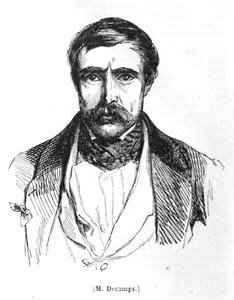
Alexandre Gabriel Decamps
1803 - 1860 , Francia
Datos clave
- Artistic Movement Or Style: Orientalismo
- Artists Or Movements Influenced By This Artist: ['Barbizon School']
- Artists Who Influenced This Artist:
- Delacroix
- Ingres
- Date Of Birth: París, Francia (1803)
- Date Of Death: Fontainebleau, Francia (1860)
- Full Name: Alexandre Gabriel Decamps
- Nationality: Francés
- Notable Artworks:
- José vendido por sus hermanos
- La Defeat de los cimbrios
- El Siglo XIX
- Place Of Birth: París
Artículos relacionados
Animalia: Explorando la Presencia Duradera de los Animales en el Arte y el Diseño de Interiores
Descubre la fascinante historia de los animales en el arte y cómo inspirar tu hogar con su simbolismo. Expertos en reproducciones y asesoramiento artístico.

Level Up Your Art: Transform Personal Photos into High-Octane Action Anime Masterpieces with AI-Driven Oil Painting
Transform your favorite photos into high-octane action anime masterpieces. Using proprietary AI and master artists, we turn digital memories into hand-painted oil on canvas legacies. Experience the perfect fusion of pop culture energy and timeless fine artistry at ArtsDot.com.

The Enduring Legacy of Oil on Canvas: Technique, History & Aesthetic Impact
Explore the rich history & techniques of oil painting – from Renaissance masters to Impressionism. Discover pigments, layering methods, and why this timeless medium endures. Expert insights for artists & art enthusiasts.

El Óleo sobre Lienzo: Historia, Técnica y la Persistencia de un Medio Artístico Atemporal
Descubre la historia y técnica del óleo sobre lienzo. Explora reproducciones fieles hechas a mano, personalización artística y consejos de expertos con ArtsDot. ¡Colecciona arte con confianza!

The Enduring Power of Painting: A Historical & Contemporary Exploration of Form and Emotion
Explore the rich history & enduring techniques of oil painting with ArtsDot. Discover masterpieces, learn about art collecting, and find authentic handmade reproductions crafted by skilled artists.