

 Ver en contexto
 Enviar
 Compartir
 Detalles

 Descargar
 Similares
 Radiografía
 Presentación de diapositivas
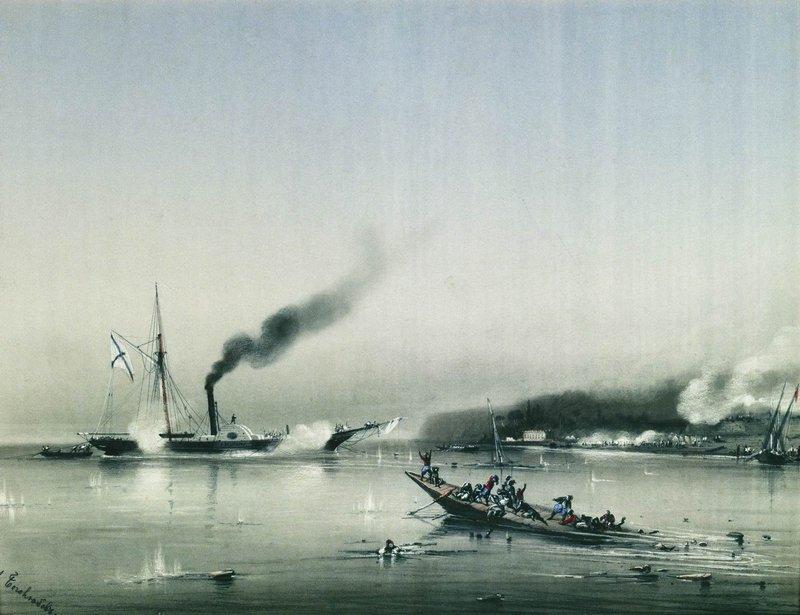
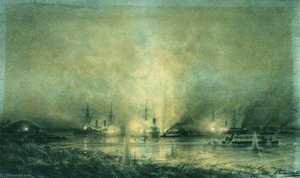
The Kolkhida Sreamship


 Ver más
Adquiera una imagen digital de alta resolución y optimizada, muy superior a la vista previa en línea.
Cada archivo es preparado meticulosamente por nuestros especialistas internos mediante el uso de herramientas avanzadas y un experto retoque manual. Nos aseguramos de que cada imagen posea una claridad excepcional, una precisión cromática impecable y un detalle minucioso.
El archivo final se entrega por correo electrónico en un plazo de 72 horas, optimizado para su uso inmediato en entornos profesionales, editoriales y de impresión. Esta es la misma calidad en la que confían los estudios de diseño, las editoriales y las galerías de primer nivel.
Imagen Digital
Descarga un archivo de alta resolución para exhibición personal, impresión y proyectos creativos. ( Comprar impresión Comprar pintura hecha a mano)
Incluido en cada pedido de imágenes digitales
Entrega digital experta, garantizada.
Al elegir ArtsDot.com, no solo está adquiriendo una imagen; está recibiendo una obra de arte digital mejorada profesionalmente, elaborada con precisión y respaldada por una garantía de satisfacción. Esto es todo lo que incluye su pedido, automáticamente:

Entrega rápida por email
Recibirá su archivo de imagen digital en alta resolución por correo electrónico en un plazo de 72 horas tras realizar su pedido, listo para su uso inmediato.

Archivo digital optimizado por IA
Su obra de arte se optimiza profesionalmente mediante herramientas avanzadas de IA y edición manual, garantizando el máximo detalle, claridad y precisión cromática.

Reenvío gratuito de por vida
¿Has borrado o perdido tu archivo por error? No te preocupes: te lo volveremos a enviar en cualquier momento, sin coste adicional.

Sin gastos de importación, siempre
Disfrute de su obra de arte al instante sin aduanas, aranceles ni gastos de envío; las descargas digitales siempre están libres de impuestos.

Garantía de fidelidad de color
Garantizamos que su imagen digital refleje los colores originales con la mayor fidelidad posible, mediante el uso de herramientas profesionales y gestión del color.

Garantía de satisfacción de 60 días
Si no está satisfecho con su imagen digital, la revisaremos o le reembolsaremos el 100% en un plazo de 60 días, sin preguntas.

100% Garantía de devolución de dinero
¿No está satisfecho? Obtenga un reembolso completo dentro de los 60 días posteriores a la recepción de su archivo digital, sin necesidad de explicaciones.

Descuentos por pedidos grandes
Compra 3 imágenes, ahorra 10% - Compra 5, ahorra 15% - Compra 10+, ahorra 20%. Ideal para proyectos creativos, galerías y agencias.
A Storm at Sea: The Genesis of "The Kolkhida Steamship"
Alexei Petrovich Bogoliubov’s “The Kolkhida Steamship,” painted in 1854, isn't merely a depiction of a naval engagement; it’s a carefully constructed tableau brimming with Romantic drama and the burgeoning spirit of realism. Born in Pomerania, Russia, into a family steeped in military tradition and intellectual discourse – his father a retired colonel, his maternal grandfather a renowned philosopher – Bogoliubov’s life was intrinsically linked to both discipline and expansive thought. This duality profoundly shaped his artistic perspective, leading him from rigorous naval service across vast oceans to the quiet contemplation of the Russian landscape. “The Kolkhida Steamship” captures this complex heritage, reflecting a fascination with maritime history, the power of nature, and the human drama unfolding within it.
- Historical Context: The mid-19th century witnessed significant naval advancements, particularly the rise of steamships. This painting reflects the era’s fascination with these new vessels – symbols of technological progress and military might – alongside a lingering appreciation for traditional sailing ships.
- Influence of Ayvazovsky: Bogoliubov was deeply influenced by Ivan Aivazovsky, Russia's foremost marine painter, known for his atmospheric depictions of the sea. Bogoliubov’s use of muted tones and dramatic lighting echoes Aivazovsky’s signature style.
Decoding the Composition: Light, Shadow, and Movement
The painting immediately commands attention with its masterful manipulation of light and shadow. Bogoliubov employs a predominantly cool palette – shades of grey, blue, and muted greens – to create an atmosphere of brooding intensity. The water surface acts as a mirror, reflecting the turbulent sky above, amplifying the sense of chaos and impending conflict. Lines are deliberately loose and expressive, guiding the viewer’s eye across the scene, emphasizing the movement of waves and smoke trails from the ships' funnels. Notice how the artist strategically uses highlights to draw attention to the central clash – a dramatic exchange of fire between larger sailing vessels and smaller, more agile boats filled with figures. The flattened perspective, while not strictly realistic, contributes to a sense of depth and immediacy, pulling the viewer directly into the heart of the battle.
Technique: Bogoliubov’s brushwork is characterized by washes and blended colors, suggesting a preference for watercolor or gouache on paper. This technique lends a softness to the overall image while still conveying a sense of dynamism and texture – particularly in the depiction of the waves and smoke.Symbolism and Narrative Depth: Beyond the Battlefield
“The Kolkhida Steamship” transcends a simple portrayal of naval combat. The scene is imbued with symbolic weight, hinting at themes of power, warfare, and perhaps even loss. The towering ships represent military might and technological advancement, while the smaller boats suggest vulnerability and the human cost of conflict. The smoke billowing from the funnels isn’t just visual effect; it symbolizes destruction and the disruption of order. The title itself, “Kolkhida Steamship,” alludes to a legendary ship from Greek mythology – a vessel carrying the spoils of war – adding another layer of narrative complexity. It suggests that this battle is not merely about territorial control but also about legacy and remembrance.
A Legacy in Romanticism: Bogoliubov’s Enduring Vision
Alexei Petrovich Bogoliubov's artistic journey, shaped by his military background and intellectual upbringing, resulted in a body of work that beautifully blended realism with the evocative spirit of Romanticism. “The Kolkhida Steamship” stands as a testament to his skill and vision – a powerful depiction of human drama set against the backdrop of a turbulent sea. Reproductions of this artwork offer a captivating glimpse into a pivotal moment in naval history, rendered with an emotional intensity that continues to resonate with viewers today. It’s a piece that invites contemplation on themes of power, conflict, and the enduring beauty—and brutality—of the natural world.
Obras relacionadas
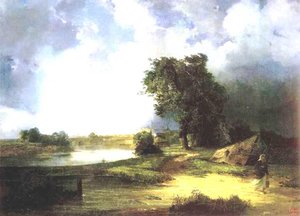
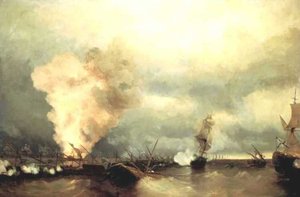
Biografía del artista
Primeros años y educación
Alexei Petrovich Bogoliubov fue un pintor de paisajes ruso, nacido el 16 de marzo de 1824 en la aldea de Pomerania en la gobernación de Novgorod. Su padre, Piotr Gavrilovich Bogoliubov, era un coronel retirado, y su abuelo materno, Alexander Radishchev, era un filósofo y crítico social muy conocido. En 1841, Alexei se graduó del colegio militar y sirvió en la armada rusa, viajando a muchos países. Comenzó a asistir a clases en la Academia de Artes de San Petersburgo en 1849, donde estudió bajo Maxim Vorobiev.Carrera e influencias
Bogoliubov estuvo muy influenciado por Ivan Aivazovsky, un pintor marino ruso. En 1853, finalizó la academia con una medalla de oro importante. Se retiró como oficial de marina y fue nombrado artista del cuartel general de la armada. De 1854 a 1860, viajó por Europa, trabajando prolíficamente. En Roma, conoció a Alexander Ivanov, quien lo convenció de centrarse más en el dibujo. En Düsseldorf, tomó clases de Andreas Achenbach. En París, admiró a los artistas de la Escuela Barbizon, incluyendo a Camille Corot y Charles-François Daubigny.Obras notables y exposiciones
Las pinturas de Bogoliubov se caracterizan por su realismo y romanticismo. Es conocido por sus numerosos paisajes y marinas, particularmente sus escenas de batallas navales. Algunas de sus obras notables se pueden encontrar en ArtsDot.com. Exhibió sus obras en la Academia Imperial de Artes y recibió el título de profesor. En 1871, fue elegido para la Academia Imperial de Artes.Legado y vida posterior
Bogoliubov se acercó al movimiento artístico de los Errantes (Peredvizhniki), participando en todas sus exposiciones. Se convirtió en miembro de su junta directiva pero tenía reservas sobre sus ideas sociales. En 1873, abandonó la academia en solidaridad con sus compañeros itinerantes. Después de 1873, Bogoliubov vivió principalmente en París debido a su afección cardíaca. Su casa era como una colonia rusa, con frecuentes visitantes que incluían a Ivan Turgenev, Ilia Repin y Vasily Polenov. Para obtener más información sobre la vida y las obras de Bogoliubov, visite su página en ArtsDot.com o su página de Wikipedia.Importancia histórica
Alexei Petrovich Bogoliubov fue un artista que sirvió como puente entre el Romanticismo y el Realismo en la pintura rusa. Su formación académica, combinada con sus viajes por Europa y su contacto con movimientos artísticos innovadores como la Escuela Barbizon, le permitieron desarrollar un estilo único que se caracterizaba por una observación precisa de la naturaleza y una sensibilidad romántica. Su participación en los Errantes (Peredvizhniki) reflejó su compromiso con el arte socialmente relevante y su deseo de acercar el arte al pueblo ruso. Su legado perdura como un testimonio de su talento artístico, su espíritu viajero y su contribución a la rica tradición del arte ruso.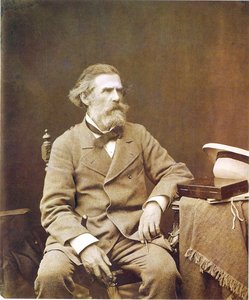
Alexei Petrovich Bogoliubov
1824 - 1896 , Rusia
Breves datos
- Artistas Que Influyeron:
- Iván Aivazovski
- Camille Corot
- Estilo Artístico: Romanticismo y Realismo
- Nacionalidad: Ruso
- Nombre Completo: Alexei Petrovich Bogoliubov
- Obras Notables:
- Paisajes marinos
- Escenas de batalla naval

