

 Vista previa
 Compartir
 Compartir
 Ver detalles

 Descargar
 Ver similares
 Radiografía
 Presentación de diapositivas
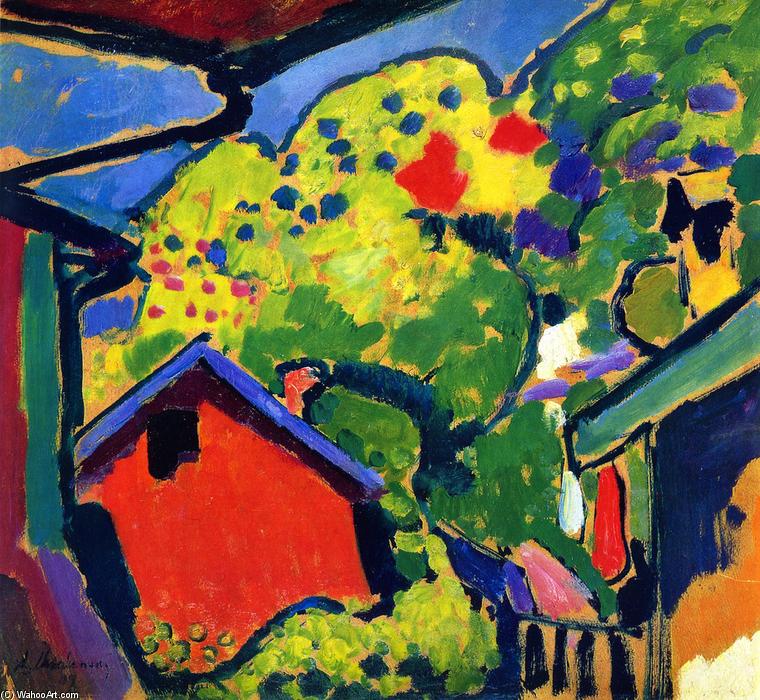
Landscape in Murnau


 Leer más
Adquiera una imagen digital de alta resolución y optimizada, muy superior a la vista previa en línea.
Cada archivo es preparado meticulosamente por nuestros especialistas internos mediante el uso de herramientas avanzadas y un experto retoque manual. Nos aseguramos de que cada imagen posea una claridad excepcional, una precisión cromática impecable y un detalle minucioso.
El archivo final se entrega por correo electrónico en un plazo de 72 horas, optimizado para su uso inmediato en entornos profesionales, editoriales y de impresión. Esta es la misma calidad en la que confían los estudios de diseño, las editoriales y las galerías de primer nivel.
Imagen Digital
Descarga un archivo de alta resolución para exhibición personal, impresión y proyectos creativos. ( Pedir impresión Encargar reproducción pintada a mano)
Incluido en cada compra de imágenes digitales
Entrega digital experta, garantizada.
Al elegir ArtsDot.com, no solo está adquiriendo una imagen; está recibiendo una obra de arte digital mejorada profesionalmente, elaborada con precisión y respaldada por una garantía de satisfacción. Esto es todo lo que incluye su pedido, automáticamente:

Entrega rápida por email
Recibirá su archivo de imagen digital en alta resolución por correo electrónico en un plazo de 72 horas tras realizar su pedido, listo para su uso inmediato.

Archivo digital optimizado por IA
Su obra de arte se optimiza profesionalmente mediante herramientas avanzadas de IA y edición manual, garantizando el máximo detalle, claridad y precisión cromática.

Reenvío gratuito de por vida
¿Has borrado o perdido tu archivo por error? No te preocupes: te lo volveremos a enviar en cualquier momento, sin coste adicional.

Sin gastos de importación, siempre
Disfrute de su obra de arte al instante sin aduanas, aranceles ni gastos de envío; las descargas digitales siempre están libres de impuestos.

Garantía de precisión de color
Garantizamos que su imagen digital refleje los colores originales con la mayor fidelidad posible, mediante el uso de herramientas profesionales y gestión del color.

Garantía de satisfacción de 60 días
Si no está satisfecho con su imagen digital, la revisaremos o le reembolsaremos el 100% en un plazo de 60 días, sin preguntas.

100% Garantía de devolución de dinero
¿No está satisfecho? Obtenga un reembolso completo dentro de los 60 días posteriores a la recepción de su archivo digital, sin necesidad de explicaciones.

Descuentos por volumen
Compra 3 imágenes, ahorra 10% - Compra 5, ahorra 15% - Compra 10+, ahorra 20%. Ideal para proyectos creativos, galerías y agencias.
Descripción del coleccionable
Landscape in Murnau – A Vision of Expressionist Color
Alexej Georgewitsch Von Jawlensky’s “Landscape in Murnau,” completed in 1909, stands as an arresting testament to the burgeoning fervor of Expressionism. Housed at the Stiftung Saarlandischer Kulturbesitz in Germany, this oil on cardboard painting transcends mere depiction; it strives to convey a profound emotional response to the natural world—a characteristic ambition that defines the movement’s core aesthetic.
Composition and Color Palette – Harmony Amidst Boldness
At first glance, “Landscape in Murnau” presents a dynamic equilibrium between color and form. Dominating the canvas is a striking red house, positioned against a backdrop of verdant trees punctuated by leaves exhibiting vibrant shades of purple. Jawlensky’s masterful manipulation of pigment—primarily crimson and emerald—is deliberately jarring, reflecting the Expressionist impulse to prioritize feeling over objective representation. The artist eschews subtle gradations in favor of assertive blocks of color, creating an immediate visual impact that seeks to stimulate the viewer's senses.
Technique – Textured Surfaces Reflect Inner Emotion
Jawlensky’s technique is characterized by thick impasto—a layering of paint applied with considerable force—resulting in textured surfaces that ripple and shimmer. This tactile quality serves not merely as a stylistic device but also as a conduit for conveying emotional intensity. The artist meticulously builds up the pigment, creating palpable ridges and depressions that mirror the turbulent currents beneath the surface of his artistic vision. Close examination reveals an intricate network of brushstrokes—each contributing to the overall sense of dynamism and expressive power.
Symbolism – Hints of Spirituality Within Nature
Beyond its formal qualities, “Landscape in Murnau” resonates with symbolic significance. The red house, often interpreted as representing human habitation and vulnerability against the immensity of nature, anchors the composition while simultaneously highlighting the artist’s preoccupation with spiritual themes. Similarly, the purple leaves—a color associated with royalty and transcendence—suggest a yearning for elevated consciousness. These subtle visual cues invite contemplation and encourage viewers to consider the painting's deeper layers of meaning.
Legacy – A Cornerstone of Expressionist Art
"Landscape in Murnau" cemented Jawlensky’s reputation as one of the foremost practitioners of Expressionism, securing its place within art history. Its bold color palette, textured surface, and evocative symbolism encapsulate the movement's core tenets—a rejection of academic conventions and a fervent embrace of subjective experience. Reproductions of this masterpiece continue to inspire artists and collectors alike, demonstrating its enduring relevance as a symbol of artistic innovation and emotional sincerity.
Obras relacionadas

Biografía del artista
A Life Painted in Emotion: The Journey of Alexej von Jawlensky
Alexej von Jawlensky, born Alexej Georgewitsch von Jawlensky on March 13, 1864, in the Russian town of Torzhok, embarked on a path that would firmly establish him as a pivotal figure within early twentieth-century Expressionism. His formative years were characterized by frequent relocations, culminating in a settling within Moscow at the age of ten—an experience that likely instilled a sense of displacement and perhaps, a yearning for deeper connection, themes subtly woven into the emotional core of his later artistic explorations. Initially drawn to a military career, Jawlensky’s encounter with the vibrant world of art during the 1880 Moscow World Exposition proved transformative. This exposure ignited within him a passion that would ultimately supersede any sense of duty, leading him down a path dedicated to visual expression.
Early Influences and Artistic Foundations
Jawlensky’s early artistic training was somewhat unconventional. He initially pursued a military career, but his encounter with art during the 1880 Moscow World Exposition sparked an immediate and profound interest. This pivotal experience led him to abandon his military aspirations and dedicate himself to painting. He received some formal instruction at the St. Petersburg Academy of Arts, balancing his artistic pursuits with his military obligations. However, it was his association with Ilya Repin, a prominent Russian realist painter, that proved particularly formative. Repin’s influence instilled in Jawlensky a deep appreciation for realism and observation, while simultaneously encouraging him to explore new avenues of expression. Crucially, he met Marianne von Werefkin during this period—an artist of considerable means who became not only his mentor but also a vital supporter, providing the financial stability necessary for him to fully commit to his artistic endeavors. Their relationship was complex and deeply intertwined with shared creative ambitions.
Munich and the Birth of Expressionism
The move to Munich in 1894 marked a decisive turning point in Jawlensky’s career. He enrolled at Anton Ažbe’s private school, immersing himself in an environment that actively encouraged experimentation and challenged traditional academic approaches. This period witnessed a significant shift in his artistic style as he began to absorb the radical ideas circulating within the European art world. He was profoundly influenced by artists like Ferdinand Hodler, whose use of simplified forms and symbolic imagery resonated deeply with Jawlensky’s own evolving aesthetic sensibilities. Jan Verkade and Paul Sérusier further broadened his horizons, introducing him to the principles of symbolism and synthetism—movements that prioritized subjective experience and emotional resonance over strict representational accuracy. Jawlensky's engagement with groups like the Neue Künstlervereinigung München (NKvM) solidified his commitment to artistic innovation, placing him at the heart of a burgeoning Expressionist movement.
The Mystical Heads: A Journey into Inner Space
Around 1909, Jawlensky embarked on what would become his most iconic series—the “Mystical Heads.” These intensely colored portraits, often depicting faces reduced to essential forms, are not merely representations of individuals but rather explorations of spiritual essence and inner life. The heads possess a haunting quality, their simplified features and vibrant palettes conveying a sense of profound emotion and psychological depth. Works like Schokko with Red Hat (1909) and Portrait of Alexander Sakharoff (1909) exemplify this period, showcasing his mastery of color and composition. These weren’t portraits in the traditional sense; they were attempts to capture something beyond physical likeness—the soul, the inner landscape of the sitter. He distilled faces into geometric shapes, emphasizing the power of color to evoke emotion and spiritual resonance. Throughout the 1910s, Jawlensky continued to refine his style, moving towards an even greater degree of abstraction. His compositions became increasingly geometric, with forms distilled to their most fundamental elements. He developed a formulaic approach, often employing a limited range of colors arranged in carefully balanced configurations.
Exile, Legacy and Lasting Influence
The outbreak of World War I brought upheaval to Jawlensky’s life. Expelled from Germany in 1914 due to his Russian origins, he sought refuge in Switzerland, where he encountered Emmy Scheyer. Scheyer became a devoted champion of his work, tirelessly promoting it in the United States and securing him recognition on an international stage. Despite facing increasing health challenges—including severe arthritis that progressively limited his ability to paint—Jawlensky continued to create until his death in Wiesbaden, Germany, on March 15, 1941. His later works, created under immense physical hardship, are a testament to his unwavering dedication to artistic expression. Today, Alexej von Jawlensky is celebrated as a key figure in the development of Expressionism. His paintings are held in prominent museum collections worldwide, including the Museum Ostwall in Dortmund and the Städtische Galerie im Lenbachhaus in Munich. His exploration of color, form, and spiritual themes continues to resonate with audiences, solidifying his place as one of the most important artists of the early twentieth century. He left behind a body of work that is both visually striking and emotionally profound, offering a glimpse into the inner world of an artist who dared to challenge conventions and embrace the power of subjective expression.
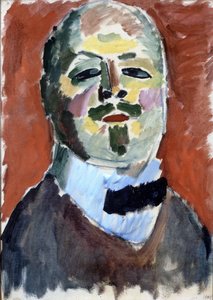
Alexej von Jawlensky
1864 - 1941 , Rusia
Datos clave
- Artistas Que Influyeron:
- Iliá Repin
- Ferdinand Hodler
- Jan Verkade
- Paul Sérusier
- Henri Matisse
- Emil Nolde
- Fecha De Fallecimiento: 15 de marzo de 1941
- Fecha De Nacimiento: 13 de marzo de 1864
- Lugar De Nacimiento: Torzhok, Rusia
- Movimiento Artístico: Expresionismo
- Movimientos Influenciados Por Este Artista:
- Der Blaue Reiter
- Die Blaue Vier
- Nacionalidad: Ruso-Alemán
- Nombre Completo: Alexej von Jawlensky
- Obras Notables:
- Paisaje con Vaca
- Cabeza Mística: Meditación
- Schokko con sombrero rojo
- Retrato de Alexander Sakharoff
- Turbante violeta

