 Ver en contexto
 Enviar
 Compartir
 Detalles

 Descargar
 Similares
 Radiografía
 Presentación de diapositivas
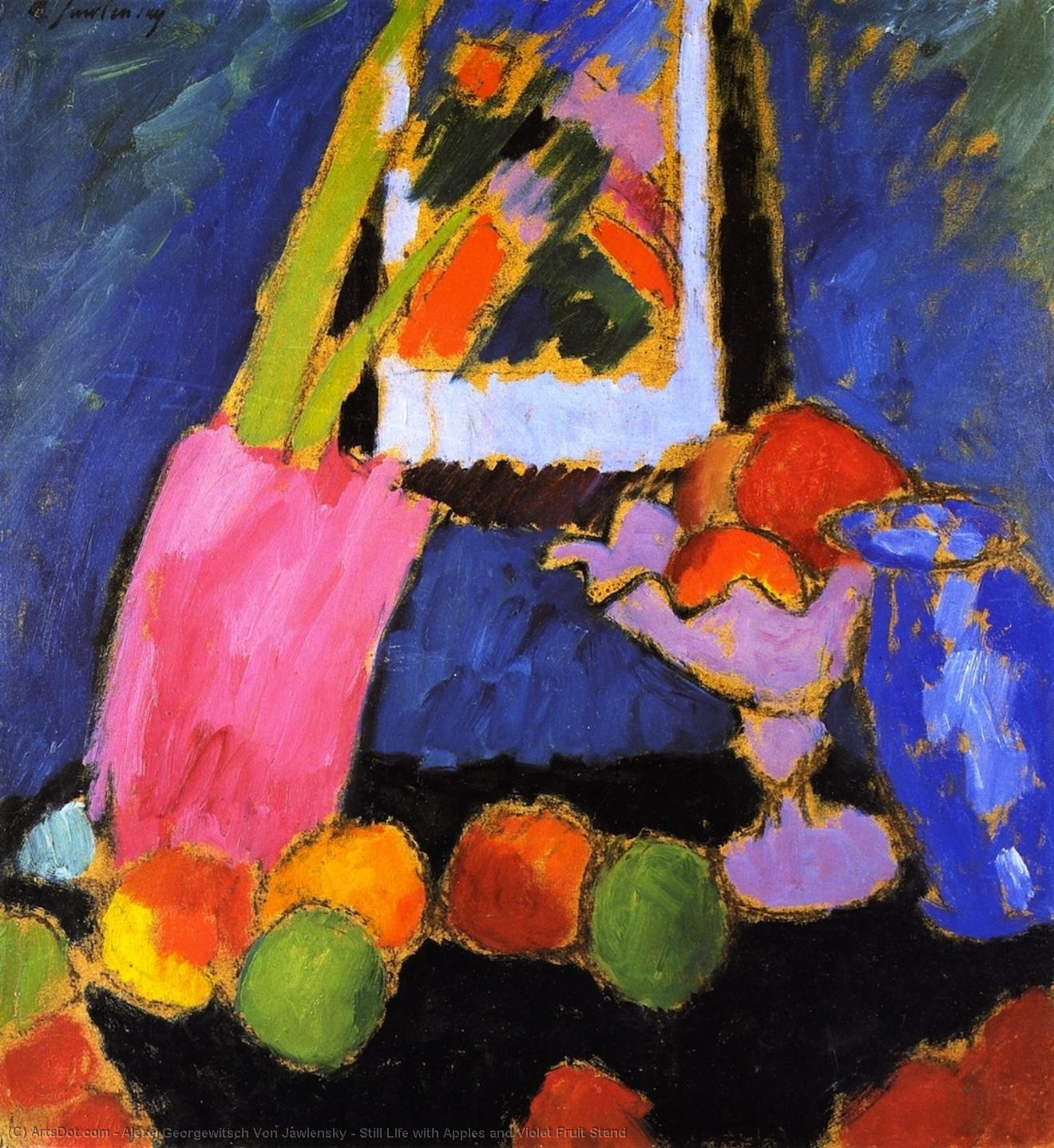
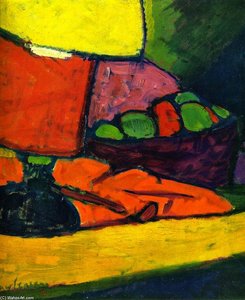
Naturaleza muerta con manzanas y puesto de frutas violetas
 Acrílico sobre lienzo
- Arte de pared
- Expresionismo
 1912
1912 49.0 x 52.0 cm
 Städel Museum
 Ver más
Reproducción al óleo hecha a mano
Óleo sobre lienzo pintado a mano en el tamaño y marco de su elección, realizado por encargo por nuestros artistas. ( Comprar impresión Comprar imagen)




P118B $10

P118H $10

P118W $10

P438Z $10

P508JH $12

P508YH $12

P805H $10

P805Z $10

P919BZ $10

P919G $10

P919XJ $10

P959ZH $10

P968JZ $12

W106C $8

W218G $10

W218JH $8

W218Y $10

W307PJ $10

W316G $10

W316PJ $8

W316Y $10

W398PJ $8

W4111J $10

W500HY $15

W500JH $15

W692G $12

W849H $8

W940BG $15

W953PJ $8




Elija entre nuestros tamaños predefinidos que respetan las proporciones originales de la obra.

Puede ingresar sus propias dimensiones para adaptarse a un marco o espacio específico. Si el tamaño seleccionado no coincide con las proporciones de la imagen original, recortaremos la obra o extenderemos la pintura con elementos adicionales pintados a mano. Se le enviará una maqueta digital para su aprobación antes de comenzar la producción.
Tenga en cuenta que la vista previa en pantalla no refleja el recorte o la extensión reales. Solo la maqueta mostrará con precisión la composición final.
Si bien existen tamaños personalizados, recomendamos seleccionar una dimensión de la lista predefinida para preservar las proporciones originales.
Tras realizar el pedido, el equipo de ArtsDot.com enviará un correo electrónico al cliente para solicitar instrucciones y proporcionarle una vista previa del boceto.
Envío a todo el mundo () en 3-4 semanas en lugar de las 5 semanas estándar. (4 septiembre). Sin comprometer la calidad.

Envío exprés gratuito a todo el mundo

Lienzo de lino de alta calidad

Seguro de envío total

Garantía de reembolso de impuestos aduaneros

Garantía de fidelidad cromática exacta

Política de devolución de 60 días (solo por defectos)

Garantía de devolución del 100% del dinero

Descuento por cantidad
 La opción de vidrio solo está disponible en tamaños inferiores a 110 cm.

Naturaleza muerta con manzanas y puesto de frutas violetas
Técnica de reproducción
Dimensiones de la reproducción
-


Precio total final
$ 263
Still Life with Apples and Violet Fruit Stand – A Window Into Jawlensky’s Soul
The painting “Still Life with Apples and Violet Fruit Stand,” executed in 1912 by Alexej von Jawlensky, transcends mere representation; it embodies the artist's deeply felt emotional landscape—a characteristic hallmark of Expressionism. Examining this artwork offers a fascinating glimpse into both Jawlensky’s artistic vision and the broader intellectual currents shaping early twentieth-century Europe.Subject Matter and Composition
At first glance, the scene presents itself as deceptively simple: a tabletop adorned with a vase containing violet blossoms alongside an assortment of fruit – predominantly apples, oranges, and bananas. However, this apparent tranquility belies a carefully considered compositional strategy designed to convey profound psychological depth. The placement of the apples in the foreground establishes visual dominance, anchoring the viewer’s gaze while simultaneously hinting at vulnerability and fragility. Behind them lie the oranges and bananas, creating layers of texture and color that contribute to the overall vibrancy of the piece. The vase itself serves as a focal point, symbolizing purity and contemplation amidst the abundance of earthly delights.Style and Technique – Embracing Emotion Through Color
Jawlensky’s artistic approach aligns perfectly with the tenets of Expressionism—a movement driven by an urgent desire to communicate inner feelings rather than objective reality. He eschews meticulous detail in favor of bold, expressive brushstrokes that prioritize color above all else. The palette is dominated by shades of red, orange, yellow, and green, colors chosen not for their literal depiction but for their ability to evoke specific emotional responses. Thick impasto—the application of paint in textured layers—further amplifies the visual impact, creating palpable physicality within the canvas and mirroring the artist’s impassioned engagement with his subject matter. The deliberate distortion of form contributes to this expressive intent, prioritizing feeling over accurate representation.Historical Context – Expressionism's Response to Uncertainty
“Still Life” emerged during a period marked by significant social and political upheaval—the dawn of the Great War and the escalating anxieties surrounding modernity’s rapid transformations. Expressionist artists reacted against prevailing artistic conventions, rejecting academic idealism in favor of confronting uncomfortable truths about human existence. Jawlensky's work reflects this spirit of rebellion, articulating a profound disillusionment with societal norms while simultaneously seeking solace in spiritual contemplation—themes that resonate powerfully across time and continue to inspire viewers today. The painting stands as testament to the movement’s conviction that art should serve as a conduit for emotional catharsis and a vehicle for exploring existential questions.Symbolism – Apples, Violet Blossoms, and the Vase's Significance
Beyond its formal qualities, “Still Life” is laden with symbolic meaning. Apples, traditionally associated with knowledge and temptation, represent both beauty and vulnerability—a duality that encapsulates Jawlensky’s artistic preoccupation with confronting difficult emotions. Violet blossoms symbolize purity and spiritual devotion, offering a counterpoint to the anxieties of the era and reflecting the artist's own quest for inner harmony. The vase itself embodies stillness and contemplation, inviting viewers to pause and consider the profound implications of their surroundings—a deliberate gesture designed to elevate the artwork beyond mere visual pleasure into a realm of psychological introspection.Emotional Impact – A Portrait of Inner Turmoil
Ultimately, “Still Life with Apples and Violet Fruit Stand” succeeds in conveying an arresting emotional portrait of Alexej von Jawlensky’s inner turmoil. The painting's vibrant colors and textured brushstrokes capture the artist’s passionate engagement with his subject matter—a testament to Expressionism’s conviction that art should serve as a catalyst for confronting uncomfortable truths about human experience. Viewing this artwork evokes a sense of melancholy beauty, prompting reflection on themes of vulnerability, spirituality, and the enduring power of emotion. It remains a compelling reminder that true artistic achievement lies not in replicating reality but in translating inner feeling into tangible form—a feat accomplished masterfully by Jawlensky’s visionary hand.Obras relacionadas
Biografía del artista
A Life Painted in Emotion: The Journey of Alexej von Jawlensky
Alexej von Jawlensky, born Alexej Georgewitsch von Jawlensky on March 13, 1864, in the Russian town of Torzhok, embarked on a path that would firmly establish him as a pivotal figure within early twentieth-century Expressionism. His formative years were characterized by frequent relocations, culminating in a settling within Moscow at the age of ten—an experience that likely instilled a sense of displacement and perhaps, a yearning for deeper connection, themes subtly woven into the emotional core of his later artistic explorations. Initially drawn to a military career, Jawlensky’s encounter with the vibrant world of art during the 1880 Moscow World Exposition proved transformative. This exposure ignited within him a passion that would ultimately supersede any sense of duty, leading him down a path dedicated to visual expression.
Early Influences and Artistic Foundations
Jawlensky’s early artistic training was somewhat unconventional. He initially pursued a military career, but his encounter with art during the 1880 Moscow World Exposition sparked an immediate and profound interest. This pivotal experience led him to abandon his military aspirations and dedicate himself to painting. He received some formal instruction at the St. Petersburg Academy of Arts, balancing his artistic pursuits with his military obligations. However, it was his association with Ilya Repin, a prominent Russian realist painter, that proved particularly formative. Repin’s influence instilled in Jawlensky a deep appreciation for realism and observation, while simultaneously encouraging him to explore new avenues of expression. Crucially, he met Marianne von Werefkin during this period—an artist of considerable means who became not only his mentor but also a vital supporter, providing the financial stability necessary for him to fully commit to his artistic endeavors. Their relationship was complex and deeply intertwined with shared creative ambitions.
Munich and the Birth of Expressionism
The move to Munich in 1894 marked a decisive turning point in Jawlensky’s career. He enrolled at Anton Ažbe’s private school, immersing himself in an environment that actively encouraged experimentation and challenged traditional academic approaches. This period witnessed a significant shift in his artistic style as he began to absorb the radical ideas circulating within the European art world. He was profoundly influenced by artists like Ferdinand Hodler, whose use of simplified forms and symbolic imagery resonated deeply with Jawlensky’s own evolving aesthetic sensibilities. Jan Verkade and Paul Sérusier further broadened his horizons, introducing him to the principles of symbolism and synthetism—movements that prioritized subjective experience and emotional resonance over strict representational accuracy. Jawlensky's engagement with groups like the Neue Künstlervereinigung München (NKvM) solidified his commitment to artistic innovation, placing him at the heart of a burgeoning Expressionist movement.
The Mystical Heads: A Journey into Inner Space
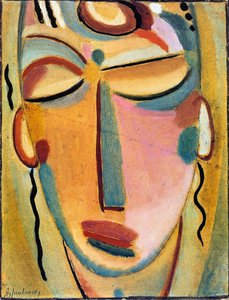
Around 1909, Jawlensky embarked on what would become his most iconic series—the “Mystical Heads.” These intensely colored portraits, often depicting faces reduced to essential forms, are not merely representations of individuals but rather explorations of spiritual essence and inner life. The heads possess a haunting quality, their simplified features and vibrant palettes conveying a sense of profound emotion and psychological depth. Works like Schokko with Red Hat (1909) and Portrait of Alexander Sakharoff (1909) exemplify this period, showcasing his mastery of color and composition. These weren’t portraits in the traditional sense; they were attempts to capture something beyond physical likeness—the soul, the inner landscape of the sitter. He distilled faces into geometric shapes, emphasizing the power of color to evoke emotion and spiritual resonance. Throughout the 1910s, Jawlensky continued to refine his style, moving towards an even greater degree of abstraction. His compositions became increasingly geometric, with forms distilled to their most fundamental elements. He developed a formulaic approach, often employing a limited range of colors arranged in carefully balanced configurations.
Exile, Legacy and Lasting Influence
The outbreak of World War I brought upheaval to Jawlensky’s life. Expelled from Germany in 1914 due to his Russian origins, he sought refuge in Switzerland, where he encountered Emmy Scheyer. Scheyer became a devoted champion of his work, tirelessly promoting it in the United States and securing him recognition on an international stage. Despite facing increasing health challenges—including severe arthritis that progressively limited his ability to paint—Jawlensky continued to create until his death in Wiesbaden, Germany, on March 15, 1941. His later works, created under immense physical hardship, are a testament to his unwavering dedication to artistic expression. Today, Alexej von Jawlensky is celebrated as a key figure in the development of Expressionism. His paintings are held in prominent museum collections worldwide, including the Museum Ostwall in Dortmund and the Städtische Galerie im Lenbachhaus in Munich. His exploration of color, form, and spiritual themes continues to resonate with audiences, solidifying his place as one of the most important artists of the early twentieth century. He left behind a body of work that is both visually striking and emotionally profound, offering a glimpse into the inner world of an artist who dared to challenge conventions and embrace the power of subjective expression.
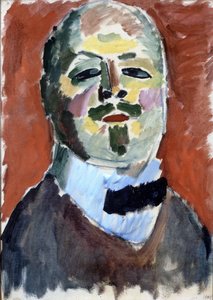
Alexej von Jawlensky
1864 - 1941 , Rusia
Datos clave
- Artistas Que Influyeron:
- Iliá Repin
- Ferdinand Hodler
- Jan Verkade
- Paul Sérusier
- Henri Matisse
- Emil Nolde
- Fecha De Fallecimiento: 15 de marzo de 1941
- Fecha De Nacimiento: 13 de marzo de 1864
- Lugar De Nacimiento: Torzhok, Rusia
- Movimiento Artístico: Expresionismo
- Movimientos Influenciados Por Este Artista:
- Der Blaue Reiter
- Die Blaue Vier
- Nacionalidad: Ruso-Alemán
- Nombre Completo: Alexej von Jawlensky
- Obras Notables:
- Paisaje con Vaca
- Cabeza Mística: Meditación
- Schokko con sombrero rojo
- Retrato de Alexander Sakharoff
- Turbante violeta
Artículos relacionados
The Bountiful Still Life: Symbolism & Artistic Representation of Fruit Across Art History
Explore the rich history of still life painting & the symbolism of fruit across art movements. Discover masterpieces from Caravaggio to Cézanne with ArtsDot – expert guidance & museum-quality reproductions.
Clyfford Still's Abstract Expressionism: A Study of Color, Form & the Existential Landscape
Explore the profound world of Clyfford Still's Abstract Expressionism with ArtsDot. Discover his unique style, existential themes & investment potential. Expert analysis for discerning collectors.
The Raw Emotion of Expressionism: A Deep Dive into its History, Characteristics & Enduring Influence
Explore the raw emotion of Expressionism with ArtsDot. Discover its history, key artists like Kirchner & Munch, and lasting influence on modern art. Expert insights for collectors & enthusiasts.
Silent Narratives: Exploring the Enduring Appeal of Still Life Painting Across Centuries
Explore the rich history of still life painting with ArtsDot. Discover Dutch Masters, decode vanitas symbolism & learn about collecting timeless art. Expert insights and museum-quality reproductions.
The Enduring Appeal of Still Life: A Historical & Contemporary Exploration
Explore the rich history & symbolism of still life painting with ArtsDot. Discover masterpieces from the Dutch Golden Age, learn about vanitas art, and find expert guidance for collecting timeless artworks.