

 Ver en contexto
 Enviar
 Compartir
 Detalles

 Descargar
 Similares
 Radiografía
 Presentación de diapositivas
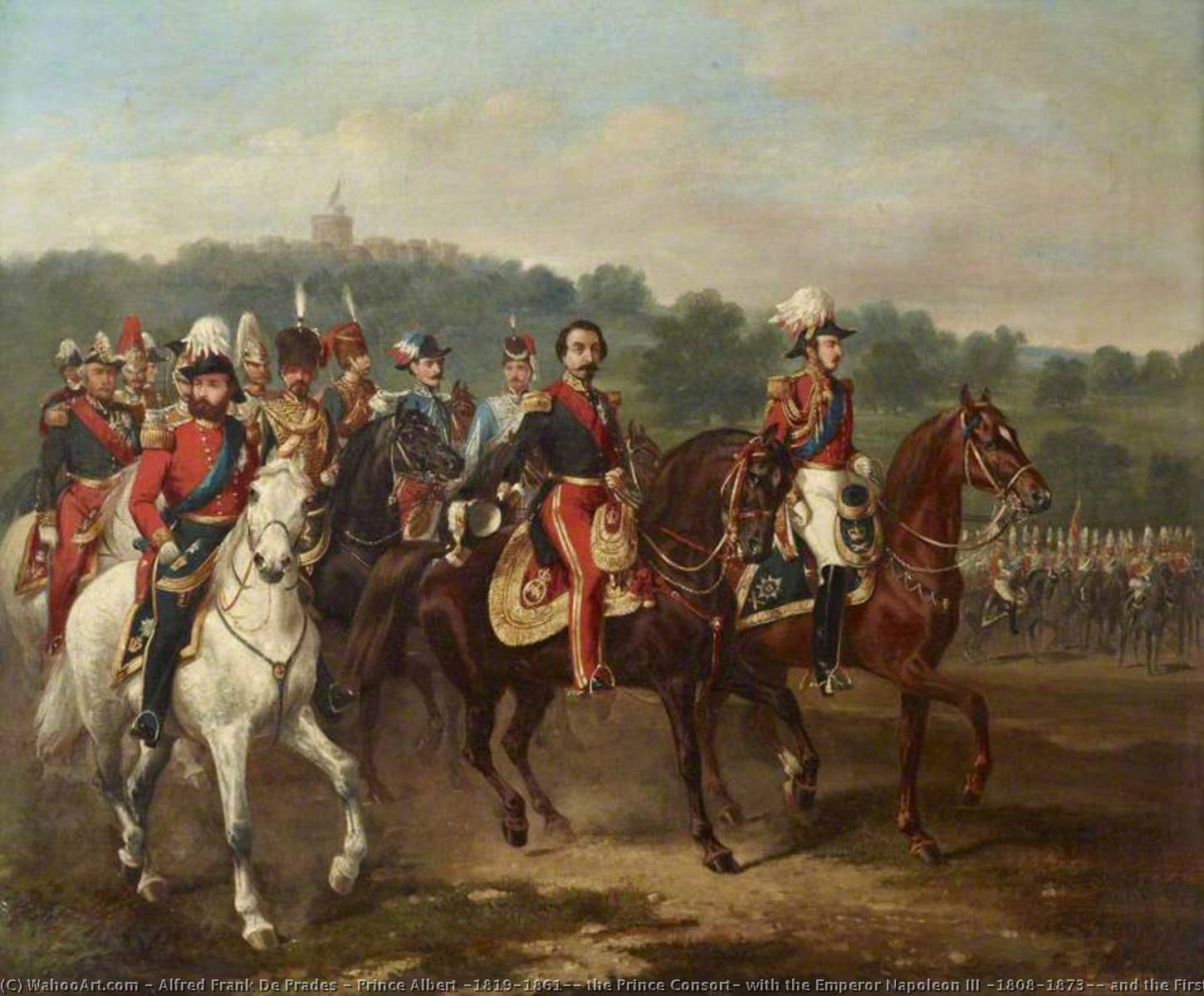
Prince Albert (1819–1861), the Prince Consort, with the Emperor Napoleon III (1808–1873), and the First Life Guards at Windsor, 17 April 1855
 50.0 x 60.0 cm
 National Trust
 Ver más
Adquiera una imagen digital de alta resolución y optimizada, muy superior a la vista previa en línea.
Cada archivo es preparado meticulosamente por nuestros especialistas internos mediante el uso de herramientas avanzadas y un experto retoque manual. Nos aseguramos de que cada imagen posea una claridad excepcional, una precisión cromática impecable y un detalle minucioso.
El archivo final se entrega por correo electrónico en un plazo de 72 horas, optimizado para su uso inmediato en entornos profesionales, editoriales y de impresión. Esta es la misma calidad en la que confían los estudios de diseño, las editoriales y las galerías de primer nivel.
Imagen Digital
Descarga un archivo de alta resolución para exhibición personal, impresión y proyectos creativos. ( Comprar impresión Comprar pintura hecha a mano)
Incluido en cada pedido de imágenes digitales
Entrega digital experta, garantizada.
Al elegir ArtsDot.com, no solo está adquiriendo una imagen; está recibiendo una obra de arte digital mejorada profesionalmente, elaborada con precisión y respaldada por una garantía de satisfacción. Esto es todo lo que incluye su pedido, automáticamente:

Entrega rápida por email
Recibirá su archivo de imagen digital en alta resolución por correo electrónico en un plazo de 72 horas tras realizar su pedido, listo para su uso inmediato.

Archivo digital optimizado por IA
Su obra de arte se optimiza profesionalmente mediante herramientas avanzadas de IA y edición manual, garantizando el máximo detalle, claridad y precisión cromática.

Reenvío gratuito de por vida
¿Has borrado o perdido tu archivo por error? No te preocupes: te lo volveremos a enviar en cualquier momento, sin coste adicional.

Sin gastos de importación, siempre
Disfrute de su obra de arte al instante sin aduanas, aranceles ni gastos de envío; las descargas digitales siempre están libres de impuestos.

Garantía de fidelidad de color
Garantizamos que su imagen digital refleje los colores originales con la mayor fidelidad posible, mediante el uso de herramientas profesionales y gestión del color.

Garantía de satisfacción de 60 días
Si no está satisfecho con su imagen digital, la revisaremos o le reembolsaremos el 100% en un plazo de 60 días, sin preguntas.

100% Garantía de devolución de dinero
¿No está satisfecho? Obtenga un reembolso completo dentro de los 60 días posteriores a la recepción de su archivo digital, sin necesidad de explicaciones.

Descuentos por pedidos grandes
Compra 3 imágenes, ahorra 10% - Compra 5, ahorra 15% - Compra 10+, ahorra 20%. Ideal para proyectos creativos, galerías y agencias.
Obras relacionadas










Biografía del artista
The Equestrian Visionary: The Life and Legacy of Alfred Frank de Prades
In the golden age of Victorian sporting art, few names resonated with the same anatomical precision and romantic vigor as Alfred Frank de Prades. A master of the animalier tradition, de Prades possessed a rare ability to breathe life into canvas, transforming static depictions of horses and military figures into breathing, pulsing scenes of historical drama. Though born in Lunel, Hérault, France, his artistic soul was deeply entwined with the landscape and culture of England. This unique duality—a French sensibility meeting British sporting passion—allowed him to capture the grandeur of the equestrian world with a nuance that captivated the noble British aristocracy and established him as one of the most sought-after painters of his era.
The foundations of his talent were laid in a childhood marked by movement and transition. Following a dramatic separation between his parents, de Prades relocated to London at the age of sixteen. This early immersion in British society proved pivotal; the sights of the English countryside and the prestige of the local racing culture became the primary muses for his developing eye. While much of his formal training remains shrouded in the mists of history, his innate grasp of equine anatomy suggests a profound, perhaps self-taught, dedication to the study of nature. Even as a young prodigy, his work displayed an uncanny ability to replicate the tension of a muscle or the frantic energy of a gallop, a skill famously evidenced by his early piece, “Down the Stretch,” painted when he was a mere thirteen years old.
A Legacy of Precision and Patronage
As de Prades matured, his artistic lineage became increasingly clear. He worked within the prestigious tradition established by George Stubbs, adopting a style characterized by scientific accuracy and emotional depth. This connection to the great masters of equine art allowed him to navigate the elite circles of London’s Covent Garden, where he became a fixture in the exhibitions of the British Institution and the Royal Academy of Arts. His work was not merely decorative; it was an exploration of power, nobility, and the symbiotic relationship between man and beast. The British sporting set, driven by a passion for hunting, racing, and military prowess, found in de Prades a chronicler who could immortalize their finest steeds and most heroic officers.
His oeuvre is marked by several defining characteristics that elevate his work above mere portraiture:
- Anatomical Realism: A relentless pursuit of truth in the depiction of equine musculature, bone structure, and movement.
- Military Grandeur: The ability to blend the elegance of cavalry uniforms with the raw energy of battle or parade scenes.
- Atmospheric Depth: Using light and shadow to create a sense of place, whether in the snowy expanses of a mail coach journey or the dusty heat of a military camp.
Through his brush, historical figures were rendered not just as icons, but as living participants in their time. His portraits of high-ranking officers, such as the 7th Earl of Cardigan, serve as vital windows into the Victorian era, capturing the intricate details of Hungarian attire and the spirited temperament of the horses they rode. De Prades did more than paint animals; he painted the very essence of an age defined by expansion, cavalry charges, and the romanticized glory of the hunt.
The Enduring Impression of a Master
Though his life came to an end in 1885, the impact of Alfred Frank de Prades continues to resonate within the halls of art history. He remains a pivotal figure for those studying the evolution of animalier painting, representing a bridge between the classical anatomical studies of the eighteenth century and the more dramatic, narrative-driven styles of the late nineteenth century. His ability to command the viewer's attention through the sheer vitality of his subjects ensures that his works remain much more than historical artifacts; they are enduring celebrations of motion, strength, and the timeless beauty of the equine form.
alfred frank de prades
1825 - 1885

