 Ver en contexto
 Enviar
 Compartir
 Detalles

 Descargar
 Similares
 Radiografía
 Presentación de diapositivas
Photograph by A.P. Maudslay
 Acrylic On Canvas
- WallArt
- Documentary Photography
 19th Century
 16.0 x 21.0 cm
 Museo Británico
 Ver más
Reproducción al óleo hecha a mano
Óleo sobre lienzo pintado a mano en el tamaño y marco de su elección, realizado por encargo por nuestros artistas. ( Comprar impresión Comprar imagen)




P118B $10

P118H $10

P118W $10

P438Z $10

P508JH $12

P508YH $12

P805H $10

P805Z $10

P919BZ $10

P919G $10

P919XJ $10

P959ZH $10

P968JZ $12

W106C $8

W218G $10

W218JH $8

W218Y $10

W307PJ $10

W316G $10

W316PJ $8

W316Y $10

W398PJ $8

W4111J $10

W500HY $15

W500JH $15

W692G $12

W849H $8

W940BG $15

W953PJ $8




Elija entre nuestros tamaños predefinidos que respetan las proporciones originales de la obra.

Puede ingresar sus propias dimensiones para adaptarse a un marco o espacio específico. Si el tamaño seleccionado no coincide con las proporciones de la imagen original, recortaremos la obra o extenderemos la pintura con elementos adicionales pintados a mano. Se le enviará una maqueta digital para su aprobación antes de comenzar la producción.
Tenga en cuenta que la vista previa en pantalla no refleja el recorte o la extensión reales. Solo la maqueta mostrará con precisión la composición final.
Si bien existen tamaños personalizados, recomendamos seleccionar una dimensión de la lista predefinida para preservar las proporciones originales.
Tras realizar el pedido, el equipo de ArtsDot.com enviará un correo electrónico al cliente para solicitar instrucciones y proporcionarle una vista previa del boceto.
Envío a todo el mundo () en 3-4 semanas en lugar de las 5 semanas estándar. (26 agosto). Sin comprometer la calidad.

Envío exprés gratuito a todo el mundo

Lienzo de lino de alta calidad

Seguro de envío total

Garantía de reembolso de impuestos aduaneros

Garantía de fidelidad cromática exacta

Política de devolución de 60 días (solo por defectos)

Garantía de devolución del 100% del dinero

Descuento por cantidad
 La opción de vidrio solo está disponible en tamaños inferiores a 110 cm.

Photograph by A.P. Maudslay
Técnica de reproducción
Dimensiones de la reproducción
-


Precio total final
$ 1488
Descripción de la obra
A Glimpse of Colonial Life: Alfred Percival Maudslay’s “Photograph by A.P. Maudslay”
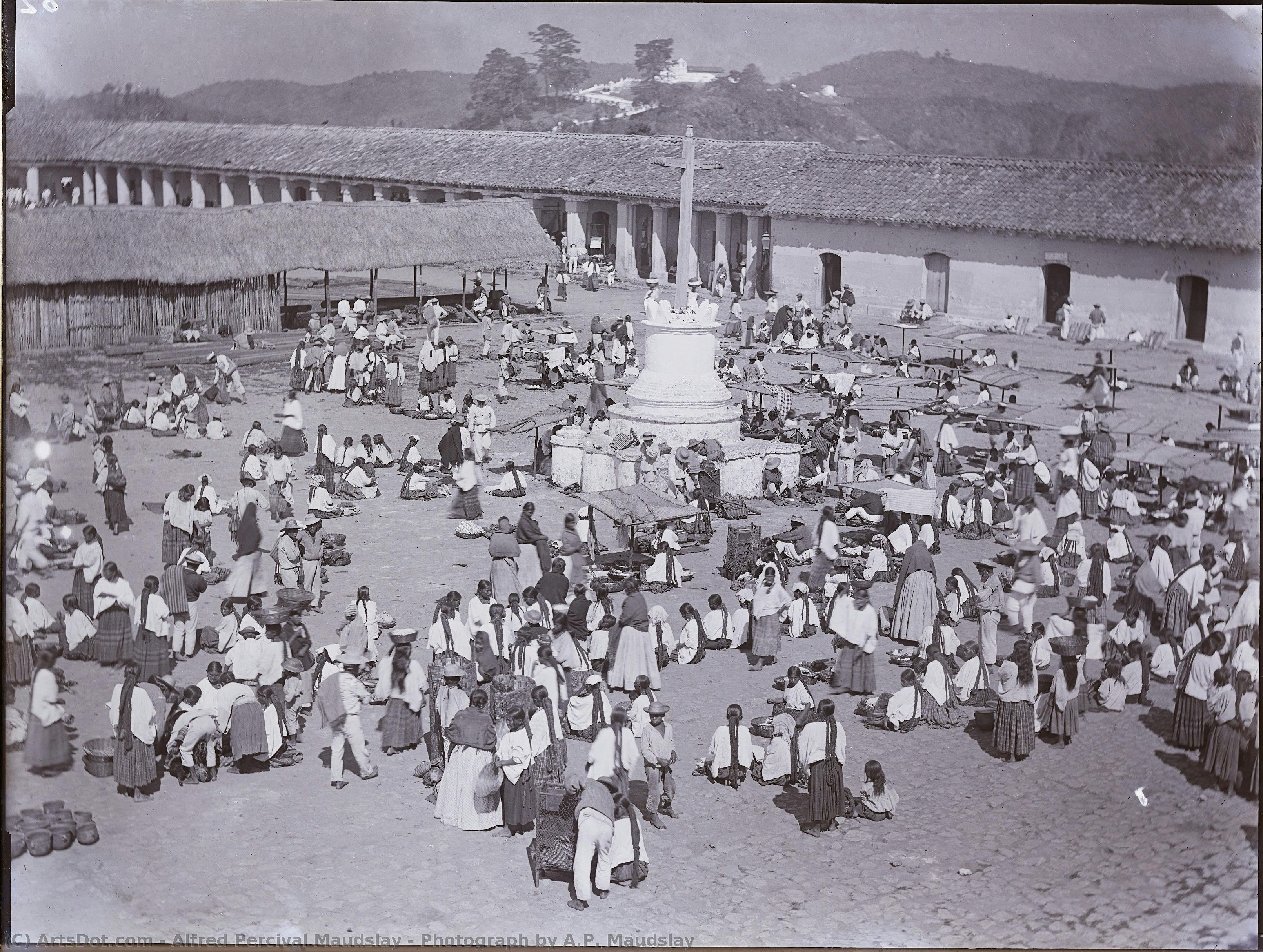
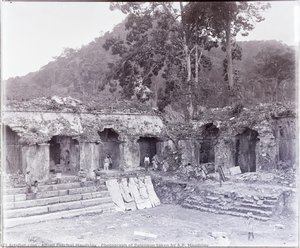
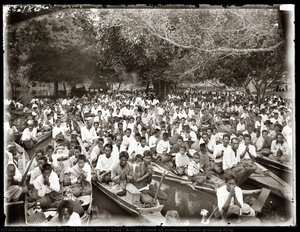
Alfred Percival Maudslay's "Photograph by A.P. Maudslay" isn’t merely a snapshot; it’s a meticulously preserved window into the heart of a bygone era, offering a poignant glimpse into colonial Jamaica during the late 19th century. The image, rendered in stark black and white with a subtle grain that speaks to its age as a silver gelatin print, captures a bustling public gathering – likely a market day or perhaps a community event – within a grand courtyard dominated by an imposing statue. The scene pulsates with life, a testament to the vibrant social fabric of British colonial society, yet subtly hinting at the complexities and inherent tensions beneath the surface.
Composition and Visual Narrative
Maudslay’s compositional choices immediately draw the viewer's eye towards the central statue, its form a silent anchor amidst the swirling mass of people. The crowd itself is densely packed, creating an almost claustrophobic effect that emphasizes the collective experience. Lines are skillfully constructed through the arrangement of figures – the orderly rows of benches, the converging paths of pedestrians, and the receding planes of the surrounding architecture – guiding our gaze across the frame. The photograph’s perspective, slightly elevated as if taken from a balcony or upper window, provides a comprehensive view, allowing us to absorb the sheer scale of the gathering. The diffused lighting suggests an overcast day, lending a muted quality to the scene and focusing attention on the details of clothing, faces, and architectural elements.
Technique and Historical Context
The photographic process employed by Maudslay—a silver gelatin print—was at its peak during this period, demanding considerable skill and precision. The subtle graininess inherent in the image is a characteristic of early 20th-century photography, reflecting the limitations of the technology while simultaneously adding to the photograph’s authentic feel. Maudslay's background as an administrator and collector for the British Museum reveals his deep interest in documenting diverse cultures and landscapes. His travels throughout the British Pacific colonies—Jamaica, Trinidad, Fiji, Samoa, Tonga, and Tahiti—were driven by a desire to gather ethnographic materials, including photographs like this one, which served as invaluable records of daily life. The photograph’s creation coincided with a period of intense colonial expansion and modernization, marked by both progress and profound social inequalities.
Symbolism and Emotional Resonance
Beyond its documentary value, the image is rich in symbolic meaning. The statue itself—its subject unknown without further research—likely represents authority, perhaps a colonial governor or a revered historical figure. The crowd’s diverse attire and interactions suggest a complex social hierarchy, with distinctions between European officials and local inhabitants readily apparent. The photograph evokes a sense of both community and constraint, capturing the spirit of a public gathering while simultaneously hinting at the power dynamics inherent in colonial society. There's an underlying current of observation—Maudslay, as both photographer and collector, is positioned as an outsider, carefully documenting this scene for posterity. The image’s enduring appeal lies in its ability to transport us back in time, prompting reflection on themes of identity, power, and the complexities of cultural exchange.
A Reproduction Worth Admiring
Reproductions of Maudslay's “Photograph by A.P. Maudslay” offer a remarkable opportunity to bring this evocative image into contemporary spaces. The meticulous detail captured in the original photograph is faithfully reproduced, allowing viewers to appreciate the nuances of composition and lighting. Whether displayed as a statement piece in a study or incorporated into a broader collection of colonial-era art, this reproduction serves as a powerful reminder of a fascinating period in history—a testament to both the beauty and the complexities of the British Empire’s reach.
Obras relacionadas
Biografía del artista
Primeros años y educación
Alfred Percival Maudslay, administrador colonial británico y arqueólogo, nació el 18 de marzo de 1850 en Londres, en una familia adinerada. Estudió ciencias naturales en Trinity Hall, Cambridge, obteniendo su licenciatura en 1872.Carrera y viajes
Los primeros planes de Maudslay para una carrera médica se postergaron mientras viajaba con su hermano, recorriendo Centroamérica, México y partes de los Estados Unidos. Este viaje despertó un interés por la arqueología, el cual definiría más tarde su legado. Tras regresar a casa, Maudslay pospuso nuevamente la escuela de medicina para viajar a Islandia en 1873. Su bronquitis crónica lo llevó a buscar un clima más cálido, lo que resultó en una serie de puestos en Jamaica, Trinidad y, finalmente, el Pacífico Sur.Contribuciones arqueológicas
El tiempo de Maudslay en las colonias del Pacífico británico sentó las bases para sus futuras indagaciones arqueológicas. Se interesó por la recolección de materiales etnográficos, lo que eventualmente contribuiría a la formación del Museo Universitario de Arqueología y Etnología de Cambridge. Su amigo, el ornitólogo Osbert Salvin, animó a Maudslay a explorar las ruinas mayas de Quiriguá y Copán.Logros notables
Maudslay fue el primero en describir el sitio de Yaxchilán.
Exploró Chichén Itzá en la década de 1880, tomando extensas fotografías.
Publicó la primera descripción detallada de Chichén Itzá en su libro, Biologia Centrali-Americana.
Realizó una traducción completa con anotaciones de la Historia de Bernal Díaz del Castillo, que sigue siendo la edición estándar en inglés.
Legado artístico
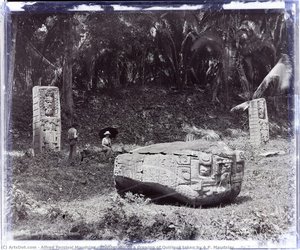
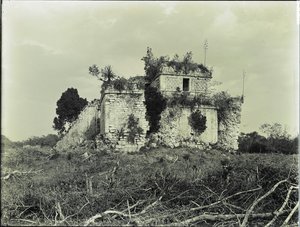
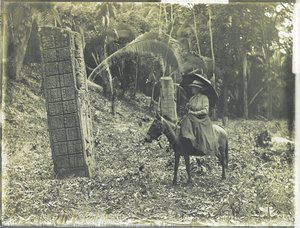
Las fotografías y escritos de Maudslay han sido preservados, ofreciendo un vistazo único al mundo de la arqueología del siglo XIX. Su obra se puede encontrar en varios museos, incluido el Museo Británico (Londres, Reino Unido), que alberga varias de sus fotografías.- fotografía de Chichén Itzá realizada por A.P. Maudslay (16 x 21 cm, Museo Británico, fotografía)
- fotografía de Chichén Itzá realizada por A.P. Maudslay (25 x 30 cm, Museo Británico, fotografía)
- fotografía de Copán realizada por A.P. Maudslay (31 x 25 cm, Museo Británico, fotografía)
Conclusión
El legado de Alfred Percival Maudslay es un testimonio del poder de la curiosidad y la exploración. Desde sus primeros días como administrador colonial hasta sus últimos años como arqueólogo, el trabajo de Maudslay continúa inspirando y educando.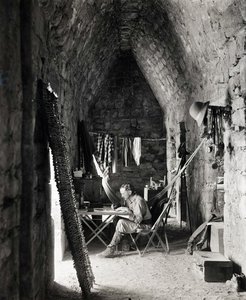
Alfred Percival Maudslay
1850 - 1931 , Reino Unido
Datos clave
- Fecha De Fallecimiento: 1931
- Fecha De Nacimiento: 1850
- Lugar De Nacimiento: Londres, Reino Unido
- Movimiento Artístico O Estilo: Arqueología/Fotografía
- Nacionalidad: Británico
- Nombre Completo: Alfred Percival Maudslay
- Obras Notables: ['Fotografía de Chichén Itzá']
Artículos relacionados

Monochrome Visions: Exploring the Aesthetic & Historical Significance of Black & White Photography
Explore the rich history & artistic power of black and white photography. From early techniques to iconic masters like Ansel Adams, discover why monochrome continues to captivate art lovers today. Expert insights for collectors.

Blanco Sublime: Los 10 Cuadros Más Famosos Dominados por la Luz y el Color
Descubre los 10 cuadros blancos más emblemáticos de la historia del arte. Explora Monet, Van Gogh y Klimt, y su magistral uso de la luz y el color. Encuentra reproducciones de alta calidad e inspírate para tu decoración en .
Timeless & Chic: Elevating Your New Home with the Sophistication of Black and White Photography
Transform your new home with the timeless allure of black and white photography. ArtsDot.com specializes in elegant monochrome decor and custom hand-painted wedding portraits that turn cherished milestones into lasting, soulful masterpieces. Elevate your space with ease.
Beyond the Lens: Photography's Enduring Influence on Modern & Contemporary Art
Explore photography's pivotal role in shaping modern & contemporary art. Discover key movements, influential artists like Stieglitz, and expert collecting advice from ArtsDot.

Las 10 Pinturas Más Famosas Dominadas por el Negro | Arte y Decoración
Descubre las 10 pinturas más impactantes dominadas por el negro. Explora obras maestras de Rembrandt, Goya y Rothko, su historia y significado. Encuentra reproducciones de arte exclusivas para transformar tu hogar en .