 Ver en contexto
 Enviar
 Compartir
 Detalles

 Descargar
 Similares
 Radiografía
 Presentación de diapositivas
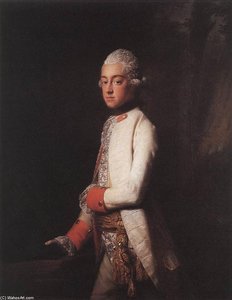
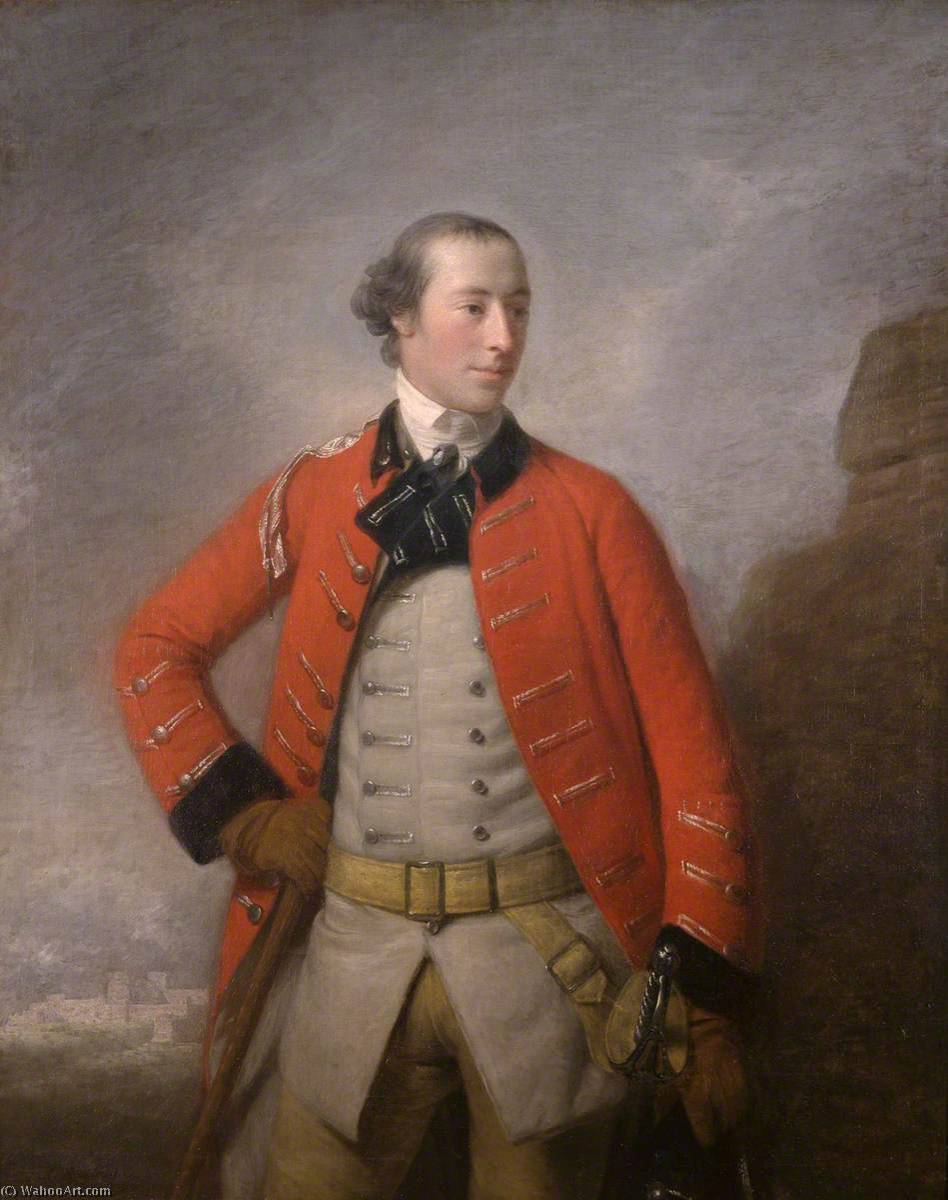
Captain Sir William Peer Williams, Bt, of the 16th Light Dragoons
 Acrylic On Canvas
- WallArt
- Rococo
 1759
1759 127.0 x 101.0 cm
 Galería Courtauld
 Ver más
Giclée / Impresión de arte
Impresiones giclée o en lienzo de calidad de museo con producción rápida y opciones de acabado flexibles. ( Comprar pintura hecha a mano Comprar imagen)




P118B $10

P118H $10

P118W $10

P438Z $10

P508JH $12

P508YH $12

P805H $10

P805Z $10

P919BZ $10

P919G $10

P919XJ $10

P959ZH $10

P968JZ $12

W106C $8

W218G $10

W218JH $8

W218Y $10

W307PJ $10

W316G $10

W316PJ $8

W316Y $10

W398PJ $8

W4111J $10

W500HY $15

W500JH $15

W692G $12

W849H $8

W940BG $15

W953PJ $8




Elija entre nuestros tamaños predefinidos que respetan las proporciones originales de la obra.

Puede introducir sus propias dimensiones para adaptarse a un marco o espacio específico. Si el tamaño seleccionado no coincide con las proporciones de la imagen original, recortaremos la obra de arte o extenderemos la imagen con un borde con efecto espejo o de color sólido. Se enviará una maqueta digital para su aprobación antes de que comience la producción.
Tenga en cuenta que la vista previa en pantalla no refleja el recorte o la extensión real. Solo la maqueta mostrará con precisión la composición final.
Aunque existen tamaños personalizados, recomendamos seleccionar una dimensión de la lista predefinida para preservar las proporciones originales.
Envío a todo el mundo () en 2 semanas en lugar de las 4/5 semanas estándar. (23 agosto)

Envío exprés gratuito a todo el mundo

Lienzo de lino de alta calidad

Seguro de envío total

Garantía de reembolso de impuestos aduaneros

Garantía de fidelidad cromática exacta

Política de devolución de 60 días (solo por defectos)

Garantía de devolución del 100% del dinero

Descuento por cantidad
 La opción de vidrio solo está disponible en tamaños inferiores a 110 cm.

Captain Sir William Peer Williams, Bt, of the 16th Light Dragoons
Giclée / Impresión de arte
Dimensiones de la reproducción
-


Precio total final
$ 62
Descripción de la pieza
Allan Ramsay: A Portrait of Power and Patronage Shaping Georgian Identity
Allan Ramsay (1713–1784) stands as a cornerstone of Scottish portraiture during the Georgian era, renowned for capturing not merely likeness but also embodying the spirit of his time. Born in Edinburgh amidst burgeoning Enlightenment ideals, Ramsay’s artistic trajectory was marked by meticulous training under Hans Hysing and subsequent immersion in the Roman Academy, fostering a profound understanding of classical aesthetics – specifically Rococo – which would permeate his oeuvre. His success hinged on securing commissions from influential patrons like George III, cementing his role as a pivotal figure in shaping Georgian cultural identity. Ramsay’s artistic journey took him to Rome and Naples between 1736 and 1738 where he studied under Francesco Solimena and Imperiali, absorbing the stylistic nuances of Italian masters. This exposure dramatically broadened his artistic horizons, equipping him with advanced techniques in chiaroscuro – dramatic contrasts of light and shadow – crucial for conveying depth and emotion within his portraits. He skillfully utilized pastel hues and delicate brushstrokes to achieve a luminous quality that reflected the elegance and refinement valued by aristocratic circles.- Key Works: Ramsay’s celebrated paintings include “Captain Sir William Peer Williams, Bt., of the 16th Light Dragoons,” depicting a commanding officer in military uniform, alongside portraits of prominent Scottish families like the Fergusons and Burnetts.
- Technique: His masterful use of pastel crayons – a relatively new medium at the time – allowed for unparalleled subtlety and tonal gradation, capturing nuanced expressions and conveying psychological complexity.
- Symbolism: Ramsay’s portraits often incorporated symbolic gestures and attire reflecting social status and moral virtue—a deliberate strategy to reinforce aristocratic ideals within Georgian society.
Captain Sir William Peer Williams, Bt., of the 16th Light Dragoons: A Study in Dignity and Military Prestige
This captivating portrait showcases Captain Sir William Peer Williams, Bt., a distinguished officer serving in the 16th Light Dragoons during the reign of George III. Executed in 1759 by Allan Ramsay, it exemplifies the artist’s signature Rococo style—characterized by graceful curves, delicate ornamentation, and an emphasis on luminous color palettes—reflecting the prevailing aesthetic sensibilities of the Georgian aristocracy. The painting captures Williams with unwavering confidence, positioned centrally within a richly textured interior setting that speaks to his elevated social standing. The composition skillfully utilizes chiaroscuro to sculpt Williams’ form, highlighting musculature and conveying strength while simultaneously softening features through subtle shading. Ramsay's meticulous attention to detail extends beyond the figure itself; he incorporates intricate drapery folds and meticulously rendered accessories—including a sword prominently displayed—to reinforce Williams’ military authority and aristocratic heritage. The muted reds and golds of the coat and sash contribute to an overall impression of regal splendor, mirroring the grandeur of George III’s court.- Historical Context: Painted during a period of significant political upheaval – marked by tensions between Britain and France – Ramsay's portrait serves as a visual embodiment of Georgian stability and aristocratic patronage.
- Emotional Impact: The painting evokes feelings of dignity, composure, and unwavering resolve—qualities deemed essential for leadership and upholding social decorum during the Georgian era.
Ramsay’s Pastel Technique: Illuminating Character Through Subtle Color Modulation
Allan Ramsay's mastery of pastel crayons distinguishes him as a pioneer in capturing nuanced emotion and texture within portraiture. Unlike oil paints, pastels offer unparalleled versatility—allowing artists to achieve breathtaking luminosity and tonal gradation with minimal pigment load. Ramsay skillfully exploited this medium’s capabilities to render Williams’ skin tones with remarkable subtlety, conveying warmth and vitality while subtly hinting at underlying psychological depth. The artist meticulously blended pastel hues – primarily reds, yellows, and blues – creating a harmonious interplay of color that enhanced the overall visual impact of the portrait. Furthermore, Ramsay employed delicate brushstrokes—often applied in thin layers—to build up texture and create atmospheric effects within the background drapery. This technique not only achieved remarkable realism but also imbued Williams’ image with an aura of elegance and refinement—a hallmark of Ramsay's artistic vision.Legacy and Enduring Influence: Ramsay’s Contribution to Georgian Art History
Allan Ramsay’s legacy extends far beyond his individual masterpieces; he established the Edinburgh School of Painting, fostering a generation of artists who embraced his stylistic principles and championed the Rococo aesthetic. His influence continues to resonate in contemporary reproductions and interpretations—demonstrating that Ramsay's contribution to British art history remains profoundly relevant today. The enduring fascination with his work stems from its ability to transport viewers back to a period defined by intellectual curiosity, artistic innovation, and aristocratic grandeur—a testament to Ramsay’s unparalleled skill as a portraitist and cultural historian.Obras relacionadas
Biografía del artista
Allan Ramsay: Una Vida de Elegancia y Arte
Primeros Años y Formación
Nacido en Edimburgo, Escocia el 13 de octubre de 1713, Allan Ramsay emergió como un destacado pintor retratista escocés cuya obra capturaba la elegancia y la refinada del arte de su época. Su viaje artístico comenzó a los veinte años cuando viajó a Londres para estudiar bajo la tutela del pintor sueco Hans Hysing, seguido de instrucción en la Academia de St. Martin's Lane. Esta formación inicial le proporcionó una base sólida en técnica y composición.
Influencias Italianas y Desarrollo Artístico
El desarrollo artístico de Ramsay tomó un giro significativo con sus viajes a Roma y Nápoles, donde pasó tres años (1736-1738) trabajando bajo la tutela de Francesco Solimena y Imperiali (Francesco Fernandi). Estos maestros italianos influyeron profundamente en su estilo, fomentando una mayor comprensión de los principios clásicos y mejorando sus habilidades para capturar la semejanza y el carácter. Absorbió la estética rococó predominante mientras también desarrolló una apreciación por los ideales neoclásicos.
Una Carrera Floreciente y Obras Notables
Al regresar a Gran Bretaña en 1738, Ramsay rápidamente estableció una exitosa carrera como retratista. Su capacidad para representar a sus sujetos con precisión y gracia pronto le valió una distinguida clientela. Algunas de sus obras más notables incluyen:
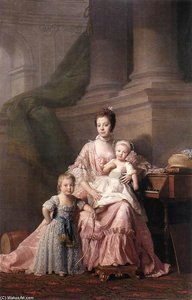
- La Reina Carlota (1744-1818) con sus dos hijos mayores (Colección Real, Londres): Una representación regia que muestra la presencia maternal de la Reina.
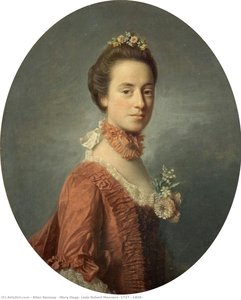
- Mary Degg, Lady Robert Manners (Galería Nacional de Escocia, Edimburgo): Un retrato elegante que demuestra la habilidad de Ramsay para capturar la belleza aristocrática.
- Retrato de cabeza de Duncan Forbes of Culloden: Esta obra temprana llamó la atención del Duque de Argyll y más tarde se incluyó en las notas bancarias del Banco Nacional de Escocia.
Nombramiento Real y Apogeo
Un momento crucial en la carrera de Ramsay llegó en 1761 con su nombramiento como Principal Pintor Ordinario de George III. Esta prestigiosa posición consolidó su estatus entre los élites artísticas y aseguró un flujo constante de encargos de la familia real y la alta sociedad. Se convirtió en *el* retratista de la era georgiana.
Vida Tardía y Legado
La vida tardía de Ramsay vio una transición hacia los intereses literarios, reflejando sus amplios intereses intelectuales. Sin embargo, tragedias personales – una dislocación accidental de su brazo derecho y el fallecimiento de su segunda esposa en 1782 – impactaron su salud y productividad. Murió en 1784.
A pesar de estos desafíos, Ramsay dejó un legado perdurable como uno de los pintores retratistas más celebrados de Escocia. Como Samuel Johnson señaló, “Me encanta Ramsay. No encontrarás a ningún hombre cuya conversación sea tan instructiva, llena de información y elegancia como la de Ramsay”. Sus obras continúan siendo admiradas por su habilidad técnica, estética refinada e insights sobre la sociedad del siglo XVIII.
Significado Histórico
La contribución de Allan Ramsay se extiende más allá de su talento artístico. Jugó un papel crucial en la configuración de la cultura visual de Escocia durante un período de importantes cambios sociales y políticos. Sus retratos proporcionan valiosos conocimientos sobre las vidas, la moda y los valores de la nobleza y la gentry escoceses. Sus obras se pueden encontrar en lugares como el ayuntamiento de Ayr y la Galería Nacional de Retratos de Escocia.
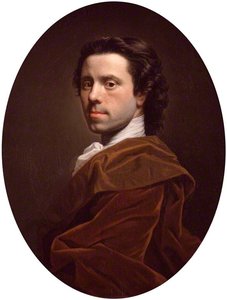
allen ramsay
1713 - 1784 , United Kingdom
Datos clave
- Artistic Movement Or Style: Rococó y Neoclásico
- Artists Or Movements Influenced By This Artist: ['Samuel Johnson']
- Artists Who Influenced This Artist:
- Hans Hysing
- Francesco Solimena
- Date Of Birth: 1713-10-13
- Full Name: Allan Ramsay
- Nationality: Escocés
- Notable Artworks:
- La Reina Carlota con sus dos hijos mayores
- Mary Degg, Lady Robert Manners
- Retrato de cabeza de Duncan Forbes
- Place Of Birth: Edimburgo, Reino Unido
Artículos relacionados
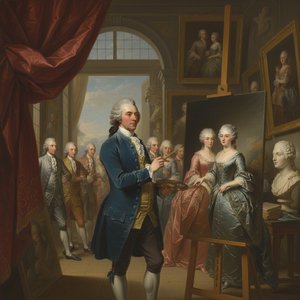
Allen Ramsay: Portraiture, Patronage & Shaping Georgian Identity
Explore the life & work of Allen Ramsay, pivotal portraitist to George III. Discover his Rococo style, influence on Georgian society, and lasting legacy in British art history. Learn about his key works & patronage.

Rococó: 10 Obras Maestras que Definieron una Época | Arte y Decoración en
Descubre las 10 obras maestras del Rococó que marcaron una época. Explora la elegancia de Fragonard, Boucher y Watteau en . Reproducciones de arte de calidad museo para decorar tu hogar con estilo.

La Estética Rococó: Opulencia, Rebelión y Placer en el Arte del Siglo XVIII
Descubre la fascinante estética rococó: su historia, características clave y los artistas más influyentes del siglo XVIII. Un análisis profundo para amantes del arte y coleccionistas.
George Paul Chalmers: Rediscovering the Angus Rembrandt & Scottish Colourist Roots
Explore the captivating world of George Paul Chalmers (1833-1878), a pivotal Scottish painter. Discover his landscapes, portraits & connection to the Aesthetic Movement and Colourists. Learn about this 'Angus Rembrandt's' legacy with ArtsDot.
Alexander Nasmyth: Picturing Scotland's Romantic Landscape – Innovation & Identity
Explore the life & art of Alexander Nasmyth, a pivotal figure in Scottish Romantic landscape painting. Discover his iconic works, including portraits of Robert Burns, and learn about his lasting influence on national identity. Fine art reproductions available.