

 Ver en contexto
 Enviar
 Compartir
 Detalles

 Descargar
 Similares
 Radiografía
 Presentación de diapositivas
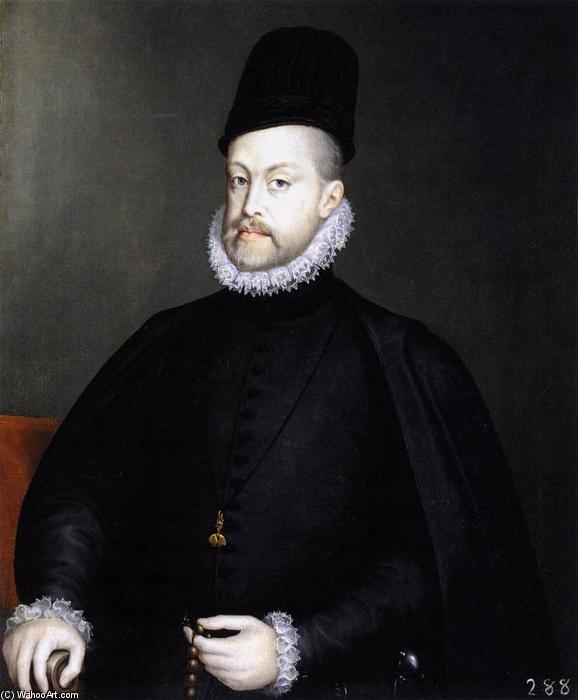
Philip II Holding a Rosary
 Oil On Canvas
- WallArt
- Renaissance
 1573
1573 88.0 x 72.0 cm
 Museo del Prado
 Ver más
Adquiera una imagen digital de alta resolución y optimizada, muy superior a la vista previa en línea.
Cada archivo es preparado meticulosamente por nuestros especialistas internos mediante el uso de herramientas avanzadas y un experto retoque manual. Nos aseguramos de que cada imagen posea una claridad excepcional, una precisión cromática impecable y un detalle minucioso.
El archivo final se entrega por correo electrónico en un plazo de 72 horas, optimizado para su uso inmediato en entornos profesionales, editoriales y de impresión. Esta es la misma calidad en la que confían los estudios de diseño, las editoriales y las galerías de primer nivel.
Imagen Digital
Descarga un archivo de alta resolución para exhibición personal, impresión y proyectos creativos. ( Comprar impresión Comprar pintura hecha a mano)
Incluido en cada pedido de imágenes digitales
Entrega digital experta, garantizada.
Al elegir ArtsDot.com, no solo está adquiriendo una imagen; está recibiendo una obra de arte digital mejorada profesionalmente, elaborada con precisión y respaldada por una garantía de satisfacción. Esto es todo lo que incluye su pedido, automáticamente:

Entrega rápida por email
Recibirá su archivo de imagen digital en alta resolución por correo electrónico en un plazo de 72 horas tras realizar su pedido, listo para su uso inmediato.

Archivo digital optimizado por IA
Su obra de arte se optimiza profesionalmente mediante herramientas avanzadas de IA y edición manual, garantizando el máximo detalle, claridad y precisión cromática.

Reenvío gratuito de por vida
¿Has borrado o perdido tu archivo por error? No te preocupes: te lo volveremos a enviar en cualquier momento, sin coste adicional.

Sin gastos de importación, siempre
Disfrute de su obra de arte al instante sin aduanas, aranceles ni gastos de envío; las descargas digitales siempre están libres de impuestos.

Garantía de fidelidad de color
Garantizamos que su imagen digital refleje los colores originales con la mayor fidelidad posible, mediante el uso de herramientas profesionales y gestión del color.

Garantía de satisfacción de 60 días
Si no está satisfecho con su imagen digital, la revisaremos o le reembolsaremos el 100% en un plazo de 60 días, sin preguntas.

100% Garantía de devolución de dinero
¿No está satisfecho? Obtenga un reembolso completo dentro de los 60 días posteriores a la recepción de su archivo digital, sin necesidad de explicaciones.

Descuentos por pedidos grandes
Compra 3 imágenes, ahorra 10% - Compra 5, ahorra 15% - Compra 10+, ahorra 20%. Ideal para proyectos creativos, galerías y agencias.
Descripción del coleccionable
The Majesty of Authority: Alonso Sánchez Coello’s ‘Philip II Holding a Rosary’
Alonso Sánchez Coello's “Philip II Holding a Rosary,” painted in 1573, is more than just a portrait; it’s a meticulously crafted embodiment of royal power and deeply rooted religious devotion within the turbulent landscape of late 16th-century Spain. The painting immediately commands attention with its dramatic lighting – a stark chiaroscuro emanating from the upper left corner that sculpts Philip II's face, highlighting his prominent nose, thoughtful gaze, and the weighty folds of his velvet doublet. This masterful use of light isn’t merely aesthetic; it serves to elevate the king, casting him in a position of solemn authority against a subtly rendered, almost impenetrable background.
Coello, working within the established traditions of Flemish objectivity and Venetian sensuality – a synthesis he uniquely embodied – has created an image that is both strikingly realistic and imbued with symbolic weight. The subject’s attire—the rich black velvet, the lace cuffs, the elaborate brooch— speaks volumes about his status as ruler of a vast empire, reflecting the opulence and grandeur associated with the Spanish court. Yet, it's the central element – the rosary held in his hand – that anchors the portrait to a profound spiritual dimension. This isn’t simply an accessory; it represents Philip II’s commitment to Catholicism, a cornerstone of his reign and a vital tool for maintaining control over both his subjects and the Church itself.
A Masterclass in Renaissance Technique
The painting's execution reveals Coello’s exceptional skill as a painter. He employs a meticulous approach, utilizing layered brushstrokes to build texture and depth – particularly evident in the fabric of the doublet and the intricate details of the beard. The use of oil paints allows for subtle gradations of color and a remarkable level of realism, capturing not just the likeness of Philip II but also his personality—a sense of quiet contemplation and regal bearing. The sharp lines defining the face and clothing are balanced by softer transitions in the drapery, creating a harmonious blend of precision and fluidity. The composition is carefully balanced, with the figure occupying the central vertical axis, reinforcing his dominance within the frame.
- Medium: Oil on Canvas
- Size: 88 x 72 cm
- Date: 1573
Historical Context and Royal Symbolism
To fully appreciate “Philip II Holding a Rosary,” it’s crucial to understand the historical context in which it was created. Spain under Philip II was at the height of its imperial power, yet also grappling with internal challenges – religious conflict, economic instability, and the looming threat of external enemies. The king's unwavering commitment to Catholicism served as both a unifying force and a justification for his expansive empire. The rosary itself became a potent symbol of this faith, representing Philip II’s piety and his role as protector of the Catholic Church.
Furthermore, the portrait reflects the prevailing artistic trends of the Renaissance – a renewed interest in classical ideals combined with a fascination with humanism and realism. Coello's work exemplifies this synthesis, creating an image that is both aesthetically pleasing and intellectually stimulating. The inclusion of details like the Golden Fleece emblem on his hat further reinforces his status as a powerful ruler, linking him to the legacy of past monarchs and the grandeur of the Spanish Empire.
A Timeless Portrait of Power and Faith
“Philip II Holding a Rosary” is more than just a historical document; it’s a compelling work of art that continues to resonate with viewers today. The painting's dramatic composition, masterful technique, and profound symbolism combine to create an image of enduring power and beauty. It offers a glimpse into the mind of one of Spain’s most influential monarchs and provides a poignant reflection on the intersection of faith, authority, and artistic expression. Reproductions of this iconic portrait remain highly sought after by collectors and interior designers alike, offering a chance to bring a touch of Renaissance majesty into any space.
Obras relacionadas
Biografía del artista
Primeros Años y Formación
- Nacido: Benifaió, España (1531)
- Pasó su infancia cerca de Valencia hasta la muerte de su padre.
- Alrededor de 1541/42, se mudó a Portugal para vivir con su abuelo, un noble al servicio de los monarcas portugueses.
- Estudió con Anthonis Mor (Antonio Moro) en Flandes alrededor de 1550.
- Recibió el patrocinio de Antoine de Granville, Obispo de Arras, también patrono de Mor.
Carrera en la Corte Española
- Trabajó para la familia real portuguesa y más tarde para la corte de João Manuel, Príncipe de Portugal.
- Se trasladó a la corte española de Felipe II en 1555, recomendado por Juana, hermana de Felipe II.
- Se convirtió en Pintor de Cámara en 1560.
- Se casó con Luisa Reyaltes, hija de un silversmith, alrededor de 1560/61.
- Su hija, Isabel Sánchez, también se convirtió en pintora y asistió en su taller.
- Se mudó con la corte a Toledo y se estableció en Madrid en 1561.
Estilo Artístico e Influencias
- Estilo: Combinó la objetividad flamenca con la sensualidad veneciana.
- Influencias: Principalmente influenciado por Anthonis Mor y Tiziano.
- Aprendió precisión de Mor.
- Incorporó tonos dorados venecianos, generosa factura y el uso de la luz de Tiziano.
- Conocido por retratos marcados por facilidad de pose, dignidad, sobriedad y calidez del color.
Obras Principales y Logros
- Produjo tanto retratos como pinturas religiosas.
- Las obras religiosas eran convencionales pero demuestran un estilo austero.
- Retratos notables:
- Felipe II sosteniendo un Rosario (1573)
- Retratos de la Infanta Isabel Clara Eugenia (1571)
- Serie de pinturas que representan a los hijos de Felipe II.
- Doble retrato de las infantas Isabella Clara Eugenia y Catalina Micaela (1568–9).
- Pintó obras religiosas para El Escorial.
- Produjo una vista topográfica del puerto de Sevilla.
Legado y Significado Histórico
- Su reputación como retratista se ha complicado por numerosas copias e imitaciones.
- Considerado una figura significativa en el arte renacentista español, particularmente por sus retratos cortesanos.
- Su obra influyó a artistas posteriores, incluyendo Velázquez, con respecto a la representación de texturas como armaduras y drapeados.
- Falleció en Madrid el 8 de agosto de 1588.
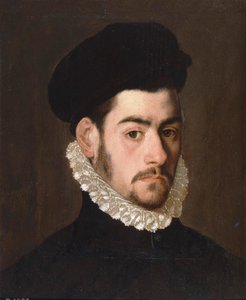
Alonso Sánchez Coello
1531 - 1588 , España
Breves datos
- Artistas Influenciados: ['Velázquez']
- Artistas Que Influyeron:
- Anthonis Mor
- Tiziano
- Fecha De Muerte: 1588
- Fecha De Nacimiento: c. 1531
- Lugar De Nacimiento: Benifaió, España
- Movimiento Artístico: Renacimiento español
- Nacionalidad: Iberia
- Nombre Completo: Alonso Sánchez Coello
- Obras Notables:
- Felipe II con rosario
- Retrato de Isabel Clara Eugenia
- Hijas de Felipe II
- La dama del abanico

