 Ver en contexto
 Enviar
 Compartir
 Detalles

 Descargar
 Similares
 Radiografía
 Presentación de diapositivas
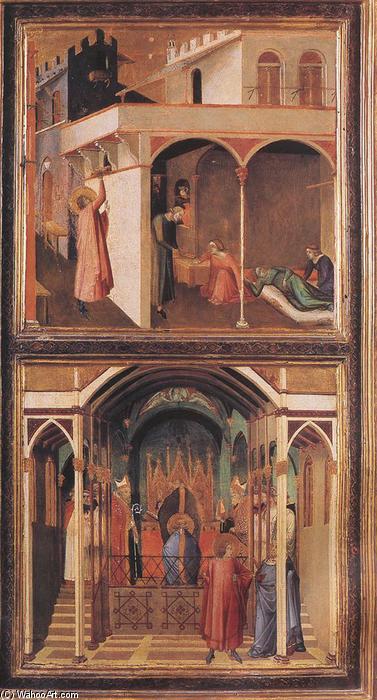
Scenes of the Life of St Nicholas
 Acrylic On Canvas
- WallArt
- International Gothic
 1332
1332 92.0 x 49.0 cm
 Galería de los Uffizi
 Ver más
Reproducción al óleo hecha a mano
Óleo sobre lienzo pintado a mano en el tamaño y marco de su elección, realizado por encargo por nuestros artistas. ( Comprar impresión Comprar imagen)




P118B $10

P118H $10

P118W $10

P438Z $10

P508JH $12

P508YH $12

P805H $10

P805Z $10

P919BZ $10

P919G $10

P919XJ $10

P959ZH $10

P968JZ $12

W106C $8

W218G $10

W218JH $8

W218Y $10

W307PJ $10

W316G $10

W316PJ $8

W316Y $10

W398PJ $8

W4111J $10

W500HY $15

W500JH $15

W692G $12

W849H $8

W940BG $15

W953PJ $8




Elija entre nuestros tamaños predefinidos que respetan las proporciones originales de la obra.

Puede ingresar sus propias dimensiones para adaptarse a un marco o espacio específico. Si el tamaño seleccionado no coincide con las proporciones de la imagen original, recortaremos la obra o extenderemos la pintura con elementos adicionales pintados a mano. Se le enviará una maqueta digital para su aprobación antes de comenzar la producción.
Tenga en cuenta que la vista previa en pantalla no refleja el recorte o la extensión reales. Solo la maqueta mostrará con precisión la composición final.
Si bien existen tamaños personalizados, recomendamos seleccionar una dimensión de la lista predefinida para preservar las proporciones originales.
Tras realizar el pedido, el equipo de ArtsDot.com enviará un correo electrónico al cliente para solicitar instrucciones y proporcionarle una vista previa del boceto.
Envío a todo el mundo () en 3-4 semanas en lugar de las 5 semanas estándar. (27 agosto). Sin comprometer la calidad.

Envío exprés gratuito a todo el mundo

Lienzo de lino de alta calidad

Seguro de envío total

Garantía de reembolso de impuestos aduaneros

Garantía de fidelidad cromática exacta

Política de devolución de 60 días (solo por defectos)

Garantía de devolución del 100% del dinero

Descuento por cantidad
 La opción de vidrio solo está disponible en tamaños inferiores a 110 cm.

Scenes of the Life of St Nicholas
Técnica de reproducción
Dimensiones de la reproducción
-


Precio total final
$ 263
Descripción de la obra
A Window into Medieval Faith: Exploring Ambrogio Lorenzetti’s “Scenes of the Life of St Nicholas”
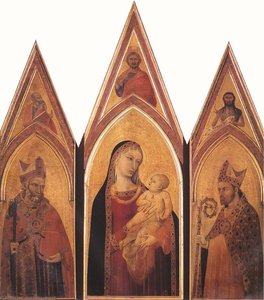
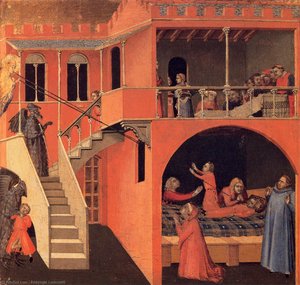
Ambrogio Lorenzetti's "Scenes of the Life of St. Nicholas," painted in 1332, offers a remarkably intimate glimpse into the religious and social fabric of 14th-century Siena. More than just a depiction of biblical events, this work is a vibrant tableau of daily life interwoven with profound spiritual significance—a testament to the artist’s skill and his engagement with the evolving artistic landscape of Italy. Measuring a modest 92 x 49 cm, the painting transcends its size through the sheer depth of narrative it conveys, inviting viewers into a world where piety and community are inextricably linked.
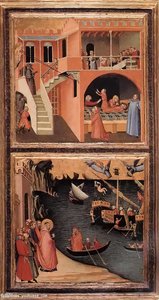
Lorenzetti's style, firmly rooted in the Sienese school yet subtly anticipating the Renaissance, is immediately striking. The tempera on wood panel technique lends a luminous quality to the colors, while the meticulous detail evident in the figures’ clothing, expressions, and architectural settings speaks to a dedication rarely seen in earlier medieval art. The composition itself is divided into two distinct registers: an upper scene of domesticity and a lower one portraying a public gathering centered around St. Nicholas himself. This duality immediately establishes a dialogue between the private sphere of faith and the communal expression of belief, reflecting the core values of the time.
The Domestic Tapestry: Rituals and Relationships
The upper section of the painting unfolds as a carefully observed domestic scene. Two women stand in conversation, one holding a child – a potent symbol of nurture and continuity within the Christian narrative. The other woman’s gaze upward suggests contemplation or perhaps an acknowledgement of a higher power. A man seated at a table, likely engaged in scholarly pursuits, is accompanied by another figure, possibly a scribe or assistant, further emphasizing the importance of learning and religious discourse. The arches and columns framing this scene aren't merely architectural elements; they create a sense of contained reverence, suggesting an interior space within a church or monastery – a place dedicated to both earthly concerns and spiritual reflection.
Lorenzetti masterfully employs color and light to establish depth and atmosphere. The muted tones of the clothing and furnishings contrast subtly with the brighter hues used for the figures themselves, drawing attention to their actions and emotions. The perspective, though not entirely rigorous by Renaissance standards, effectively conveys a sense of space and scale, anchoring the scene within a believable environment. This careful attention to detail—from the folds in the drapery to the expressions on the faces—transforms a simple depiction of daily life into a compelling narrative.
The Heart of Devotion: St. Nicholas’s Ministry
The lower section of the painting shifts focus, presenting a public scene centered around St. Nicholas. A figure identified as St. Nicholas himself is seated on a bench, surrounded by individuals who appear to be listening intently or receiving blessings. The architecture here mirrors that of the upper section, reinforcing the idea of a shared space dedicated to religious observance. This gathering isn’t merely a spectacle; it represents an active engagement with faith—a community seeking guidance and support from their patron saint.
The presence of St. Nicholas, a figure already gaining prominence in popular piety during this period, underscores the painting's significance within its historical context. He embodies generosity, compassion, and divine grace – qualities highly valued by the medieval populace. The scene suggests a moment of communal reflection, where individuals seek solace and inspiration from the saint’s example. It is a powerful reminder of the vital role that religious figures played in shaping social values and fostering a sense of community.
A Legacy of Vision: Lorenzetti's Place in Art History
“Scenes of the Life of St. Nicholas” stands as a remarkable achievement, bridging the gap between medieval artistic traditions and the burgeoning Renaissance. Ambrogio Lorenzetti’s innovative use of perspective, his nuanced portrayal of human emotion, and his ability to seamlessly integrate religious narrative with everyday life demonstrate a profound understanding of both art and society. The painting offers a valuable window into the spiritual and social world of 14th-century Siena, reminding us of the enduring power of art to illuminate our past and connect us to the values that have shaped human civilization. Reproductions of this work offer an exceptional opportunity to bring this captivating scene into any space, fostering contemplation and appreciation for a pivotal moment in artistic history.
Obras relacionadas
Biografía del artista
Vida y Orígenes
- Nombre: Ambrogio Lorenzetti
- Nacido: Siena, Italia (c. 1290)
- Fallecido: 1348 (probablemente por la peste bubónica)
- Familia: Hermano del también pintor Pietro Lorenzetti.
- Formación Temprana: Los detalles son escasos, pero probablemente recibió formación dentro de la tradición artística sienesa.
Estilo Artístico e Influencias
- Escuela Sienesa: Lorenzetti fue una figura destacada en la escuela sienesa de pintura, conocida por su elegancia y estilo decorativo.
- Influencia Bizantina: Las primeras obras muestran influencia del arte italo-bizantino, caracterizado por la frontalidad y las figuras estilizadas.
- Influencias Clásicas: Demostró interés en la antigüedad clásica, evidente en sus estudios de escultura e incorporación de motivos clásicos.
- Naturalismo: Un desarrollo clave en el estilo de Lorenzetti fue un movimiento hacia el naturalismo, representando figuras y escenas con mayor realismo que las generaciones anteriores. Esto contrastaba con el enfoque más estilizado del arte sienés anterior.
- Simone Martini: Influenciado por Simone Martini, otra figura destacada en la escuela sienesa.
- Giotto: Algunos estudiosos sugieren una conexión con las innovaciones de Giotto en naturalismo y representación espacial.
Obras Principales y Logros
- Madonna y Niño (1319): Una obra temprana que demuestra influencia bizantina pero también insinúa su estilo naturalista en desarrollo.
- Frescos en el Palazzo Pubblico, Siena: Su logro más significativo es el ciclo de frescos en la Sala dei Nove (Sala de los Nueve) que representa La Alegoría del Buen y Mal Gobierno y escenas que ilustran los efectos del buen y mal gobierno sobre la ciudad y el campo.
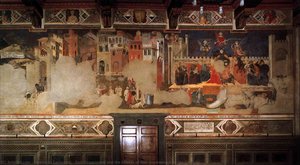
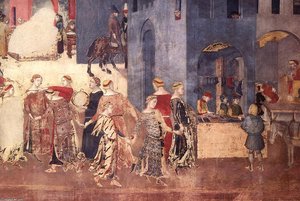
- Efectos del Buen Gobierno sobre la Ciudad y el Campo: Una notable representación panorámica de una sociedad medieval próspera, considerada una enciclopedia de la vida cotidiana.
- Alegoría del Mal Gobierno y sus Efectos sobre la Ciudad y el Campo: Un marcado contraste con el fresco "buen gobierno", que ilustra las consecuencias de la corrupción y el mal gobierno. Destaca por presentar una de las primeras representaciones de un reloj de arena.
- Investidura de San Luis de Tolosa (1329): Un fresco que demuestra su habilidad en desarrollo para representar la perspectiva y figuras realistas.
- Maestà (c. 1335): Una pieza de retablo que muestra una interacción más dinámica entre la Virgen María y el Niño, reflejando una expresividad emocional en evolución.
Desarrollo e Innovación
- Perspectiva: Lorenzetti experimentó con la perspectiva, aunque no en una forma completamente desarrollada, sus intentos contribuyeron al desarrollo de la representación espacial en la pintura.
- Fisiognomía: Mostró interés en la fisiognomía (el estudio de las características faciales para determinar el carácter), agregando profundidad psicológica a sus figuras.
- Temas Seculares: Sus frescos en el Palazzo Pubblico marcaron un cambio significativo hacia temas seculares en el arte, reflejando la creciente importancia de la vida cívica y el gobierno.
- Individualismo: El trabajo de Lorenzetti demostró un grado de individualismo artístico inusual para su época, ya que persiguió su propia visión en lugar de adherirse estrictamente a las demandas del patrocinio.
Significado Histórico
- Precursor del Renacimiento: Las innovaciones de Lorenzetti en naturalismo, perspectiva y temas seculares allanaron el camino para el Renacimiento italiano.
- Influencia en Artistas Posteriores: Su trabajo influyó en generaciones posteriores de pintores sieneses y florentinos.
- Documentando la Vida Medieval: Los frescos en el Palazzo Pubblico proporcionan valiosas perspectivas sobre la sociedad, la economía y el gobierno medievales.
- Visión Artística Única: La capacidad de Lorenzetti para combinar tradiciones bizantinas con tendencias naturalistas emergentes creó un legado artístico único y perdurable.
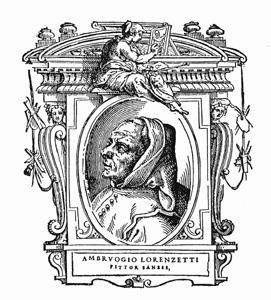
Ambrogio Lorenzetti
1290 - 1348 , Italia
Datos clave
- Artistas Influenciados:
- Artistas Sieneses
- Pintores Florentinos
- Artistas Que Influyeron:
- Simone Martini
- Arte Bizantino
- Giotto
- Fecha De Muerte: 1348
- Fecha De Nacimiento: c. 1290
- Lugar De Nacimiento: Siena, Italia
- Movimiento Artístico: Escuela Sienesa, Renacimiento
- Nacionalidad: Italiana
- Nombre Completo: Ambrogio Lorenzetti
- Obras Notables:
- Madonna y Niño (1319)
- Buen Gobierno
- Mal Gobierno
- Investidura de San Luis
Artículos relacionados

Legado en las Paredes: Frescos Familiares que Trascienden el Tiempo
Descubre el arte del fresco muralístico para inmortalizar tu historia familiar. Expertos en frescos personalizados y técnicas ancestrales. Crea un legado visual único con .

The Enduring Legacy of Fresco Painting: Techniques, History & Contemporary Relevance
Explore the rich history & enduring artistry of fresco painting – from Giotto to Michelangelo! Discover techniques, conservation efforts, & modern applications. Learn how ArtsDot brings this timeless art form to your home.

The Enduring Legacy of Fresco: Technique, History & Artistic Expression Across Cultures
Explore the rich history & enduring legacy of fresco painting! Discover ancient techniques, Giotto's masterpieces, and modern applications. Expert insights for art lovers & professionals.

¿El Arte que Habita Contigo: El Poder Emocional de un Fresco Interior Personalizado?
Descubre el poder emocional de un fresco interior personalizado. Expertos en arte te guían para crear una obra única que refleje tu estilo y valore tu hogar. : calidad, confianza y diseño excepcional.
El Fresco a Través de los Siglos: Técnica, Historia y Expresión Artística Duradera
Descubre la historia y técnica del fresco, desde sus orígenes en la antigüedad hasta los maestros renacentistas. Guía completa sobre conservación, restauración y el legado artístico de este arte milenario.