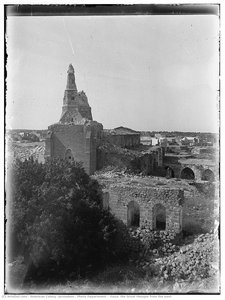
![[gaza, The Great Mosque From The East] — American Colony (jerusalem). Photo Department](/media/artworks/images-full/b5/c0/b5c0bf54fb0d68878cee6e8358377234.jpg)
 Ver en contexto
 Enviar
 Compartir
 Detalles

 Descargar
 Similares
 Radiografía
 Presentación de diapositivas
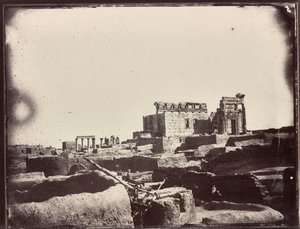
[Gaza, the Great Mosque from the east]


 Ver más
Giclée / Impresión de arte
Impresiones giclée o en lienzo de calidad de museo con producción rápida y opciones de acabado flexibles. ( Comprar pintura hecha a mano Comprar imagen)




































Elija entre nuestros tamaños predefinidos que respetan las proporciones originales de la obra.

Puede introducir sus propias dimensiones para adaptarse a un marco o espacio específico. Si el tamaño seleccionado no coincide con las proporciones de la imagen original, recortaremos la obra de arte o extenderemos la imagen con un borde con efecto espejo o de color sólido. Se enviará una maqueta digital para su aprobación antes de que comience la producción.
Tenga en cuenta que la vista previa en pantalla no refleja el recorte o la extensión real. Solo la maqueta mostrará con precisión la composición final.
Aunque existen tamaños personalizados, recomendamos seleccionar una dimensión de la lista predefinida para preservar las proporciones originales.
Envío a todo el mundo () en 2 semanas en lugar de las 4/5 semanas estándar. (4 septiembre)

Envío exprés gratuito a todo el mundo

Lienzo de lino de alta calidad

Seguro de envío total

Garantía de reembolso de impuestos aduaneros

Garantía de fidelidad cromática exacta

Política de devolución de 60 días (solo por defectos)

Garantía de devolución del 100% del dinero

Descuento por cantidad
 La opción de vidrio solo está disponible en tamaños inferiores a 110 cm.

[Gaza, the Great Mosque from the east]
Giclée / Impresión de arte
Dimensiones de la reproducción
-


Precio total final
$ 62
Obras relacionadas






Biografía del artista
The American Colony: Documenting a Vanishing World
The story of the American Colony (Jerusalem) Photo Department is unlike that of most artistic collectives. It wasn’t born from shared aesthetic principles or formal training, but rather from a unique social experiment – and a profound sense of place. Founded in 1882 by a group of Americans seeking a utopian community based on biblical principles in Palestine, the Colony quickly became an enclave set apart from the rapidly changing political and cultural landscape of Jerusalem. While initially focused on agricultural pursuits and religious study, it was the advent of photography that would secure their lasting legacy, transforming them into chroniclers of a world on the cusp of irrevocable change.
The late 19th and early 20th centuries witnessed an explosion in photographic technology, and the Colony embraced it with fervor. Initially self-taught, members like John D. Whiting, Khalil Raad, and later Eric Matthiesen honed their skills, establishing a photo department that wasn’t merely about capturing images but about meticulously documenting life in Jerusalem and the surrounding regions. Their subjects weren't grand historical events or posed portraits of dignitaries; instead, they focused on the everyday – bustling marketplaces, religious processions, nomadic Bedouin tribes, the architectural splendor of ancient sites, and the faces of ordinary people from all walks of life. This dedication to portraying a comprehensive view of society, free from overt political agenda, is what sets their work apart.
A Style Rooted in Observation
The American Colony photographers didn’t strive for artistic embellishment or dramatic effect. Their aesthetic was one of precise observation, characterized by sharp focus, balanced compositions, and a commitment to natural light. They favored large-format cameras and painstakingly detailed printing processes, resulting in images that possess an almost palpable sense of realism. This wasn’t about creating art *about* the Middle East; it was about creating a visual record *of* it. Their photographs offer a rare glimpse into a time before mass tourism and modernization irrevocably altered the region's character.
The influence of early ethnographic photography is evident in their work, but they moved beyond simple documentation to capture a sense of humanity. Portraits are often remarkably intimate, revealing not just physical likenesses but also hints of personality and dignity. Their landscapes aren’t merely scenic views; they convey the harsh beauty and timeless quality of the land. The Colony photographers were keen observers of cultural practices, documenting festivals, rituals, and traditional crafts with respect and sensitivity.
Beyond Documentation: Archival Significance
The American Colony Photo Department's output wasn’t initially intended for widespread artistic recognition. Their photographs served a variety of practical purposes – illustrating books and articles about the Holy Land, providing images for postcards and souvenirs, and documenting the Colony’s own activities. However, over time, their archive grew into an invaluable historical resource.
- A Visual Time Capsule: The collection provides a unique visual record of Jerusalem and Palestine during a period of significant political and social upheaval, offering insights that written accounts often lack.
- Cultural Preservation: Their photographs documented traditions and ways of life that have since disappeared, preserving them for future generations.
- Architectural Record: The detailed images of historical sites serve as important records of architectural features and urban landscapes before modernization.
A Lasting Impression
Though the original American Colony community eventually dissolved, its Photo Department’s legacy endures. Their photographs continue to be studied by historians, art scholars, and anyone seeking a deeper understanding of the Middle East's rich cultural heritage. The work stands as a testament to the power of photography not just as an artistic medium but as a tool for preserving memory, fostering empathy, and documenting the human experience. Today, their images offer a poignant reminder of a world that is forever lost – and a powerful call to appreciate the beauty and fragility of cultural diversity.