 Vista previa
 Compartir
 Compartir
 Ver detalles

 Descargar
 Ver similares
 Radiografía
 Presentación de diapositivas
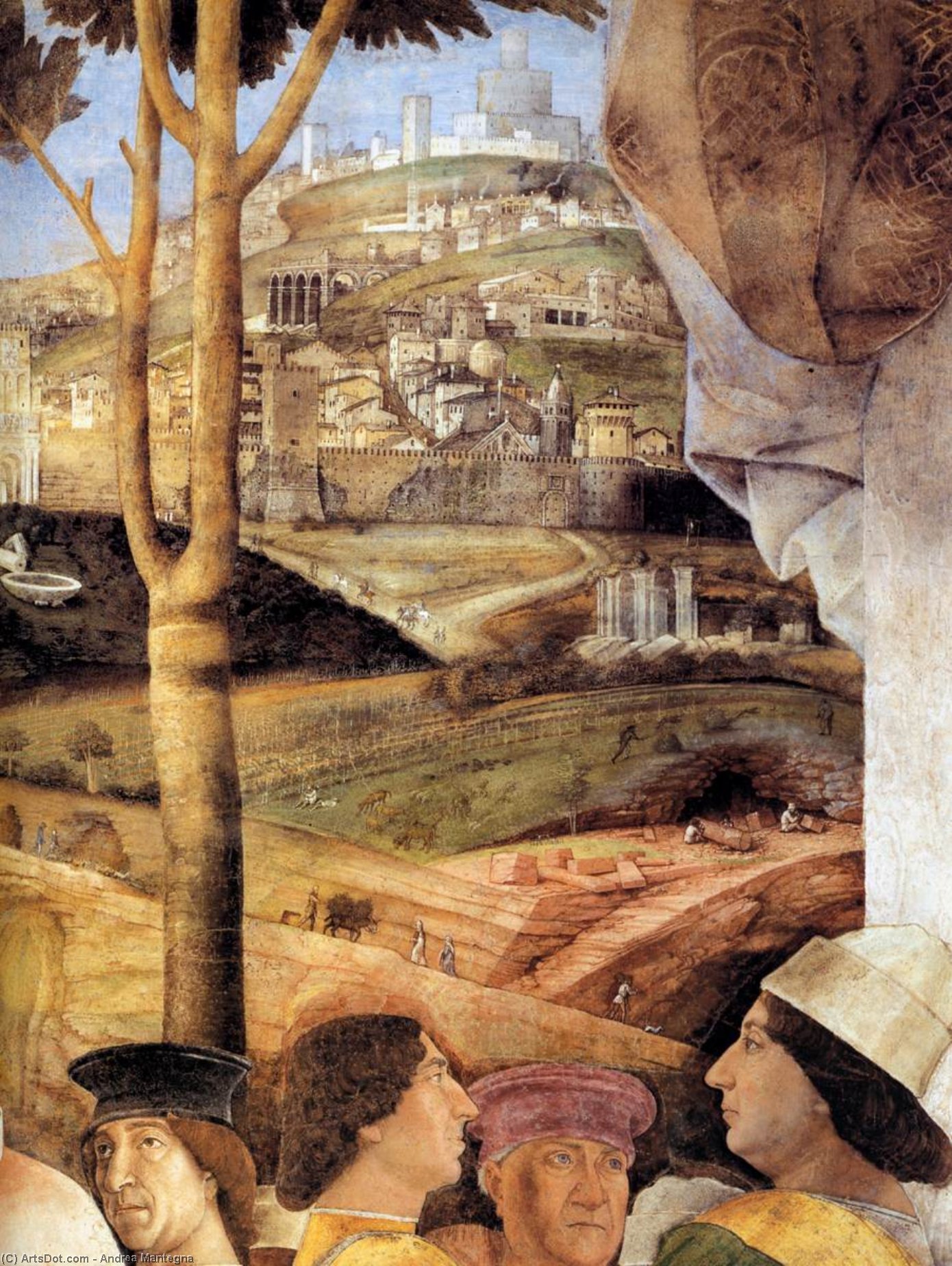
El encuentro (detalle)


 Leer más
Giclée / Impresión de arte
Impresiones giclée o en lienzo de calidad de museo con producción rápida y opciones de acabado flexibles. ( Encargar reproducción pintada a mano Comprar descarga)




P118B $10

P118H $10

P118W $10

P438Z $10

P508JH $12

P508YH $12

P805H $10

P805Z $10

P919BZ $10

P919G $10

P919XJ $10

P959ZH $10

P968JZ $12

W106C $8

W218G $10

W218JH $8

W218Y $10

W307PJ $10

W316G $10

W316PJ $8

W316Y $10

W398PJ $8

W4111J $10

W500HY $15

W500JH $15

W692G $12

W849H $8

W940BG $15

W953PJ $8




Elija entre nuestros tamaños predefinidos que respetan las proporciones originales de la obra.

Puede introducir sus propias dimensiones para adaptarse a un marco o espacio específico. Si el tamaño seleccionado no coincide con las proporciones de la imagen original, recortaremos la obra de arte o extenderemos la imagen con un borde con efecto espejo o de color sólido. Se enviará una maqueta digital para su aprobación antes de que comience la producción.
Tenga en cuenta que la vista previa en pantalla no refleja el recorte o la extensión real. Solo la maqueta mostrará con precisión la composición final.
Aunque existen tamaños personalizados, recomendamos seleccionar una dimensión de la lista predefinida para preservar las proporciones originales.
Envío a todo el mundo () en 2 semanas en lugar de las 4/5 semanas estándar. (22 agosto)

Envío exprés gratuito a todo el mundo

Lienzo de lino de alta calidad

Seguro de envío completo

Garantía de reembolso de aranceles aduaneros

Garantía de fidelidad cromática exacta

Política de devolución de 60 días (solo por defectos)

Garantía de devolución del 100% del dinero

Oferta por volumen
 La opción de vidrio solo está disponible en tamaños inferiores a 110 cm.

El encuentro (detalle)
Giclée / Impresión de arte
Tamaño de la reproducción
-


Precio total
$ 62
Descripción de la pieza
A Renaissance Dialogue: The Soul of Mantegna’s Vision
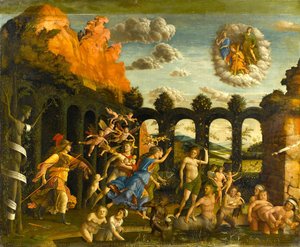
In the quiet intensity of Andrea Mantegna’s “The Meeting,” we find ourselves transported to a moment where the weight of history meets the intimacy of human connection. Painted around 1465, this exquisite detail is far more than a mere depiction of a messenger delivering a letter; it is a profound meditation on the continuity between the fallen glory of Rome and the burgeoning vitality of the Italian Renaissance. As the eye wanders through the valley, one feels the palpable tension of anticipation—the delivery of news that will soon alter the course of Ludovico Gonzaga’s life. Mantegna does not simply paint a scene; he constructs a stage where time itself seems to pause, inviting the viewer to witness a pivotal chapter in a grander, unfolding narrative.
The atmosphere of the work is one of vibrant, sun-drenched activity, yet it is anchored by a deep, scholarly stillness. The figures, gathered within a lush landscape, engage in a dance of observation and conversation, their presence lending a sense of lived reality to the composition. The distant architecture and the gentle presence of boats upon the water suggest a world that is both expansive and interconnected, a bustling valley where commerce and communication flow as naturally as the river itself. For the collector or designer, this piece offers a window into a lost era of elegance, providing a focal point that commands attention through its narrative depth and atmospheric richness.
The Sculptural Precision of a Master
What distinguishes Mantegna from his contemporaries is his refusal to settle for mere prettiness. Eschewing the soft, idealized beauty found in the works of Piero della Francesca, Mantegna embraced a sculptural realism that feels almost tactile. His figures possess an anatomical rigor, a skeletal and muscular clarity that speaks to his deep immersion in the study of Roman antiquities. Having trained in the workshop of Squarcione—a place more akin to an archaeological academy than a traditional studio—Mantegna infused his brushstrokes with the monumental weight of ancient stone. Every fold of fabric and every contour of a limb feels as though it has been carved from marble rather than applied with pigment.
This commitment to archaeological accuracy is matched by his technical mastery of tempera on wood. Through the meticulous layering of translucent glazes, Mantegna achieved a luminous depth that mimics the very light of the Italian sun. He utilized the revolutionary principles of linear perspective to manipulate space, drawing the viewer’s gaze deep into the horizon. This mathematical precision creates an illusionistic window, making the landscape feel not like a flat surface, but a breathable, three-dimensional world. To possess a reproduction of such a work is to bring a sense of structured, classical order and intellectual sophistication into any interior space.
An Invitation to Timeless Elegance
For the discerning art lover or interior decorator, “The Meeting” serves as an unparalleled source of inspiration. It embodies the Renaissance ideal of humanism—the belief in the dignity of man and the beauty of the natural world. The painting’s ability to balance complex mathematical perspective with emotional warmth makes it a versatile masterpiece. Whether placed in a grand library or a contemporary living space, its muted yet rich tones and historical gravity provide an anchor of prestige.
Investing in a high-quality reproduction of this work allows one to curate an environment steeped in the legacy of the masters. It is an opportunity to surround oneself with the spirit of 1465, celebrating a period where art was used to bridge the gap between the ancient past and a bright, human-centered future. In every detail of Mantegna’s composition, there is a lesson in observation, a tribute to history, and an enduring beauty that continues to captivate the modern soul.
Biografía del artista
vida temprana y carrera
Andrea Mantegna, un innovador pintor e estudioso de la arqueología romana italiano, nació en Italia en 1431. Su vida está marcada por una desviación significativa de las formas suaves de su tiempo, favoreciendo un tratamiento audaz y voluminoso del espacio y la forma.contribución a la perspectiva
La obra de Mantegna fue fundamental para explorar la perspectiva, utilizando técnicas como ajustar la línea del horizonte para impartir una escala más grandiosa y gravedad a sus obras. Este enfoque marcó una desviación significativa de las formas suaves de su tiempo, mostrando su estilo único.obras notables y asociaciones
* Las pinturas de Mantegna son reconocidas por su calidad robusta y escultórica, exhibiendo paisajes y figuras duras y reflectantes que revelan su sensibilidad como escultor a la forma y la textura. * Su asociación con la familia Bellini a través del matrimonio es notable, ya que refleja la interconexión de las familias artísticas durante el Renacimiento.legado en la historia del arte
La influencia de Mantegna en el desarrollo del arte en Italia y más allá es innegable. Su enfoque audaz de la perspectiva y la forma ha inspirado a generaciones de artistas. Como se ve en su colección en ArtsDot, sus obras continúan cautivando al público con su grandeza e innovación.- Movimientos artísticos clave: Renacimiento, perspectiva temprana.
- Obras notables: incluyen "El lamento sobre el Cristo muerto" y "San Jorge".
- Museos que exhiben su obra: la Galería Nacional de Londres y la Pinacoteca Brera en Milán, entre otros.
lectura adicional y exploración
* Para más información sobre la vida y las obras de Mantegna, consulte la colección Palumbo-Fossati (Venecia, Italia), que presenta una breve reseña de la colección y sus piezas notables. * Explore la historia del arte en Italia con la cultura de Italia en Wikipedia.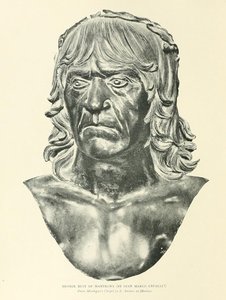
Andrea Mantegna
1431 - 1506 , Italia
Datos clave
- Artistas Influenciados:
- Rafael
- Miguel Ángel
- Artistas Que Influyeron:
- Donatello
- Jacopo Bellini
- Fecha De Muerte: 1506
- Fecha De Nacimiento: 1431
- Lugar De Nacimiento: Carturo, Italia
- Movimiento Artístico: Renacimiento Temprano
- Nacionalidad: Italiana
- Nombre Completo: Andrea Mantegna
- Obras Notables:
- El Lamento sobre el Cristo muerto
- San Jorge y el dragón
- Camera degli Sposi
- Los Triunfos de César
Artículos relacionados

Legado en las Paredes: Frescos Familiares que Trascienden el Tiempo
Descubre el arte del fresco muralístico para inmortalizar tu historia familiar. Expertos en frescos personalizados y técnicas ancestrales. Crea un legado visual único con .

The Enduring Legacy of Fresco: Technique, History & Artistic Expression Across Cultures
Explore the rich history & enduring legacy of fresco painting! Discover ancient techniques, Giotto's masterpieces, and modern applications. Expert insights for art lovers & professionals.

The Enduring Legacy of Fresco Painting: Techniques, History & Contemporary Relevance
Explore the rich history & enduring artistry of fresco painting – from Giotto to Michelangelo! Discover techniques, conservation efforts, & modern applications. Learn how ArtsDot brings this timeless art form to your home.

¿El Arte que Habita Contigo: El Poder Emocional de un Fresco Interior Personalizado?
Descubre el poder emocional de un fresco interior personalizado. Expertos en arte te guían para crear una obra única que refleje tu estilo y valore tu hogar. : calidad, confianza y diseño excepcional.
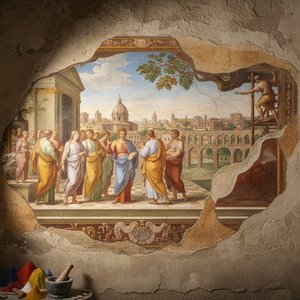
El Fresco a Través de los Siglos: Técnica, Historia y Expresión Artística Duradera
Descubre la historia y técnica del fresco, desde sus orígenes en la antigüedad hasta los maestros renacentistas. Guía completa sobre conservación, restauración y el legado artístico de este arte milenario.