 Enviar
 Compartir
 Detalles

 Descargar
 Similares
 Presentación de diapositivas
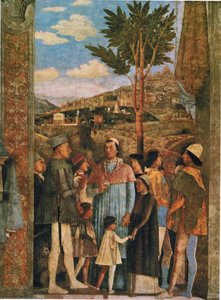
The Meeting


 Ver más
Giclée / Impresión de arte
Impresiones giclée o en lienzo de calidad de museo con producción rápida y opciones de acabado flexibles. ( Comprar pintura hecha a mano Comprar imagen)




































Elija entre nuestros tamaños predefinidos que respetan las proporciones originales de la obra.

Puede introducir sus propias dimensiones para adaptarse a un marco o espacio específico. Si el tamaño seleccionado no coincide con las proporciones de la imagen original, recortaremos la obra de arte o extenderemos la imagen con un borde con efecto espejo o de color sólido. Se enviará una maqueta digital para su aprobación antes de que comience la producción.
Tenga en cuenta que la vista previa en pantalla no refleja el recorte o la extensión real. Solo la maqueta mostrará con precisión la composición final.
Aunque existen tamaños personalizados, recomendamos seleccionar una dimensión de la lista predefinida para preservar las proporciones originales.
Envío a todo el mundo () en 2 semanas en lugar de las 4/5 semanas estándar. (6 septiembre)

Envío exprés gratuito a todo el mundo

Lienzo de lino de alta calidad

Seguro de envío total

Garantía de reembolso de impuestos aduaneros

Garantía de fidelidad cromática exacta

Política de devolución de 100 días (solo por defectos)

Garantía de devolución del 100% del dinero

Descuento por cantidad
 La opción de vidrio solo está disponible en tamaños inferiores a 110 cm.

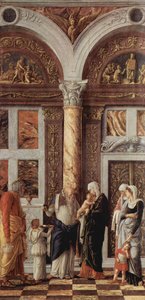
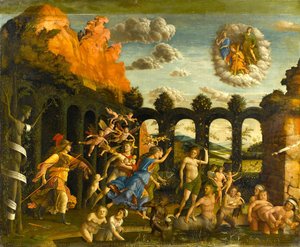
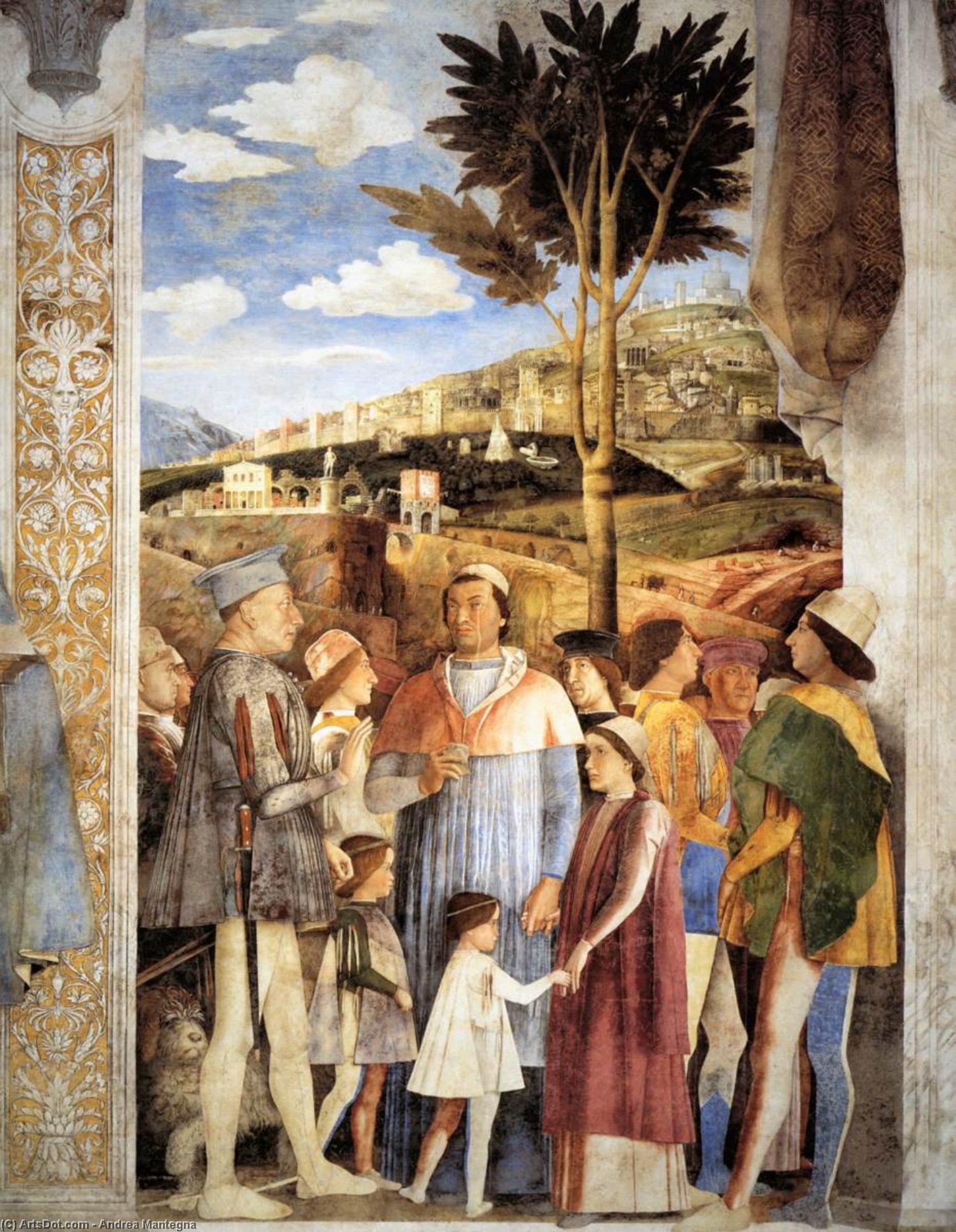
The Meeting
Giclée / Impresión de arte
Dimensiones de la reproducción
-


Precio total final
$ 62
A Renaissance Echo of Antiquity
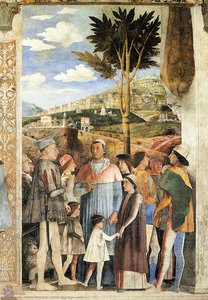
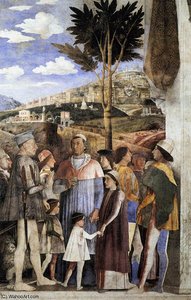
To step before Andrea Mantegna’s “The Meeting” is to experience a profound dialogue between the present and a long-lost Roman glory. Painted around 1465, this monumental fresco does not merely depict a gathering of figures; it serves as a deliberate act of artistic resurrection. Within the hallowed atmosphere of its original setting, the work functions as a window into an era where the dust of ancient ruins was being swept away by the intellectual fervor of the Early Renaissance. Mantegna, a master deeply immersed in the study of archaeology, does not simply imitate classical motifs; he breathes life back into them, creating a scene that feels both historically grounded and vibrantly alive.
The composition centers around a prominent tree, a focal point that anchors a lively village scene. Beneath its branches, at least fourteen figures are gathered in what appears to be a communal square or a sacred grove. There is a palpable sense of social harmony as the figures engage in quiet conversation, their presence lending a human warmth to the structured, almost architectural landscape. This choice of subject matter reflects the Renaissance tradition of using nature and civic spaces to symbolize unity and spiritual contemplation, inviting the viewer to participate in this timeless moment of connection.
Mastery of Form and Illusionistic Depth
Mantegna’s technical prowess is nothing short of extraordinary, particularly in his ability to manipulate space through linear perspective. Drawing inspiration from ancient architectural treatises, he employs a rigorous mathematical approach to create an unprecedented sense of depth. The viewer's eye is drawn through the foreground figures, past the central tree, and into the receding fields, creating a convincing illusion of three-dimensional reality on a flat surface. This mastery of spatial depth is paired with a sculptural approach to the human form; his figures possess a certain weight and permanence, as if they were carved from stone rather than painted with pigment.
The technique of fresco painting further enhances this effect. By applying pigments directly onto wet plaster, Mantegna achieved a durable, seamless surface that mimics the very texture of antiquity. The tonal gradations are subtle yet precise, allowing for a level of anatomical accuracy and clarity that eschews unnecessary ornamentation in favor of pure, structural truth. For the discerning collector or interior designer, this piece offers a sophisticated interplay of light and shadow, making it an ideal centerpiece for spaces that demand both intellectual depth and visual grandeur.
A Timeless Legacy for the Modern Collector
Beyond its technical brilliance, “The Meeting” carries an emotional resonance that transcends the centuries. It captures a moment frozen in time—a sense of peace, community, and scholarly curiosity. The painting’s ability to evoke the grandeur of the Roman Empire while maintaining a relatable, human intimacy makes it a versatile masterpiece for contemporary decor. Whether placed in a library, a formal salon, or a curated gallery space, a high-quality reproduction of this work brings with it an aura of historical prestige and refined taste.
For those seeking to infuse their surroundings with the spirit of the Renaissance, Mantegna’s work offers more than just decoration; it offers an invitation to reflect on the enduring beauty of human civilization. The painting stands as a testament to the power of art to bridge the gap between eras, making it a profound choice for anyone looking to surround themselves with pieces that possess both historical significance and an eternal, captivating grace.
Obras relacionadas
Biografía del artista
vida temprana y carrera
Andrea Mantegna, un innovador pintor e estudioso de la arqueología romana italiano, nació en Italia en 1431. Su vida está marcada por una desviación significativa de las formas suaves de su tiempo, favoreciendo un tratamiento audaz y voluminoso del espacio y la forma.contribución a la perspectiva
La obra de Mantegna fue fundamental para explorar la perspectiva, utilizando técnicas como ajustar la línea del horizonte para impartir una escala más grandiosa y gravedad a sus obras. Este enfoque marcó una desviación significativa de las formas suaves de su tiempo, mostrando su estilo único.obras notables y asociaciones
* Las pinturas de Mantegna son reconocidas por su calidad robusta y escultórica, exhibiendo paisajes y figuras duras y reflectantes que revelan su sensibilidad como escultor a la forma y la textura. * Su asociación con la familia Bellini a través del matrimonio es notable, ya que refleja la interconexión de las familias artísticas durante el Renacimiento.legado en la historia del arte
La influencia de Mantegna en el desarrollo del arte en Italia y más allá es innegable. Su enfoque audaz de la perspectiva y la forma ha inspirado a generaciones de artistas. Como se ve en su colección en ArtsDot, sus obras continúan cautivando al público con su grandeza e innovación.- Movimientos artísticos clave: Renacimiento, perspectiva temprana.
- Obras notables: incluyen "El lamento sobre el Cristo muerto" y "San Jorge".
- Museos que exhiben su obra: la Galería Nacional de Londres y la Pinacoteca Brera en Milán, entre otros.
lectura adicional y exploración
* Para más información sobre la vida y las obras de Mantegna, consulte la colección Palumbo-Fossati (Venecia, Italia), que presenta una breve reseña de la colección y sus piezas notables. * Explore la historia del arte en Italia con la cultura de Italia en Wikipedia.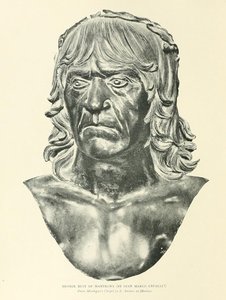
Andrea Mantegna
1431 - 1506 , Italia
Datos clave
- Artistas Influenciados:
- Rafael
- Miguel Ángel
- Artistas Que Influyeron:
- Donatello
- Jacopo Bellini
- Fecha De Muerte: 1506
- Fecha De Nacimiento: 1431
- Lugar De Nacimiento: Carturo, Italia
- Movimiento Artístico: Renacimiento Temprano
- Nacionalidad: Italiana
- Nombre Completo: Andrea Mantegna
- Obras Notables:
- El Lamento sobre el Cristo muerto
- San Jorge y el dragón
- Camera degli Sposi
- Los Triunfos de César
Artículos relacionados

Legado en las Paredes: Frescos Familiares que Trascienden el Tiempo
Descubre el arte del fresco muralístico para inmortalizar tu historia familiar. Expertos en frescos personalizados y técnicas ancestrales. Crea un legado visual único con .

The Enduring Legacy of Fresco: Technique, History & Artistic Expression Across Cultures
Explore the rich history & enduring legacy of fresco painting! Discover ancient techniques, Giotto's masterpieces, and modern applications. Expert insights for art lovers & professionals.

The Enduring Legacy of Fresco Painting: Techniques, History & Contemporary Relevance
Explore the rich history & enduring artistry of fresco painting – from Giotto to Michelangelo! Discover techniques, conservation efforts, & modern applications. Learn how ArtsDot brings this timeless art form to your home.
El Fresco a Través de los Siglos: Técnica, Historia y Expresión Artística Duradera
Descubre la historia y técnica del fresco, desde sus orígenes en la antigüedad hasta los maestros renacentistas. Guía completa sobre conservación, restauración y el legado artístico de este arte milenario.

¿El Arte que Habita Contigo: El Poder Emocional de un Fresco Interior Personalizado?
Descubre el poder emocional de un fresco interior personalizado. Expertos en arte te guían para crear una obra única que refleje tu estilo y valore tu hogar. : calidad, confianza y diseño excepcional.