

 Enviar
 Compartir
 Detalles

 Descargar
 Similares
 Presentación de diapositivas
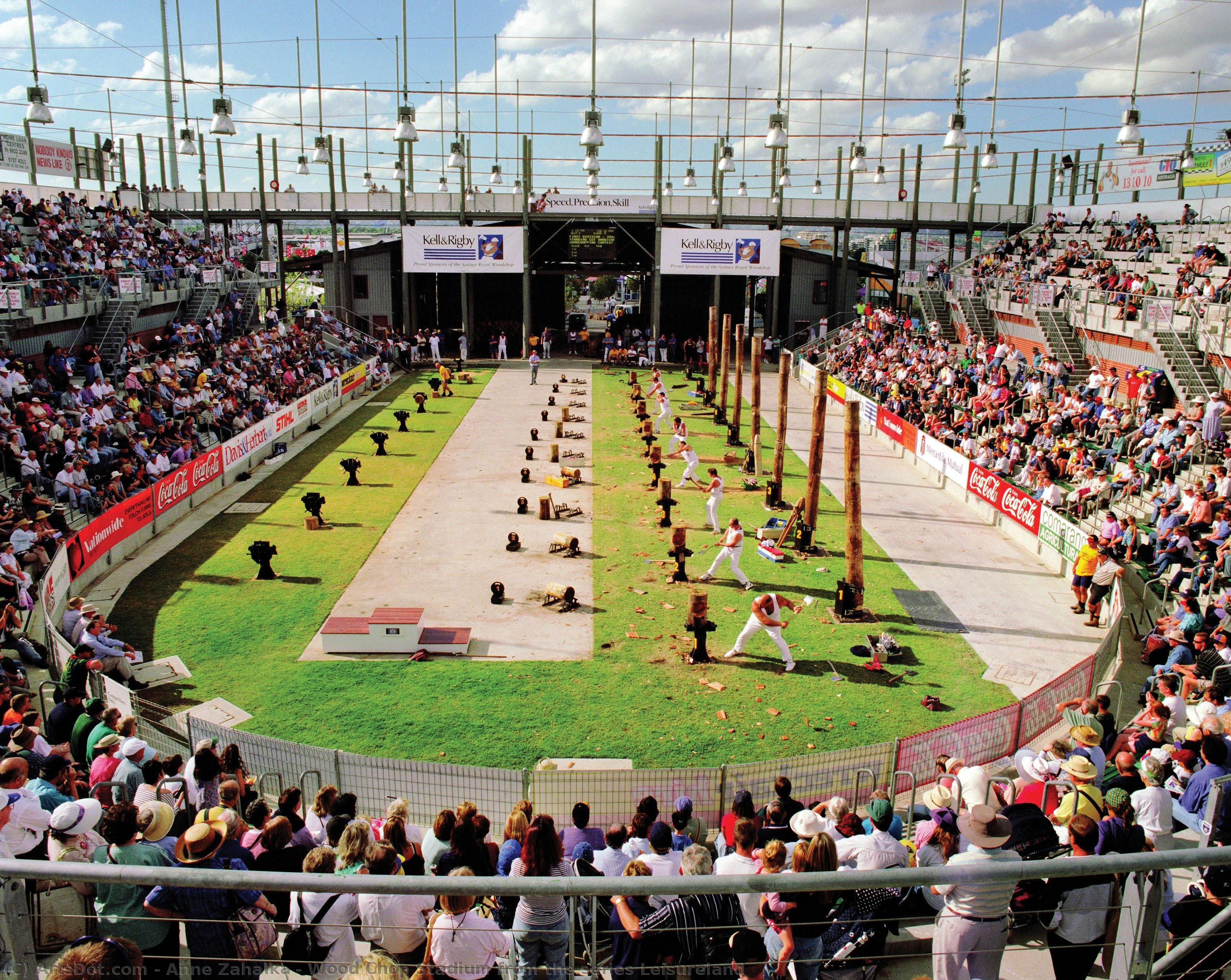
Wood Chop Stadium from the series Leisureland
 Photography
- Photo
- Contemporary Realism
 1999
1999- Contemporary
 115.0 x 145.0 cm
 Museo Ian Potter de Arte
 Ver más
Adquiera una imagen digital de alta resolución y optimizada, muy superior a la vista previa en línea.
Cada archivo es preparado meticulosamente por nuestros especialistas internos mediante el uso de herramientas avanzadas y un experto retoque manual. Nos aseguramos de que cada imagen posea una claridad excepcional, una precisión cromática impecable y un detalle minucioso.
El archivo final se entrega por correo electrónico en un plazo de 72 horas, optimizado para su uso inmediato en entornos profesionales, editoriales y de impresión. Esta es la misma calidad en la que confían los estudios de diseño, las editoriales y las galerías de primer nivel.
Imagen Digital
Descarga un archivo de alta resolución para exhibición personal, impresión y proyectos creativos. ( Comprar impresión Comprar pintura hecha a mano)
Incluido en cada pedido de imágenes digitales
Entrega digital experta, garantizada.
Al elegir ArtsDot.com, no solo está adquiriendo una imagen; está recibiendo una obra de arte digital mejorada profesionalmente, elaborada con precisión y respaldada por una garantía de satisfacción. Esto es todo lo que incluye su pedido, automáticamente:

Entrega rápida por email
Recibirá su archivo de imagen digital en alta resolución por correo electrónico en un plazo de 72 horas tras realizar su pedido, listo para su uso inmediato.

Archivo digital optimizado por IA
Su obra de arte se optimiza profesionalmente mediante herramientas avanzadas de IA y edición manual, garantizando el máximo detalle, claridad y precisión cromática.

Reenvío gratuito de por vida
¿Has borrado o perdido tu archivo por error? No te preocupes: te lo volveremos a enviar en cualquier momento, sin coste adicional.

Sin gastos de importación, siempre
Disfrute de su obra de arte al instante sin aduanas, aranceles ni gastos de envío; las descargas digitales siempre están libres de impuestos.

Garantía de fidelidad de color
Garantizamos que su imagen digital refleje los colores originales con la mayor fidelidad posible, mediante el uso de herramientas profesionales y gestión del color.

Garantía de satisfacción de 60 días
Si no está satisfecho con su imagen digital, la revisaremos o le reembolsaremos el 100% en un plazo de 60 días, sin preguntas.

100% Garantía de devolución de dinero
¿No está satisfecho? Obtenga un reembolso completo dentro de los 60 días posteriores a la recepción de su archivo digital, sin necesidad de explicaciones.

Descuentos por pedidos grandes
Compra 3 imágenes, ahorra 10% - Compra 5, ahorra 15% - Compra 10+, ahorra 20%. Ideal para proyectos creativos, galerías y agencias.
The Theatricality of Sport: A Glimpse into Leisureland
In her evocative work, Wood Chop Stadium from the series Leisureland, photographer Anne Zahalka invites us to peer through a lens that blurs the line between documentary reality and staged performance. Part of her celebrated 1999 series, this piece captures a moment of raw, physical exertion within the structured confines of an Australian sporting arena. At first glance, the scene is one of communal celebration—a sun-drenched afternoon where the rhythmic strike of axes against timber serves as the heartbeat of the crowd. Yet, beneath the surface of this traditional wood-chopping competition lies Zahalka’s profound inquiry into the nature of spectacle. She treats the sporting pavilion not merely as a venue for athletic prowess, but as a grand stage where every participant, from the sweat-streaked competitor to the intently watching spectator, plays a scripted role in the construction of national identity.
The composition is a masterclass in capturing the vibrant energy of Australian life. The artist utilizes a hyperrealistic approach that demands close inspection; one can almost feel the coarse texture of the logs and the heat radiating from the midday sun. The palette is grounded in earthy, organic tones—the deep browns of the timber and the lush greens of the stadium periphery—yet these are punctuated by the sharp, modern brightness of high-visibility vests and colorful banners. This interplay between the primal, visceral nature of the wood chop and the artificial, brightly colored trappings of the modern event mirrors Zahalka’s fascination with how "play" is orchestrated. The lighting, casting long, dramatic shadows across the tiered seating, adds a cinematic quality to the scene, suggesting that what we are witnessing is as much a theatrical production as it is a sporting event.
A Symphony of Community and Performance
To behold this work is to experience the complex layers of social ritual. Zahalka draws upon the philosophical concept that all life is a form of performance, echoing the sentiment that "all the world’s a stage." In this stadium, the boundaries between the performer and the observer are fluid. The spectators are not passive witnesses; they are costumed participants in a shared cultural narrative, their gazes fixed on the arena with a collective intensity that transforms a simple competition into a significant ritual. This sense of community engagement is palpable, making the piece an emotionally resonant choice for those who value art that explores human connection and the shared traditions that bind a society together.
For the discerning collector or interior designer, this reproduction offers more than just a visual focal point; it provides a conversation piece steeped in cultural depth. The meticulous attention to detail—the focused expressions of concentration on the competitors' faces and the diverse tapestry of the crowd—ensures that the artwork maintains its impact from any distance. Whether placed in a contemporary gallery setting or as a centerpiece in a sophisticated residential space, Wood Chop Stadium brings with it an atmosphere of vitality, nostalgia, and intellectual intrigue. It is a profound celebration of the "unreal" beauty found within our most concrete daily experiences, making it a timeless addition to any curated collection.
Obras relacionadas
Biografía del artista
The Lens of Identity: The Artistic Journey of Anne Zahalka
Anne Zahalka stands as a profound voice in contemporary Australian photography, an artist whose work transcends the mere documentation of reality to explore the very fabric of cultural identity. Born in 1957, Zahalka’s heritage—a tapestry woven from a Jewish Austrian mother and a Catholic Czech father—provided her with an early, intrinsic connection to themes of migration, displacement, and the complexities of belonging. This rich, multicultural background would later become a cornerstone of her artistic inquiry, as she sought to capture the nuances of Australia's diverse population and the often-overlooked narratives of its migrant histories.
Her formal education at the Prahran College of Fine Arts in Melbourne and later at the Sydney College of the Arts laid the technical foundation for a career defined by meticulous precision. Zahalka’s early fascination with the natural world, particularly the rugged landscapes of the Australian Outback, eventually merged with a sophisticated understanding of photographic artifice. Influenced heavily by the Surrealist masters René Magritte and Giorgio Morandi, she learned to manipulate perception, using the camera not just as a tool for recording what is seen, but as a medium to challenge the viewer's understanding of truth and illusion.
Theatricality and the Hyperreal: The Leisureland Series
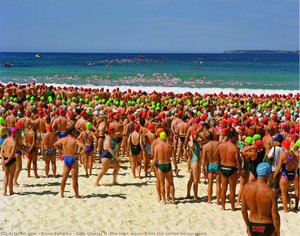
Perhaps Zahalka’s most significant contribution to the photographic canon is her celebrated series, Leisureland. In these works, the boundary between documentary photography and staged performance dissolves entirely. Through a hyperrealistic lens, she transforms quintessential Australian scenes—a sun-drenched AFL match at the Sydney Cricket Ground, the rhythmic intensity of a Wood Chop Stadium event, or the communal energy of the Cole Classic II beach swim—into theatrical spectacles. These are not mere snapshots of leisure; they are carefully choreographed compositions where the subjects become performers on a national stage.
In Leisureland, Zahalka invites us to witness the "theatricality of the everyday." She utilizes dramatic lighting and precise positioning to suggest that our cultural rituals are, in many ways, scripted performances. By treating the beach or the sporting arena as a grand stage, she highlights how national identity is constructed through shared public displays and the donning of specific "costumes," such as swimwear or team colors. This approach allows her to explore deeper sociological layers, examining how gender roles, social conventions, and even the concept of the "Australian spirit" are enacted and reinforced within these communal spaces.
Legacy and Artistic Evolution
Zahalka’s impact extends far beyond the photographic print. Her artistic evolution has seen her venture into sculptural installations, where she explores materiality and form by incorporating natural elements like wood and stone. This expansion of her medium reflects a lifelong commitment to investigating how we perceive our environment and our place within it. Her ability to bridge the gap between the visceral reality of the Australian landscape and the intellectual complexities of postcolonial identity has earned her a permanent place in the nation's most prestigious institutions.
The historical significance of her work is cemented by its presence in the collections of:
- The Art Gallery of New South Wales
- The National Gallery of Victoria
- The State Library of New South Wales
- The National Gallery of Australia
Throughout her career, from receiving the Leopold Godowsky Award in Boston to her large-scale commissions like Welcome to Sydney for Sydney Airport, Zahalka has remained a steadfast investigator of memory and remembrance. Her work continues to resonate because it does not merely show us Australia; it asks us to look closer at the layers of history, migration, and performance that constitute the heart of the Australian experience.
anne zahalka
1957 - , Australia
Breves datos
- Artistic Movement Or Style: Hyperrealism
- Artists Or Movements Influenced By This Artist: ['']
- Artists Who Influenced This Artist: ['']
- Date Of Birth: 1957
- Full Name: Anne Zahalka
- Nationality: Australian
- Notable Artworks:
- Wood Chop Stadium
- Cole Classic II
- AFL match
- Place Of Birth: Australia

