

 Ver en contexto
 Enviar
 Compartir
 Detalles

 Descargar
 Similares
 Radiografía
 Presentación de diapositivas
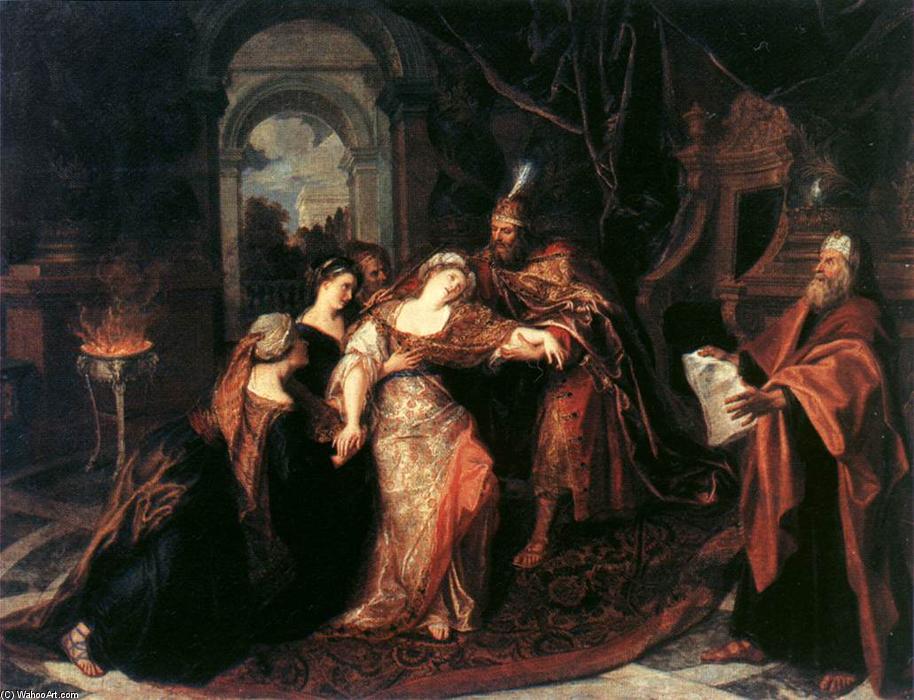
The Swooning of Esther
 Baroque
 1704
1704 105.0 x 137.0 cm
 Museo del Louvre
 Ver más
Adquiera una imagen digital de alta resolución y optimizada, muy superior a la vista previa en línea.
Cada archivo es preparado meticulosamente por nuestros especialistas internos mediante el uso de herramientas avanzadas y un experto retoque manual. Nos aseguramos de que cada imagen posea una claridad excepcional, una precisión cromática impecable y un detalle minucioso.
El archivo final se entrega por correo electrónico en un plazo de 72 horas, optimizado para su uso inmediato en entornos profesionales, editoriales y de impresión. Esta es la misma calidad en la que confían los estudios de diseño, las editoriales y las galerías de primer nivel.
Imagen Digital
Descarga un archivo de alta resolución para exhibición personal, impresión y proyectos creativos. ( Comprar impresión Comprar pintura hecha a mano)
Incluido en cada pedido de imágenes digitales
Entrega digital experta, garantizada.
Al elegir ArtsDot.com, no solo está adquiriendo una imagen; está recibiendo una obra de arte digital mejorada profesionalmente, elaborada con precisión y respaldada por una garantía de satisfacción. Esto es todo lo que incluye su pedido, automáticamente:

Entrega rápida por email
Recibirá su archivo de imagen digital en alta resolución por correo electrónico en un plazo de 72 horas tras realizar su pedido, listo para su uso inmediato.

Archivo digital optimizado por IA
Su obra de arte se optimiza profesionalmente mediante herramientas avanzadas de IA y edición manual, garantizando el máximo detalle, claridad y precisión cromática.

Reenvío gratuito de por vida
¿Has borrado o perdido tu archivo por error? No te preocupes: te lo volveremos a enviar en cualquier momento, sin coste adicional.

Sin gastos de importación, siempre
Disfrute de su obra de arte al instante sin aduanas, aranceles ni gastos de envío; las descargas digitales siempre están libres de impuestos.

Garantía de fidelidad de color
Garantizamos que su imagen digital refleje los colores originales con la mayor fidelidad posible, mediante el uso de herramientas profesionales y gestión del color.

Garantía de satisfacción de 60 días
Si no está satisfecho con su imagen digital, la revisaremos o le reembolsaremos el 100% en un plazo de 60 días, sin preguntas.

100% Garantía de devolución de dinero
¿No está satisfecho? Obtenga un reembolso completo dentro de los 60 días posteriores a la recepción de su archivo digital, sin necesidad de explicaciones.

Descuentos por pedidos grandes
Compra 3 imágenes, ahorra 10% - Compra 5, ahorra 15% - Compra 10+, ahorra 20%. Ideal para proyectos creativos, galerías y agencias.
Obras relacionadas
Biografía del artista
The Legacy of Antoine Coypel II: A Bridge Between Eras
In the grand tapestry of French art history, few figures embody the delicate transition from the structured majesty of the Baroque to the playful elegance of the Rococo as gracefully as Antoine Coypel II. Born in Paris in 1661 into a lineage of profound artistic prestige, his very existence was intertwined with the pulse of the French Royal Academy. As the son of the celebrated painter Noël Coypel, Antoine did not merely inherit a name; he inherited a visual language of meticulous observation and masterful draughtsmanship. His early life was marked by an immersion in the highest circles of Parisian culture, a period that would lay the foundation for a career defined by both classical restraint and an emerging, spirited dynamism.
The formative years of Coypel II were characterized by a rigorous education that spanned the most significant artistic hubs of Europe. At the age of eleven, he accompanied his father to Italy, a journey that proved transformative. In Rome, the young artist found himself breathing the same air as the remnants of the High Renaissance and the burgeoning Roman Baroque. By studying the works of masters such as Carlo Maratta and witnessing the sculptural genius of Gian Lorenzo Bernini, Coypel developed a profound respect for anatomical precision and classical proportion. This Italian sojourn allowed him to master the art of copying the Antique, an essential practice that instilled in him a lifelong reverence for idealized beauty and balanced composition.
Mastery of Form and the Royal Commission
Upon his return to Paris in 1676, Coypel II completed his training at the Académie Royale, quickly ascending through the ranks of the artistic elite. His talent was such that he achieved official recognition with remarkable speed, earning the title of académicien at a young age. This period of his life saw him navigating the complex waters of royal patronage, securing prestigious commissions that would decorate the most significant architectural wonders of France. From the altarpieces of Notre-Dame in Paris to the grand decorative schemes for the Palais Royal, his brushwork became a tool for storytelling on a monumental scale.
His technical prowess was particularly evident in his ability to blend the heavy, dramatic chiaroscuro of Rubens and Rembrandt with a uniquely French clarity. While he possessed the skill to execute the grand, sweeping gestures required for history paintings, he often favored a certain restrained elegance. This stylistic choice allowed him to capture profound psychological depth within his subjects. In works such as "The Swooning of Esther," commissioned by Louis XIV for the Fontainebleau Palace, one can observe his mastery over luminous palettes and the intricate rendering of drapery, all serving to heighten the emotional intensity of the biblical narrative.
A Pivotal Figure in French Art History
As his career progressed, Coypel II reached the zenith of professional achievement. His appointment as premier peintre du roi (First Painter to the King) and his role as the keeper of the royal collection of drawings solidified his status as a pillar of the French art establishment. He was not merely a painter of scenes but a custodian of the aesthetic values of the age. Even as the artistic climate began to shift toward the more whimsical and lighthearted Rococo style, Coypel II remained a stabilizing force, ensuring that the principles of classical structure were not lost in the pursuit of ornamentation.
The historical significance of Antoine Coypel II lies in his role as a stylistic conduit. His oeuvre serves as a visual record of an era in flux, capturing the moment when the austere grandeur of the 17th century began to soften into the decorative exuberance of the 18th. Though he lived in the shadow of more famous contemporaries and family members, his contribution to the evolution of French painting is undeniable. Through his portraits, mythological scenes, and historical canvases, he left behind a legacy of grace, drama, and an enduring commitment to the beauty of the human form.
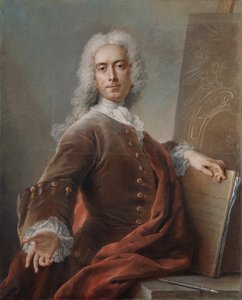
antoine coypel ii
1661 - 1722

