

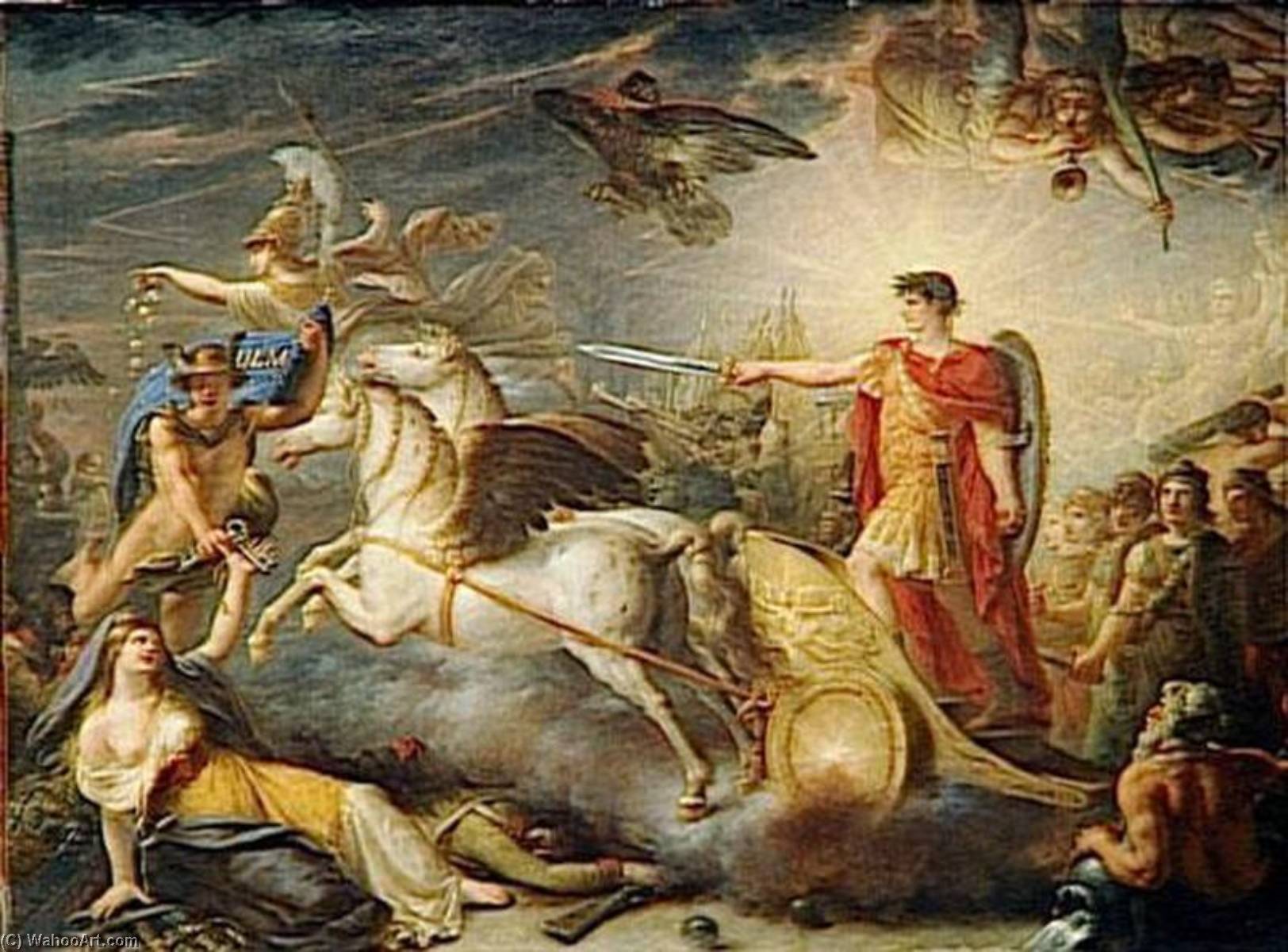
 Ver en contexto
 Enviar
 Compartir
 Detalles

 Descargar
 Similares
 Radiografía
 Presentación de diapositivas
ALLEGORIE DE LA REDDITION D'ULM.20 OCTOBRE 1805
 Ver más
Adquiera una imagen digital de alta resolución y optimizada, muy superior a la vista previa en línea.
Cada archivo es preparado meticulosamente por nuestros especialistas internos mediante el uso de herramientas avanzadas y un experto retoque manual. Nos aseguramos de que cada imagen posea una claridad excepcional, una precisión cromática impecable y un detalle minucioso.
El archivo final se entrega por correo electrónico en un plazo de 72 horas, optimizado para su uso inmediato en entornos profesionales, editoriales y de impresión. Esta es la misma calidad en la que confían los estudios de diseño, las editoriales y las galerías de primer nivel.
Imagen Digital
Descarga un archivo de alta resolución para exhibición personal, impresión y proyectos creativos. ( Comprar impresión Comprar pintura hecha a mano)
Incluido en cada pedido de imágenes digitales
Entrega digital experta, garantizada.
Al elegir ArtsDot.com, no solo está adquiriendo una imagen; está recibiendo una obra de arte digital mejorada profesionalmente, elaborada con precisión y respaldada por una garantía de satisfacción. Esto es todo lo que incluye su pedido, automáticamente:

Entrega rápida por email
Recibirá su archivo de imagen digital en alta resolución por correo electrónico en un plazo de 72 horas tras realizar su pedido, listo para su uso inmediato.

Archivo digital optimizado por IA
Su obra de arte se optimiza profesionalmente mediante herramientas avanzadas de IA y edición manual, garantizando el máximo detalle, claridad y precisión cromática.

Reenvío gratuito de por vida
¿Has borrado o perdido tu archivo por error? No te preocupes: te lo volveremos a enviar en cualquier momento, sin coste adicional.

Sin gastos de importación, siempre
Disfrute de su obra de arte al instante sin aduanas, aranceles ni gastos de envío; las descargas digitales siempre están libres de impuestos.

Garantía de fidelidad de color
Garantizamos que su imagen digital refleje los colores originales con la mayor fidelidad posible, mediante el uso de herramientas profesionales y gestión del color.

Garantía de satisfacción de 60 días
Si no está satisfecho con su imagen digital, la revisaremos o le reembolsaremos el 100% en un plazo de 60 días, sin preguntas.

100% Garantía de devolución de dinero
¿No está satisfecho? Obtenga un reembolso completo dentro de los 60 días posteriores a la recepción de su archivo digital, sin necesidad de explicaciones.

Descuentos por pedidos grandes
Compra 3 imágenes, ahorra 10% - Compra 5, ahorra 15% - Compra 10+, ahorra 20%. Ideal para proyectos creativos, galerías y agencias.
Obras relacionadas









Biografía del artista
Antoine François Callet: Painter of Allegory and Imperial Splendor
Antoine François Callet (1741–1823), often referred to simply as Antoine Callet, stands as a prominent figure in the artistic landscape of late 18th-century France—a painter whose career coincided with pivotal moments in European history, notably the reign of Louis XVI and the Napoleonic era. Primarily celebrated for his monumental ceiling paintings and portraits commissioned by royalty, Callet’s oeuvre embodies the grandeur and intellectual fervor characteristic of Rococo and Neoclassical styles simultaneously. Born in Paris, Callet's early life remains somewhat shrouded in obscurity, though he secured a prestigious position within the Académie Royale de peinture et de sculpture—the Royal Academy of Painting and Sculpture—a testament to his talent and ambition. Crucially, he achieved recognition through winning the grand prix de Rome in 1769, an invaluable opportunity for young artists aspiring to establish themselves as masters of classical art. This scholarship propelled him to Rome where he honed his skills under the tutelage of Francesco Saverio Salviati, absorbing influences from Caravaggio and Bernini—artists whose dramatic chiaroscuro techniques would profoundly impact Callet’s artistic vision. He was particularly drawn to the expressive power of Baroque painting, recognizing its ability to convey emotion and grandeur with unparalleled effectiveness. Callet's prolific output spanned decades, producing a diverse range of works that reflected both personal taste and the demands of his aristocratic patrons. He excelled in portraiture, capturing the likenesses of dignitaries and members of the nobility with meticulous detail and psychological insight—works that offer valuable glimpses into the social dynamics of the period. His portraits are notable for their subtle nuances of expression and their masterful rendering of drapery and skin tones, demonstrating a profound understanding of human anatomy and artistic technique. These commissions served not only to adorn aristocratic residences but also to solidify Callet’s reputation as one of the most accomplished portraitists of his time. However, Callet’s fame rests principally upon his monumental ceiling paintings, particularly those adorning the Grande Galerie of the Palais du Luxembourg. These ambitious projects showcased his mastery of color, composition, and illusionistic perspective, transforming spaces into immersive narratives imbued with mythological and allegorical symbolism. He undertook commissions for prominent figures like Louis XVI and Marie Antoinette, creating opulent frescoes that celebrated royal power and artistic excellence. “L'aurore” (Aurora), depicting a radiant dawn symbolizing hope and renewal, exemplifies his commitment to conveying complex ideas through visual imagery—a hallmark of Rococo aesthetics. Similarly, "Allegorie du dix-huit brumaire ou la france sauvée" (Allegory of 18 Brumaire or France Saved) powerfully captured the fervor surrounding Napoleon Bonaparte’s coup d’état, cementing Callet's place in history as a visual chronicler of political upheaval. Furthermore, he undertook monumental frescoes for Versailles, including “Allegorie de la bataille d’Austerlitz” (Allegory of the Battle of Austerlitz), portraying a triumphant victory over Austria and cementing his reputation as one of the foremost artists serving Napoleon’s regime. This ambitious undertaking demonstrated Callet's ability to synthesize classical ideals with contemporary political concerns—a characteristic feature of Neoclassical art during the Napoleonic era. His meticulous attention to detail and masterful handling of pigment contributed significantly to the enduring beauty and intellectual depth of his paintings, securing his legacy as a master artist whose work continues to inspire admiration for its artistic merit and historical significance.
Antoine Callet
1741 - 1823 , Francia
Breves datos
- Artistic Movement Or Style: Estilo Rococo
- Artists Or Movements Influenced By This Artist: ['Louis XVI']
- Artists Who Influenced This Artist:
- Francesco Saverio Salviati
- Jean Baptiste Rousseau
- Date Of Birth: Paris, Francia (1741)
- Date Of Death: 1823
- Full Name: Antoine François Callet
- Nationality: Francés
- Notable Artworks:
- L'aurore
- Allegorie du dix-huit brumaire
- Allegorie de la bataille d'Austerlitz
- Place Of Birth: París

