 Ver en contexto
 Enviar
 Compartir
 Detalles

 Descargar
 Similares
 Radiografía
 Presentación de diapositivas
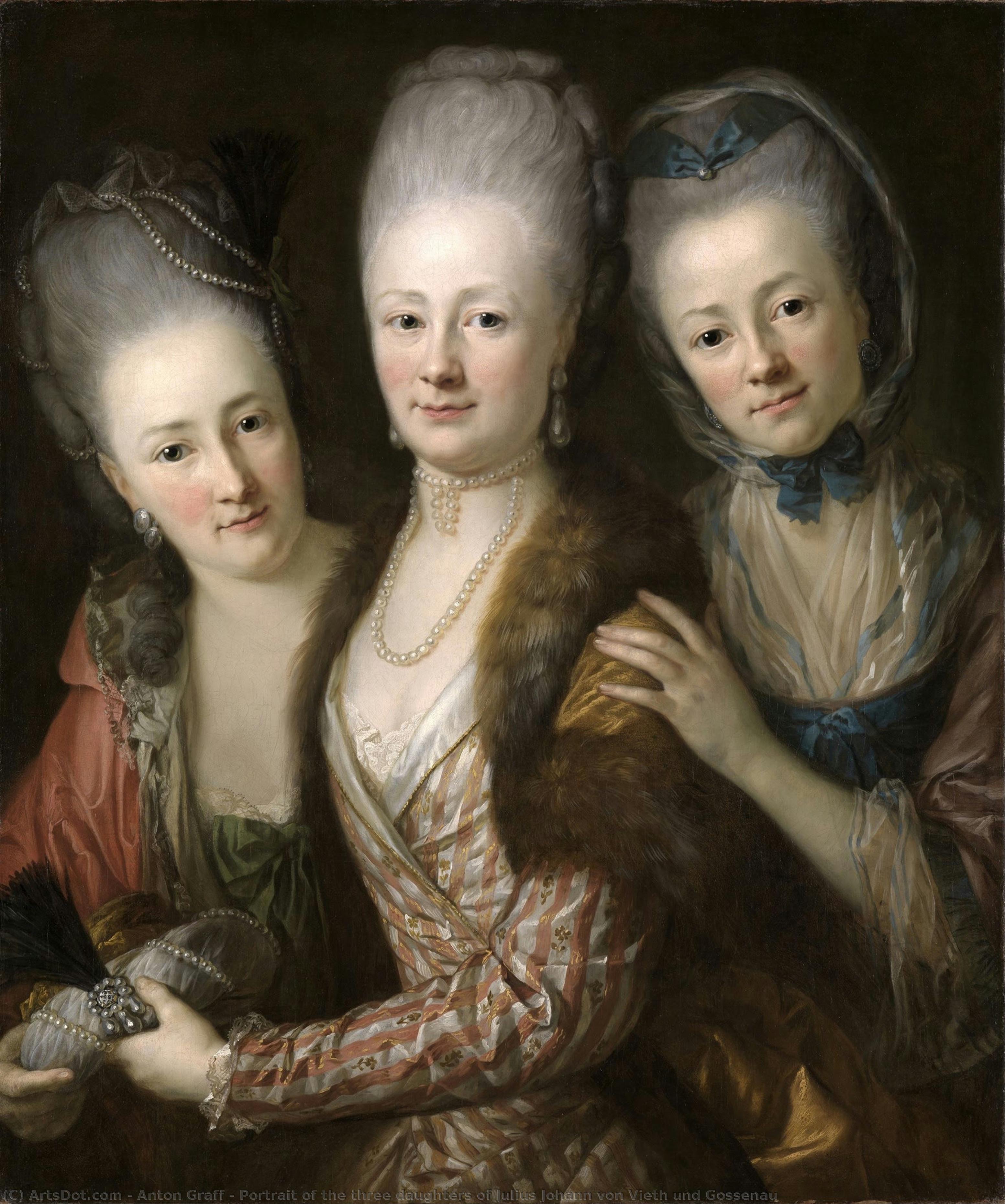
Portrait of the three daughters of Julius Johann von Vieth und Gossenau
 Oil On Canvas
- WallArt
- Classicism
 1773
1773 5.0 x 81.0 cm
 Staatliche Kunsthalle Karlsruhe
 Ver más
Reproducción al óleo hecha a mano
Óleo sobre lienzo pintado a mano en el tamaño y marco de su elección, realizado por encargo por nuestros artistas. ( Comprar impresión Comprar imagen)




P118B $10

P118H $10

P118W $10

P438Z $10

P508JH $12

P508YH $12

P805H $10

P805Z $10

P919BZ $10

P919G $10

P919XJ $10

P959ZH $10

P968JZ $12

W106C $8

W218G $10

W218JH $8

W218Y $10

W307PJ $10

W316G $10

W316PJ $8

W316Y $10

W398PJ $8

W4111J $10

W500HY $15

W500JH $15

W692G $12

W849H $8

W940BG $15

W953PJ $8




Elija entre nuestros tamaños predefinidos que respetan las proporciones originales de la obra.

Puede ingresar sus propias dimensiones para adaptarse a un marco o espacio específico. Si el tamaño seleccionado no coincide con las proporciones de la imagen original, recortaremos la obra o extenderemos la pintura con elementos adicionales pintados a mano. Se le enviará una maqueta digital para su aprobación antes de comenzar la producción.
Tenga en cuenta que la vista previa en pantalla no refleja el recorte o la extensión reales. Solo la maqueta mostrará con precisión la composición final.
Si bien existen tamaños personalizados, recomendamos seleccionar una dimensión de la lista predefinida para preservar las proporciones originales.
Tras realizar el pedido, el equipo de ArtsDot.com enviará un correo electrónico al cliente para solicitar instrucciones y proporcionarle una vista previa del boceto.
Envío a todo el mundo () en 3-4 semanas en lugar de las 5 semanas estándar. (30 agosto). Sin comprometer la calidad.

Envío exprés gratuito a todo el mundo

Lienzo de lino de alta calidad

Seguro de envío total

Garantía de reembolso de impuestos aduaneros

Garantía de fidelidad cromática exacta

Política de devolución de 60 días (solo por defectos)

Garantía de devolución del 100% del dinero

Descuento por cantidad
 La opción de vidrio solo está disponible en tamaños inferiores a 110 cm.

Portrait of the three daughters of Julius Johann von Vieth und Gossenau
Técnica de reproducción
Dimensiones de la reproducción
-


Precio total final
$ 263
Portrait of the Three Daughters of Julius Johann von Vieth und Gossenau by Anton Graff
Anton Graff’s “Portrait of the Three Daughters of Julius Johann Julius von Vieth und Glossenau” stands as a testament to the elegance and sophistication of Neoclassical portraiture, capturing not merely likeness but also an idealized representation of familial grace within the opulent milieu of Saxony in 1773. Painted by Swiss artist Anton Graff (1736-1813), this artwork transcends mere visual depiction; it embodies a carefully considered artistic statement reflecting the prevailing intellectual currents of the Enlightenment and the burgeoning fascination with classical ideals.Subject Matter and Composition
The painting portrays three women – Juliane Caroline von der Planitz, Sophie Juliane Elisabeth d’Argollo, and Juliane Charlotte von Todtleben – daughters of Johann Julius von Vieth und Glossenau, a prominent Saxon courtier and counselor. Graff skillfully arranges them within a symmetrical composition, reflecting the formal conventions of Neoclassicism. Each woman is positioned on a distinct plane, creating depth and visual interest while simultaneously emphasizing their individual presence. The gaze of each daughter directs towards the viewer, establishing an intimate connection between subject and observer—a hallmark of portraiture during this period aimed at conveying dignity and virtue.Style and Technique: Neoclassical Refinement
Graff’s technique exemplifies the meticulous precision characteristic of Neoclassicism. Employing oil paint on canvas, he achieves remarkable tonal gradations and subtle modeling effects that imbue the figures with palpable realism. The artist meticulously renders textures—the silk gowns, powdered wigs, delicate jewelry—demonstrating a mastery of observation and artistic skill. Graff’s palette leans towards muted tones – creams, golds, and browns – reflecting the restrained aesthetic favored by artists seeking inspiration from ancient Greece and Rome. These colors contribute to an atmosphere of serenity and refinement, mirroring the values championed by Enlightenment thinkers who revered rationality and order.Historical Context: The Enlightenment's Influence
“Portrait of the Three Daughters” emerged during a pivotal moment in European history—the Enlightenment. This intellectual movement prioritized reason and empirical observation over dogma and superstition, profoundly impacting artistic sensibilities. Graff’s work aligns seamlessly with this ethos by presenting idealized figures embodying moral virtue and aristocratic grace. The depiction of noblewomen underscores the importance of lineage and social status within the societal hierarchy of the time – a preoccupation common in portraiture during the 18th century. Furthermore, the painting reflects the broader fascination with classical antiquity, evident in the formal poses and drapery reminiscent of Roman sculptures.Symbolism: Dignity and Virtue Embodied
Beyond its technical brilliance, “Portrait of the Three Daughters” carries symbolic weight. The powdered wigs represent status and erudition—a deliberate allusion to the intellectual pursuits valued by the Enlightenment elite. Jewelry symbolizes wealth and refinement, reinforcing the daughters’ position within the aristocratic social order. Graff's careful attention to detail conveys a profound respect for beauty and harmony – values central to Neoclassical aesthetics. The serene expressions of the women convey inner composure and moral integrity—a timeless aspiration for portraiture that transcends temporal boundaries.Emotional Impact: A Window into Aristocratic Life
Ultimately, “Portrait of the Three Daughters” offers viewers an evocative glimpse into the refined lifestyle of Saxon nobility during the 1770s. Graff’s masterful rendering captures not only physical likeness but also psychological nuance—suggesting inner character and conveying a sense of dignified composure. The painting invites contemplation on themes of family, beauty, and virtue – enduring subjects that continue to resonate with audiences today. It serves as an exquisite example of Neoclassical portraiture's ability to elevate visual art into a vehicle for transmitting cultural values and capturing the essence of human experience.Obras relacionadas


Biografía del artista
A Life Etched in Likeness: The World of Anton Graff
Anton Graff, born in Winterthur, Switzerland in 1736, emerged as one of the most celebrated portraitists of his era—a period defined by the Enlightenment’s intellectual fervor and the burgeoning Neoclassical aesthetic. His story is not merely a chronicle of artistic skill but a fascinating journey through the social and cultural landscapes of 18th and early 19th century Europe, intimately connected with some of its most brilliant minds. Graff's beginnings were humble; he received his initial training in Winterthur under Johann Ulrich Schellenberg before venturing to Augsburg where his talent quickly outpaced the local guild’s comfort level. Forced to move on due to the anxieties of less gifted contemporaries, he found mentorship with Johann Jakob Haid and later, Leonhard Schneider in Ansbach, honing his skills while absorbing diverse artistic influences. These early experiences instilled in him not only technical proficiency but also a resilience that would characterize his career. Frequent trips to Munich allowed him to study masterworks, laying the foundation for his distinctive style—a blend of meticulous detail, psychological insight, and an emerging Neoclassical sensibility.From Dresden Court Painter to Chronicler of an Era
The pivotal moment in Graff’s career arrived with his appointment as court painter to the Saxon electorate in Dresden in 1766. This position provided him not only financial security but also access to a vibrant intellectual circle and a steady stream of prominent sitters. He quickly became *the* portraitist of choice for the leading figures of the German Enlightenment, immortalizing individuals like Friedrich Schiller, Christoph Willibald Gluck, Gotthold Ephraim Lessing, Moses Mendelssohn, and Johann Gottfried Herder on canvas. These were not simply likenesses; Graff possessed a remarkable ability to capture the inner lives of his subjects—their intellect, their passions, and their vulnerabilities. He wasn’t merely painting faces; he was documenting an intellectual revolution. His portraits became visual embodiments of the era's philosophical and artistic currents. The invitation from Christian Ludwig von Hagedorn, director of the Dresden Art Academy, initially met with Graff’s own self-doubt – a testament to his humility despite undeniable talent. It was a self-portrait that ultimately secured his position, demonstrating a confidence and skill that resonated deeply within the court.A Master of Light, Shadow, and Social Nuance
Graff's artistic technique was characterized by a masterful command of light and shadow, influenced significantly by the work of Ján Kupecký, whose paintings he studied intently. He employed this skill to draw attention to the faces of his sitters, imbuing them with depth and psychological complexity. However, Graff wasn’t oblivious to the social conventions of his time; while focusing on the face for male subjects, he often subtly highlighted the décolletage of female sitters—a nod to prevailing aesthetic expectations. His attention to detail extended beyond the human form, encompassing the textures of fabrics and draperies with a precision reminiscent of French court painters like Hyacinthe Rigaud. Initially favoring monochrome backgrounds, Graff later embraced outdoor settings, reflecting the growing trend in English portraiture. The price of his portraits reflected not only his time but also the intricacy of the sitter’s attire—a testament to the importance placed on social status and material wealth during that period. He was a keen observer of human nature, famously noting Schiller's difficulty in remaining still for a sitting – a charming anecdote revealing both his patience and his perceptive eye.A Network of Patrons and Influences
Graff’s success stemmed not only from his artistic talent but also from his astute understanding of the social dynamics of his time. He cultivated relationships with influential figures across Europe, including Frederick the Great, whose portrait remains one of Graff's most celebrated works. His clientele extended beyond the German nobility to include Russian, Polish, and Baltic aristocrats, further cementing his international reputation. He was a favorite among poets, musicians, diplomats, and scholars—individuals who appreciated his ability to capture their essence on canvas. The artist’s travels were often dictated by the needs of his patrons, leading him through cities like Munich, where he studied the works of masters such as Rembrandt and Rubens, and ultimately establishing Dresden as his primary base of operations. Graff's artistic development was shaped by a diverse range of influences, from the Baroque elegance of Italian portraiture to the classical restraint of Greek sculpture – all skillfully integrated into his unique style.Legacy and Historical Significance
Anton Graff’s influence extended beyond the realm of portraiture. As a teacher at the Dresden Art Academy, he nurtured the talents of future generations of artists, including Emma Körner, Philipp Otto Runge, and Karl Ludwig Kaaz. His work represents a crucial bridge between the Rococo and Neoclassical styles, embodying both the elegance and ornamentation of the former with the clarity and restraint of the latter. He painted nearly 1,000 portraits during his lifetime, creating an invaluable visual record of the German Enlightenment and its leading figures. Perhaps his most celebrated work is the portrait of Frederick the Great, a masterpiece created without ever having the king pose for him directly. Graff cleverly observed the monarch during military parades, capturing his commanding presence and steely gaze with remarkable accuracy. This painting, housed at Schloss Charlottenburg, remains an iconic image of Prussian power and leadership. Anton Graff’s legacy endures not only through his stunning portraits but also as a testament to the power of art to capture the spirit of an age. He was more than just a painter; he was a chronicler, a social commentator, and a master of human representation whose work continues to resonate with audiences today.A Lasting Impression
Despite receiving lucrative offers from other academies, including one in Berlin, Graff remained committed to Dresden, solidifying his position as the leading portrait painter in Germany throughout the late 18th and early 19th centuries. His clientele extended beyond the German nobility to include Russian, Polish, and Baltic aristocrats, further cementing his international reputation. He was a favorite among poets, musicians, diplomats, and scholars—individuals who appreciated his ability to capture their essence on canvas. Graff’s portraits offer a unique window into a pivotal period in European history, providing invaluable insights into the lives, thoughts, and aspirations of those who shaped the Enlightenment and laid the foundations for the Romantic era. His work stands as a lasting tribute to the power of portraiture to transcend mere representation and become a profound expression of human experience.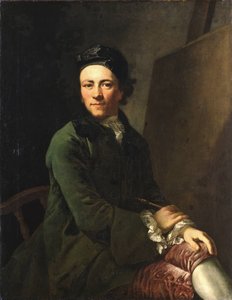
Anton Graff
1736 - 1813 , Suiza
Datos clave
- Artistic Movement Or Style: Neoclasicismo
- Artists Or Movements Influenced By This Artist: ['Frederick Law Olmsted']
- Artists Who Influenced This Artist: ['Johann Ulrich Schellenberg']
- Date Of Birth: 1736
- Date Of Death: 1813
- Full Name: Anton Graff
- Nationality: Suizo
- Notable Artworks:
- Retrato del Duque Antón de Lorena
- Niña en Traje Folclórico
- Place Of Birth: Winterthur, Suiza
Artículos relacionados
Anton von Werner: Imperial Painter, Historical Witness & Shifting German Identity
Explore the life & work of Anton von Werner, Imperial Germany's leading painter. Discover his dramatic depictions of war, unification, and court life – a fascinating insight into 19th-century German history & art.
El Siglo XVIII en el Arte: 10 Obras Maestras para Decorar con Historia y Elegancia
Descubre 10 obras maestras del siglo XVIII: Goya, Fragonard y más. Explora la historia, el arte barroco, rococó y neoclasicismo que inspiran decoración elegante. Reproducciones de alta calidad en ArtsDot.com.

Expresionismo Alemán: 10 Obras Maestras que Transformaron el Arte | ArtsDot
Descubre las 10 obras maestras del Expresionismo Alemán: Kirchner, Munch y más. Explora la historia, técnica y emoción detrás de estos lienzos icónicos. Reproducciones de arte de museo en ArtsDot.com. ¡Inspira tu hogar con arte!
Reflecting Nobility & Nuance: 18th-Century Portraiture as a Window into Societal Values
Explore the world of 18th-century portraiture with ArtsDot. Discover symbolism, artistic innovation & societal values reflected in masterpieces by Reynolds, Hogarth & more. Expert insights for collectors.
Neoclasicismo: 10 Obras Maestras que Definieron un Estilo Eterno |
Descubre las 10 obras maestras del Neoclasicismo con . Explora la historia de David, Ingres y Canova, su técnica y el legado de este estilo eterno. Reproducciones de arte de museo para tu hogar. ¡Explora la colección online!