

 Enviar
 Compartir
 Detalles

 Descargar
 Similares
 Presentación de diapositivas
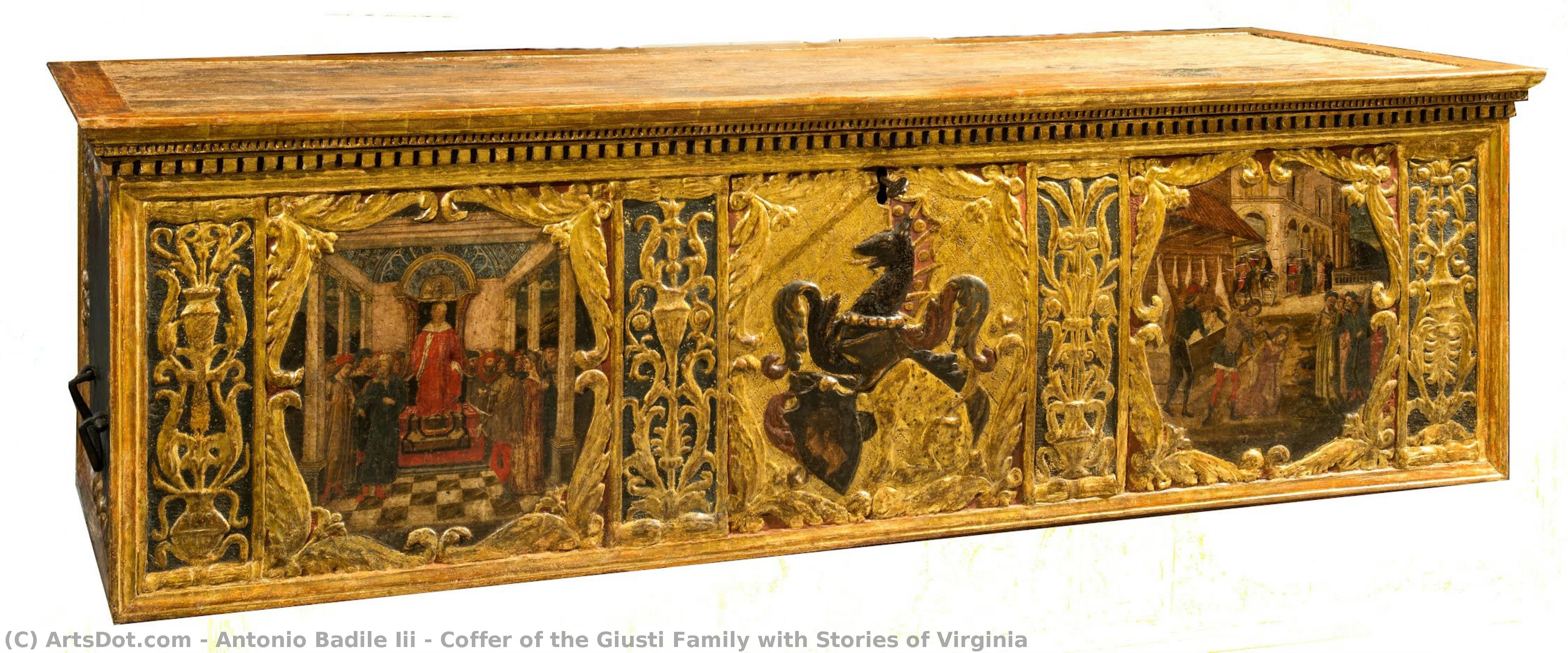
Coffer of the Giusti Family with Stories of Virginia
 Wood
Wood- Sculpture
- Renaissance
 1400
1400- Renaissance
 190.0 x 59.0 cm
 Museo Castelvecchio
 Ver más
Giclée / Impresión de arte
Impresiones giclée o en lienzo de calidad de museo con producción rápida y opciones de acabado flexibles. ( Comprar pintura hecha a mano Comprar imagen)




































Elija entre nuestros tamaños predefinidos que respetan las proporciones originales de la obra.

Puede introducir sus propias dimensiones para adaptarse a un marco o espacio específico. Si el tamaño seleccionado no coincide con las proporciones de la imagen original, recortaremos la obra de arte o extenderemos la imagen con un borde con efecto espejo o de color sólido. Se enviará una maqueta digital para su aprobación antes de que comience la producción.
Tenga en cuenta que la vista previa en pantalla no refleja el recorte o la extensión real. Solo la maqueta mostrará con precisión la composición final.
Aunque existen tamaños personalizados, recomendamos seleccionar una dimensión de la lista predefinida para preservar las proporciones originales.
Envío a todo el mundo () en 2 semanas en lugar de las 4/5 semanas estándar. (6 septiembre)

Envío exprés gratuito a todo el mundo

Lienzo de lino de alta calidad

Seguro de envío total

Garantía de reembolso de impuestos aduaneros

Garantía de fidelidad cromática exacta

Política de devolución de 100 días (solo por defectos)

Garantía de devolución del 100% del dinero

Descuento por cantidad
 La opción de vidrio solo está disponible en tamaños inferiores a 110 cm.

Coffer of the Giusti Family with Stories of Virginia
Giclée / Impresión de arte
Dimensiones de la reproducción
-


Precio total final
$ 62
A Masterpiece of Narrative Splendor
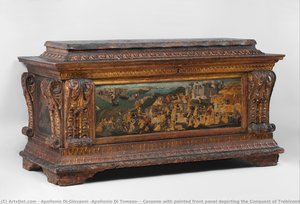
In the realm of Renaissance craftsmanship, few objects command attention quite like the Coffer of the Giusti Family with Stories of Virginia. This exquisite wedding chest, dating back to approximately 1400, serves as a breathtaking intersection of fine woodworking and classical storytelling. Crafted from sturdy fir wood using the meticulous dovetail joint technique, the piece is far more than a mere functional item; it is a portable stage for historical drama. The chest is adorned with a precious denticulated frame and an abundant gilded tablet decoration that catches the light, drawing the eye toward the central panel which proudly displays the arms of the Giusti family. This heraldic centerpiece is flanked by elegant candelabra motifs, creating a sense of architectural grandeur even within the confines of a domestic object.
The artistry extends to the very edges of the composition, where four pairs of knotted leaves anchor the corners, lending an almost circular, organic softness to the three isolated fields on the forehead. This delicate balance between the rigid structure of the wood and the fluid, decorative elements creates a visual rhythm that has captivated observers for centuries. For the discerning collector or interior designer, such a piece represents the pinnacle of period elegance, offering a profound sense of history and a sophisticated focal point for any curated space.
The Drama of Antiquity Unfolded
Beyond its gilded exterior, the coffer serves as a vivid manuscript in paint. The decorated compartments illustrate two pivotal moments from the tragic legend of Virginia and Claudio Appio, as chronicled by ancient historians such as Livy, Dionysius of Halikanassus, and Cicero. These panels do not merely depict scenes; they breathe life into the classical past. One can almost feel the tension in the air as the painted figures navigate the political and personal turmoil of Rome. The second episode is rendered with an extraordinary level of realism and literalism, capturing the harrowing moment when Virginio, brandishing a butcher's knife, takes action to protect his daughter’s honor.
The technique employed here reflects a transition in artistic sensibility, where the narrative clarity required for such complex stories meets a burgeoning interest in human emotion. The use of color and composition within these small, isolated fields allows the viewer to become an active participant in the unfolding tragedy. This ability to weave high-stakes historical drama into the grain of a wooden chest makes the work an unparalleled specimen of late medieval and early Renaissance storytelling, where every brushstroke serves the purpose of moral and historical instruction.
A Legacy of Craftsmanship and Inspiration
The provenance and execution of this piece speak to a time when art was deeply integrated into the fabric of daily life. The preservation of the original lid and handles, alongside the remarkably intact interior, offers a rare window into the domestic luxury of the 15th century. While the work is attributed to the era of Antonio Badile III—a master known for blending the linear elegance of the Gothic style with the burgeoning innovations of the Italian Renaissance—the coffer itself stands as a testament to the enduring power of the Veronese tradition.
For those seeking to bring a piece of this historical majesty into a modern setting, a high-quality reproduction offers an opportunity to celebrate the intersection of fine art and decorative excellence. Whether placed in a grand library or used as a statement piece in a contemporary salon, the Coffer of the Giusti Family evokes a sense of timelessness. It invites contemplation of the virtues of honor, sacrifice, and the enduring strength of family legacy, making it an evocative choice for any space dedicated to the appreciation of true artistic heritage.
Obras relacionadas

Biografía del artista
primeros años y formación
antonio badile iii, pintor italiano de verona, nació en 1517, sumergido en un legado de gran prestigio, pues era nieto de giovanni badile da verona, un reconocido maestro del siglo XV. Su formación, forjada bajo la tutela de su tío francesco badile y de giovanni francesco caroto, sentó las bases fundamentales para el éxito que alcanzaría en su trayectoria profesional.influencias artísticas y estilo
la esencia de antonio se define por una maestría técnica que influyó profundamente en figuras como paul véronèse y su cuñado giovanni battista zelotti. Su pincel también se nutrió de la sensibilidad del pintor bresciano alessandro bonvicino (il moretto). Esta mezcla ecléctica de corrientes dio lugar a un estilo único, capaz de entrelazar con armonía los elementos del renacimiento italiano con la rica tradición veronesa.obras notables y legado
entre sus creaciones más memorables destacan piezas que narran la transición de épocas:- santos cecilia, tiburcio y valeriano (museo castelvecchio, verona, italia), un tríptico que revela su fascinación por integrar las innovaciones renacentistas dentro de una estructura lineal y gótica.
- retablo de san nazaro, que presenta a la madonna y los santos (1540), una obra donde su dominio de la composición y el color alcanza su plenitud.
- la resurrección de lazaro en la chapelle de la sainte-croix, iglesia de san bernardino, donde demuestra su destreza para capturar escenas de gran dramatismo.
museos y colecciones
la obra de antonio se preserva en diversas ciudades de la región del véneto. Para profundizar en su universo artístico y descubrir otros maestros, puede visitar el museo parrocchiale (verolanuova, italia) o explorar el extenso perfil del artista: antonio badile iii en ArtsDot.conclusión
las contribuciones de antonio badile iii a la tradición pictórica veronesa son innegables; su capacidad para fusionar influencias y su maestría compositiva han dejado una huella imborrable en el mundo del arte. Para sumergirse más profundamente en su legado y en el de otros artistas de renombre, le invitamos a explorar la completa base de datos de arte de ArtsDot.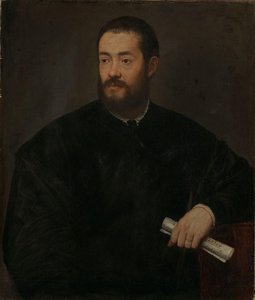
Antonio Badile Iii
1517 - 1560 , Italia
Datos clave
- Artistas O Movimientos Influenciados Por Este Artista:
- Leonardo da Vinci
- Estilo de Savonarola
- Artistas Que Influyeron En Este Artista:
- Cosimo Rosselli
- Rafael
- Fecha De Muerte: 31 de octubre de 1517
- Fecha De Nacimiento: 28 de marzo de 1472
- Lugar De Nacimiento: Savignano di Prato, Toscana
- Movimiento O Estilo Artístico: Alto Renacimiento
- Nacionalidad: Renacimiento italiano
- Nombre Completo: Fra Bartolomeo”
- Obras Notables:
- Visión de San Bernardo
- Retrato de Savonarola
Artículos relacionados

Evolución de los Retratos: El Arte Personalizado como Crónica de la Vida Familiar a Través de las Generaciones
Descubre la evolución del retrato familiar y cómo convertir tus recuerdos en obras de arte atemporales. Pinturas al óleo personalizadas por artistas expertos. ¡Preserva tu legado con ArtsDot!

The Enduring Legacy of Family Portraiture: A Historical & Artistic Exploration
Explore the rich history of family portraiture with ArtsDot. Discover artistic styles, symbolism & collecting insights. Commission a custom oil painting or appraise your existing artwork today!

Ecos de la Ancestralidad: Retratos Familiares a Través de la Historia
Descubra la historia y el simbolismo del retrato familiar a través de los siglos. En , revive tu legado con reproducciones y comisiones personalizadas.

Depicting Kinship: Family Values Across Artistic Movements & Historical Contexts
Explore the rich history of depicting kinship in art! From Dutch Masters to contemporary artists, discover how family values have been represented across movements & time. Expert insights for collectors at ArtsDot.
De Instantánea a Legado: Reinterpretando Retratos Familiares a Través de las Técnicas de los Maestros Antiguos
Transforme sus fotos familiares en obras de arte atemporales con ArtsDot.com. Retratos personalizados pintados a mano por artistas expertos, utilizando técnicas ancestrales y materiales de calidad museo. ¡Legado familiar garantizado!