Comprar impresión
 Enviar
 Compartir


 Descargar
 Similares
 Presentación de diapositivas
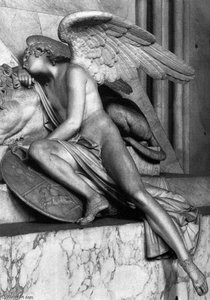
Monument to Archduchess Maria Christina (detail)


Antonio Canova (1757 – 1822)
Descubre a Antonio Canova (1757-1822), el escultor neoclásico por excelencia! Admira sus impresionantes estatuas de mármol como Cupido y Psique, Las Gracias y más. ¡Explora su vida y legado!
Iglesia de los Agustinos (Vienna, Austria)
Descubre la Iglesia de los Agustinos de Viena: iglesia imperial Habsburgo durante siglos! Admira bodas reales, el monumento a Canova y el cripta imperial Herzgruft.
Antonio Canova’s Monument to Archduchess Maria Christina: A Study in Grief and Neoclassical Elegance
The monumental sculpture by Antonio Canova, “Monument to Archduchess Maria Christina,” stands as a testament to the Romantic era's fascination with classical ideals while simultaneously grappling with profound sorrow. Completed in 1805 for Duke Albert von Sachsen-Teschen’s beloved wife, Maria Cristina, it embodies the spirit of its time—a desire to honor memory and beauty through meticulously crafted marble form—and continues to captivate viewers today with its masterful execution and poignant symbolism.A Synthesis of Antiquity and Emotion
Canova's decision to draw inspiration from the pyramidal tombs of ancient Egypt wasn’t merely stylistic; it represented a deliberate rejection of Baroque excess in favor of restrained grandeur. The pyramid shape itself symbolizes stability, permanence, and ascension—a visual metaphor for Maria Cristina’s eternal repose. However, this formal elegance is tempered by an exquisitely rendered depiction of grief. The reclining figure embodies vulnerability and sorrow, her wings outstretched as if yearning for solace or attempting to ward off despair. This juxtaposition of classical form and emotional expression distinguishes Canova's work from its predecessors and establishes it as a cornerstone of Neoclassical sculpture.Technique and Material: Carrara Marble Perfection
Canova’s skill lay in his unparalleled mastery of marble carving—specifically Carrara marble, renowned for its purity and translucency. The sculptor employed meticulous techniques to achieve an astonishing level of realism, capturing the subtle nuances of musculature and drapery with breathtaking precision. Layers upon layers of dust were painstakingly removed from the surface, revealing a luminous sheen that enhances the sculpture’s ethereal quality. Canova's dedication to detail ensured that every contour conveyed emotion—the gentle curve of Maria Cristina’s torso, the delicate folds of her gown—creating an immersive experience for the observer.Symbolism Beyond Form: Mourning and Remembrance
The sculpture transcends mere representation; it speaks volumes about the human condition. The wings symbolize transcendence – a longing for spiritual comfort beyond earthly suffering – reflecting the prevailing Romantic preoccupation with themes of mortality and afterlife. Furthermore, the pose itself—reclining on a stone base—suggests both repose and vulnerability, mirroring the acceptance of death as inevitable yet accompanied by grace and dignity. Canova’s intention was to honor Maria Cristina's memory not merely through physical likeness but also through conveying the profound emotion associated with loss – a sentiment that resonates powerfully across centuries.Historical Context: The Romantic Response to Loss
Created during the Napoleonic Wars, “Monument to Archduchess Maria Christina” reflects the anxieties and aspirations of its era. The sculpture emerged from a cultural landscape grappling with upheaval and uncertainty—yet simultaneously yearning for solace in timeless beauty and moral virtue. Canova’s work stands as an emblem of Romantic idealism – a belief that art could elevate the human spirit and offer consolation amidst hardship. Its enduring appeal lies precisely in its ability to capture the universal experience of grief while upholding the highest standards of artistic achievement, cementing Canova's legacy as one of the most influential sculptors of his time.- Artist: Antonio Canova
- Born Year: 1757
- Death Year: 1822
- Birth City: Possagno
- Birth Country: Italy
Further Research:
- Tomb of Duchess Maria Christina of Saxony-Teschen by CANOVA ...
- Monument to Archduchess Maria Christina (detail)
- Monument to Archduchess Maria Christina (detail)
- Gipsoteca
- Funerary Monument to Maria Christina of Austria - Antonio Canova
- The age of neo-classicism: [catalogue] of the fourteenth exhibition of the Council of Europe [held at] the Royal Academy and the Victoria & Albert Museum,
Sobre esta obra
- Título: Monument to Archduchess Maria Christina (detail)
- Artista: Antonio Canova
- Año: 1798
- Formato: Portrait
- Estado de derechos de autor: Dominio público
- Ubicación: Iglesia de los Agustinos
- Técnica y materiales: Sculpture Bronze
- Técnica o medio: Sculpture
- Color predominante: Espresso
- Finalidad: Accent
Datos clave
- Artistic style: Classical Ideals
- Subject or theme: Mourning; Grief
- Notable elements or techniques: Winged Figure; Anatomical Detail
- Influences: Greek Sculpture
- Title: Monument to Archduchess Maria Christina (detail)
- Year: 1798
- Medium: Marble Sculpture
Código QR