

 Ver en contexto
 Enviar
 Compartir
 Detalles

 Descargar
 Similares
 Radiografía
 Presentación de diapositivas
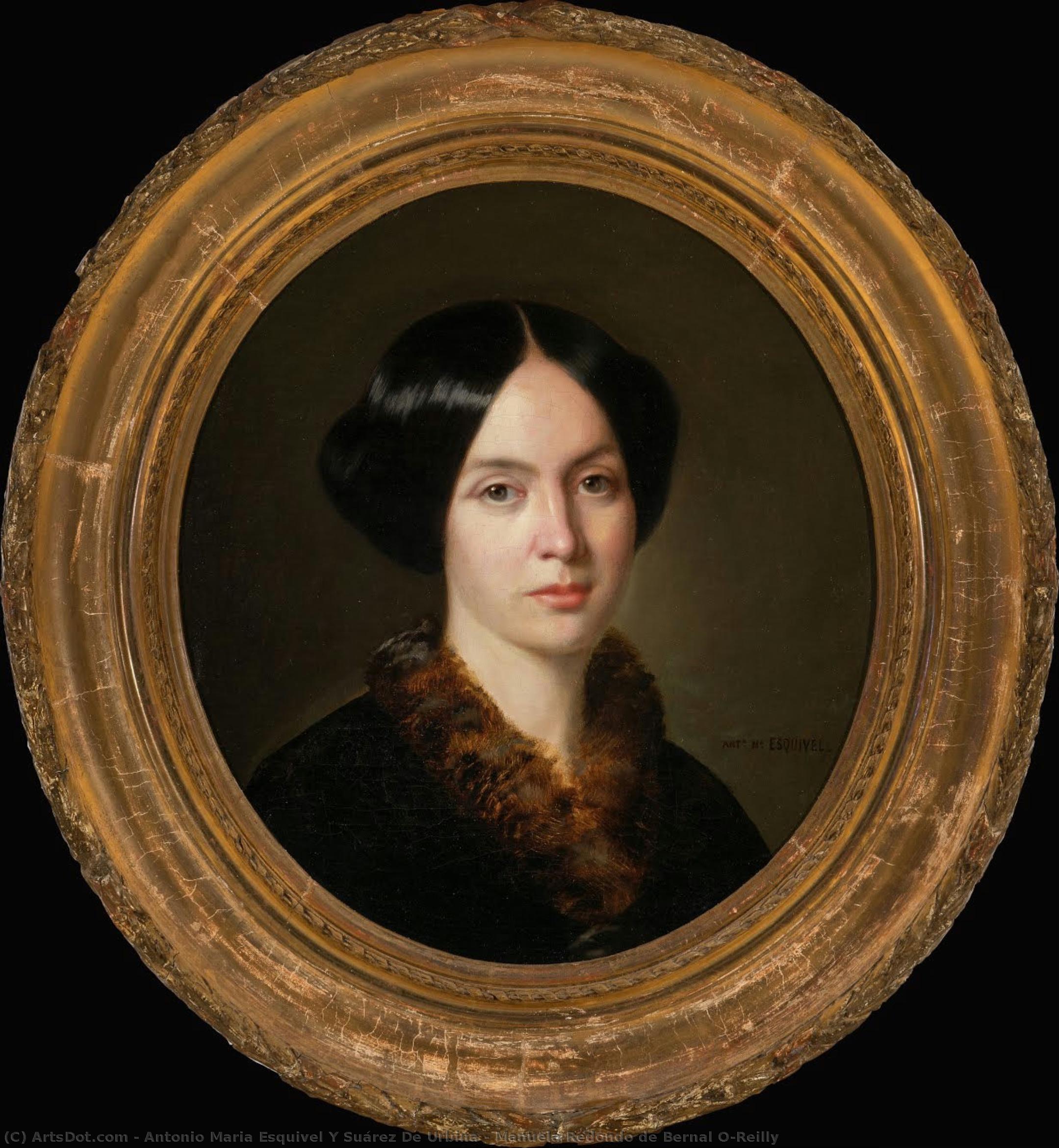
Manuela Redondo de Bernal O’Reilly
 71.0 x 65.0 cm
 Centro de Colección Patrimonial de Gipuzkoa
 Ver más
Reproducción al óleo hecha a mano
Óleo sobre lienzo pintado a mano en el tamaño y marco de su elección, realizado por encargo por nuestros artistas. ( Comprar impresión Comprar imagen)




































Elija entre nuestros tamaños predefinidos que respetan las proporciones originales de la obra.

Puede ingresar sus propias dimensiones para adaptarse a un marco o espacio específico. Si el tamaño seleccionado no coincide con las proporciones de la imagen original, recortaremos la obra o extenderemos la pintura con elementos adicionales pintados a mano. Se le enviará una maqueta digital para su aprobación antes de comenzar la producción.
Tenga en cuenta que la vista previa en pantalla no refleja el recorte o la extensión reales. Solo la maqueta mostrará con precisión la composición final.
Si bien existen tamaños personalizados, recomendamos seleccionar una dimensión de la lista predefinida para preservar las proporciones originales.
Tras realizar el pedido, el equipo de ArtsDot.com enviará un correo electrónico al cliente para solicitar instrucciones y proporcionarle una vista previa del boceto.
Envío a todo el mundo () en 3-4 semanas en lugar de las 5 semanas estándar. (7 septiembre). Sin comprometer la calidad.

Envío exprés gratuito a todo el mundo

Lienzo de lino de alta calidad

Seguro de envío total

Garantía de reembolso de impuestos aduaneros

Garantía de fidelidad cromática exacta

Política de devolución de 100 días (solo por defectos)

Garantía de devolución del 100% del dinero

Descuento por cantidad
 La opción de vidrio solo está disponible en tamaños inferiores a 110 cm.

Manuela Redondo de Bernal O’Reilly
Técnica de reproducción
Dimensiones de la reproducción
-


Precio total final
$ 263
Obras relacionadas










Biografía del artista
The Soul of Spanish Romanticism: The Life of Antonio María Esquivel
In the heart of nineteenth-century Spain, a period defined by the turbulent beauty of Romanticism, the name Antonio María Esquivel y Suárez de Urbina emerged as a beacon of psychological depth and technical mastery. Born in Seville on March 8, 1806, Esquivel’s early life was shadowed by the profound tragedy of war; his father, a dedicated cavalry officer, perished at the Battle of Bailén in 1808. This early encounter with loss perhaps seeded the emotional sensitivity that would later define his brushwork. Growing up in the vibrant, sun-drenched atmosphere of Seville, he began his formal artistic journey at the Real Academia de Bellas Artes de Santa Isabel de Hungría. It was here that he first encountered the lingering echoes of the great Baroque master, Murillo. By absorbing Murillo’s sophisticated use of chiaroscuro—that dramatic, breathing interplay between light and shadow—Esquivel developed a foundational ability to imbue his subjects with a sense of living presence and spiritual weight.
As his ambitions grew, Esquivel sought the intellectual rigor of Madrid, moving to the capital in 1831. His arrival was marked by a relentless pursuit of excellence, leading him to enroll at the prestigious Real Academia de Buenos Aires de San Fernando as a merit scholar. This period of his life was one of intense academic expansion and social engagement. He did not merely paint; he became a vital thread in the cultural fabric of Madrid, helping to found the Artistic and Literary Lyceum in 1837. His role in this institution was multifaceted, as he even shared his profound understanding of human form by teaching classes in anatomy—a discipline that would later lend a structural precision to his portraits, allowing him to capture not just the surface of a face, but the very bone and muscle of human emotion.
A Master of the Portrait and the Human Spirit
While Esquivel’s repertoire touched upon various themes, it was in the realm of portraiture that he achieved his most enduring immortality. He possessed a rare gift for navigating the delicate balance between Neoclassical dignity and Romantic passion. His portraits were far more than mere likenesses; they were psychological studies that captured the essence of Spain's aristocratic and intellectual elite. Whether depicting the solemn authority of a figure like Manuel Gutierrez or the tender, familial intimacy found in his Self-portrait with his sons Carlos and Vicente, Esquivel’s work resonated with a profound sense of character. His ability to render the softness of childhood skin alongside the heavy textures of velvet and lace made him a sought-after chronicler of his era.
The evolution of his style is particularly evident in how he transitioned from the rigid structures of academic training to a more fluid, emotive expression. This development was not without its personal struggles. A period of severe illness eventually left him nearly blind, a devastating blow for an artist whose life was dedicated to the observation of light and form. The darkness brought by his failing vision mirrored a deep personal melancholy, yet even in these difficult years, his legacy remained anchored in the triumphs of his earlier career. His work stands as a testament to a period when art sought to bridge the gap between the external world and the internal landscape of the human soul.
Legacy and Historical Significance
The historical significance of Antonio María Esquivel lies in his role as a bridge between the classical traditions of the Spanish Golden Age and the emotive fervor of the Romantic movement. He carried the torch of Murillo into a new century, refining the techniques of light and shadow to suit a more modern, introspective age. His contributions to the Madrid art scene through the Lyceum helped foster a generation of artists, ensuring that the dialogue between science—through his anatomical studies—and art remained vibrant.
Today, the works of Esquivel are preserved in some of the world's most esteemed institutions, including the Museo del Prado, where they continue to captivate viewers with their timeless elegance. To study his life is to study the very heartbeat of nineteenth-century Spanish culture: a blend of academic discipline, profound tragedy, and an unyielding passion for capturing the fleeting beauty of the human countenance.
antonio maria esquivel y suárez de urbina
1806 - 1857
Datos clave
- Artistic Movement Or Style: Romantic
- Artists Or Movements Influenced By This Artist: ['Romanticism']
- Artists Who Influenced This Artist: ['Murillo']
- Date Of Birth: March 8, 1806
- Date Of Death: April 9, 1857
- Full Name: Antonio María Esquivel y Suárez de Urbina
- Nationality: Spanish
- Notable Artworks: ['Portrait of María Ignacia de Borbón']
- Place Of Birth: Seville, Spain