

 Ver en contexto
 Enviar
 Compartir
 Detalles

 Descargar
 Similares
 Radiografía
 Presentación de diapositivas
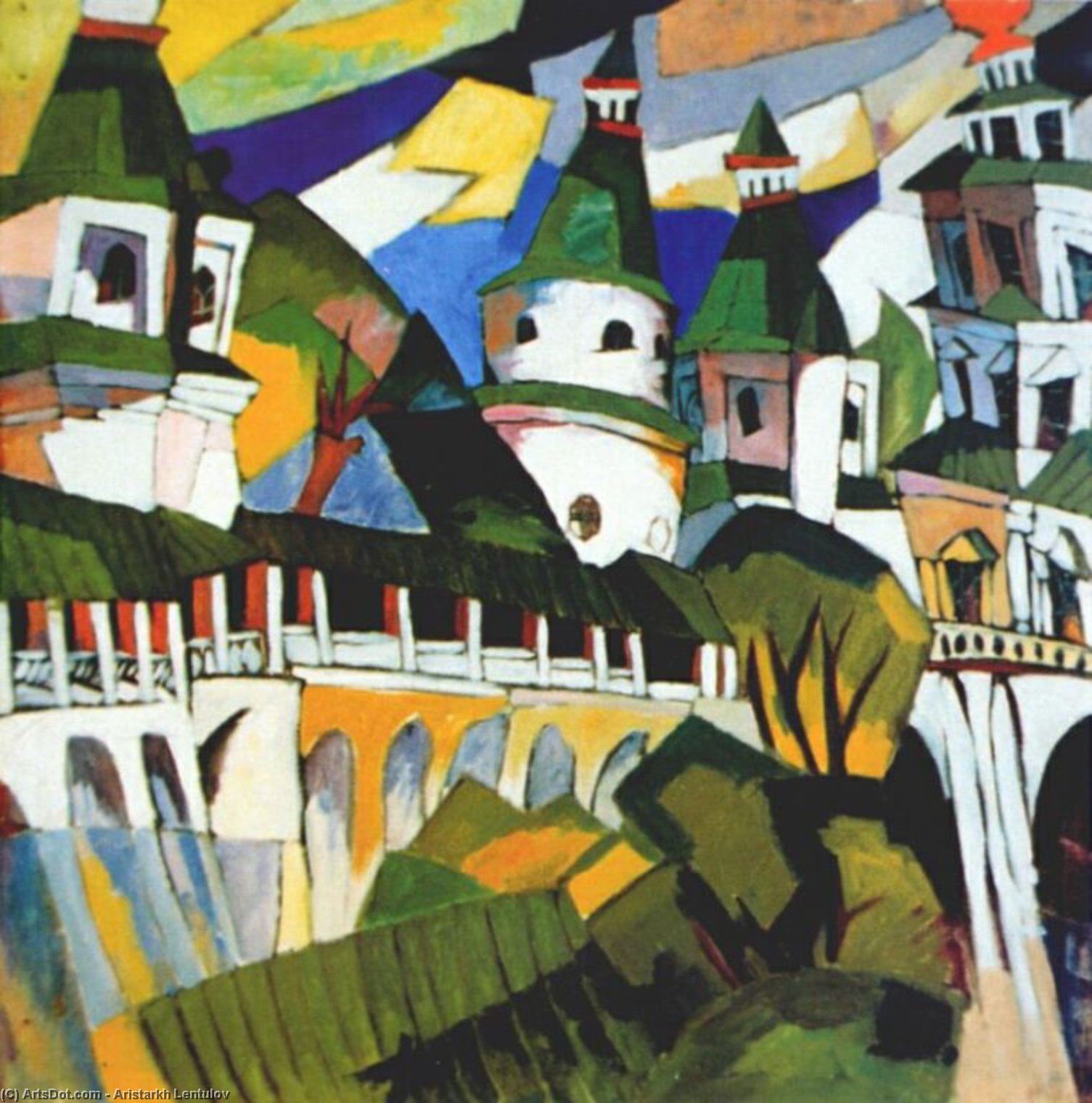
Churches


 Ver más
Reproducción al óleo hecha a mano
Óleo sobre lienzo pintado a mano en el tamaño y marco de su elección, realizado por encargo por nuestros artistas. ( Comprar impresión Comprar imagen)




































Elija entre nuestros tamaños predefinidos que respetan las proporciones originales de la obra.

Puede ingresar sus propias dimensiones para adaptarse a un marco o espacio específico. Si el tamaño seleccionado no coincide con las proporciones de la imagen original, recortaremos la obra o extenderemos la pintura con elementos adicionales pintados a mano. Se le enviará una maqueta digital para su aprobación antes de comenzar la producción.
Tenga en cuenta que la vista previa en pantalla no refleja el recorte o la extensión reales. Solo la maqueta mostrará con precisión la composición final.
Si bien existen tamaños personalizados, recomendamos seleccionar una dimensión de la lista predefinida para preservar las proporciones originales.
Tras realizar el pedido, el equipo de ArtsDot.com enviará un correo electrónico al cliente para solicitar instrucciones y proporcionarle una vista previa del boceto.
Envío a todo el mundo () en 3-4 semanas en lugar de las 5 semanas estándar. (3 septiembre). Sin comprometer la calidad.

Envío exprés gratuito a todo el mundo

Lienzo de lino de alta calidad

Seguro de envío total

Garantía de reembolso de impuestos aduaneros

Garantía de fidelidad cromática exacta

Política de devolución de 60 días (solo por defectos)

Garantía de devolución del 100% del dinero

Descuento por cantidad
 La opción de vidrio solo está disponible en tamaños inferiores a 110 cm.

Churches
Técnica de reproducción
Dimensiones de la reproducción
-


Precio total final
$ 263
Obras relacionadas
Biografía del artista
Aristarkh Lentulov: A Pioneer of Russian Modernism
Aristarkh Vasilyevich Lentulov, born in 1882 in a small village near Penza, Russia, was not merely a painter; he was a vital architect of the Russian avant-garde. His life’s work represents a fascinating confluence of influences – from traditional folk art and religious iconography to the radical experimentation of Cubism and Futurism – resulting in a uniquely vibrant and emotionally charged style that continues to captivate viewers today. Lentulov's journey, marked by both artistic breakthroughs and periods of political alignment, offers a compelling glimpse into the turbulent era of early 20th-century Russia.
Early influences shaped Lentulov’s formative years. Initially drawn to realism, he honed his skills at various art schools in Penza, Kiev, and St. Petersburg, absorbing techniques from masters like Ilya Repin and Dmitry Kardovsky. However, it was his encounter with the Parisian avant-garde in 1911 that proved transformative. Immersed in the circles of Cubists such as Robert Delaunay, he embraced fragmentation, geometric abstraction, and a bold use of color – elements that would become cornerstones of his distinctive style. This period wasn’t simply an imitation of Western trends; Lentulov skillfully integrated these influences with his own deeply rooted Russian sensibility.
The Jack of Diamonds and the Rise of Cubo-Futurism
Lentulov's artistic trajectory gained momentum through his involvement in the “Jack of Diamonds” group, a notoriously rebellious collective that emerged in Moscow during 1910. This association was far more than just a social circle; it represented a deliberate challenge to established artistic norms and a fervent embrace of innovation. The Jack of Diamonds, known for their provocative exhibitions and outspoken critiques, sought to shock the public and force a re-evaluation of art’s role in society. Lentulov's participation solidified his position within this dynamic movement, pushing him towards increasingly experimental forms.
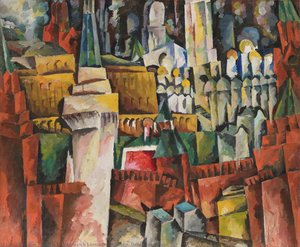
His work during this period – exemplified by paintings like “Moscow” (1916) and “Church. New Jerusalem” (1917) – is characterized by a remarkable dynamism. Planes are fractured and reassembled, colors clash and harmonize in unexpected ways, and the familiar world is rendered with an almost hallucinatory intensity. Lentulov’s use of color wasn't merely decorative; it conveyed emotion, energy, and a sense of underlying chaos. He drew inspiration from Russian folklore, incorporating elements of traditional patterns and imagery into his abstract compositions, creating a visual language that was both modern and deeply rooted in the nation’s cultural heritage.
From Cubo-Futurism to Social Realism
Following the 1917 Revolution, Lentulov navigated the shifting political landscape of Soviet Russia. While initially aligned with the avant-garde, he gradually adapted his style to align with the prevailing artistic directives. He continued to work as a stage designer for prominent theaters, contributing significantly to the visual identity of numerous productions. This period saw a shift towards more tonal and representational works, often depicting landscapes and portraits imbued with a sense of warmth and vitality.
Despite these changes, Lentulov never abandoned his core artistic principles. His paintings from the 1920s and 30s – such as “Dawn at Volga” (1928) and “Sun over the Roofs. Sunrise” (1928) – retain a remarkable energy and emotional depth. He continued to experiment with color and composition, exploring themes of everyday life and the beauty of the Russian countryside. His later work, particularly his stage designs for productions like "Spanish Priest" (1934), demonstrated his enduring creativity and versatility.
Legacy and Significance
Aristarkh Lentulov’s legacy extends far beyond his individual works. He was a pivotal figure in the development of Russian modernism, bridging the gap between European avant-garde movements and the unique cultural traditions of Russia. His innovative use of color, fragmented forms, and symbolic imagery profoundly influenced generations of artists. Lentulov's art serves as a testament to the power of artistic experimentation and the enduring spirit of creativity in the face of political and social upheaval. He remains an important voice in Russian art history, celebrated for his bold vision and unwavering commitment to pushing the boundaries of artistic expression.
aristarkh vasilevich lentulov
1882 - 1943
Datos clave
- Artistic Movement Or Style:
- Cubism
- Cubo-Futurism
- Orphism
- Fauvism
- Artists Or Movements Influenced By This Artist:
- Wassily Kandinsky
- Kazimir Malevich
- Artists Who Influenced This Artist:
- Robert Delaunay
- Henri Le Fauconnier
- J. Metzenge
- Dmitry Kardovsky
- Date Of Birth: January 16, 1882
- Date Of Death: April 15, 1943
- Full Name: Aristarkh Vasilyevich Lentulov
- Nationality: Russian
- Notable Artworks:
- Moscow
- Portrait of N. Svendonskaya
- Street, Moscow
- Churches, New Jerusalem
- Place Of Birth: Penza Oblast, Russia

