 Vista previa
 Compartir
 Compartir
 Ver detalles

 Descargar
 Ver similares
 Radiografía
 Presentación de diapositivas
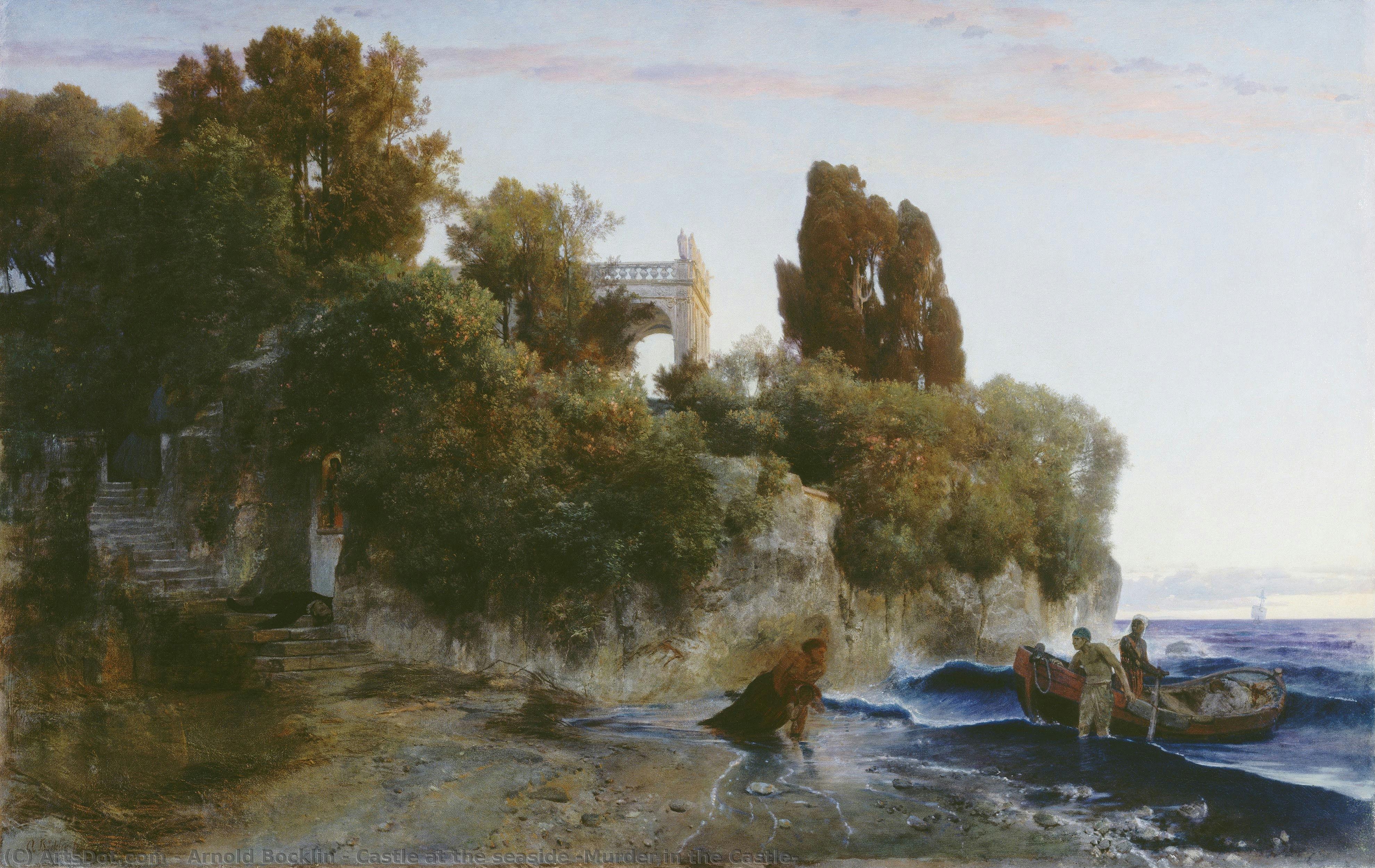
Castle at the seaside (Murder in the Castle)


 Leer más
Reproducción al óleo hecha a mano
Óleo sobre lienzo pintado a mano en el tamaño y marco de su elección, realizado por encargo por nuestros artistas. ( Pedir impresión Comprar descarga)




P118B $10

P118H $10

P118W $10

P438Z $10

P508JH $12

P508YH $12

P805H $10

P805Z $10

P919BZ $10

P919G $10

P919XJ $10

P959ZH $10

P968JZ $12

W106C $8

W218G $10

W218JH $8

W218Y $10

W307PJ $10

W316G $10

W316PJ $8

W316Y $10

W398PJ $8

W4111J $10

W500HY $15

W500JH $15

W692G $12

W849H $8

W940BG $15

W953PJ $8




Elija entre nuestros tamaños predefinidos que respetan las proporciones originales de la obra.

Puede ingresar sus propias dimensiones para adaptarse a un marco o espacio específico. Si el tamaño seleccionado no coincide con las proporciones de la imagen original, recortaremos la obra o extenderemos la pintura con elementos adicionales pintados a mano. Se le enviará una maqueta digital para su aprobación antes de comenzar la producción.
Tenga en cuenta que la vista previa en pantalla no refleja el recorte o la extensión reales. Solo la maqueta mostrará con precisión la composición final.
Si bien existen tamaños personalizados, recomendamos seleccionar una dimensión de la lista predefinida para preservar las proporciones originales.
Tras realizar el pedido, el equipo de ArtsDot.com enviará un correo electrónico al cliente para solicitar instrucciones y proporcionarle una vista previa del boceto.
Envío a todo el mundo () en 3-4 semanas en lugar de las 5 semanas estándar. (20 agosto). Sin comprometer la calidad.

Envío exprés gratuito a todo el mundo

Lienzo de lino de alta calidad

Seguro de envío completo

Garantía de reembolso de aranceles aduaneros

Garantía de fidelidad cromática exacta

Política de devolución de 60 días (solo por defectos)

Garantía de devolución del 100% del dinero

Oferta por volumen
 La opción de vidrio solo está disponible en tamaños inferiores a 110 cm.

Castle at the seaside (Murder in the Castle)
Técnica de reproducción
Tamaño de la reproducción
-


Precio total
$ 263
Descripción de la obra
A Glimpse into a Dreamscape: The Genesis of "Castle by the Sea & Murder in the Castle Garden"
Arnold Böcklin's 1859 painting, “Castle by the Sea & Murder in the Castle Garden,” isn’t merely a depiction of a coastal scene; it’s an immersion into a realm of profound melancholy and unsettling beauty. Born in Basel during a period of intense artistic and intellectual ferment—the rise of Symbolism challenging the dominance of Realism—Böcklin was deeply influenced by Romanticism's fascination with the sublime, the macabre, and the power of the imagination. This work exemplifies his signature style: a haunting blend of classical architectural grandeur juxtaposed against the raw, elemental forces of nature, all rendered in a palette of muted blues, greys, and ochres that evoke a perpetual twilight.
The painting immediately draws the eye to the imposing castle perched precariously on a cliff face, its weathered stone hinting at centuries of silent observation. Below, a bustling scene unfolds: laborers toil on the beach, their figures rendered with a deliberate lack of detail, suggesting an almost anonymous existence. A small boat ventures out towards the horizon, while a shadowy figure—perhaps a victim or a perpetrator—lurks within the castle’s darkened interior. The composition is deliberately unbalanced, creating a sense of unease and foreboding. Böcklin masterfully uses atmospheric perspective to draw the viewer into this enclosed world, blurring the lines between reality and dream.
Symbolism Woven into Stone: Unpacking the Layers of Meaning
Böcklin’s work is rich in symbolic resonance, inviting multiple interpretations. The castle itself represents a decaying ideal—a monument to ambition and power now crumbling under the relentless passage of time. Its isolation speaks to themes of loneliness, mortality, and the futility of earthly pursuits. The laborers on the beach embody the struggles of ordinary life, their labor rendered as a repetitive, almost ritualistic act. The small boat represents hope or escape, but its destination remains uncertain. Crucially, the “murder” hinted at within the castle’s walls isn't explicitly depicted; it’s suggested through atmosphere and implication—a subtle disruption of the established order.
The painting is deeply rooted in Romantic ideas about the sublime – that experience which inspires awe and terror simultaneously. Böcklin taps into this feeling, creating a scene that is both beautiful and unsettling. The use of muted colors contributes to this effect, evoking a sense of sadness and loss. Furthermore, the castle’s architecture—a blend of Romanesque and Gothic styles—references classical notions of power and authority, now rendered obsolete by time and circumstance.
Technique and Texture: A Masterclass in Atmospheric Painting
Böcklin's technique is characterized by a meticulous attention to detail combined with a loose, expressive brushstroke. He employs a layering technique—building up the image through multiple thin glazes of oil paint—to create a sense of depth and luminosity. The textures are remarkably varied: the rough, uneven surface of the beach contrasts sharply with the smooth, polished stone of the castle walls. Böcklin’s use of color is particularly noteworthy; he masterfully employs chiaroscuro – the dramatic contrast between light and shadow – to heighten the emotional impact of the scene.
The artist's deliberate choice of a limited palette—primarily blues, greys, and ochres—contributes significantly to the painting’s somber mood. He skillfully uses these colors to create a sense of atmosphere, evoking the feeling of a perpetual twilight or a melancholic dream. The brushwork itself is loose and expressive, conveying a sense of movement and dynamism within the static composition.
A Legacy of Mystery: “Castle by the Sea & Murder in the Castle Garden” Today
“Castle by the Sea & Murder in the Castle Garden” remains one of Böcklin’s most enduringly captivating works. Its haunting beauty and profound symbolism continue to resonate with viewers today, prompting reflection on themes of mortality, loss, and the human condition. The painting's influence can be seen in the work of numerous artists who followed in Böcklin’s footsteps, including Symbolist painters like Odilon Redon and Gustave Moreau. It is a testament to the power of art to evoke emotion, stimulate imagination, and transcend time.
Obras relacionadas
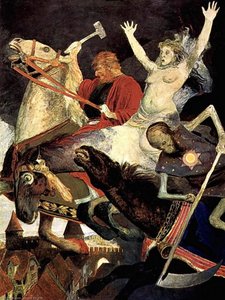
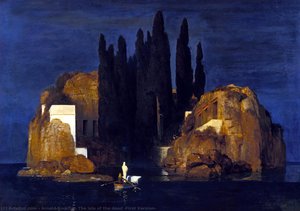
Biografía del artista
Primeros años y formación
Arnold Böcklin, pintor simbolista suizo, nació el 16 de octubre de 1827 en Basilea, Suiza. Su padre, Christian Frederick Böcklin, descendía de una antigua familia de Schaffhausen y se dedicaba al comercio de seda. La madre de Arnold, Ursula Lippe, era nativa de la misma ciudad. Estudió en la Academia de Düsseldorf bajo Schirmer, convirtiéndose en amigo de Anselm Feuerbach. Böcklin está asociado con la Escuela de Düsseldorf de pintura.Carrera artística y simbolismo
El viaje artístico de Böcklin lo llevó a varias ciudades, incluyendo París, donde trabajó en el Louvre, y Roma, donde fue influenciado por sus vistas. Su obra a menudo presentaba figuras alegóricas y mitológicas en entornos que involucraban arquitectura clásica, explorando temas de la muerte y la mortalidad.- Great Park, una de sus primeras obras, mostró la antigua mitología.
- Ninfa y Sátiro (1858) y Safo (1859) fueron obras notables de este período.
- El retrato de Böcklin de sí mismo, con la muerte tocando un violín (1872), ejemplificó su estilo único.
Evolución artística e influencias
La obra de Böcklin evolucionó hacia un simbolismo más profundo y evocador. Se inspiró en la literatura clásica, la mitología griega y romana, y el paisaje suizo. Su interés por temas como la muerte, la melancolía y la naturaleza se reflejó en sus pinturas con una atmósfera onírica y misteriosa. Böcklin fue influenciado por artistas como Peter Cornelius y Philipp Veit, así como por las ideas del movimiento prerrafaelita.Logros principales e impacto
Böcklin es mejor conocido por sus cinco versiones de La Isla de los Muertos (1880-1886), que evocaban el cementerio inglés en Florencia, donde estaba enterrada su hija. Esta obra maestra se convirtió en un símbolo del simbolismo tardorromántico y ha inspirado a numerosos artistas y compositores. Su trabajo influyó en artistas más jóvenes como Hans Thoma e inspiró a varios compositores de la época romántica tardía. Clement Greenberg describió su obra como "una de las expresiones más consumadas" de su tiempo.Legado e importancia histórica
El estilo de Böcklin se superpone con el de los prerrafaelitas, enfatizando el mundo de los sueños y el misticismo. Su capacidad para crear imágenes evocadoras y simbólicas lo convirtió en una figura clave del movimiento simbolista. Su obra sigue siendo admirada por su belleza melancólica, su profundidad psicológica y su impacto duradero en el arte occidental.Museos y colecciones
La obra de Böcklin se puede encontrar en varios museos, incluyendo:- Öffentliche Kunstsammlung (Basilea, Suiza)
- Kunstmuseum Basel (Suiza)
- Museum Kunsthaus Zürich (Zúrich, Suiza)
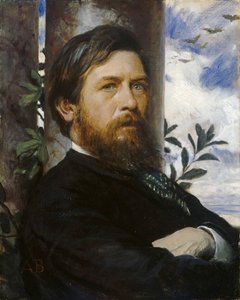
Arnold Böcklin
1827 - 1901 , Suiza
Datos clave
- Artistas Que Influyeron: ['Anselm Feuerbach']
- Fallecimiento: 16 de enero de 1901
- Fecha De Nacimiento: 16 de octubre de 1827
- Influenciado A Artistas: ['Hans Thoma']
- Lugar De Nacimiento: Basilea, Suiza
- Movimiento Artístico: Simbolismo
- Nacionalidad: Suizo
- Nombre Completo: Arnold Böcklin
- Obras Notables:
- Isla de la Muerte
- La Guerra
- Ninfas y sátiros
Artículos relacionados
Cultivating Paradise: A Historical & Artistic Exploration of Gardens in Painting
Explore the rich history of gardens in painting! Discover masterpieces from Renaissance to Impressionism & beyond. Learn about symbolism, artists like Monet & Klimt, and find your perfect artwork at ArtsDot.
Los 10 cuadros más famosos con tonos verde mar medio: Arte, historia y decoración
Descubre los 10 cuadros más famosos con tonos verde mar medio. Explora la historia, artistas como Monet y Renoir, e inspírate para decorar tu hogar con arte impresionista. Reproducciones de alta calidad en ArtsDot.com.
Paul Klee: Las 25 Obras Maestras que Definen un Genio del Arte Moderno | ArtsDot
Descubre las 25 obras maestras de Paul Klee, el genio del arte moderno. Explora su expresionismo único, composiciones abstractas y vibrantes paletas de colores. Reproducciones de alta calidad y decoración con arte en ArtsDot.com.
Claude Monet: Las 25 Obras Maestras del Impresionismo para Decorar tu Hogar con Arte
Descubre las 25 obras maestras de Claude Monet, el padre del impresionismo. Explora la historia, técnica y belleza de sus paisajes, nenúfares y 'Impresión, sole levant'. Encuentra reproducciones de arte exclusivas en ArtsDot.com.
The Azure Depths: Exploring Representations of the Ocean in Art History
Explore the rich history of ocean art! Discover Romantic seascapes, renowned artists like Aivazovsky & Harris, and expert guidance for collectors at ArtsDot.com.