

 Ver en contexto
 Enviar
 Compartir
 Detalles

 Descargar
 Similares
 Radiografía
 Presentación de diapositivas
 Stats
StatsThe future artist
 Oil
Oil- WallArt
- Naturalism
 1927
1927- 19th Century
 30.0 x 19.0 cm
 Museo Nacional del Grão Vasco
 Ver más
Adquiera una imagen digital de alta resolución y optimizada, muy superior a la vista previa en línea.
Cada archivo es preparado meticulosamente por nuestros especialistas internos mediante el uso de herramientas avanzadas y un experto retoque manual. Nos aseguramos de que cada imagen posea una claridad excepcional, una precisión cromática impecable y un detalle minucioso.
El archivo final se entrega por correo electrónico en un plazo de 72 horas, optimizado para su uso inmediato en entornos profesionales, editoriales y de impresión. Esta es la misma calidad en la que confían los estudios de diseño, las editoriales y las galerías de primer nivel.
Imagen Digital
Descarga un archivo de alta resolución para exhibición personal, impresión y proyectos creativos. ( Switch to Print Comprar pintura hecha a mano)
Incluido en cada pedido de imágenes digitales
Entrega digital experta, garantizada.
Al elegir ArtsDot.com, no solo está adquiriendo una imagen; está recibiendo una obra de arte digital mejorada profesionalmente, elaborada con precisión y respaldada por una garantía de satisfacción. Esto es todo lo que incluye su pedido, automáticamente:

Entrega rápida por email
Recibirá su archivo de imagen digital en alta resolución por correo electrónico en un plazo de 72 horas tras realizar su pedido, listo para su uso inmediato.

Archivo digital optimizado por IA
Su obra de arte se optimiza profesionalmente mediante herramientas avanzadas de IA y edición manual, garantizando el máximo detalle, claridad y precisión cromática.

Reenvío gratuito de por vida
¿Has borrado o perdido tu archivo por error? No te preocupes: te lo volveremos a enviar en cualquier momento, sin coste adicional.

Sin gastos de importación, siempre
Disfrute de su obra de arte al instante sin aduanas, aranceles ni gastos de envío; las descargas digitales siempre están libres de impuestos.

Garantía de fidelidad de color
Garantizamos que su imagen digital refleje los colores originales con la mayor fidelidad posible, mediante el uso de herramientas profesionales y gestión del color.

Garantía de satisfacción de 100 días
Si no está satisfecho con su imagen digital, la revisaremos o le reembolsaremos el 100% en un plazo de 100 días, sin preguntas.

100% Garantía de devolución de dinero
¿No está satisfecho? Obtenga un reembolso completo dentro de los 100 días posteriores a la recepción de su archivo digital, sin preguntas.

Descuentos por pedidos grandes
Compra 3 imágenes, ahorra 10% - Compra 5, ahorra 15% - Compra 10+, ahorra 20%. Ideal para proyectos creativos, galerías y agencias.
A Moment of Quiet Creation
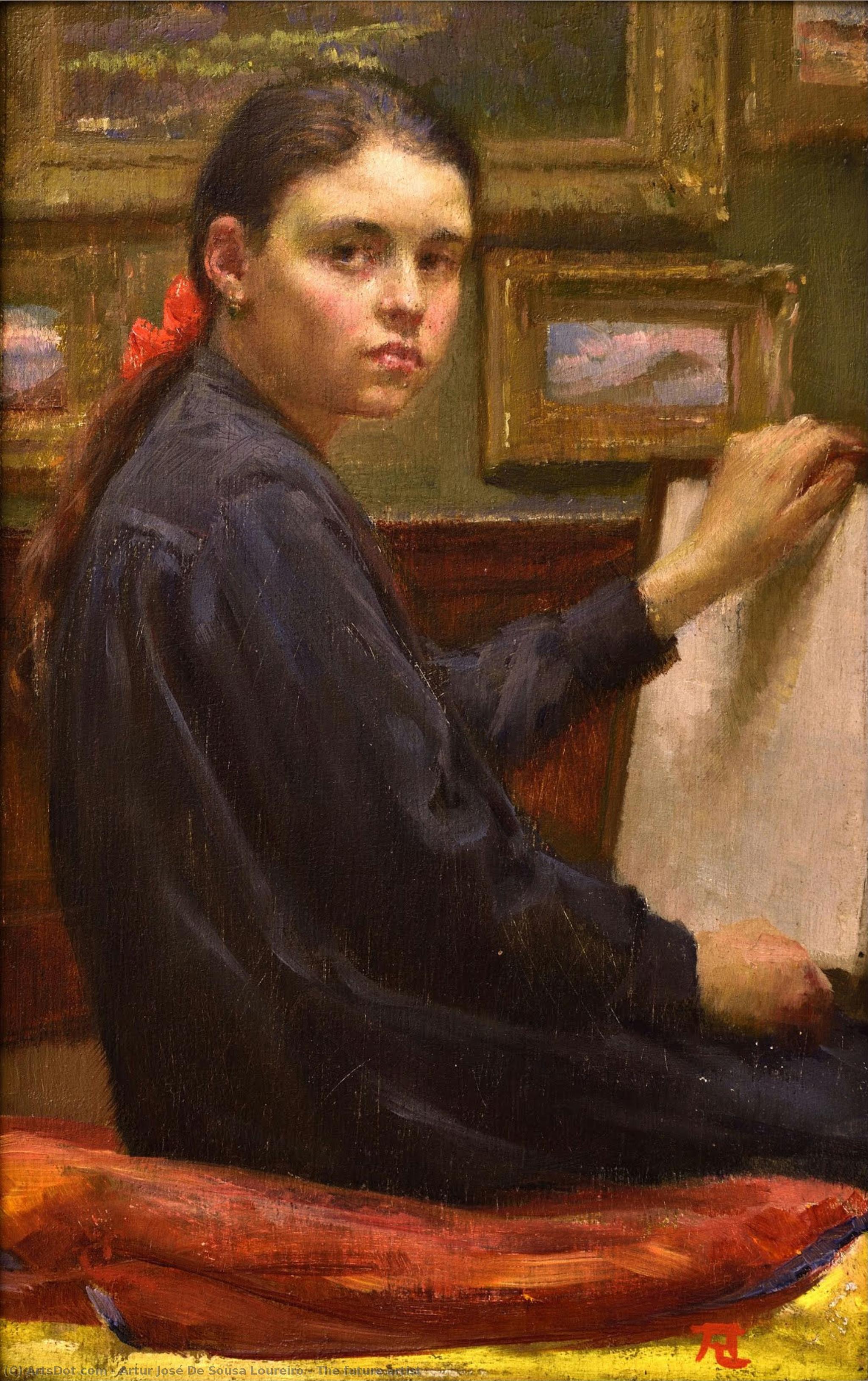
In the soft, diffused light of an artist's sanctuary, The Future Artist invites us into a world of profound stillness and burgeoning potential. Painted in 1927 by the esteemed Portuguese master Artur José de Sousa Loureiro, this evocative oil painting captures a young woman seated amidst the beautiful clutter of a studio. She rests upon a vibrant red cushion, a splash of warmth that mirrors the spirited crimson of her hair ribbon, yet her gaze is not one of outward excitement. Instead, she looks toward the observer with an expression that balances thoughtful contemplation with a hint of melancholy. In her hands, she holds a blank canvas—a powerful symbol of the unwritten chapters of her life and the infinite possibilities of her creative journey.
The composition is masterfully centered, drawing the eye immediately to the subject's face before allowing it to wander through the surrounding environment. The background is a rich tapestry of artistic legacy, filled with framed paintings that hang upon the walls like silent mentors. This layering of imagery suggests a deep connection to the lineage of art, placing the young girl within a continuum of creativity that stretches far beyond her immediate moment. The shallow perspective used by Loureiro creates an intimate atmosphere, pulling the viewer into her personal space and making us feel less like distant observers and more like quiet witnesses to her private introspection.
Mastery of Light and Texture
Loureiro’s technical prowess is on full display through his meticulous use of realism and light. The painting employs a palette dominated by muted earth tones, which provides a sophisticated backdrop for the more luminous elements of the work. Through the careful application of shadows, the artist creates a sense of profound depth, giving weight to the wooden surfaces of the studio and the heavy folds of the subject's clothing. The brushwork, while appearing loose and expressive in certain textures, remains disciplined enough to render the delicate nuances of skin and the tactile quality of fabric with remarkable accuracy.
For collectors and interior designers, this piece offers a unique blend of classical elegance and emotional depth. The organic shapes—the curves of the subject's form and the irregular silhouettes of the background frames—interact harmoniously with the linear precision of the studio's structure. This balance makes the artwork an exceptional choice for spaces that require a focal point of sophistication, such as a study, a library, or a refined living area. It is a work that does not merely decorate a wall but breathes life into a room, offering a sense of timelessness and a quiet, enduring beauty.
A Legacy of Inspiration
Beyond its aesthetic merits, The Future Artist serves as a poignant meditation on the nature of inspiration and the weight of expectation. The presence of the blank canvas is perhaps the most striking symbolic element; it represents both the daunting void of the unknown and the exhilarating freedom of creation. As we gaze upon this young woman, we are reminded of our own moments of hesitation before starting something new, and the courage required to face the emptiness with purpose. Loureiro, a painter whose life spanned the transition from 19th-century Naturalism to more modern sensibilities, imbues this late work with a sense of nostalgia that resonates deeply with the contemporary soul.
Owning a high-quality reproduction of this masterpiece allows one to bring this atmosphere of quiet intellectualism into the home. It is an investment in a piece of history that speaks to the enduring human spirit and the eternal pursuit of artistic truth. Whether viewed as a study in light or a narrative of personal growth, Loureiro’s work remains a captivating testament to the power of the painted image to capture the fleeting essence of a soul in transition.
Obras relacionadas


Biografía del artista
A Portuguese Painter’s Journey Through Time
Artur José de Sousa Loureiro, a name now recognized within the rich tapestry of Portuguese art history, was more than just an artist; he was a traveler, an innovator, and a keen observer of his time. Born in Porto on February 11, 1853, and passing away peacefully on July 7, 1932, Loureiro’s life unfolded across continents – from the artistic fervor of Rome to the vibrant landscapes of Australia – leaving behind a legacy of captivating paintings that continue to resonate today. His journey is one of constant evolution, marked by mentorship, patronage, and an unwavering dedication to his craft.Early Beginnings and Artistic Foundations
Artur Loureiro’s initial steps into the world of art were guided by the invaluable tutelage of António José da Costa, a friend and mentor who instilled in him the fundamental principles of drawing and painting. This early foundation proved crucial as he later enrolled at the Escola Superior de Belas Artes do Porto, where he honed his skills under the watchful eye of João António Correia. Correia’s influence shaped Loureiro's approach to composition and technique, laying the groundwork for his distinctive style. It was during this period that he began to develop a keen interest in capturing the essence of light and atmosphere – a characteristic that would become central to his later works.A Continental Odyssey
Loureiro’s artistic development took an exciting turn with the support of his patron, Delfim Guedes, a 1st Count of Almedina. This patronage enabled him to embark on a transformative journey to Rome in 1875. Rome proved to be a pivotal experience, exposing Loureiro to the classical traditions and artistic innovations that had shaped generations of European painters. He enrolled at the Accademia Romana, quickly establishing himself within the city’s thriving artistic circle and absorbing the techniques of his instructors. In 1879, fueled by ambition and seeking further refinement, Loureiro moved to Paris on a scholarship. The École des Beaux-Arts in Paris provided him with an unparalleled opportunity to study under renowned artists like Alexandre Cabanel, mastering the intricacies of academic painting while simultaneously immersing himself in the dynamic atmosphere of the Latin Quarter. His time in Paris saw him exhibiting his works at the Salon, gaining recognition among fellow Portuguese artists such as Silva Porto and António Ramalho. A significant chapter in Loureiro’s life unfolded when he emigrated to Australia in 1884, accompanied by his wife, Marie Huybers. Settling in Melbourne, he embraced a new role as “Professor of Design” at the Presbyterian Ladies' Academy, imparting his knowledge and passion for art to a younger generation. This period marked a shift towards landscapes and animal paintings, reflecting the unique beauty of the Australian countryside.Notable Achievements and Recognition
Loureiro’s artistic career was punctuated by numerous accolades and achievements that cemented his place in the Australian art scene. In 1892, he produced *The Death of Burke*, a poignant depiction of the tragic expedition led by Robert Burke and William Strzelecki. The painting, deeply rooted in the historical event, captured the harsh realities of the outback and resonated powerfully with viewers. He was also an active member of the Australian Art Association, contributing to its exhibitions and playing a key role in its subsequent merger with the Victorian Artists' Society. A testament to his artistic prowess, Loureiro received the Gold Medal at the International Exhibition in London in 1899 for *The Death of Burke*. This prestigious award brought international recognition to his work and underscored his mastery of technique and composition. In 1900, he was awarded a third-class medal at the Paris Exposition for *The Vision of Saint Stanislaus of Kostka*, further solidifying his reputation as a skilled and imaginative painter.Return to Portugal and Legacy
In 1904, Loureiro returned to his homeland, Porto, establishing a studio – affectionately known as the “Crystal Palace” – where he continued to paint and teach for decades. His second marriage in 1918 to Elisa Fernanda de Sousa Pires marked a new chapter in his personal life, while simultaneously reaffirming his commitment to Portuguese art. Throughout his later years, Loureiro’s studio became a hub of artistic activity, attracting students and admirers alike. His final exhibition in 1929 at the Salão Silva Porto showcased a collection of his finest works, including evocative landscapes of the Douro River and the coastal promenade. The Uffizi Gallery in Florence acquired one of his self-portraits, a testament to the enduring value of his artistic vision. Artur José de Sousa Loureiro passed away on July 7, 1932, leaving behind a rich legacy that continues to inspire artists and captivate viewers with its beauty and emotional depth. His paintings remain a vital part of Portuguese art history, offering a glimpse into the soul of a man who embraced life’s journey with an open heart and a brush in hand.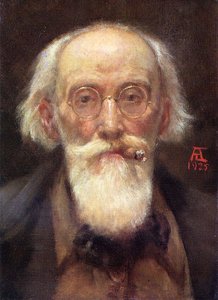
Artur Loureiro
1853 - 1932 , Portugal
Breves datos
- Artistic Movement Or Style: Naturalismo
- Artists Or Movements Influenced By This Artist: ['João Marques de Oliveira']
- Artists Who Influenced This Artist: ['António José da Costa']
- Date Of Birth: 11 Feb 1853
- Date Of Death: 7 Jul 1932
- Full Name: Artur José de Sousa Loureiro
- Nationality: Portuguesa
- Notable Artworks:
- Muerte de Burke
- Rio Douro
- Place Of Birth: Porto, Portugal