 Ver en contexto
 Enviar
 Compartir
 Detalles

 Descargar
 Similares
 Radiografía
 Presentación de diapositivas
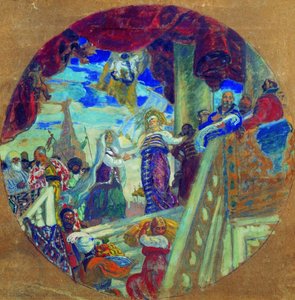
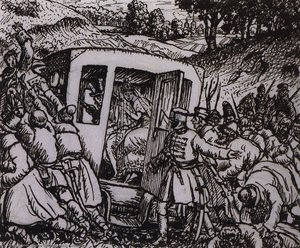
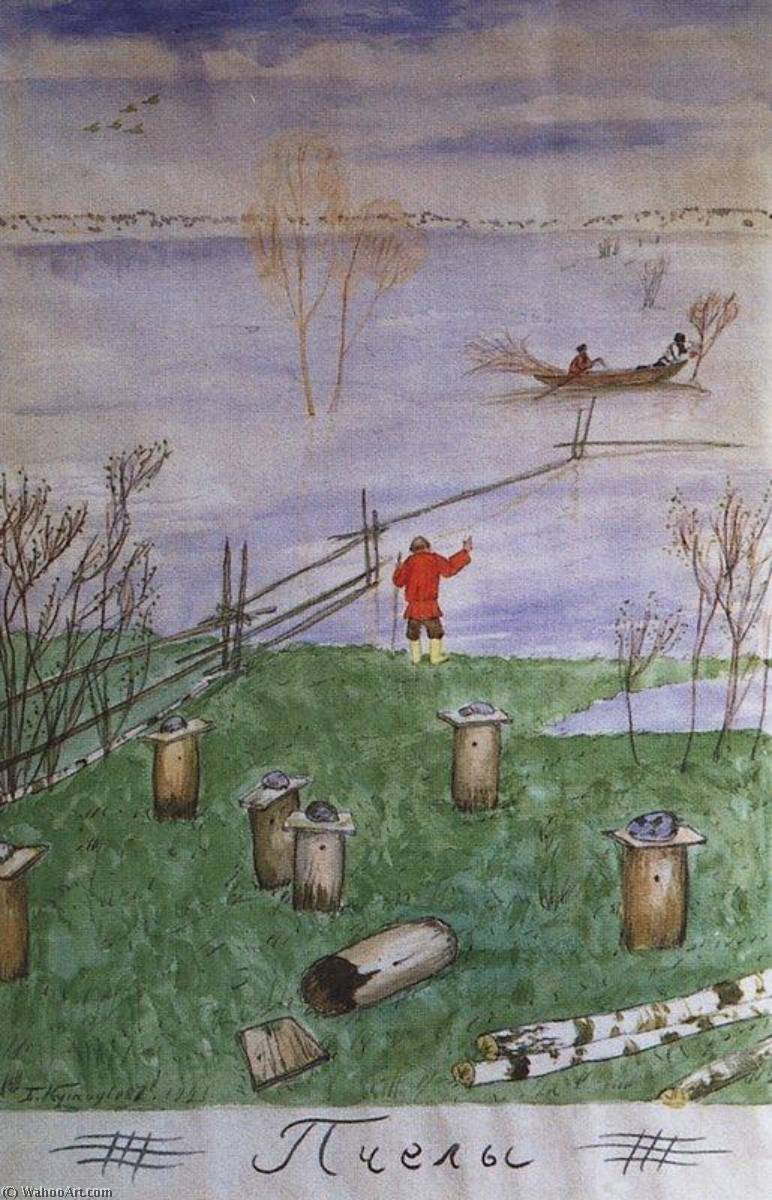
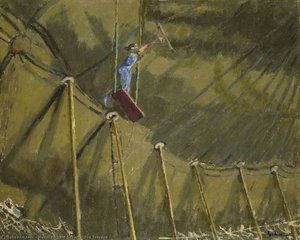
An Illustration for Nikolai Nekrasov's Poem Bees


 Ver más
Reproducción al óleo hecha a mano
Óleo sobre lienzo pintado a mano en el tamaño y marco de su elección, realizado por encargo por nuestros artistas. ( Comprar impresión Comprar imagen)




P118B $10

P118H $10

P118W $10

P438Z $10

P508JH $12

P508YH $12

P805H $10

P805Z $10

P919BZ $10

P919G $10

P919XJ $10

P959ZH $10

P968JZ $12

W106C $8

W218G $10

W218JH $8

W218Y $10

W307PJ $10

W316G $10

W316PJ $8

W316Y $10

W398PJ $8

W4111J $10

W500HY $15

W500JH $15

W692G $12

W849H $8

W940BG $15

W953PJ $8




Elija entre nuestros tamaños predefinidos que respetan las proporciones originales de la obra.

Puede ingresar sus propias dimensiones para adaptarse a un marco o espacio específico. Si el tamaño seleccionado no coincide con las proporciones de la imagen original, recortaremos la obra o extenderemos la pintura con elementos adicionales pintados a mano. Se le enviará una maqueta digital para su aprobación antes de comenzar la producción.
Tenga en cuenta que la vista previa en pantalla no refleja el recorte o la extensión reales. Solo la maqueta mostrará con precisión la composición final.
Si bien existen tamaños personalizados, recomendamos seleccionar una dimensión de la lista predefinida para preservar las proporciones originales.
Tras realizar el pedido, el equipo de ArtsDot.com enviará un correo electrónico al cliente para solicitar instrucciones y proporcionarle una vista previa del boceto.
Envío a todo el mundo () en 3-4 semanas en lugar de las 5 semanas estándar. (28 agosto). Sin comprometer la calidad.

Envío exprés gratuito a todo el mundo

Lienzo de lino de alta calidad

Seguro de envío total

Garantía de reembolso de impuestos aduaneros

Garantía de fidelidad cromática exacta

Política de devolución de 60 días (solo por defectos)

Garantía de devolución del 100% del dinero

Descuento por cantidad
 La opción de vidrio solo está disponible en tamaños inferiores a 110 cm.

An Illustration for Nikolai Nekrasov's Poem Bees
Técnica de reproducción
Dimensiones de la reproducción
-


Precio total final
$ 263
A Window into Russian Soul: Boris Kustodiev’s “An Illustration for Nikolai Nekrasov’s Poem Bees”
Boris Mikhailovich Kustodiev's 1921 watercolor, "An Illustration for Nikolai Nekrasov’s Poem Bees," isn't merely a depiction of a rural scene; it’s a vibrant portal into the heart of Russian life and folklore. Painted during a period of profound social and artistic transformation – the aftermath of the 1905 Revolution and the rise of Soviet realism – Kustodiev masterfully captures a timeless quality, evoking both nostalgia for a vanishing world and a deep appreciation for its enduring spirit. The painting immediately draws the eye with its rich palette, dominated by earthy browns, greens, and blues, punctuated by flashes of crimson and gold that suggest warmth and vitality. This isn’t a photographic representation; rather, it's an intensely felt experience, rendered through Kustodiev’s signature Naïve Art style – a technique characterized by bold outlines, simplified forms, and a deliberate lack of illusionistic depth. The scene unfolds on the banks of a tranquil body of water, likely a river or lake, reflecting the expansive sky above. A solitary figure stands near the water's edge, his posture suggesting contemplation as he gazes across to a distant point – perhaps a village, a loved one, or simply the boundless expanse of nature. The composition is deliberately uncluttered, focusing attention on the central subject and creating a sense of quiet serenity. Two small boats are visible in the background, hinting at human activity and connection with the natural world. However, the figures within them remain indistinct, adding to the painting’s enigmatic quality. Kustodiev's use of hatching – short, parallel lines applied in varying directions – creates a remarkable sense of texture and depth, imbuing the landscape with an almost tactile presence. This technique, reminiscent of older Russian icon painting, lends the work a timelessness that transcends its specific historical context. Kustodiev’s artistic journey was deeply intertwined with his personal experiences and the socio-cultural realities of his time. Born in Astrakhan, a city on the Volga River, he witnessed firsthand the lives of merchants and common folk – a world of bustling markets, colorful costumes, and enduring traditions. These observations profoundly shaped his artistic vision, informing his decision to depict scenes of rural Russia with such warmth and authenticity. The poem "Bees," written by Nikolai Nekrasov, explores themes of labor, community, and the simple pleasures of life in the countryside – all subjects that resonated deeply with Kustodiev’s own worldview. The painting can be interpreted as a celebration of these values, suggesting a longing for a simpler time and a connection to the land. Symbolically, the painting is rich with meaning. The bees themselves represent hard work, community, and the interconnectedness of all things. The figure contemplating the distance embodies a sense of yearning – perhaps for something lost or unattainable. The water serves as a mirror, reflecting not only the sky but also the viewer’s own thoughts and emotions. The boats symbolize human interaction and the passage of time. Kustodiev's deliberate use of color further enhances the painting’s symbolic power; the warm hues evoke feelings of comfort and nostalgia, while the cooler tones suggest a sense of melancholy and reflection. Ultimately, “An Illustration for Nikolai Nekrasov’s Poem Bees” is more than just a beautiful artwork; it’s a poignant meditation on Russian identity, rural life, and the enduring human spirit. Reproductions capture this essence beautifully, offering a tangible connection to Kustodiev's artistic vision. Its evocative imagery and masterful technique make it a treasured addition to any collection, inviting viewers to lose themselves in its timeless beauty and contemplate the deeper meanings embedded within its vibrant scene.Artist Information: Boris Mikhailovich Kustodiev
Born on March 7, 1878, in Astrakhan, Russia, Boris Kustodiev’s life was a testament to his unwavering dedication to art. His early years were marked by hardship following the death of his father, a professor, forcing his mother to shoulder the family's financial burdens. This experience instilled in him a deep empathy for the struggles of ordinary people – a theme that would become central to his artistic output. Kustodiev’s formal training began at the theological seminary in Astrakhan before he transitioned to private lessons with Pavel Vlasov, a student of Vasily Perov, which ignited his passion for painting. He then attended the Imperial Academy of Arts in St. Petersburg under Ilya Repin from 1896 to 1903, receiving invaluable guidance and honing his skills. Repin recognized Kustodiev’s talent early on, inviting him to assist with a monumental commemorative painting – a significant recognition for a young artist. Throughout his career, Kustodiev explored various artistic styles, including Naïve Art (Primitivism), which he embraced wholeheartedly and is most prominently displayed in “Bees.” He also worked as a book illustrator, capturing the essence of classic Russian literature with remarkable sensitivity. His later years were marked by illness, but his creative spirit remained undimmed until his death on May 28, 1927, leaving behind a legacy of vibrant and deeply evocative paintings that continue to captivate audiences today. His work is now housed in major museums across Russia and beyond, solidifying his place as one of the most important figures in Russian art history.Obras relacionadas
Biografía del artista
Primeros años y educación
Boris Mikhailovich Kustodiev, un renombrado pintor ruso y diseñador de teatro, nació el 7 de marzo de 1878 en Astracán, Rusia. Su padre, un profesor de filosofía, historia de la literatura y lógica en el seminario teológico local, falleció cuando Boris era joven, dejando a su madre con las cargas financieras. Esta temprana exposición a las dificultades de la clase mercantil provincial más tarde influiría en los temas artísticos de Kustodiev. Entre 1893 y 1896, Kustodiev estudió en el seminario teológico de Astracán, tomando lecciones de arte privadas de Pavel Vlasov, un alumno de Vasily Perov. Luego asistió al estudio de Ilya Repin en la Academia Imperial de Artes de San Petersburgo desde 1896 hasta 1903.Carrera artística y obras notables
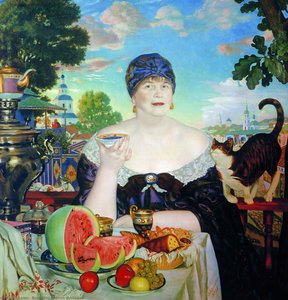
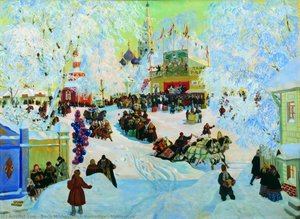
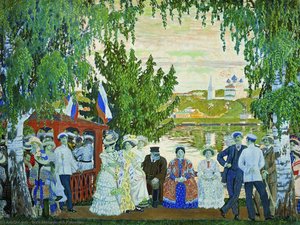
La carrera artística de Kustodiev se caracterizó por sus contribuciones a varios géneros, incluyendo retratos, escenas de género e ilustraciones de libros. Su obra "La esposa de un mercader", pintada en 1918, es considerada una de sus obras más famosas. "Fontanka" (1916) y "Martes de Panqueques/Maslenitsa" (1916) son notables por su vívida descripción de la vida rusa. Los retratos de Kustodiev, como los de Ivan Bilibin (1901), Moldovtsev (1901) y el grabador Mate (1902), demuestran su habilidad para capturar la esencia de sus sujetos.Desarrollo artístico y influencias
Kustodiev inicialmente se inspiró en los realistas rusos como Ilya Repin y Vasily Perov, quienes retrataron la vida cotidiana del pueblo ruso con gran detalle y empatía. Sin embargo, a medida que su carrera avanzaba, Kustodiev desarrolló un estilo más distintivo, caracterizado por colores vibrantes, formas redondeadas y una sensación general de alegría y optimismo. Su obra se relaciona con el movimiento Art Nouveau, aunque mantiene elementos del realismo ruso tradicional. La influencia de la cultura popular rusa, las festividades tradicionales y los mercados bulliciosos son evidentes en muchas de sus pinturas.Últimos años y legado
En 1916, Kustodiev se volvió parapléjico, pero su producción artística siguió siendo prolífica. Sus obras posteriores, caracterizadas por su naturaleza alegre y colorida, contradicen el sufrimiento físico que soportó. "El mercado", una pintura de Alexey Petrovich Bogolyubov, es un testimonio de la influencia duradera del estilo de Kustodiev. Kustodiev dejó un legado como uno de los pintores rusos más queridos y reconocibles, conocido por su capacidad para capturar el espíritu vibrante y festivo de la vida rusa. Su obra continúa siendo celebrada por su colorido, optimismo y representación auténtica de la cultura popular rusa.Museos y colecciones
- La esposa de un mercader (1918) - una obra fundamental que muestra la maestría de Kustodiev en el realismo ruso.
- Fontanka (1916) - una vívida descripción de la vida rusa, característica del estilo posterior de Kustodiev.
- Martes de Panqueques/Maslenitsa (1916) - otro ejemplo de la capacidad de Kustodiev para capturar la esencia de la cultura rusa.
- "El mercado" de Alexey Petrovich Bogolyubov - un testimonio de la influencia duradera del estilo de Kustodiev.
- Museo de Bellas Artes Kramskoi (Voronezh, Rusia) – alberga una impresionante colección de arte ruso, incluyendo obras de Vasily Maksimov e Isaak Ilyich Levitan.
- Museo de Arte de Járkov (Ucrania) - posee una vasta colección de obras de arte, incluyendo pinturas de Sergei Arsenievich Vinogradov y Nikolai Pimonenko.
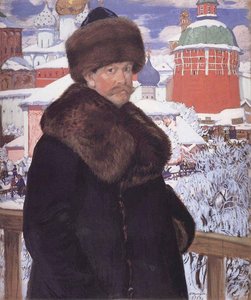
Boris Mikhailovich Kustodiev
1878 - 1927 , Rusia
Datos clave
- Artistas Que Influyeron:
- Ilya Repin
- Vasily Perov
- Estilo Artístico: Realismo, Impresionismo
- Fecha De Nacimiento: 7 de marzo de 1878
- Lugar De Nacimiento: Astrájan, Rusia
- Nacionalidad: Ruso
- Nombre Completo: Boris Mikhailovich Kustodiev
- Obras Notables:
- Esposa de un Mercader
- Retrato de K.B. Kustodiev
- Recogí fresas
- Chimenea (Noche)
- Maslenitsa
Artículos relacionados

Acuarelas Legendarias: 10 Obras Maestras que Transformaron el Arte | ArtsDot
Descubre 10 acuarelas legendarias de Turner, Monet y Sargent que revolucionaron el arte. Explora la historia, técnica y belleza de estas obras maestras impresionistas y románticas. Reproducciones de museo en ArtsDot.com.

Ephemeral Visions: Exploring the Artistic Legacy & Contemporary Practice of Watercolor Painting
Explore the captivating world of watercolor painting! Discover its rich history, essential techniques, influential artists & collecting tips. A comprehensive guide for art enthusiasts from ArtsDot.
Visiones Efímeras: Historia y Resonancia Emocional de la Pintura Acuarela
Descubre la fascinante historia de la acuarela, desde sus orígenes hasta su expresión contemporánea. Explora técnicas, artistas clave como Paul Klee y encuentra reproducciones de alta calidad en ArtsDot.
Ephemeral Visions: Exploring the Artistic Legacy & Nuances of Watercolor Painting
Explore the captivating world of watercolor painting! Discover its rich history, essential techniques, influential artists & collecting tips from art experts. A comprehensive guide for enthusiasts.
La Fascinación Duradera de la Acuarela: Historia, Técnicas y Práctica Contemporánea
Descubre la fascinante historia y las técnicas de la acuarela. Explora obras maestras, aprende con expertos y encuentra reproducciones o comisiones personalizadas en .