 Ver en contexto
 Enviar
 Compartir
 Detalles

 Descargar
 Similares
 Radiografía
 Presentación de diapositivas
 Estadísticas
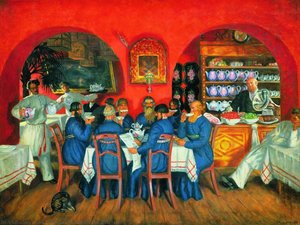
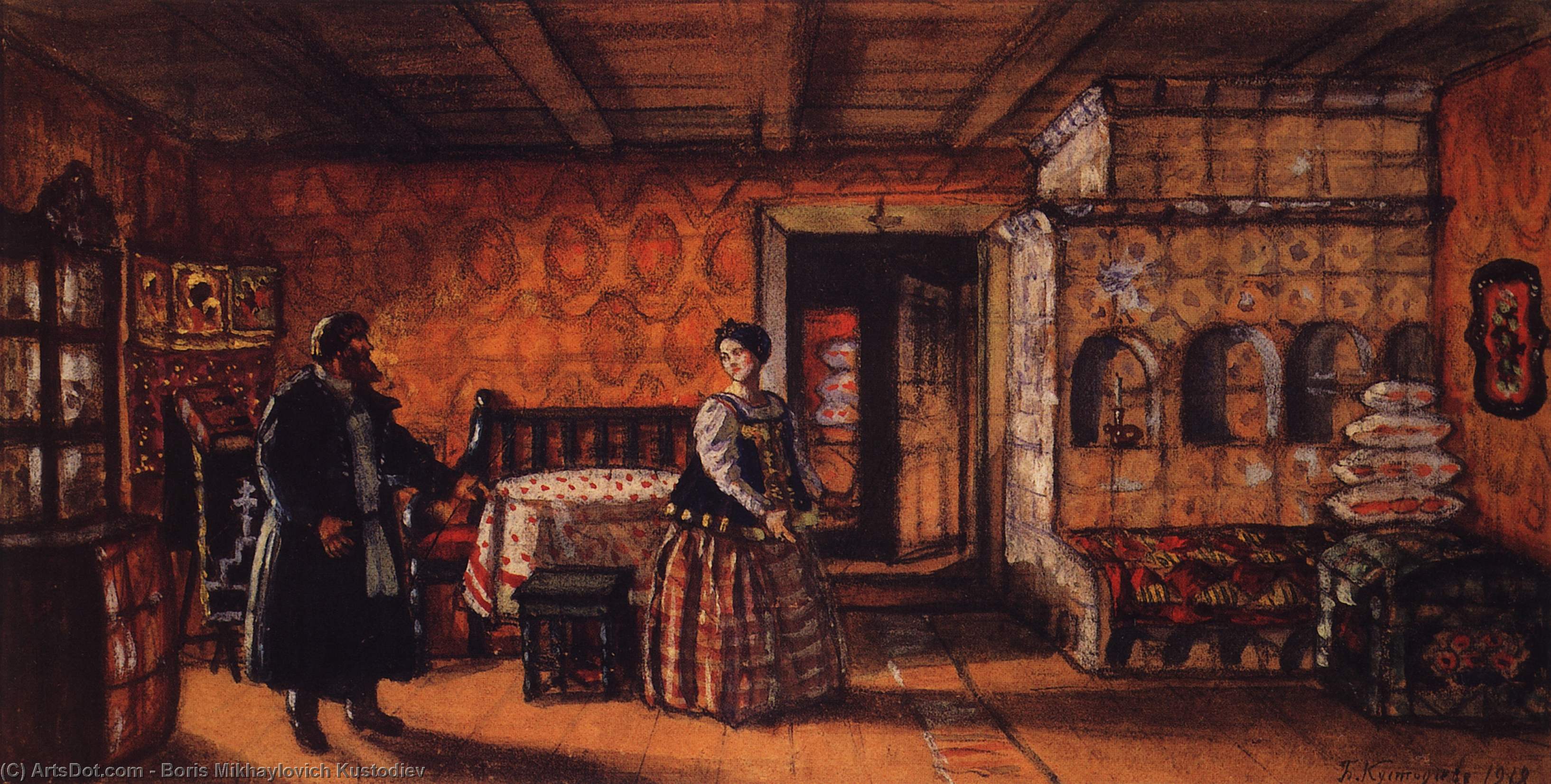
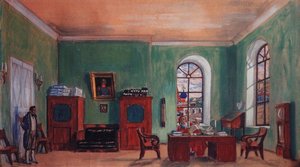
Room in the house of Prokofy Pazukhin


 Ver más
Reproducción al óleo hecha a mano
Óleo sobre lienzo pintado a mano en el tamaño y marco de su elección, realizado por encargo por nuestros artistas. ( Cambiar a Impresión Cambiar a imagen digital)




P118B $10

P118H $10

P118W $10

P438Z $10

P508JH $12

P508YH $12

P805H $10

P805Z $10

P919BZ $10

P919G $10

P919XJ $10

P959ZH $10

P968JZ $12

W106C $8

W218G $10

W218JH $8

W218Y $10

W307PJ $10

W316G $10

W316PJ $8

W316Y $10

W398PJ $8

W4111J $10

W500HY $15

W500JH $15

W692G $12

W849H $8

W940BG $15

W953PJ $8




Elija entre nuestros tamaños predefinidos que respetan las proporciones originales de la obra.

Puede ingresar sus propias dimensiones para adaptarse a un marco o espacio específico. Si el tamaño seleccionado no coincide con las proporciones de la imagen original, recortaremos la obra o extenderemos la pintura con elementos adicionales pintados a mano. Se le enviará una maqueta digital para su aprobación antes de comenzar la producción.
Tenga en cuenta que la vista previa en pantalla no refleja el recorte o la extensión reales. Solo la maqueta mostrará con precisión la composición final.
Si bien existen tamaños personalizados, recomendamos seleccionar una dimensión de la lista predefinida para preservar las proporciones originales.
Tras realizar el pedido, el equipo de ArtsDot.com enviará un correo electrónico al cliente para solicitar instrucciones y proporcionarle una vista previa del boceto.
Envío a todo el mundo () en 3-4 semanas en lugar de las 5 semanas estándar. (8 septiembre). Sin comprometer la calidad.

Envío exprés gratuito a todo el mundo

Lienzo de lino de alta calidad

Seguro de envío total

Garantía de reembolso de impuestos aduaneros

Garantía de fidelidad cromática exacta

Política de devolución de 100 días (solo por defectos)

Garantía de devolución del 100% del dinero

Descuento por cantidad
 La opción de vidrio solo está disponible en tamaños inferiores a 110 cm.

Room in the house of Prokofy Pazukhin
Técnica de reproducción
Dimensiones de la reproducción
-


Precio total final
$ 263
A Window into Russian Intimacy
In the evocative masterpiece Room in the house of Prokofy Pazukhin, painted in 1918, Boris Mikhailovich Kustodiev invites us to step through a threshold into a world of quiet domesticity and communal warmth. At first glance, the canvas presents a meticulously detailed interior, yet beneath the surface lies the profound soul of a nation in transition. The scene unfolds around a central dining table, where the presence of a woman and various figures engaged in soft conversation creates a sense of lived-in reality. Kustodiev captures not just a room, but a moment of human connection, where the clinking of tea glasses and the low murmur of voices seem almost audible through the brushstrokes. The arrangement of furniture—the sturdy chairs, the inviting couch, and the bookshelf heavy with knowledge—suggests a home that is both a sanctuary and a center of intellectual life.
The composition is masterfully balanced, utilizing the domestic elements to guide the viewer's eye through the narrative of the room. A vase placed delicately on the table serves as a focal point of grace, mirroring the organic beauty found in the human interactions surrounding it. The inclusion of a clock on the wall acts as a subtle memento mori, a gentle reminder of the passage of time amidst the timelessness of shared companionship. For the collector or interior designer, this piece offers more than mere decoration; it provides a narrative anchor for a space, bringing an atmosphere of historical depth and sophisticated nostalgia to any curated collection.
The Mastery of Kustodiev’s Technique
Kustodiev’s technique in this work is a testament to his rigorous training under the legendary Ilya Repin at the Imperial Academy of Arts. His ability to blend realism with a vibrant, almost celebratory color palette allows the room to glow with an inner light. The artist employs a rich, textured approach to paint, where every surface—from the polished wood of the dining table to the soft fabric of the upholstery—is rendered with tactile precision. This mastery of light and shadow creates a three-dimensional depth that pulls the viewer into the scene, making the atmosphere feel palpable.
While the subject matter is grounded in the reality of a specific Russian household, Kustodiev infuses the work with an idealized, romanticized spirit. His brushwork avoids the coldness of pure academic realism, opting instead for a warmth that celebrates the textures of everyday life. This stylistic choice makes the painting particularly captivating for those who appreciate art that evokes emotion; it is a piece that does not just depict a room, but breathes life into it. For anyone seeking to adorn their home with a high-quality reproduction, this work offers a unique opportunity to possess a fragment of Russian cultural heritage, rendered with an unparalleled sense of joy and resilience.
A Legacy of Spirit and Resilience
To understand the emotional weight of Room in the house of Prokofy Pazukhin, one must consider the historical context of 1918. Amidst the profound political and social upheavals of the Russian Revolution, Kustodiev chose to focus on the enduring strength of the domestic sphere. His work often served as a nostalgic refuge, celebrating the vibrant traditions and the colorful character of the Russian people even when the world outside was changing irrevocably. The painting stands as a symbol of continuity—a testament to the fact that even in times of great uncertainty, the rituals of gathering, eating, and conversing remain the bedrock of human existence.
This piece resonates deeply with modern sensibilities, offering a sense of peace and stability that is increasingly sought after in contemporary interior design. It serves as an inspiration for those looking to create spaces that feel grounded, storied, and profoundly human. Owning a reproduction of this work is an invitation to surround oneself with the warmth of Kustodiev’s vision, ensuring that the lively, soulful atmosphere of this historic Russian room continues to inspire generations to come.
Obras relacionadas
Biografía del artista
Primeros años y educación
Boris Mikhailovich Kustodiev, un renombrado pintor ruso y diseñador de teatro, nació el 7 de marzo de 1878 en Astracán, Rusia. Su padre, un profesor de filosofía, historia de la literatura y lógica en el seminario teológico local, falleció cuando Boris era joven, dejando a su madre con las cargas financieras. Esta temprana exposición a las dificultades de la clase mercantil provincial más tarde influiría en los temas artísticos de Kustodiev. Entre 1893 y 1896, Kustodiev estudió en el seminario teológico de Astracán, tomando lecciones de arte privadas de Pavel Vlasov, un alumno de Vasily Perov. Luego asistió al estudio de Ilya Repin en la Academia Imperial de Artes de San Petersburgo desde 1896 hasta 1903.Carrera artística y obras notables
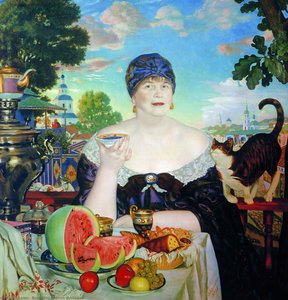
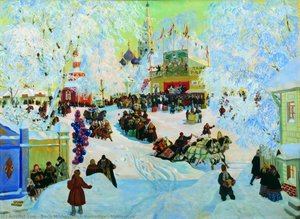
La carrera artística de Kustodiev se caracterizó por sus contribuciones a varios géneros, incluyendo retratos, escenas de género e ilustraciones de libros. Su obra "La esposa de un mercader", pintada en 1918, es considerada una de sus obras más famosas. "Fontanka" (1916) y "Martes de Panqueques/Maslenitsa" (1916) son notables por su vívida descripción de la vida rusa. Los retratos de Kustodiev, como los de Ivan Bilibin (1901), Moldovtsev (1901) y el grabador Mate (1902), demuestran su habilidad para capturar la esencia de sus sujetos.Desarrollo artístico y influencias
Kustodiev inicialmente se inspiró en los realistas rusos como Ilya Repin y Vasily Perov, quienes retrataron la vida cotidiana del pueblo ruso con gran detalle y empatía. Sin embargo, a medida que su carrera avanzaba, Kustodiev desarrolló un estilo más distintivo, caracterizado por colores vibrantes, formas redondeadas y una sensación general de alegría y optimismo. Su obra se relaciona con el movimiento Art Nouveau, aunque mantiene elementos del realismo ruso tradicional. La influencia de la cultura popular rusa, las festividades tradicionales y los mercados bulliciosos son evidentes en muchas de sus pinturas.Últimos años y legado
En 1916, Kustodiev se volvió parapléjico, pero su producción artística siguió siendo prolífica. Sus obras posteriores, caracterizadas por su naturaleza alegre y colorida, contradicen el sufrimiento físico que soportó. "El mercado", una pintura de Alexey Petrovich Bogolyubov, es un testimonio de la influencia duradera del estilo de Kustodiev. Kustodiev dejó un legado como uno de los pintores rusos más queridos y reconocibles, conocido por su capacidad para capturar el espíritu vibrante y festivo de la vida rusa. Su obra continúa siendo celebrada por su colorido, optimismo y representación auténtica de la cultura popular rusa.Museos y colecciones
- La esposa de un mercader (1918) - una obra fundamental que muestra la maestría de Kustodiev en el realismo ruso.
- Fontanka (1916) - una vívida descripción de la vida rusa, característica del estilo posterior de Kustodiev.
- Martes de Panqueques/Maslenitsa (1916) - otro ejemplo de la capacidad de Kustodiev para capturar la esencia de la cultura rusa.
- "El mercado" de Alexey Petrovich Bogolyubov - un testimonio de la influencia duradera del estilo de Kustodiev.
- Museo de Bellas Artes Kramskoi (Voronezh, Rusia) – alberga una impresionante colección de arte ruso, incluyendo obras de Vasily Maksimov e Isaak Ilyich Levitan.
- Museo de Arte de Járkov (Ucrania) - posee una vasta colección de obras de arte, incluyendo pinturas de Sergei Arsenievich Vinogradov y Nikolai Pimonenko.
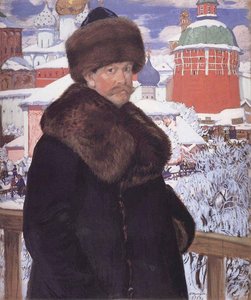
Boris Mikhailovich Kustodiev
1878 - 1927 , Rusia
Datos clave
- Artistas Que Influyeron:
- Ilya Repin
- Vasily Perov
- Estilo Artístico: Realismo, Impresionismo
- Fecha De Nacimiento: 7 de marzo de 1878
- Lugar De Nacimiento: Astrájan, Rusia
- Nacionalidad: Ruso
- Nombre Completo: Boris Mikhailovich Kustodiev
- Obras Notables:
- Esposa de un Mercader
- Retrato de K.B. Kustodiev
- Recogí fresas
- Chimenea (Noche)
- Maslenitsa
Artículos relacionados
Discover Russian Realism: Soulful Masterpieces and the Timeless Spirit of the Peredvizhniki for Your Modern Home
Elevate your home with the soulful beauty of Russian Realism. Discover exquisite hand-painted reproductions of Peredvizhniki masterpieces, from lyrical landscapes to profound portraits, curated to bring historical depth and timeless elegance to your modern interior design.
Victor Vasnetsov: Myth, Nationalism & the Revival of Russian Fairy Tale Painting
Explore the captivating world of Victor Vasnetsov, a co-founder of Russian folklorist painting. Discover his iconic works, influence on national identity, and lasting legacy in this expert guide.
Boris Grigoriev: Capturing the Soul of Russia Through Realism & Narrative Art
Explore the captivating realism of Boris Grigoriev, a pivotal Russian artist renowned for his poignant portraits & depictions of peasant life. Discover his artistic evolution and lasting legacy at ArtsDot.
Ivan Bilibin: A Synthesis of Folklore, Modernism & National Identity in Russian Illustration
Explore the enchanting world of Ivan Bilibin, a master Russian illustrator who synthesized folklore, Art Nouveau & national identity. Discover his iconic fairy tale illustrations and legacy with ArtsDot.
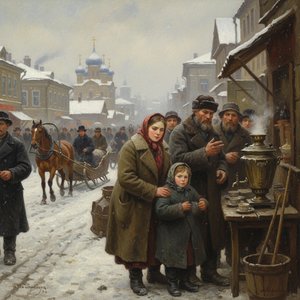
Vladimir Makovsky: Realism, Social Commentary & Russian Life in Late 19th-Century Painting
Explore the captivating world of Vladimir Makovsky, a leading Russian realist painter. Discover his insightful depictions of 19th-century life, social commentary & legacy with ArtsDot.