

 Ver en contexto
 Enviar
 Compartir
 Detalles

 Descargar
 Similares
 Radiografía
 Presentación de diapositivas
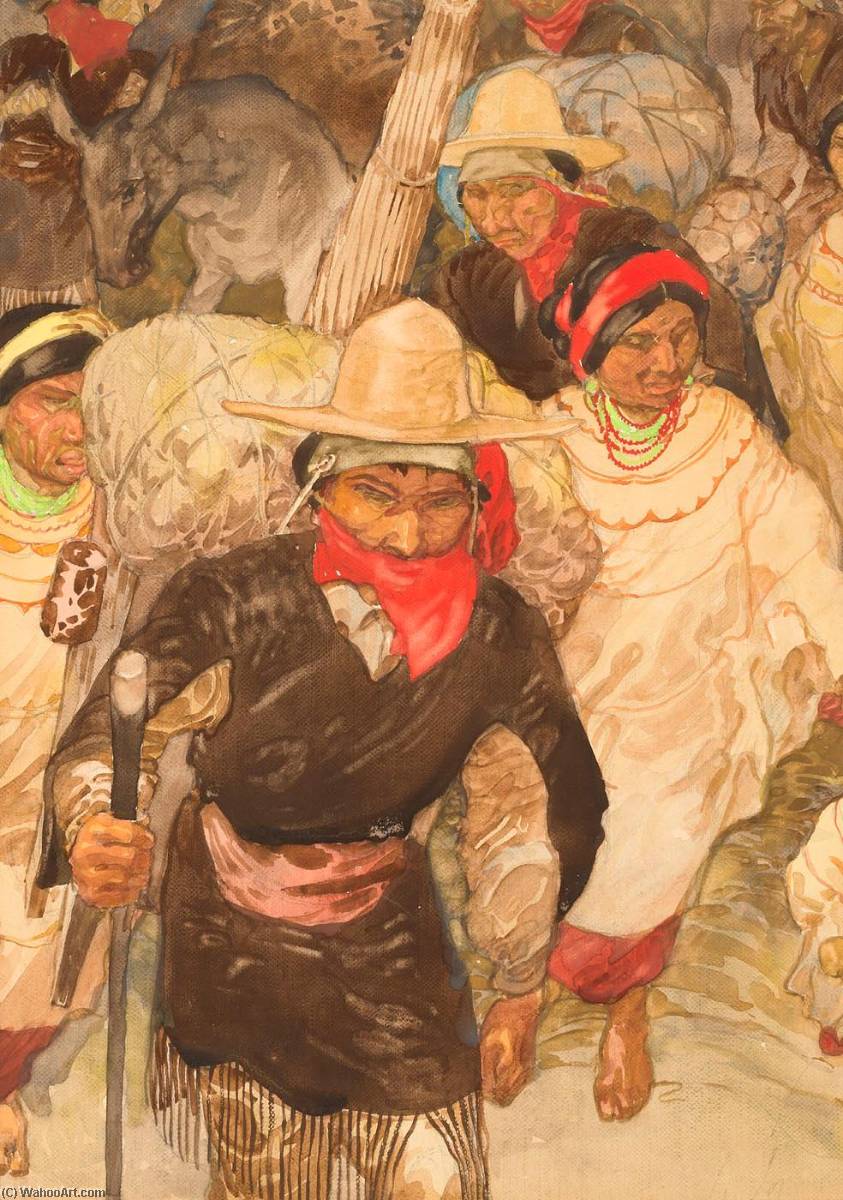
Caravan of Indians, Guatemala
 Ver más
Adquiera una imagen digital de alta resolución y optimizada, muy superior a la vista previa en línea.
Cada archivo es preparado meticulosamente por nuestros especialistas internos mediante el uso de herramientas avanzadas y un experto retoque manual. Nos aseguramos de que cada imagen posea una claridad excepcional, una precisión cromática impecable y un detalle minucioso.
El archivo final se entrega por correo electrónico en un plazo de 72 horas, optimizado para su uso inmediato en entornos profesionales, editoriales y de impresión. Esta es la misma calidad en la que confían los estudios de diseño, las editoriales y las galerías de primer nivel.
Imagen Digital
Descarga un archivo de alta resolución para exhibición personal, impresión y proyectos creativos. ( Comprar impresión Comprar pintura hecha a mano)
Incluido en cada pedido de imágenes digitales
Entrega digital experta, garantizada.
Al elegir ArtsDot.com, no solo está adquiriendo una imagen; está recibiendo una obra de arte digital mejorada profesionalmente, elaborada con precisión y respaldada por una garantía de satisfacción. Esto es todo lo que incluye su pedido, automáticamente:

Entrega rápida por email
Recibirá su archivo de imagen digital en alta resolución por correo electrónico en un plazo de 72 horas tras realizar su pedido, listo para su uso inmediato.

Archivo digital optimizado por IA
Su obra de arte se optimiza profesionalmente mediante herramientas avanzadas de IA y edición manual, garantizando el máximo detalle, claridad y precisión cromática.

Reenvío gratuito de por vida
¿Has borrado o perdido tu archivo por error? No te preocupes: te lo volveremos a enviar en cualquier momento, sin coste adicional.

Sin gastos de importación, siempre
Disfrute de su obra de arte al instante sin aduanas, aranceles ni gastos de envío; las descargas digitales siempre están libres de impuestos.

Garantía de fidelidad de color
Garantizamos que su imagen digital refleje los colores originales con la mayor fidelidad posible, mediante el uso de herramientas profesionales y gestión del color.

Garantía de satisfacción de 60 días
Si no está satisfecho con su imagen digital, la revisaremos o le reembolsaremos el 100% en un plazo de 60 días, sin preguntas.

100% Garantía de devolución de dinero
¿No está satisfecho? Obtenga un reembolso completo dentro de los 60 días posteriores a la recepción de su archivo digital, sin necesidad de explicaciones.

Descuentos por pedidos grandes
Compra 3 imágenes, ahorra 10% - Compra 5, ahorra 15% - Compra 10+, ahorra 20%. Ideal para proyectos creativos, galerías y agencias.
Obras relacionadas


Biografía del artista
Carl Folke Sahlin: A Window into Vanishing Worlds
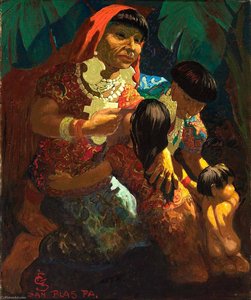
The art of Carl Folke Sahlin, a Swedish-born artist who spent much of his career in Miami, Florida, offers more than just visually arresting watercolors. It’s a poignant and remarkably detailed chronicle of indigenous cultures on the brink of transformation during the first half of the 20th century. Born in Stockholm in 1885, Sahlin wasn't initially destined for a life immersed in ethnographic painting; he began his career as an illustrator and advertising executive in New York and Chicago, experiences that honed his technical skills but ultimately led him to seek a deeper connection with the world beyond the urban landscape.
A pivotal moment arrived in 1940 when Sahlin, seeking respite from the bustle of American life, relocated to Miami. It was here, amidst the burgeoning subtropical environment and a surprising influx of South American immigrants, that his artistic focus shifted dramatically. He began a relentless journey through Central and South America – Ecuador, Peru, Panama, Mexico – driven by an almost obsessive desire to document the lives and traditions of the indigenous peoples he encountered. This wasn’t simply sightseeing; Sahlin sought genuine participation in their daily routines, immersing himself in their communities, learning their languages (to varying degrees), and patiently observing their customs before committing them to watercolor.
Sahlin's artistic style is immediately recognizable. He eschewed the romanticized depictions often associated with early ethnographic art, favoring a remarkably realistic approach. His paintings aren’t idealized portraits; they capture the grit, the weariness, and the quiet dignity of individuals living in challenging circumstances. He employed a vibrant palette, utilizing bold colors to convey not just appearance but also emotion and atmosphere. The use of loose brushstrokes and layered washes creates a sense of movement and immediacy, as if the viewer is witnessing these scenes unfold before their eyes. His meticulous attention to detail – from the intricate patterns of woven textiles to the weathered faces of his subjects – speaks volumes about his respect for the cultures he portrayed.
Thematic Focus: Rituals, Labor, and Everyday Life
Sahlin’s work isn't defined by grand narratives or heroic figures. Instead, it focuses on the everyday realities of indigenous communities. He frequently depicted scenes of ritualistic ceremonies – dances, festivals, religious processions – capturing the energy and symbolism of these events with remarkable sensitivity. Equally compelling are his portrayals of labor: men and women engaged in traditional crafts, farming, fishing, or simply tending to their families. These images offer a rare glimpse into the rhythms of life for communities often overlooked by mainstream historical accounts.
A particularly notable aspect of Sahlin’s work is his consistent representation of indigenous attire. He meticulously researched and accurately depicted the complex and culturally significant garments worn by different groups, recognizing that clothing was far more than mere fabric; it was a powerful symbol of identity, status, and tradition. His paintings are veritable encyclopedias of South American dress, offering invaluable insights into the diverse cultural heritage of the region.
Influences and Artistic Development
While Sahlin’s artistic style is distinctly his own, it's clear that he was influenced by a number of sources. His early training as an illustrator instilled in him a strong command of technique and composition. The work of European watercolorists, particularly the Impressionists, likely informed his use of color and brushwork. However, Sahlin’s most significant influence undoubtedly came from his own experiences – his immersion in indigenous cultures and his genuine desire to document their lives with respect and accuracy.
His time in Miami also played a crucial role in shaping his artistic development. The city's vibrant immigrant community provided him with a constant source of inspiration, while the Blue Dome Fellowship, a local arts organization, offered him a supportive network of fellow artists. Sahlin’s work evolved over time, becoming increasingly focused on capturing the nuances of indigenous culture and reflecting his deep appreciation for these vanishing worlds.
Legacy and Historical Significance
Carl Folke Sahlin's paintings represent a vital contribution to our understanding of South American indigenous cultures during a period of profound change. His meticulous documentation offers a valuable record of traditions that were rapidly disappearing as a result of colonization, globalization, and modernization. His work stands as a testament to the importance of ethnographic art in preserving cultural heritage and fostering cross-cultural dialogue.
Sahlin’s paintings are now housed in collections around the world, including the Smithsonian American Art Museum and the National Gallery in Stockholm. They continue to be exhibited and studied, reminding us of the rich diversity of human experience and the urgent need to protect vulnerable cultures from being lost forever. His legacy lies not just in his beautiful artwork but also in his unwavering commitment to documenting the lives of those often marginalized by history.
carl folke sahlin
1885 - 1976
Breves datos
- Artistic Movement Or Style: Ethnographic art
- Artists Or Movements Influenced By This Artist: ['None specified']
- Artists Who Influenced This Artist: ['None specified']
- Date Of Birth: 1885
- Date Of Death: 1976
- Full Name: Carl Folke Sahlin
- Nationality: Swedish
- Notable Artworks:
- Women in Regional Costume
- The Alcaldes of Pisac
- Cowboys in Costume
- Place Of Birth: Stockholm, Sweden

