 Ver en contexto
 Enviar
 Compartir
 Detalles

 Descargar
 Similares
 Radiografía
 Presentación de diapositivas
Paisaje Italiano

 Ver más
Reproducción al óleo hecha a mano
Óleo sobre lienzo pintado a mano en el tamaño y marco de su elección, realizado por encargo por nuestros artistas. ( Comprar impresión Comprar imagen)




































Elija entre nuestros tamaños predefinidos que respetan las proporciones originales de la obra.

Puede ingresar sus propias dimensiones para adaptarse a un marco o espacio específico. Si el tamaño seleccionado no coincide con las proporciones de la imagen original, recortaremos la obra o extenderemos la pintura con elementos adicionales pintados a mano. Se le enviará una maqueta digital para su aprobación antes de comenzar la producción.
Tenga en cuenta que la vista previa en pantalla no refleja el recorte o la extensión reales. Solo la maqueta mostrará con precisión la composición final.
Si bien existen tamaños personalizados, recomendamos seleccionar una dimensión de la lista predefinida para preservar las proporciones originales.
Tras realizar el pedido, el equipo de ArtsDot.com enviará un correo electrónico al cliente para solicitar instrucciones y proporcionarle una vista previa del boceto.
Envío a todo el mundo () en 3-4 semanas en lugar de las 5 semanas estándar. (23 agosto). Sin comprometer la calidad.

Envío exprés gratuito a todo el mundo

Lienzo de lino de alta calidad

Seguro de envío total

Garantía de reembolso de impuestos aduaneros

Garantía de fidelidad cromática exacta

Política de devolución de 60 días (solo por defectos)

Garantía de devolución del 100% del dinero

Descuento por cantidad
 La opción de vidrio solo está disponible en tamaños inferiores a 110 cm.

Paisaje Italiano
Técnica de reproducción
Dimensiones de la reproducción
-


Precio total final
$ 263
Descripción de la obra
Paisaje Italiano de Carl Morgenstern: Una Serena Mirada al Siglo XIX
- Artista: Carl Morgenstern
- Año de Nacimiento: 1811
- Año de Fallecimiento: 1893
Tema y Composición
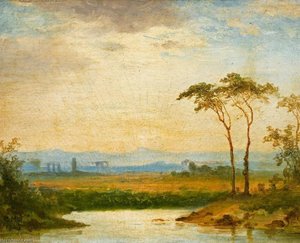
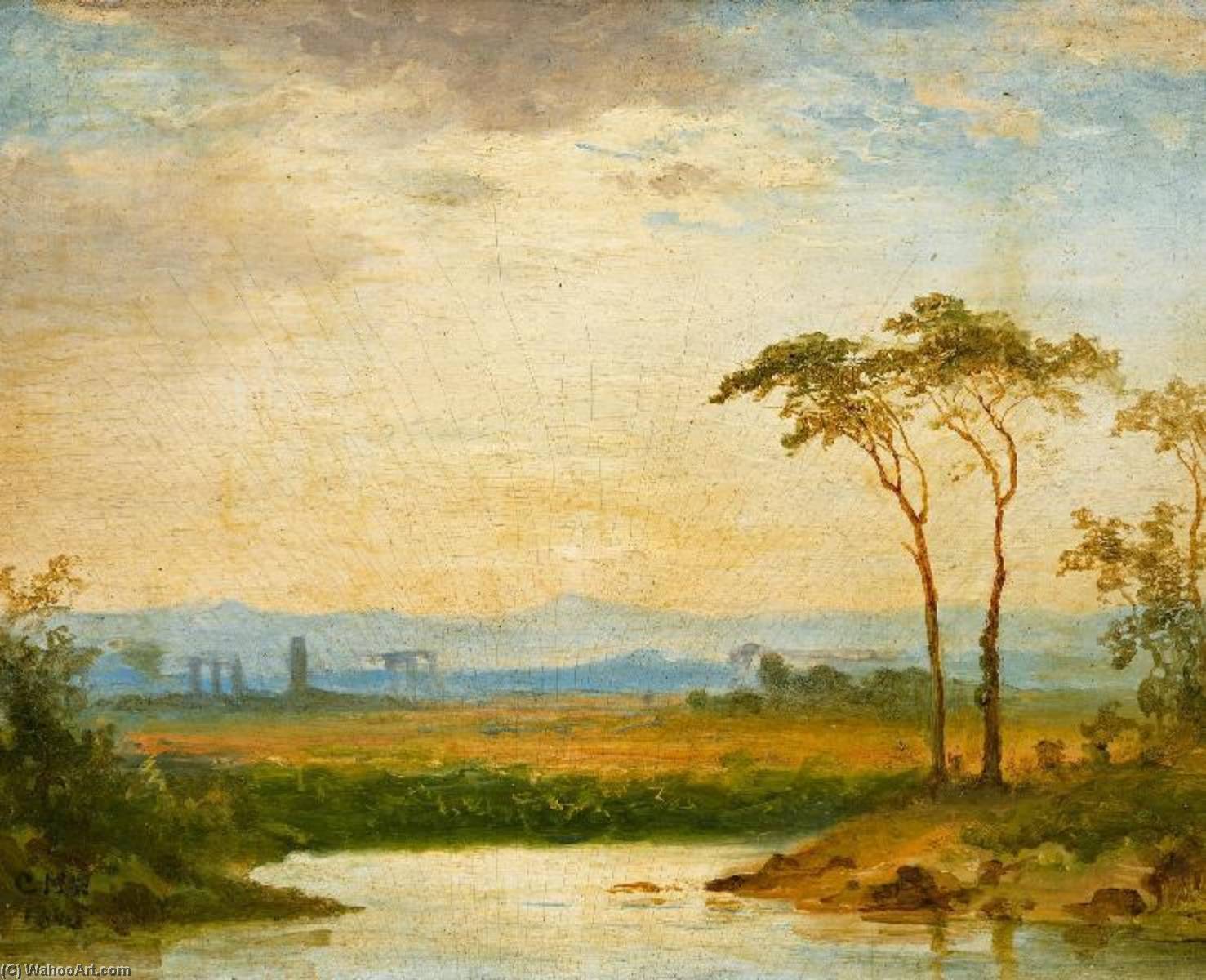
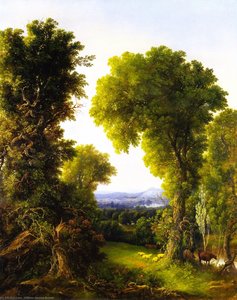
El "Paisaje Italiano" de Carl Morgenstern ofrece una vista tranquila de un paisaje ribereño, evocador de los paisajes pintorescos populares en Europa durante el siglo XIX. La pintura se centra en dos árboles prominentes que se alzan junto a la orilla del agua, cuyas formas anclan la composición. Varios árboles más pequeños pueblan el fondo, creando profundidad y contribuyendo a una sensación general de serenidad. Tres figuras están sutilmente integradas en el paisaje: una cerca del lado izquierdo y dos más atrás a la derecha, añadiendo un toque de presencia humana sin perturbar la atmósfera pacífica. El río fluye suavemente por la escena, reflejando el cielo y el follaje circundante.
Estilo y Técnica
"Paisaje Italiano" ejemplifica el estilo Romántico prevaleciente durante la época de Morgenstern. Este movimiento artístico enfatizaba la emoción, el individualismo y la sublime belleza de la naturaleza. Morgenstern emplea hábilmente una paleta suave de verdes, azules y marrones para capturar el idílico campo italiano. Su pincelada parece delicada y refinada, sugiriendo un enfoque en capturar la luz y la atmósfera más que el realismo estricto. La composición de la pintura utiliza la perspectiva atmosférica – los detalles se vuelven más suaves y los colores más fríos a medida que retroceden en la distancia – creando una ilusión convincente de profundidad.
Contexto Histórico e Influencias
La fascinación de Morgenstern por Italia fue una característica definitoria de su carrera artística. Pasó varios años estudiando en Italia, sumergiéndose en sus paisajes y cultura. Este trabajo refleja la tradición del "Gran Tour", donde artistas e intelectuales europeos viajaban a Italia en busca de inspiración y educación. La pintura también se alinea con el interés general del siglo XIX por representar escenas rurales idílicas como un contrapunto a la rápida industrialización que ocurría en toda Europa. Su maestro, Carl Rottmann, influyó significativamente en su estilo, animándolo a abrazar la pintura de paisajes y capturar sus cualidades atmosféricas.
Impacto Emocional y Simbolismo
"Paisaje Italiano" evoca una sensación de calma y tranquilidad. El suave fluir del río, el exuberante verdor y la luz tenue contribuyen a una sensación de contemplación pacífica. Si bien no es abiertamente simbólico, los árboles pueden interpretarse como representantes de fuerza, resistencia o quizás incluso la belleza perdurable de la naturaleza. La presencia de las figuras sugiere una conexión humana con este mundo natural, insinuando el ocio y el disfrute. En general, la pintura ofrece un respiro de las ansiedades de la vida moderna, invitando a los espectadores a sumergirse en un momento de serena belleza.
Obras relacionadas
Biografía del artista
Carl Morgenstern: A Visionary Landscape Painter of Late Romantic Germany
Carl Fredricksen (1770 – 1852) stands as a singular figure in German art history, recognized primarily for his evocative landscapes and portraits that embody the spirit of the late Romantic era. Born in Magdeburg, Prussia, Morgenstern’s artistic journey began with rigorous academic training under Johann August Eberhard at Halle University, grounding him firmly in classical philology alongside philosophical inquiry – an intellectual duality that profoundly shaped his creative output. While overshadowed by contemporaries like Friedrich Schlegel and Ludwig Tieck, Morgenstern carved out a distinctive niche through meticulous observation of nature and a masterful manipulation of tonal color palettes, establishing himself as one of the foremost landscape painters of his time.- Early Influences: Morgenstern’s formative years were marked by exposure to Enlightenment ideals championed by Immanuel Kant, fostering a preoccupation with rationalism and moral philosophy that subtly permeated his artistic sensibilities. However, he swiftly embraced the burgeoning Romantic movement, captivated by its emphasis on emotion, imagination, and the sublime—a shift powerfully reflected in his increasingly dramatic depictions of mountainous vistas and stormy seas.
- The Dorpat Years: His relocation to Dorpat University Library in 1802 proved pivotal, transforming Morgenstern from a contemplative philosopher into a prolific artist dedicated to capturing the grandeur of Estonia’s Baltic landscape. During this period, he abandoned his initial focus on Plato's dialogues and turned instead toward literary criticism and art history, analyzing texts by Goethe and Schiller with unparalleled insight.
- Technique & Style: Morgenstern’s artistic technique was characterized by a deliberate restraint—a calculated avoidance of excessive brushwork that prioritized tonal harmony and atmospheric depth. He favored muted earth tones – ochres, siennas, umbers – blended seamlessly to convey the subtle nuances of light and shadow, creating landscapes imbued with an almost palpable sense of stillness and contemplation. His portraits similarly demonstrated meticulous attention to detail, capturing not merely physical likeness but also psychological character—a hallmark of Romantic portraiture.
Notable Works & Artistic Legacy
Morgenstern’s oeuvre comprises approximately 300 paintings, predominantly landscapes executed in oil on canvas. Among his most celebrated compositions are “The Baltic Coast,” depicting the rugged coastline of Estonia with breathtaking realism and expressive color; “Mount Königsberg,” a monumental depiction of Prussia's highest peak showcasing Morgenstern’s mastery of tonal gradation; and numerous portraits of prominent intellectuals and dignitaries—including depictions of Friedrich Nietzsche and Hermann Diels—that reveal his keen understanding of human psychology. His meticulous documentation of geological formations and botanical specimens underscores his commitment to scientific observation alongside artistic creativity.- Georg Schäfer & Ny Carlsberg Glyptotek: Morgenstern’s paintings are housed in prestigious institutions such as the Georg Schäfer Museum in Tartu, Estonia, and the Ny Carlsberg Glyptotek in Copenhagen, Denmark, ensuring their enduring presence within the canon of German Romantic art.
- Influence on Spitzweg Collection: His legacy extends beyond museum collections; Morgenstern’s works are included in the Spitzweg Collection, demonstrating his impact on subsequent generations of artists and scholars interested in landscape painting and psychological portraiture.
Symbolism & Philosophical Depth
Beyond mere visual representation, Morgenstern's paintings resonate with philosophical considerations rooted in Kantian epistemology—a preoccupation with perceiving the sublime as an experience that transcends rational understanding. He sought to convey not just what he saw but also what he felt—the awe and wonder inspired by confronting the immensity of nature and the complexities of human consciousness. This intellectual underpinning informs his artistic vision, elevating his landscapes from picturesque depictions into meditations on beauty, morality, and the relationship between humanity and the cosmos. Morgenstern’s contribution to German art lies not only in his technical prowess but also in his ability to infuse his canvases with profound philosophical ideas—a testament to the enduring power of Romantic thought.Concluding Remarks: A Quiet Giant
Carl Morgenstern remains a relatively obscure figure compared to many of his contemporaries, yet his paintings continue to captivate viewers with their understated elegance and atmospheric depth. His unwavering dedication to observation combined with intellectual rigor cemented his position as one of the foremost landscape painters of his era—a quiet giant whose artistic legacy persists through the enduring beauty of his landscapes and the insightful portrayal of human character.
carl morgenstern
1811 - 1893
Datos clave
- Artistic Movement Or Style: Romanticism
- Artists Or Movements Influenced By This Artist: ['Bildungsroman']
- Artists Who Influenced This Artist: ['Friedrich August Wolf']
- Date Of Birth: August 28 [O.S. August 17] 1770
- Date Of Death: September 15 [O.S. September 3] 1852
- Full Name: Johann Karl Simon Morgenstern
- Nationality: German
- Notable Artworks:
- De Platonis Republica commentationes tres
- Auszüge aus den Tagebüchern und Papieren eines Reisenden
- Place Of Birth: Magdeburg, Germany
Artículos relacionados
Evoking Nature's Sublime: A Comprehensive Exploration of 19th-Century Landscape Painting
Explore the captivating world of 19th-century landscape painting! Discover renowned artists like Friedrich & Monet, key movements, and find the perfect artwork to bring nature's serenity into your home. Expert insights at ArtsDot.

Paisajes Románticos: 10 Obras Maestras que Definieron un Movimiento Artístico
Descubre los 10 paisajes románticos más influyentes de artistas como Caspar David Friedrich y Turner. Explora la belleza, el simbolismo y las técnicas del movimiento romántico. Reproducciones de arte exclusivas en ArtsDot.com.

John Constable: Las 25 Obras Maestras del Paisaje Inglés | ArtsDot
Descubre las 25 obras maestras de John Constable, el pintor romántico inglés que capturó la belleza del paisaje. Explora su técnica, historia y significado en ArtsDot.com. Reproducciones de arte de alta calidad para tu hogar.

Arboreal Echoes: A Historical & Artistic Exploration of Trees in Painting
Explore the rich history of trees in painting! Discover symbolism, Romantic masterpieces by Caspar David Friedrich & beyond. A curated journey for art enthusiasts.
Flowing Narratives: Rivers in Painting – A Historical Exploration
Explore the rich history of rivers in painting! Discover masterpieces from ancient times to Impressionism & beyond. Learn about symbolism, artists like Monet & Daubigny, and find your perfect serene artwork at ArtsDot.