 Ver en contexto
 Enviar
 Compartir
 Detalles

 Descargar
 Similares
 Radiografía
 Presentación de diapositivas
Filippo Tommaso Marinetti
 1910
1910 100.0 x 82.0 cm
 Ver más
Giclée / Impresión de arte
Impresiones giclée o en lienzo de calidad de museo con producción rápida y opciones de acabado flexibles. ( Comprar pintura hecha a mano Comprar imagen)




































Elija entre nuestros tamaños predefinidos que respetan las proporciones originales de la obra.

Puede introducir sus propias dimensiones para adaptarse a un marco o espacio específico. Si el tamaño seleccionado no coincide con las proporciones de la imagen original, recortaremos la obra de arte o extenderemos la imagen con un borde con efecto espejo o de color sólido. Se enviará una maqueta digital para su aprobación antes de que comience la producción.
Tenga en cuenta que la vista previa en pantalla no refleja el recorte o la extensión real. Solo la maqueta mostrará con precisión la composición final.
Aunque existen tamaños personalizados, recomendamos seleccionar una dimensión de la lista predefinida para preservar las proporciones originales.
Envío a todo el mundo () en 2 semanas en lugar de las 4/5 semanas estándar. (27 agosto)

Envío exprés gratuito a todo el mundo

Lienzo de lino de alta calidad

Seguro de envío total

Garantía de reembolso de impuestos aduaneros

Garantía de fidelidad cromática exacta

Política de devolución de 60 días (solo por defectos)

Garantía de devolución del 100% del dinero

Descuento por cantidad
 La opción de vidrio solo está disponible en tamaños inferiores a 110 cm.

Filippo Tommaso Marinetti
Giclée / Impresión de arte
Dimensiones de la reproducción
-


Precio total final
$ 62
Descripción de la pieza
The Artistic Movement: Futurism
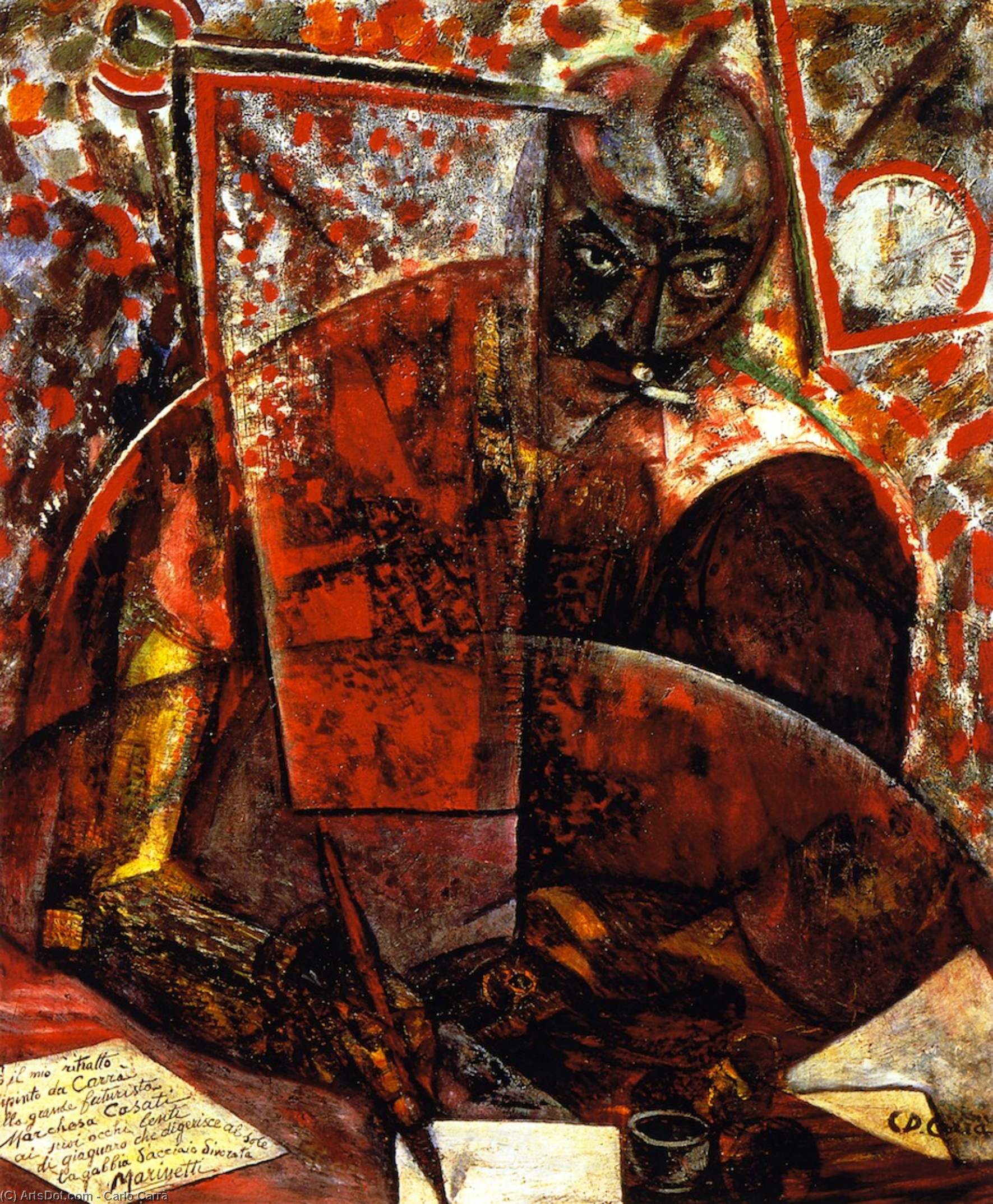
Futurism was an avant-garde movement that emerged in Italy during the early 20th century. It sought to break away from traditional forms of art by embracing modernity and the machine age. The movement's key figures, including Filippo Tommaso Marinetti, were fascinated by speed, technology, and the urban landscape.The Painting: A Portrait of a Visionary
The painting Filippo Tommaso Marinetti is a portrait of the founder of Futurism. It captures Marinetti in a contemplative moment, surrounded by symbols of his intellectual pursuits. The cat on his lap represents the quiet companionship that contrasts with the dynamic and violent themes often associated with Futurism.Artistic Influences
Carlo Carrà's work was influenced by various artistic movements, including Cubism. This is evident in the fragmented forms and multiple perspectives depicted in his paintings. The fusion of Cubist techniques with Futurist ideals resulted in a unique style that characterized Carrà's art.Other Notable Works
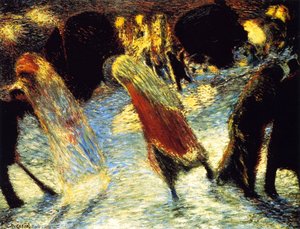
- Mountain landscape with church by Wassily Kandinsky (32 x 44 cm, Expressionism, Oil) - The Morning Bell by Winslow Homer - Leaving the Theater by Carlo Carrà (69 x 91 cm, Estorick Collection of Modern Italian Art, London, United Kingdom, Oil On Canvas)Artistic Movements and Their Impact
- Cubism: An early-20th-century art movement that revolutionized painting and the visual arts. It influenced artistic innovations in music, ballet, literature, and architecture. - Cubo-Futurism: A Russian art movement that combined elements of Italian Futurism and French Analytical Cubism.Conclusion
Carlo Carrà's Filippo Tommaso Marinetti is a significant work in the context of Futurist art. It reflects the movement's emphasis on modernity, technology, and intellectual pursuits. The painting serves as a bridge between traditional portraiture and the avant-garde ideals of the early 20th century. For more information on Futurism and its influence on art, visit The Futurism Art Movement at ArtsDot. Explore the world of handmade oil painting reproductions and discover the beauty of art from various movements and periods.To learn more about Cubo-Futurism, refer to Cubo-Futurism on Wikipedia.
Obras relacionadas



Biografía del artista
Early Life and the Seeds of Artistic Rebellion
Carlo Carrà, born in Quargnento near Alessandria, Italy, on February 11, 1881, embarked on a path diverging sharply from academic tradition. His youth was marked by necessity; at twelve years old, he left his family to apprentice as a mural decorator. This formative experience, steeped in the physicality of art-making and craftsmanship, indelibly shaped his artistic sensibilities. It wasn’t merely applying paint—it was immersion into color, form, and visual communication. A sojourn to Paris at the turn of the century, decorating pavilions for the Exposition Universelle, exposed him to burgeoning currents of contemporary French art, a crucial awakening that broadened his horizons beyond Italian provincialism. This exposure was followed by a brief period in London, where he encountered exiled Italian anarchists—a political undercurrent subtly informing his early work with themes of social unrest and rebellion. Returning to Milan in 1901, Carrà honed his skills, eventually enrolling at the Brera Academy in 1906, studying under Cesare Tallone. Yet, even within the academy’s structure, a restless spirit persisted, yearning for artistic innovation.Embracing Dynamism: The Futurist Years
The year 1910 proved pivotal. Carrà joined Umberto Boccioni, Luigi Russolo, and Giacomo Balla, signing the manifesto of the Futurist painters—a declaration irrevocably altering Italian art’s course. Futurism was a radical ideology, an explosive celebration of modernity, speed, technology, youth, and the machine age's relentless energy. It rejected the past, embracing dynamism and anticipating a future defined by progress. Carrà’s early Futurist works, such as The Funeral of the Anarchist Galli (1911) and Rhythms of Objects (1911), vividly embody these principles. The Funeral of the Anarchist Galli, a chaotic yet compelling depiction of grief and protest, isn’t merely representation but a visceral experience of movement and emotion. The fractured forms and jarring colors convey the raw energy of the crowd and disruptive political force. Rhythms of Objects further demonstrates his exploration of dynamism, breaking down everyday objects into fragmented shapes suggesting motion and transformation. These paintings weren’t about *what* was depicted but *how* it was perceived—a revolutionary approach to representation. Carrà wasn’t just painting scenes; he attempted to capture the very essence of modern life in all its frenetic glory.From Futurism to Metaphysics and Beyond
The fervor of Futurism waned for Carrà as World War I loomed, his artistic trajectory taking an unexpected turn. Around 1917, a profound shift occurred, influenced by his encounter with Giorgio de Chirico in Ferrara. De Chirico’s “Metaphysical Painting”—characterized by unsettling juxtapositions, eerie perspectives, and a dreamlike atmosphere—resonated deeply with Carrà. He began incorporating mannequin imagery into his work, as seen in The Daughters of Lot (1919), creating scenes both familiar and disturbing. This period marked a move away from Futurism’s outward dynamism toward an inward exploration of psychological states and existential anxieties. The 1920s and 30s witnessed another evolution as Carrà turned to landscape painting. He developed a more atmospheric style, characterized by flattened perspectives and textured brushwork, exemplified in works like Morning by the Sea (1928). This wasn’t a rejection of earlier experimentation but an integration into a new visual language—a quieter, more contemplative approach to art.Exploring Carrà's World Further
Carrà’s legacy lies not only in iconic images but also in his relentless pursuit of artistic truth—a quest leading him through innovation, reflection, and engagement with a tumultuous political landscape. He was pivotal in both Futurism and Metaphysical Painting, pushing boundaries and challenging norms. His willingness to experiment throughout his career demonstrates remarkable intellectual curiosity and artistic courage. His influence extends beyond painting, impacting sculpture, literature, and design through the Futurist movement’s interdisciplinary approach.- Delve deeper into his works at various online art databases.
- Explore the revolutionary spirit of Futurism and its key figures.
- Consult reputable sources like Wikipedia and Britannica for comprehensive biographical information.
- The Funeral of the Anarchist Galli (1911)
- Rhythms of Objects (1911)
- The Daughters of Lot (1919)
- Morning by the Sea (1928)
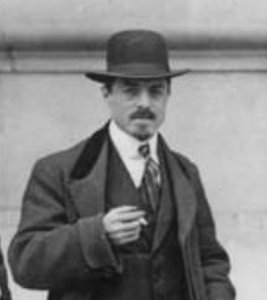
Carlo Carrà
1881 - 1966 , Italia
Datos clave
- Artistic Movement Or Style: Futurism, Metaphysical art
- Artists Who Influenced This Artist:
- Giacomo Balla
- Giorgio de Chirico
- Date Of Birth: Feb 11, 1881
- Date Of Death: Apr 13, 1966
- Full Name: Carlo Carrà
- Nationality: Italian
- Notable Artworks:
- Funeral of Galli
- Rhythms of Objects
- Daughters of Lot
- Morning by the Sea
- Place Of Birth: Alessandria, Italy