 Vista previa
 Compartir
 Compartir
 Ver detalles

 Descargar
 Ver similares
 Radiografía
 Presentación de diapositivas
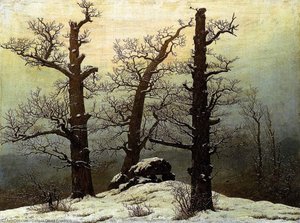
Uña sobre una tumba
 Acrílico sobre lienzo
- Arte de pared
- Romanticism
 1837
1837 25.0 x 22.0 cm
 Leer más
Giclée / Impresión de arte
Impresiones giclée o en lienzo de calidad de museo con producción rápida y opciones de acabado flexibles. ( Encargar reproducción pintada a mano Comprar descarga)




P118B $10

P118H $10

P118W $10

P438Z $10

P508JH $12

P508YH $12

P805H $10

P805Z $10

P919BZ $10

P919G $10

P919XJ $10

P959ZH $10

P968JZ $12

W106C $8

W218G $10

W218JH $8

W218Y $10

W307PJ $10

W316G $10

W316PJ $8

W316Y $10

W398PJ $8

W4111J $10

W500HY $15

W500JH $15

W692G $12

W849H $8

W940BG $15

W953PJ $8




Elija entre nuestros tamaños predefinidos que respetan las proporciones originales de la obra.

Puede introducir sus propias dimensiones para adaptarse a un marco o espacio específico. Si el tamaño seleccionado no coincide con las proporciones de la imagen original, recortaremos la obra de arte o extenderemos la imagen con un borde con efecto espejo o de color sólido. Se enviará una maqueta digital para su aprobación antes de que comience la producción.
Tenga en cuenta que la vista previa en pantalla no refleja el recorte o la extensión real. Solo la maqueta mostrará con precisión la composición final.
Aunque existen tamaños personalizados, recomendamos seleccionar una dimensión de la lista predefinida para preservar las proporciones originales.
Envío a todo el mundo () en 2 semanas en lugar de las 4/5 semanas estándar. (19 agosto)

Envío exprés gratuito a todo el mundo

Lienzo de lino de alta calidad

Seguro de envío completo

Garantía de reembolso de aranceles aduaneros

Garantía de fidelidad cromática exacta

Política de devolución de 60 días (solo por defectos)

Garantía de devolución del 100% del dinero

Oferta por volumen
 La opción de vidrio solo está disponible en tamaños inferiores a 110 cm.

Uña sobre una tumba
Giclée / Impresión de arte
Tamaño de la reproducción
-


Precio total
$ 62
Descripción de la pieza
Landscape with Grave, Coffin and Owl
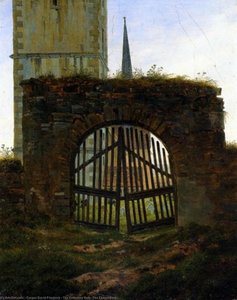
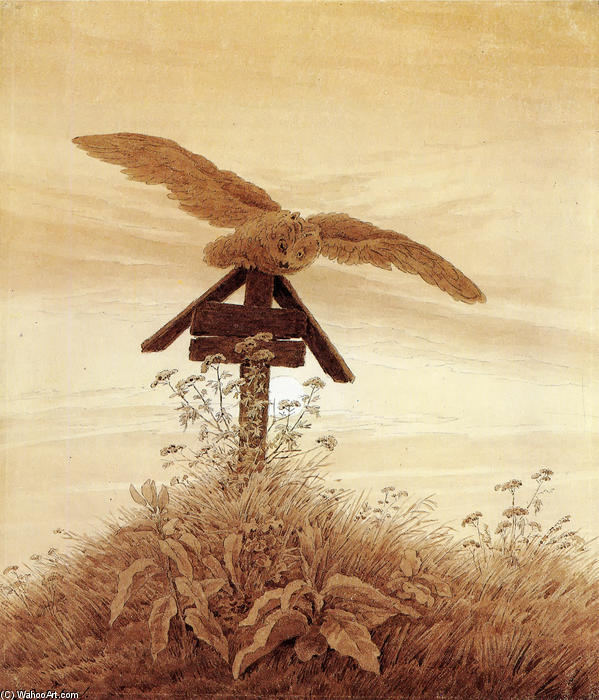
Caspar David Friedrich’s “Owl on a Grave” stands as an emblem of Romantic landscape painting—a testament to the movement's profound engagement with nature’s sublime beauty and its contemplation of mortality. Created in 1837 during his formative years, this artwork transcends mere visual representation; it invites viewers into a meditative dialogue about existence itself. Friedrich, deeply influenced by theological ideas regarding God’s presence within the natural world—particularly championed by Ludwig Gotthard Kosegarten—crafted “Owl on a Grave” to capture not just what he saw but how it *felt*. This ambition is palpable in every brushstroke and tonal gradation, distinguishing it from earlier neoclassical styles.Composition and Symbolism: The Language of Silence
Friedrich meticulously orchestrated the painting’s composition to maximize its expressive power. Dominating the canvas is an owl perched atop a weathered wooden post or grave marker—a deliberate choice reflecting the pervasive preoccupation with death and decay within Romantic thought. The owl's downward gaze establishes a palpable atmosphere of introspection, prompting viewers to confront existential questions about life’s fleeting nature. Complementing this central figure are subtle additions: another bird nestled in the upper left corner – likely mirroring the owl’s solemn posture – and a solitary flower positioned on the right side, injecting a touch of fragile beauty into the otherwise austere landscape. The owl itself carries profound symbolic weight, representing wisdom, death, and the afterlife—themes central to Romantic spirituality. Similarly, the grave marker serves as a poignant reminder of mortality, grounding the viewer in the inescapable reality of human existence.Artistic Style and Technique: Gothic Influence Meets Pencil Precision
Friedrich’s artistic style is characterized by its embrace of gothic elements – particularly the dramatic interplay of light and shadow – to evoke feelings of melancholy and spiritual contemplation. He skillfully employs pencil as his medium, achieving remarkable detail and textural nuance. This technique allows him to capture the subtle nuances of atmospheric perspective, conveying a sense of depth and realism that distinguishes it from earlier neoclassical styles. The muted palette—primarily browns, greys, and ochres—further reinforces the painting’s solemn mood and aligns with Friedrich's desire to depict nature as an arena for profound spiritual experience. Unlike many Romantic painters who favored bold brushstrokes and vibrant colors, Friedrich prioritized tonal gradation, creating a visual harmony that underscores the painting’s contemplative character.Context and Significance: Friedrich’s Vision of Humanity’s Place in Nature
Friedrich's artistic endeavors were deeply rooted in the intellectual currents of his time—specifically the burgeoning Romantic movement’s rejection of Enlightenment rationalism in favor of emotion and intuition. He championed the notion that art should inspire awe and reverence for the natural world, mirroring a broader cultural shift toward valuing experience over dogma. Like Turner and Constable before him, Friedrich sought to capture not merely what he saw but how it *felt*. His paintings frequently featured solitary figures dwarfed by expansive landscapes—a deliberate strategy designed to convey the insignificance of human existence against the backdrop of cosmic grandeur. This visual motif powerfully communicates the Romantic preoccupation with confronting mortality and contemplating the sublime—the experience of encountering something beyond comprehension that simultaneously inspires terror and delight.Preservation and Display: A Testament to Artistic Legacy
The original “Owl on a Grave” resides within the Pomerania State Museum, Greifswald, Germany—a repository of art and cultural heritage that houses over 14,000 years of Pomeranian history. The museum’s architectural ensemble—characterized by its harmonious blend of Gothic and neo-classical styles—provides an ideal setting for appreciating Friedrich's masterpiece alongside other significant artworks from the Romantic era. Its careful curation ensures that future generations can experience the enduring beauty and intellectual depth of this iconic painting. Experience the beauty and symbolism of Caspar David Friedrich's "Owl on a Grave" through ArtsDot’s handmade oil painting reproductions. Photo Description: The painting is a beautiful depiction of an owl perched on top of a wooden post or grave marker. The owl appears to be looking downward as it sits atop the post. The scene takes place in front of a sky background that adds depth and perspective to the image. In addition to the main subject, there are several other elements present in the painting. There is a bird located near the top left corner of the image, possibly another owl or a different species. A small flower can be seen on the right side of the painting, adding a touch of natural beauty to the scene. The overall composition of the painting creates an atmosphere of tranquility and contemplation. Size: 25 x 22 cm Date: 1837 ARTIST INFORMATION: ================== Artist: Caspar David Friedrich Birth Year: 1774 Death Year: 1840 Birth City: Greifswald Birth Country: Germany Biography:A Solitary Vision: The Life and Art of Caspar David Friedrich
Born in the Baltic port city of Greifswald on September 5, 1774, Caspar David Friedrich’s life was steeped in a melancholic atmosphere that would profoundly shape his artistic vision. He was the sixth of ten children, raised in the strict Lutheran creed of his father Adolf Gottlieb Friedrich, a candle-maker and soap boiler. Records of the family's financial circumstances are contradictory; while some sources indicate the children were privately tutored, others record that they were raised in relative poverty. He became familiar with death from an early age. His mother, Sophie, died in 1781 when he was seven. A year later, his sister Elisabeth died, and a second sister, Maria, succumbed to typhus in 1791. Arguably the greatest tragedy of his childhood happened in 1787 when his brother Johann Christoffer died: at the age of thirteen, Caspar David witnessed his younger brother fall through the ice of a frozen lake and drown. Some accounts suggest that Johann Christoffer perished while trying to rescue Caspar David, who was also in danger on the ice. Friedrich began his formal study of art in 1790 as a private student of artist Johann Gottfried Quistorp at the University of Greifswald, where he studied theology alongside art. Quistorp took his students on outdoor drawing excursions; as a result, Friedrich was encouraged to sketch from life at an early age. Through Quistorp, Friedrich met and was subsequently influenced by the theologian Ludwig Gotthard Kosegarten, who taught that nature was a revelation of God. Quistorp introduced Friedrich to the work of the German 17th-century artist Adam Elsheimer, whose works often included religious subjects dominated by landscape, and nocturnal subjects. During this period he also studied literature and aesthetics with Swedish professor Thomas Thorild. Friedrich entered the Academy of Copenhagen four years later, where he studied under teachers such as Christian August Lorentzen and the landscape painter Jens Juel. These artists were inspired by the Sturm und Drang movement and represented a midpoint between the dramatic intensity and expressive manner of the budding Romantic aesthetic and the waning neo-classical ideal. Mood was paramount"Obras relacionadas
Biografía del artista
vida temprana y carrera
caspar david friedrich, una figura destacada del movimiento romántico alemán, nació el 5 de septiembre de 1774, en Greifswald, que entonces formaba parte de Pomerania sueca. Sus primeros años estuvieron marcados por una inclinación innata hacia el arte, lo que le llevó a estudiar en la Universidad de Leipzig y posteriormente en Copenhague.estilo artístico y temas
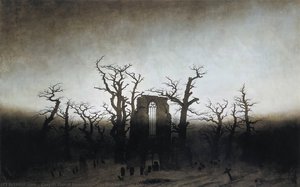
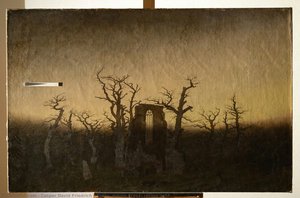
La obra de Friedrich se caracteriza por el uso profundo de elementos góticos y fenómenos naturales para evocar una profunda contemplación y un sentido del sublime. Sus paisajes a menudo disminuyen las figuras humanas para resaltar la inmensidad del mundo natural, reflejando el cambio social de su época hacia la espiritualidad en lugar de los beneficios materiales.- abbey among oak trees, un estado intermedio después de la eliminación del aglutinante viejo y retoques, muestra la maestría de Friedrich para capturar la esencia de la naturaleza (alte nationalgalerie, Berlín, Alemania, fotografía).
- Morning (óleo) ejemplifica su capacidad para representar escenas serenas e introspectivas.
- northern landscape, spring (óleo) y landscape in the riesengebirge (óleo) demuestran aún más su habilidad para capturar la belleza de la naturaleza en diferentes estaciones y paisajes.
influencia y legado
La influencia de Friedrich en la historia del arte es profunda, siendo su obra pionera del romanticismo alemán. Su estilo contemplativo, aunque inicialmente celebrado, cayó fuera de sintonía con el progreso industrial de Alemania más tarde. Sin embargo, a fines del siglo XX, fue aclamado como un artista de renombre internacional. puntos clave en la carrera de Friedrich:- reconocimiento temprano por su 'tragedia del paisaje' en su obra.
- declive en popularidad durante su vida posterior debido al progreso industrial en Alemania.
- aclamación póstuma como pionero del romanticismo alemán a fines del siglo XX.
explore more at ArtsDot
Para una extensa base de datos de obras de arte y biografías de artistas, incluyendo las obras de Caspar David Friedrich, visite [https://ArtsDot.com](https://ArtsDot.com). Descubra la evolución del arte occidental a través de los siglos, desde la Edad Media temprana hasta la era moderna, con la wahoo art timeline. Aprenda sobre las figuras clave en la historia del arte y explore los diferentes estilos y movimientos que dieron forma al mundo del arte.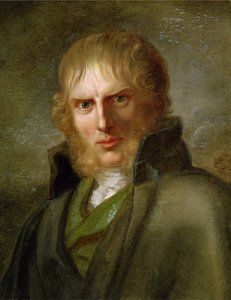
Caspar David Friedrich
1774 - 1840 , Alemania
Datos clave
- Artistas Que Influyeron:
- Jacob van Ruisdael
- Immanuel Kant
- Fecha De Muerte: 7 de mayo de 1840
- Fecha De Nacimiento: 5 de septiembre de 1774
- Influencia Artística:
- Simbolistas
- Surrealistas
- Lugar De Nacimiento: Greifswald, Alemania
- Movimiento Artístico: Romanticismo alemán
- Nacionalidad: Alemán
- Nombre Completo: Caspar David Friedrich
- Obras Notables:
- El mar de hielo
- El caminante sobre el
- Abadía en el hayedo
- Acantilados de tiza en Rügen
Artículos relacionados

Paisajes Románticos: 10 Obras Maestras que Definieron un Movimiento Artístico
Descubre los 10 paisajes románticos más influyentes de artistas como Caspar David Friedrich y Turner. Explora la belleza, el simbolismo y las técnicas del movimiento romántico. Reproducciones de arte exclusivas en ArtsDot.com.

Los 10 Paisajes Más Icónicos de la Historia del Arte | ArtsDot
Descubre los 10 paisajes más emblemáticos de la historia del arte, desde Monet a Van Gogh. Explora su significado, técnica y belleza atemporal. Encuentra reproducciones de alta calidad e inspira tu hogar con ArtsDot.com.
El Sublime y lo Pintoresco: Explorando la Emoción y la Naturaleza en la Pintura Romántica de Paisaje
Explora la profunda conexión entre el arte romántico y la naturaleza. Descubre a Caspar David Friedrich, John Constable y otros maestros del sublime y lo pintoresco. Análisis experto e historia del movimiento.

Evocations of Place: A Historical Journey Through Landscape Art
Explore the rich history of landscape art with ArtsDot. Discover renowned artists, movements like Impressionism & Romanticism, and expert guidance for collecting timeless pieces. Find your perfect serene escape today!
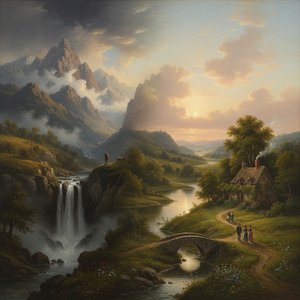
El Sublime y lo Pintoresco: Explorando la Emoción y la Naturaleza en la Pintura Romántica de Paisaje
Descubre la profunda emoción y el significado espiritual de la pintura romántica de paisaje. Explora las obras maestras de Friedrich, Turner y otros artistas clave con ArtsDot.