

 Ver en contexto
 Enviar
 Compartir
 Detalles

 Descargar
 Similares
 Radiografía
 Presentación de diapositivas
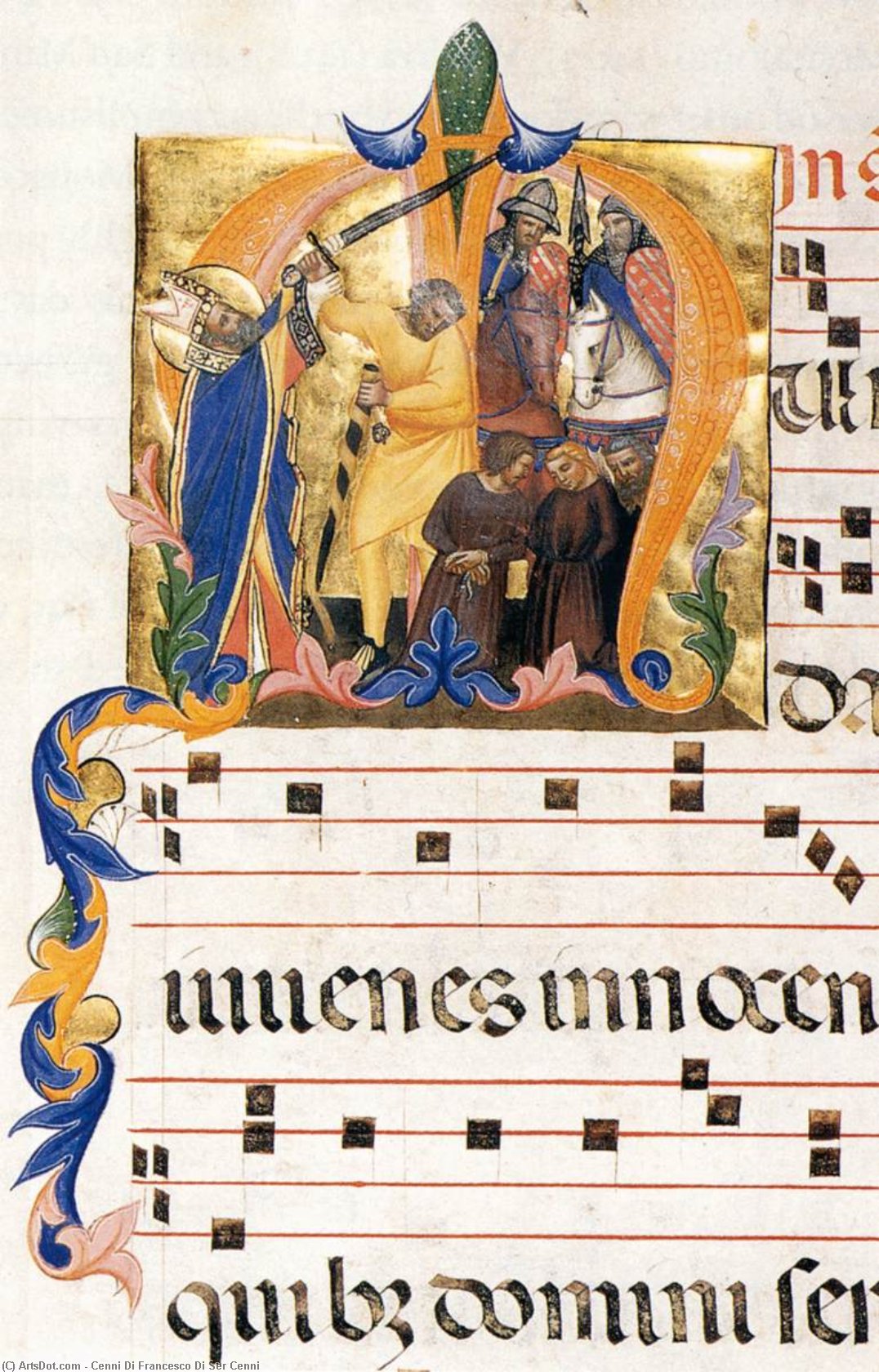
Antiphonary (Folio 27v)
 Tempera
- Gothic Style
 1370
1370- Late Medieval
 608.0 x 418.0 cm
 Walters Art Museum
 Ver más
Adquiera una imagen digital de alta resolución y optimizada, muy superior a la vista previa en línea.
Cada archivo es preparado meticulosamente por nuestros especialistas internos mediante el uso de herramientas avanzadas y un experto retoque manual. Nos aseguramos de que cada imagen posea una claridad excepcional, una precisión cromática impecable y un detalle minucioso.
El archivo final se entrega por correo electrónico en un plazo de 72 horas, optimizado para su uso inmediato en entornos profesionales, editoriales y de impresión. Esta es la misma calidad en la que confían los estudios de diseño, las editoriales y las galerías de primer nivel.
Imagen Digital
Descarga un archivo de alta resolución para exhibición personal, impresión y proyectos creativos. ( Comprar impresión Comprar pintura hecha a mano)
Incluido en cada pedido de imágenes digitales
Entrega digital experta, garantizada.
Al elegir ArtsDot.com, no solo está adquiriendo una imagen; está recibiendo una obra de arte digital mejorada profesionalmente, elaborada con precisión y respaldada por una garantía de satisfacción. Esto es todo lo que incluye su pedido, automáticamente:

Entrega rápida por email
Recibirá su archivo de imagen digital en alta resolución por correo electrónico en un plazo de 72 horas tras realizar su pedido, listo para su uso inmediato.

Archivo digital optimizado por IA
Su obra de arte se optimiza profesionalmente mediante herramientas avanzadas de IA y edición manual, garantizando el máximo detalle, claridad y precisión cromática.

Reenvío gratuito de por vida
¿Has borrado o perdido tu archivo por error? No te preocupes: te lo volveremos a enviar en cualquier momento, sin coste adicional.

Sin gastos de importación, siempre
Disfrute de su obra de arte al instante sin aduanas, aranceles ni gastos de envío; las descargas digitales siempre están libres de impuestos.

Garantía de fidelidad de color
Garantizamos que su imagen digital refleje los colores originales con la mayor fidelidad posible, mediante el uso de herramientas profesionales y gestión del color.

Garantía de satisfacción de 60 días
Si no está satisfecho con su imagen digital, la revisaremos o le reembolsaremos el 100% en un plazo de 60 días, sin preguntas.

100% Garantía de devolución de dinero
¿No está satisfecho? Obtenga un reembolso completo dentro de los 60 días posteriores a la recepción de su archivo digital, sin necesidad de explicaciones.

Descuentos por pedidos grandes
Compra 3 imágenes, ahorra 10% - Compra 5, ahorra 15% - Compra 10+, ahorra 20%. Ideal para proyectos creativos, galerías y agencias.
Descripción del coleccionable
A Glimpse into Sacred Splendor: The Antiphonary (Folio 27v)
To stand before the Antiphonary (Folio 27v) is to step directly across the threshold of the late Middle Ages, a journey into a world where devotion was rendered in pigment and gold. This magnificent folio, executed by Cenni Di Francesco Di Ser Cenni around 1370, is far more than just an illuminated page; it is a breathtaking testament to faith, artistry, and the profound dedication of its creator. The sheer scale of this tempera masterpiece—measuring an imposing 608 x 418 cm—commands attention, enveloping the viewer in its rich narrative tapestry. One cannot help but feel the hushed reverence that must have accompanied its creation within the scriptorium walls.
The Flourish of Gothic Mastery and Technique
Cenni di Francesco di Ser Cenni’s hand breathes the unmistakable spirit of the Gothic style, an aesthetic characterized by intricate detail, soaring spirituality, and a dramatic richness. The technique employed—tempera paint on vellum—lends to the work a luminous quality; each vibrant blue, deep crimson, and sunlit yellow seems to glow from within. Observe the border decoration: it is not merely filler, but a complex ecosystem of life rendered in pigment. Intricate floral motifs intertwine with delicate scrollwork, creating an ornamental embrace around the central narrative. This meticulous craftsmanship speaks volumes about the specialized knowledge held by medieval artisans, who treated every edge and corner as an opportunity for divine beauty.
Narrative Depth and Symbolic Resonance
The illustration crowning this folio captures a moment charged with historical or religious significance. A gathering of figures, arrayed in period-appropriate medieval attire, draw the eye immediately. The presence of symbols—perhaps a shield suggesting martial piety, or a figure holding an open book representing sacred knowledge—invites deep contemplation. Below this grand scene, the musical notations upon the staff, accompanied by Latin text, anchor the piece firmly within its liturgical context. These elements suggest that the page was designed not just to be viewed, but to be *experienced*—to accompany chant and prayer through the solemn rituals of the Church.
Bringing History Home: Reproducing Timeless Art
For those who wish to capture a fragment of this unparalleled history within the intimacy of their own space, ArtsDot.com offers exquisite hand-painted oil reproductions. These modern interpretations are crafted with the utmost respect for Cenni’s original vision. While the reproduction translates the tempera glow into rich oils, it successfully conveys the emotional weight and breathtaking detail of the original manuscript. Owning such a piece allows art lovers, collectors, and designers alike to surround themselves with an aura of profound cultural heritage and unparalleled artistic achievement.
Obras relacionadas
Biografía del artista
A Florentine Voice in the Gothic Twilight
Cenni di Francesco di ser Cenni, a name perhaps less resonant than those of his celebrated contemporaries, nevertheless occupies a vital position in the transition between the late Gothic period and the burgeoning Renaissance in Florence. Born around 1369, amidst a city already stirring with new artistic currents, Cenni’s career unfolded during a time of profound cultural shift. While details of his personal life remain elusive—historical records offer glimpses primarily through documented commissions rather than intimate biographical narratives—his artistic legacy speaks volumes about the enduring power of tradition and the subtle seeds of innovation. He was registered in Florence's Arte dei Medici e Speziali in 1369, marking a formal entry into the city’s vibrant guild system, and continued to work within its artistic circles until his death in 1415. Cenni wasn’t merely replicating established styles; he was actively shaping them, bridging the gap between the elegance of the Gothic era and the emerging naturalism that would define the Renaissance.Echoes of Masters and a Developing Style
Cenni di Francesco's artistic formation was deeply rooted in the International Gothic style—a refined aesthetic characterized by graceful figures, opulent colors, and intricate ornamentation. However, his work wasn’t simply derivative; it bore the distinct imprint of influential predecessors. The elegant linearity and compositional sophistication evident in Orcagna’s works clearly resonated with Cenni, informing his approach to form and design. Simultaneously, he absorbed the softer modeling and emotional expressiveness championed by Agnolo Gaddi, imbuing his figures with a gentle humanity that transcended mere stylistic imitation. This synthesis of influences is particularly noticeable in his early pieces, where one can discern a delicate balance between decorative refinement and nascent psychological depth. His style evolved over time, demonstrating an increasing sophistication in composition and detail. He skillfully blended Byzantine traditions with emerging Renaissance elements, hinting at the artistic revolution to come while remaining firmly grounded in the aesthetic sensibilities of his era.Significant Works and Lasting Impressions
Though a substantial body of work is attributed to Cenni di Francesco, it’s the *Fresco of the True Cross* within the Cappella della Croce di Giorno at the Church of San Francesco in Volterra that stands as his most celebrated achievement—and uniquely, his only known signed work. Completed in 1410, this fresco is a testament to his narrative skill and mastery of technique. The composition unfolds with clarity and grace, depicting key episodes from the legend of the True Cross with meticulous detail and vibrant color. Beyond Volterra, his artistic footprint extends to Florence itself, notably through a fresco attributed to him at the entrance to the Basilica of Santa Maria Novella, likely painted around 1390. This large-scale devotional image showcases his ability to create compelling visual narratives for public consumption. The *Polyptych with Coronation of the Virgin and Saints*, now housed in the Getty Museum, further exemplifies Cenni’s command of complex compositions and rich color palettes—a quintessential example of altarpiece design during that period. Numerous other works, including illuminated manuscripts – notably Antiphonary folios – and panel paintings, continue to be attributed to him based on stylistic analysis, enriching our understanding of his prolific output.A Bridge Between Eras
Cenni di Francesco’s historical significance lies not in radical innovation but in his role as a crucial link between artistic traditions. He wasn't at the forefront of the revolutionary changes sweeping through Florence; rather, he embodied a refined continuation of the Gothic aesthetic while subtly incorporating elements that foreshadowed the Renaissance. This included a growing emphasis on naturalism and emotional expression—a departure from the more stylized conventions of earlier Gothic art. His work helped preserve and refine the International Gothic style, ensuring its continued influence on subsequent generations of artists even as new artistic paradigms emerged. He contributed significantly to the rich artistic heritage of Florence during a period of immense cultural change, offering valuable insights into the artistic landscape of 14th-century Italy. Though perhaps not as widely recognized as some of his contemporaries, Cenni di Francesco’s paintings remain compelling testaments to an artist who skillfully navigated the currents of his time, leaving behind a legacy that continues to resonate with beauty and grace.- Notable Works: The True Cross Fresco (Volterra), Santa Maria Novella Fresco, Polyptych with Coronation of the Virgin and Saints
- Influenced By: Orcagna, Gaddi
- Style: International Gothic
cenni di francesco di ser cenni
1369 - 1415 , Italia
Breves datos
- Artistic Movement Or Style: Gótico Internacional
- Artists Who Influenced This Artist:
- Orcagna
- Giovanni del Biondo
- Date Of Birth: 1369
- Date Of Death: c. 1415
- Full Name: Cenni di Francesco di Ser Cenni
- Nationality: Italiano
- Notable Artworks:
- El Sacramento (Volterra)
- Santa Maria Novella Fresco
- Políptico con Coronación
- Place Of Birth: Florence, Italia

