 Ver en contexto
 Enviar
 Compartir
 Detalles

 Descargar
 Similares
 Radiografía
 Presentación de diapositivas
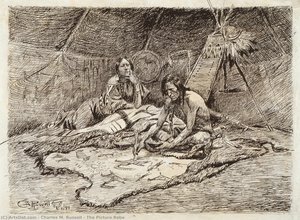
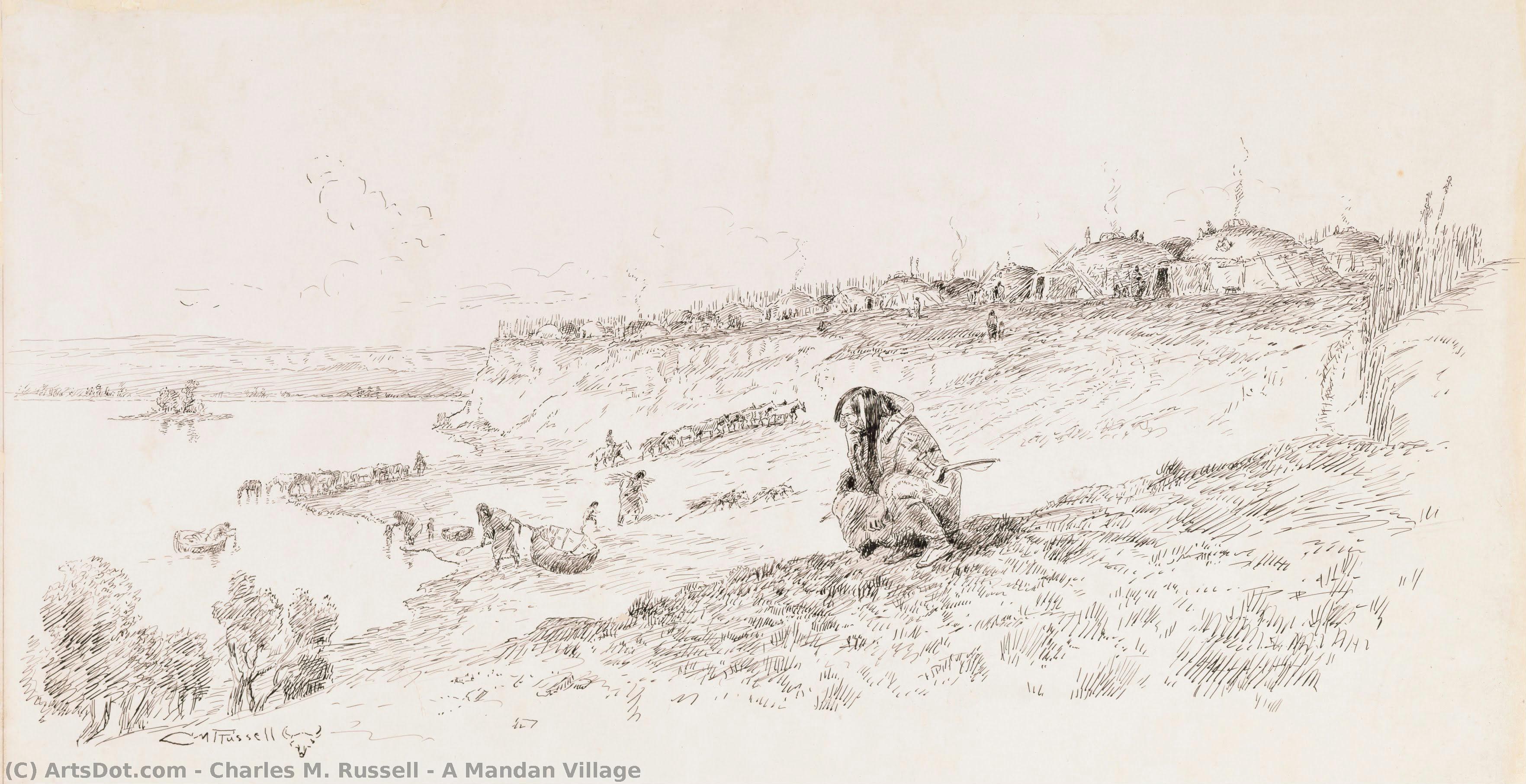
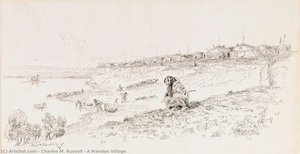
A Mandan Village
 Graphite Pencil
- WallArt
- Contemporary Realism
 1922
1922- 19th Century
 55.0 x 35.0 cm
 Amon Carter Museo de Arte Estadounidense
 Ver más
Giclée / Impresión de arte
Impresiones giclée o en lienzo de calidad de museo con producción rápida y opciones de acabado flexibles. ( Comprar pintura hecha a mano Comprar imagen)




P118B $10

P118H $10

P118W $10

P438Z $10

P508JH $12

P508YH $12

P805H $10

P805Z $10

P919BZ $10

P919G $10

P919XJ $10

P959ZH $10

P968JZ $12

W106C $8

W218G $10

W218JH $8

W218Y $10

W307PJ $10

W316G $10

W316PJ $8

W316Y $10

W398PJ $8

W4111J $10

W500HY $15

W500JH $15

W692G $12

W849H $8

W940BG $15

W953PJ $8




Elija entre nuestros tamaños predefinidos que respetan las proporciones originales de la obra.

Puede introducir sus propias dimensiones para adaptarse a un marco o espacio específico. Si el tamaño seleccionado no coincide con las proporciones de la imagen original, recortaremos la obra de arte o extenderemos la imagen con un borde con efecto espejo o de color sólido. Se enviará una maqueta digital para su aprobación antes de que comience la producción.
Tenga en cuenta que la vista previa en pantalla no refleja el recorte o la extensión real. Solo la maqueta mostrará con precisión la composición final.
Aunque existen tamaños personalizados, recomendamos seleccionar una dimensión de la lista predefinida para preservar las proporciones originales.
Envío a todo el mundo () en 2 semanas en lugar de las 4/5 semanas estándar. (25 agosto)

Envío exprés gratuito a todo el mundo

Lienzo de lino de alta calidad

Seguro de envío total

Garantía de reembolso de impuestos aduaneros

Garantía de fidelidad cromática exacta

Política de devolución de 60 días (solo por defectos)

Garantía de devolución del 100% del dinero

Descuento por cantidad
 La opción de vidrio solo está disponible en tamaños inferiores a 110 cm.

A Mandan Village
Giclée / Impresión de arte
Dimensiones de la reproducción
-


Precio total final
$ 62
Descripción de la pieza
A Mandan Village: Russell's Romantic Vision of the American West
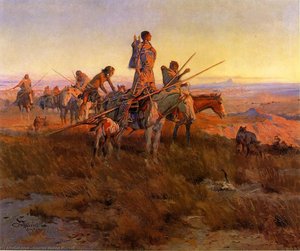
Charles Marion Russell’s “A Mandan Village,” completed in 1922, transcends mere landscape depiction; it embodies the artist’s profound connection to the untamed spirit of the American frontier—a realm he experienced firsthand as a cowboy traversing Montana’s Judith Basin. Born in St. Louis in 1864, Russell abandoned formal schooling at sixteen to pursue this visceral immersion into the life he envisioned, marking a decisive break from conventional artistic pursuits and irrevocably shaping his distinctive style. This wasn't simply observation; it was internalization—a transformation of experience into a core element of his oeuvre. The artwork captures a serene tableau featuring a Mandan village nestled along the meandering banks of the Missouri River. Russell meticulously portrays daily life amongst Native Americans during his era, focusing on figures engaged in activities like hunting and tending livestock. These individuals are rendered with remarkable detail, conveying not just visual accuracy but also an appreciation for cultural traditions rooted deeply within the landscape. The artist eschewed grand narratives or dramatic compositions, favoring instead a contemplative gaze upon nature’s beauty and its inhabitants—a stylistic choice that speaks to Russell's belief in capturing essence rather than spectacle. Executed in graphite pencil on paper, “A Mandan Village” exemplifies Russell’s signature realism. He deliberately avoided flamboyant colors or theatrical gestures, prioritizing tonal subtlety and textural nuance. The monochromatic palette—primarily shades of gray—amplifies the artwork’s solemn atmosphere, fostering a feeling of quiet reverence for the natural world. Russell achieved astonishing tonal variation through layering pencil strokes with painstaking precision. Hatching and cross-hatching techniques skillfully build up textures, simulating the roughness of terrain – the weathered stone of dwellings and the rugged expanse of the riverbank—and conveying a palpable sense of depth that draws the viewer into the scene. Delicate lines delineate foliage and distant vistas, while bolder lines define human forms and architectural structures. Historically, Russell’s artistic output coincided with a pivotal moment in American history: the waning days of the cowboy era and the encroaching influence of civilization. Yet, rather than documenting these transformations, he sought to preserve the fading grandeur of a bygone age—a deliberate act of remembrance that cemented his legacy as one of America's foremost landscape artists. The painting serves as a poignant reminder of a time when humanity existed in harmonious communion with nature, reflecting Russell’s unwavering conviction that art could illuminate the soul of its subject matter.- Subject Matter: Daily life amongst Mandan Native Americans
- Style & Medium: Realism; Graphite Pencil on Paper
- Technique: Layered Hatching and Cross-Hatching for Texture and Depth
- Historical Context: Late Cowboy Era; Preservation of Rural Traditions
Obras relacionadas
Biografía del artista
Primeros años e inspiración
Charles Marion Russell, un renombrado artista estadounidense, dejó una huella imborrable en el mundo del arte con sus cautivadoras representaciones del oeste americano. Nacido el 19 de marzo de 1864 en St. Louis, Missouri, la vida de Russell fue un testimonio de su pasión por el arte y el salvaje oeste.Carrera artística y obras notables
La carrera artística de Russell abarcó múltiples medios, incluyendo pintura y escultura en bronce. Sus obras se caracterizan por sus vívidas representaciones de vaqueros, nativos americanos y paisajes ubicados en los Estados Unidos occidentales y Alberta, Canadá. Algunas obras notables incluyen:- A Bad Hoss (1904) - un ejemplo esencial de la capacidad de Russell para capturar el espíritu del oeste americano. (ver obras similares en ArtsDot)
- Batalla del Río Belly River (1905) - esta pintura muestra la habilidad de Russell para representar escenas dramáticas con precisión y detalle. (explorar más arte occidental en ArtsDot)
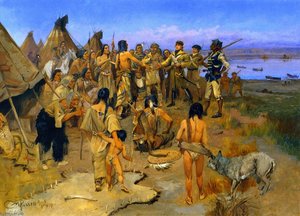
- Lewis y Clark se encuentran con los indios en Ross' Hole (1916) - un mural notable que cuelga en las cámaras de la casa del capitolio de Montana, mostrando el estilo narrativo histórico de Russell. (descubrir más arte americano en ArtsDot)
Desarrollo artístico y influencias
La fascinación de Russell por el oeste comenzó en su infancia, leyendo relatos de exploradores y comerciantes de pieles. A los 16 años, se trasladó a Montana para trabajar en una granja de ovejas, lo que le permitió experimentar la vida del oeste de primera mano. Su tiempo como vaquero y wrangler durante once años fue crucial para su desarrollo artístico, proporcionándole el material y la inspiración para sus pinturas. La cultura nativa americana también influyó profundamente en Russell, especialmente después de vivir cerca de las tribus Blackfoot, Piegan y Blood en Alberta, Canadá, en 1888. Esta experiencia se reflejó en sus detalladas representaciones de la vida de los nativos americanos.Legado y colecciones
El legado de Russell está preservado a través de varias colecciones, incluyendo:- El Complejo del Museo C. M. Russell en Great Falls, Montana, que alberga más de 2000 obras de arte de Russell, objetos personales y artefactos.
- La Sociedad Histórica de Montana en Helena, Montana, que presenta una colección significativa de las obras de Russell.
- El Centro Buffalo Bill del Oeste en Cody, Wyoming, que muestra el arte de Russell y el oeste americano.
Conclusión
El legado artístico de Charles Marion Russell continúa cautivando al público con su auténtica representación del oeste americano. A través de sus obras, experimentamos la esencia de una época pasada, preservada para siempre en el reino del arte. Explore más del arte de Russell y otras obras maestras occidentales en ArtsDot.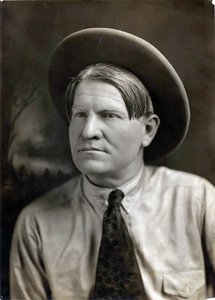
Charles Marion Russell
1864 - 1926 , Estados Unidos de América
Datos clave
- Estilo Artístico: Arte del Viejo Oeste
- Fecha De Fallecimiento: 24 de octubre de 1926
- Fecha De Nacimiento: 19 de marzo de 1864
- Lugar De Nacimiento: St. Louis, EE. UU.
- Nacionalidad: Estadounidense
- Nombre Completo: Charles Marion Russell
- Obras Notables:
- A Bad Hoss
- Battle of Belly River
- Lewis and Clark Meeting Indians
Artículos relacionados
Charles Marion Russell: Capturing the American West Through a Romantic Lens
Explore the captivating world of Charles Marion Russell, 'the cowboy artist.' Discover his life, iconic paintings, advocacy for Native Americans, and investment potential. A guide for discerning art collectors.
Benjamin West: Transatlantic Ambition & Shaping American Art
Explore the life & legacy of Benjamin West, pioneering American artist and Royal Academy president. Discover his Neoclassical masterpieces, transatlantic influence, and lasting impact on art history. Learn more at ArtsDot.

Giclée Prints: Archival Quality & Aesthetic Nuances for the Discerning Collector
Explore the world of giclée prints with ArtsDot. Learn about archival quality, aesthetic nuances & investment potential. Expert guidance for discerning art collectors seeking museum-quality reproductions and lasting value.
Alfred Jacob Miller: Chronicling the American West Through Artistic Observation & Narrative
Explore the captivating art of Alfred Jacob Miller, chronicler of the American West. Discover his iconic paintings, techniques & lasting legacy – a valuable addition to any serious collection. Learn more at ArtsDot.

The Enduring Legacy of Fine Art Prints: Technique, History & Aesthetic Impact
Explore the rich history & techniques of fine art prints. Discover investment potential, assess authenticity, and learn how to preserve your collection with expert guidance. Trusted insights for discerning collectors.