 Ver en contexto
 Enviar
 Compartir
 Detalles

 Descargar
 Similares
 Radiografía
 Presentación de diapositivas
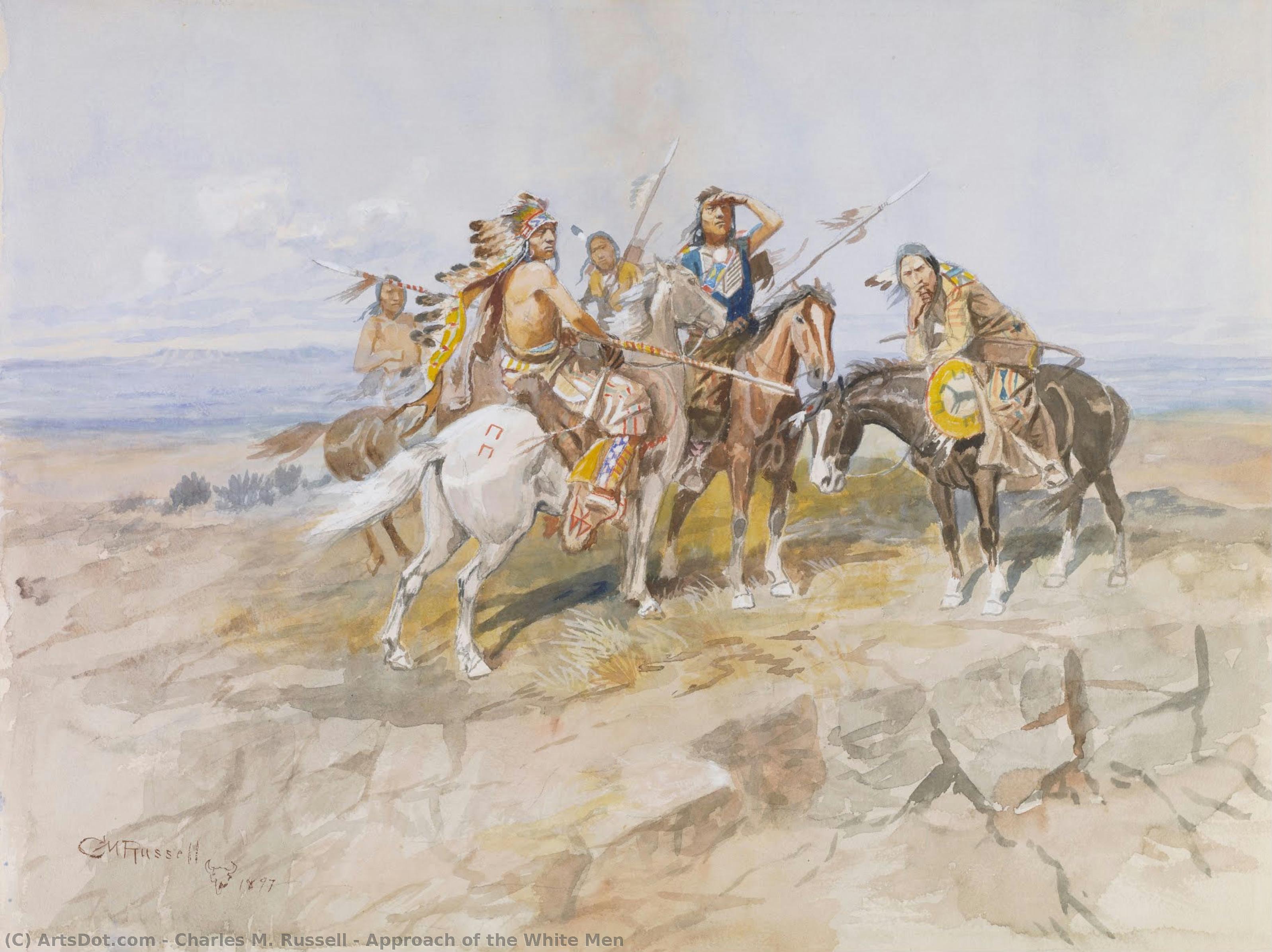
Approach of the White Men
 Acuarela
- Arte de pared
- Western Romanticism
 1897
1897 60.0 x 45.0 cm
 Amon Carter Museo de Arte Estadounidense
 Ver más
Reproducción al óleo hecha a mano
Óleo sobre lienzo pintado a mano en el tamaño y marco de su elección, realizado por encargo por nuestros artistas. ( Comprar impresión Comprar imagen)




P118B $10

P118H $10

P118W $10

P438Z $10

P508JH $12

P508YH $12

P805H $10

P805Z $10

P919BZ $10

P919G $10

P919XJ $10

P959ZH $10

P968JZ $12

W106C $8

W218G $10

W218JH $8

W218Y $10

W307PJ $10

W316G $10

W316PJ $8

W316Y $10

W398PJ $8

W4111J $10

W500HY $15

W500JH $15

W692G $12

W849H $8

W940BG $15

W953PJ $8




Elija entre nuestros tamaños predefinidos que respetan las proporciones originales de la obra.

Puede ingresar sus propias dimensiones para adaptarse a un marco o espacio específico. Si el tamaño seleccionado no coincide con las proporciones de la imagen original, recortaremos la obra o extenderemos la pintura con elementos adicionales pintados a mano. Se le enviará una maqueta digital para su aprobación antes de comenzar la producción.
Tenga en cuenta que la vista previa en pantalla no refleja el recorte o la extensión reales. Solo la maqueta mostrará con precisión la composición final.
Si bien existen tamaños personalizados, recomendamos seleccionar una dimensión de la lista predefinida para preservar las proporciones originales.
Tras realizar el pedido, el equipo de ArtsDot.com enviará un correo electrónico al cliente para solicitar instrucciones y proporcionarle una vista previa del boceto.
Envío a todo el mundo () en 3-4 semanas en lugar de las 5 semanas estándar. (22 agosto). Sin comprometer la calidad.

Envío exprés gratuito a todo el mundo

Lienzo de lino de alta calidad

Seguro de envío total

Garantía de reembolso de impuestos aduaneros

Garantía de fidelidad cromática exacta

Política de devolución de 60 días (solo por defectos)

Garantía de devolución del 100% del dinero

Descuento por cantidad
 La opción de vidrio solo está disponible en tamaños inferiores a 110 cm.

Approach of the White Men
Técnica de reproducción
Dimensiones de la reproducción
-


Precio total final
$ 363
Descripción de la obra
A Moment Frozen in Time: Charles Marion Russell’s “Approach of the White Men”
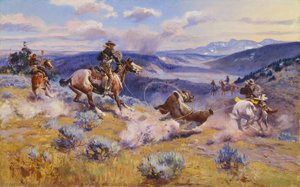
Charles Marion Russell's "Approach of the White Men," painted in 1897, isn’t merely a depiction of a Western encounter; it’s a carefully constructed tableau brimming with narrative tension and evocative symbolism. Born in St. Louis and forged by a decade spent as a Montana cowboy, Russell possessed an unparalleled understanding of the American West – not just its landscapes but also the complex relationships between its indigenous inhabitants and the encroaching settlers. This painting captures that dynamic with remarkable immediacy, utilizing a loose, almost sketch-like style to convey both the drama of the scene and the artist’s own deeply felt observations.
The composition immediately draws the viewer in. A diagonal thrust created by the advancing horses, rendered with powerful, energetic brushstrokes, leads the eye towards a cluster of Native American figures on horseback – their clothing ablaze with vibrant reds and oranges that contrast sharply with the muted earth tones dominating the background. The high horizon line compresses the sky, emphasizing the vastness of the landscape and intensifying the sense of movement. Russell masterfully employs flattened perspective, characteristic of his style, prioritizing emotional impact over strict realism. This technique lends a feeling of immediacy, as if we’re witnessing this encounter unfold before our very eyes.
The Language of Color and Line: Technique and Style
Russell's masterful use of watercolor and gouache on paper is central to the painting’s power. The fluid washes of color create a sense of atmospheric depth, while visible brushstrokes add texture and dynamism. Notice how he utilizes subtle shifts in tone – from the warm browns and tans of the earth to the cooler blues and greens of the distant hills – to establish a believable landscape. The loose, gestural lines, particularly evident in the horses’ forms, contribute to the painting's sense of movement and energy. It’s not about precise detail; it’s about capturing the *feeling* of the West—its ruggedness, its vastness, and its inherent tension.
- Watercolor & Gouache: Russell favored these mediums for their ability to create luminous washes and blend seamlessly.
- Loose Brushwork: The visible brushstrokes are a hallmark of his style, conveying spontaneity and immediacy.
- Flattened Perspective: A deliberate choice that prioritizes emotional impact over strict realism.
Symbolism and Narrative Depth
Beyond its surface depiction, “Approach of the White Men” is rich in symbolic meaning. The approaching figures represent a pivotal moment in American history – the collision of two cultures, fraught with both opportunity and conflict. The Native Americans’ posture suggests cautious observation and perhaps even apprehension, while the settlers' advance embodies westward expansion. Russell doesn’t offer easy answers or simplistic judgments; instead, he presents a complex scene that invites contemplation about the legacy of this encounter. The painting subtly evokes themes of displacement, cultural misunderstanding, and the enduring impact of historical events.
Furthermore, the title itself – “Approach” – suggests a prelude to something significant, hinting at an inevitable confrontation. The painting’s overall mood is one of quiet tension, punctuated by the vibrant colors of the Native American clothing, which serve as a visual reminder of their distinct culture and identity.
A Legacy of the West: Russell's Enduring Vision
Charles Marion Russell’s “Approach of the White Men” stands as a powerful testament to his unique artistic vision. It’s more than just a Western painting; it’s a window into a pivotal moment in American history, rendered with remarkable skill and emotional depth. Reproductions of this iconic work capture much of its original impact, offering a compelling glimpse into the life and times of the “Cowboy Artist” who immortalized the American West for generations to come. Its evocative imagery continues to resonate today, prompting reflection on themes of cultural encounter, expansion, and the enduring spirit of the frontier.
Obras relacionadas
Biografía del artista
Primeros años e inspiración
Charles Marion Russell, un renombrado artista estadounidense, dejó una huella imborrable en el mundo del arte con sus cautivadoras representaciones del oeste americano. Nacido el 19 de marzo de 1864 en St. Louis, Missouri, la vida de Russell fue un testimonio de su pasión por el arte y el salvaje oeste.Carrera artística y obras notables
La carrera artística de Russell abarcó múltiples medios, incluyendo pintura y escultura en bronce. Sus obras se caracterizan por sus vívidas representaciones de vaqueros, nativos americanos y paisajes ubicados en los Estados Unidos occidentales y Alberta, Canadá. Algunas obras notables incluyen:- A Bad Hoss (1904) - un ejemplo esencial de la capacidad de Russell para capturar el espíritu del oeste americano. (ver obras similares en ArtsDot)
- Batalla del Río Belly River (1905) - esta pintura muestra la habilidad de Russell para representar escenas dramáticas con precisión y detalle. (explorar más arte occidental en ArtsDot)
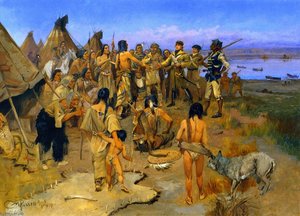
- Lewis y Clark se encuentran con los indios en Ross' Hole (1916) - un mural notable que cuelga en las cámaras de la casa del capitolio de Montana, mostrando el estilo narrativo histórico de Russell. (descubrir más arte americano en ArtsDot)
Desarrollo artístico y influencias
La fascinación de Russell por el oeste comenzó en su infancia, leyendo relatos de exploradores y comerciantes de pieles. A los 16 años, se trasladó a Montana para trabajar en una granja de ovejas, lo que le permitió experimentar la vida del oeste de primera mano. Su tiempo como vaquero y wrangler durante once años fue crucial para su desarrollo artístico, proporcionándole el material y la inspiración para sus pinturas. La cultura nativa americana también influyó profundamente en Russell, especialmente después de vivir cerca de las tribus Blackfoot, Piegan y Blood en Alberta, Canadá, en 1888. Esta experiencia se reflejó en sus detalladas representaciones de la vida de los nativos americanos.Legado y colecciones
El legado de Russell está preservado a través de varias colecciones, incluyendo:- El Complejo del Museo C. M. Russell en Great Falls, Montana, que alberga más de 2000 obras de arte de Russell, objetos personales y artefactos.
- La Sociedad Histórica de Montana en Helena, Montana, que presenta una colección significativa de las obras de Russell.
- El Centro Buffalo Bill del Oeste en Cody, Wyoming, que muestra el arte de Russell y el oeste americano.
Conclusión
El legado artístico de Charles Marion Russell continúa cautivando al público con su auténtica representación del oeste americano. A través de sus obras, experimentamos la esencia de una época pasada, preservada para siempre en el reino del arte. Explore más del arte de Russell y otras obras maestras occidentales en ArtsDot.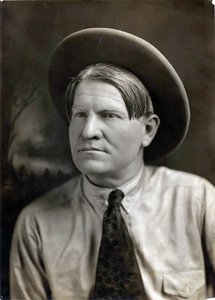
Charles Marion Russell
1864 - 1926 , Estados Unidos de América
Datos clave
- Estilo Artístico: Arte del Viejo Oeste
- Fecha De Fallecimiento: 24 de octubre de 1926
- Fecha De Nacimiento: 19 de marzo de 1864
- Lugar De Nacimiento: St. Louis, EE. UU.
- Nacionalidad: Estadounidense
- Nombre Completo: Charles Marion Russell
- Obras Notables:
- A Bad Hoss
- Battle of Belly River
- Lewis and Clark Meeting Indians
Artículos relacionados
Charles Marion Russell: Capturing the American West Through a Romantic Lens
Explore the captivating world of Charles Marion Russell, 'the cowboy artist.' Discover his life, iconic paintings, advocacy for Native Americans, and investment potential. A guide for discerning art collectors.
Charles Bird King: Capturing Native American Dignity Through Portraiture & Cultural Exchange
Explore the captivating portraits of Charles Bird King, renowned for his depictions of Native American leaders. Discover the historical context, artistic techniques, and collecting value of these significant 19th-century artworks.
Grant Wood & American Regionalism: Identity, Myth & the Rural Landscape
Explore the world of Grant Wood & American Regionalism with ArtsDot. Discover the symbolism behind 'American Gothic', recurring themes, and the movement's lasting impact on art history. High-quality reproductions available.
Henry Farny: Romantic Visions of the American West & Indigenous Life
Explore the evocative paintings of Henry Farny, renowned for his romantic realism & depictions of Native American life in the 19th-century West. Discover his legacy and key artworks at ArtsDot.
Alfred Jacob Miller: Chronicling the American West Through Artistic Observation & Narrative
Explore the captivating art of Alfred Jacob Miller, chronicler of the American West. Discover his iconic paintings, techniques & lasting legacy – a valuable addition to any serious collection. Learn more at ArtsDot.