

 Vista previa
 Compartir
 Compartir
 Ver detalles

 Descargar
 Ver similares
 Radiografía
 Presentación de diapositivas
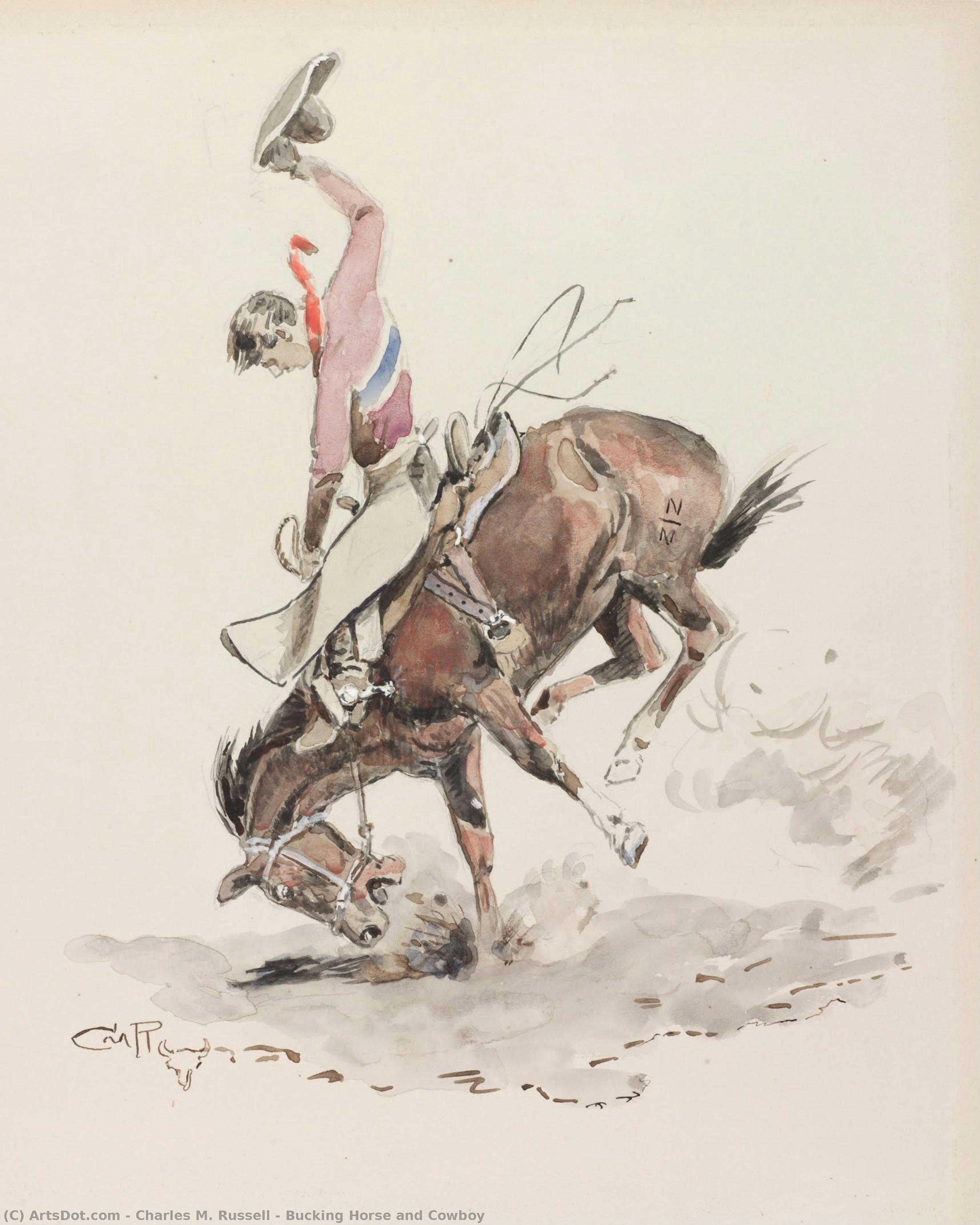
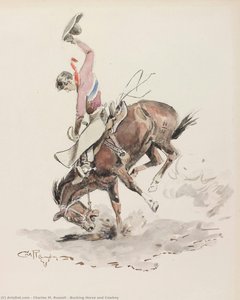
Bucking Horse and Cowboy
 Acrílico sobre lienzo
- Arte de pared
- American Romanticism
 1925
1925 28.0 x 33.0 cm
 Amon Carter Museo de Arte Estadounidense
 Leer más
Adquiera una imagen digital de alta resolución y optimizada, muy superior a la vista previa en línea.
Cada archivo es preparado meticulosamente por nuestros especialistas internos mediante el uso de herramientas avanzadas y un experto retoque manual. Nos aseguramos de que cada imagen posea una claridad excepcional, una precisión cromática impecable y un detalle minucioso.
El archivo final se entrega por correo electrónico en un plazo de 72 horas, optimizado para su uso inmediato en entornos profesionales, editoriales y de impresión. Esta es la misma calidad en la que confían los estudios de diseño, las editoriales y las galerías de primer nivel.
Imagen Digital
Descarga un archivo de alta resolución para exhibición personal, impresión y proyectos creativos. ( Pedir impresión Encargar reproducción pintada a mano)
Incluido en cada compra de imágenes digitales
Entrega digital experta, garantizada.
Al elegir ArtsDot.com, no solo está adquiriendo una imagen; está recibiendo una obra de arte digital mejorada profesionalmente, elaborada con precisión y respaldada por una garantía de satisfacción. Esto es todo lo que incluye su pedido, automáticamente:

Entrega rápida por email
Recibirá su archivo de imagen digital en alta resolución por correo electrónico en un plazo de 72 horas tras realizar su pedido, listo para su uso inmediato.

Archivo digital optimizado por IA
Su obra de arte se optimiza profesionalmente mediante herramientas avanzadas de IA y edición manual, garantizando el máximo detalle, claridad y precisión cromática.

Reenvío gratuito de por vida
¿Has borrado o perdido tu archivo por error? No te preocupes: te lo volveremos a enviar en cualquier momento, sin coste adicional.

Sin gastos de importación, siempre
Disfrute de su obra de arte al instante sin aduanas, aranceles ni gastos de envío; las descargas digitales siempre están libres de impuestos.

Garantía de precisión de color
Garantizamos que su imagen digital refleje los colores originales con la mayor fidelidad posible, mediante el uso de herramientas profesionales y gestión del color.

Garantía de satisfacción de 60 días
Si no está satisfecho con su imagen digital, la revisaremos o le reembolsaremos el 100% en un plazo de 60 días, sin preguntas.

100% Garantía de devolución de dinero
¿No está satisfecho? Obtenga un reembolso completo dentro de los 60 días posteriores a la recepción de su archivo digital, sin necesidad de explicaciones.

Descuentos por volumen
Compra 3 imágenes, ahorra 10% - Compra 5, ahorra 15% - Compra 10+, ahorra 20%. Ideal para proyectos creativos, galerías y agencias.
Descripción del coleccionable
A Wild Dance on Steel: Charles Marion Russell’s “Bucking Horse and Cowboy”
Charles Marion Russell's "Bucking Horse and Cowboy," painted in 1925, isn’t merely a depiction of a rodeo; it’s a visceral embodiment of the American West—a landscape etched with grit, courage, and an undeniable connection to the untamed spirit of the frontier. This dynamic watercolor captures a fleeting moment of intense action, a collision between man and beast that speaks volumes about the relationship between humanity and nature in the heartland. Russell, deeply immersed in the life of a cowboy himself, eschewed academic precision for a raw, immediate style, prioritizing feeling over meticulous detail.
The composition is anchored by the rearing horse, its powerful muscles straining against the canvas, its head thrown back in a defiant snort. The rider, a figure rendered with swift, confident strokes, struggles to maintain his balance, his hat flying upward as if caught in the whirlwind of the bucking motion. Russell’s masterful use of hatching and cross-hatching creates an incredible sense of movement—you can almost feel the vibration of the horse's hooves against the earth and the wind whipping through the cowboy’s hair. The color palette is deliberately earthy – browns, tans, creams – mirroring the dusty tones of the Western landscape, punctuated by flashes of red in the cowboy’s attire and a touch of blue in the sky, adding to the painting’s dramatic intensity.
The Cowboy Artist: Russell's Vision of the West
Charles Marion Russell wasn’t simply an artist; he was a chronicler of the American West. Born in St. Louis in 1864 and spending his formative years as a working cowboy in Montana, Russell absorbed the rhythms, challenges, and legends of frontier life. This firsthand experience profoundly shaped his artistic vision, leading him to create over 2,000 paintings and bronze sculptures that vividly portrayed cowboys, Native Americans, wildlife, and the vast landscapes of the American West. Unlike many artists who relied on secondhand accounts or romanticized notions, Russell’s work is rooted in authentic observation and a deep respect for the people and animals he depicted.
Russell's style evolved over time, beginning with more realistic depictions and gradually embracing a looser, sketch-like approach that prioritized capturing the *feeling* of the West. “Bucking Horse and Cowboy” exemplifies this shift—it’s not a perfectly rendered portrait but rather an energetic study in movement and emotion. His work was often controversial for its unflinching portrayal of Native Americans, reflecting the complex realities of the era, yet he also championed their culture and advocated for their rights, leaving a lasting legacy as both an artist and an advocate.
Symbolism and the Spirit of the West
Beyond its immediate depiction of a rodeo scene, “Bucking Horse and Cowboy” is rich in symbolic meaning. The bucking horse itself represents the untamed wilderness—a force to be reckoned with, demanding respect and skill. The cowboy’s struggle for control symbolizes humanity's ongoing effort to tame and understand nature. The painting speaks to themes of courage, resilience, and the enduring spirit of individualism that defined the American West. Russell frequently used his art to explore these themes, portraying cowboys as rugged heroes who embodied the values of self-reliance and independence.
Furthermore, the piece resonates with a broader narrative about the relationship between humans and animals—a dynamic of challenge, respect, and mutual dependence. The cowboy’s posture suggests a partnership built on trust and understanding, while the horse's reaction conveys both power and vulnerability. It is this delicate balance that makes the painting so compelling.
A Legacy in Watercolor: Reproduction and Display
Reproductions of “Bucking Horse and Cowboy” offer a remarkable opportunity to bring the energy and spirit of Russell’s vision into any space. The watercolor medium lends itself beautifully to reproduction, capturing the artist's characteristic loose brushstrokes and vibrant colors. When selecting a print, consider the scale – larger reproductions will truly capture the dynamism of the original while smaller versions can serve as striking accents in a room. The painting’s earthy palette works well with a variety of interior design styles, from rustic Western themes to contemporary spaces seeking a touch of rugged charm.
Russell's work continues to resonate today, reminding us of the enduring allure and complexity of the American West. “Bucking Horse and Cowboy” stands as a testament to his artistic skill and his profound understanding of the human spirit—a captivating image that embodies the wild beauty and untamed spirit of the frontier.
Obras relacionadas

Biografía del artista
Primeros años e inspiración
Charles Marion Russell, un renombrado artista estadounidense, dejó una huella imborrable en el mundo del arte con sus cautivadoras representaciones del oeste americano. Nacido el 19 de marzo de 1864 en St. Louis, Missouri, la vida de Russell fue un testimonio de su pasión por el arte y el salvaje oeste.Carrera artística y obras notables
La carrera artística de Russell abarcó múltiples medios, incluyendo pintura y escultura en bronce. Sus obras se caracterizan por sus vívidas representaciones de vaqueros, nativos americanos y paisajes ubicados en los Estados Unidos occidentales y Alberta, Canadá. Algunas obras notables incluyen:- A Bad Hoss (1904) - un ejemplo esencial de la capacidad de Russell para capturar el espíritu del oeste americano. (ver obras similares en ArtsDot)
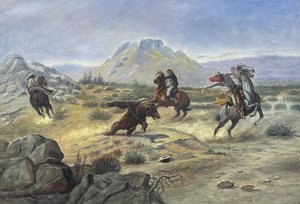
- Batalla del Río Belly River (1905) - esta pintura muestra la habilidad de Russell para representar escenas dramáticas con precisión y detalle. (explorar más arte occidental en ArtsDot)
- Lewis y Clark se encuentran con los indios en Ross' Hole (1916) - un mural notable que cuelga en las cámaras de la casa del capitolio de Montana, mostrando el estilo narrativo histórico de Russell. (descubrir más arte americano en ArtsDot)
Desarrollo artístico y influencias
La fascinación de Russell por el oeste comenzó en su infancia, leyendo relatos de exploradores y comerciantes de pieles. A los 16 años, se trasladó a Montana para trabajar en una granja de ovejas, lo que le permitió experimentar la vida del oeste de primera mano. Su tiempo como vaquero y wrangler durante once años fue crucial para su desarrollo artístico, proporcionándole el material y la inspiración para sus pinturas. La cultura nativa americana también influyó profundamente en Russell, especialmente después de vivir cerca de las tribus Blackfoot, Piegan y Blood en Alberta, Canadá, en 1888. Esta experiencia se reflejó en sus detalladas representaciones de la vida de los nativos americanos.Legado y colecciones
El legado de Russell está preservado a través de varias colecciones, incluyendo:- El Complejo del Museo C. M. Russell en Great Falls, Montana, que alberga más de 2000 obras de arte de Russell, objetos personales y artefactos.
- La Sociedad Histórica de Montana en Helena, Montana, que presenta una colección significativa de las obras de Russell.
- El Centro Buffalo Bill del Oeste en Cody, Wyoming, que muestra el arte de Russell y el oeste americano.
Conclusión
El legado artístico de Charles Marion Russell continúa cautivando al público con su auténtica representación del oeste americano. A través de sus obras, experimentamos la esencia de una época pasada, preservada para siempre en el reino del arte. Explore más del arte de Russell y otras obras maestras occidentales en ArtsDot.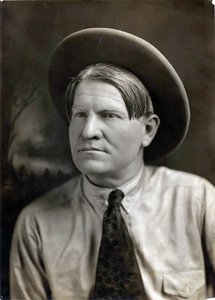
Charles Marion Russell
1864 - 1926 , Estados Unidos de América
Datos clave
- Estilo Artístico: Arte del Viejo Oeste
- Fecha De Fallecimiento: 24 de octubre de 1926
- Fecha De Nacimiento: 19 de marzo de 1864
- Lugar De Nacimiento: St. Louis, EE. UU.
- Nacionalidad: Estadounidense
- Nombre Completo: Charles Marion Russell
- Obras Notables:
- A Bad Hoss
- Battle of Belly River
- Lewis and Clark Meeting Indians

