 Ver en contexto
 Enviar
 Compartir
 Detalles

 Descargar
 Similares
 Radiografía
 Presentación de diapositivas
 Estadísticas
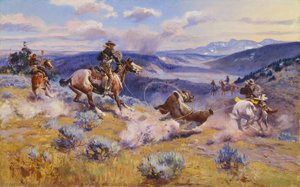
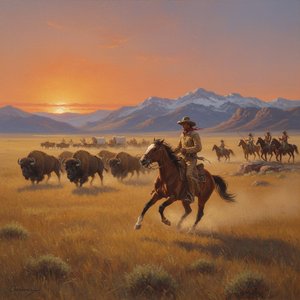
Christmas Dinner for the Men on the Trail


 Ver más
Giclée / Impresión de arte
Impresiones giclée o en lienzo de calidad de museo con producción rápida y opciones de acabado flexibles. ( Comprar pintura hecha a mano Cambiar a imagen digital)




P118B $10

P118H $10

P118W $10

P438Z $10

P508JH $12

P508YH $12

P805H $10

P805Z $10

P919BZ $10

P919G $10

P919XJ $10

P959ZH $10

P968JZ $12

W106C $8

W218G $10

W218JH $8

W218Y $10

W307PJ $10

W316G $10

W316PJ $8

W316Y $10

W398PJ $8

W4111J $10

W500HY $15

W500JH $15

W692G $12

W849H $8

W940BG $15

W953PJ $8




Elija entre nuestros tamaños predefinidos que respetan las proporciones originales de la obra.

Puede introducir sus propias dimensiones para adaptarse a un marco o espacio específico. Si el tamaño seleccionado no coincide con las proporciones de la imagen original, recortaremos la obra de arte o extenderemos la imagen con un borde con efecto espejo o de color sólido. Se enviará una maqueta digital para su aprobación antes de que comience la producción.
Tenga en cuenta que la vista previa en pantalla no refleja el recorte o la extensión real. Solo la maqueta mostrará con precisión la composición final.
Aunque existen tamaños personalizados, recomendamos seleccionar una dimensión de la lista predefinida para preservar las proporciones originales.
Envío a todo el mundo () en 2 semanas en lugar de las 4/5 semanas estándar. (9 septiembre)

Envío exprés gratuito a todo el mundo

Lienzo de lino de alta calidad

Seguro de envío total

Garantía de reembolso de impuestos aduaneros

Garantía de fidelidad cromática exacta

Política de devolución de 100 días (solo por defectos)

Garantía de devolución del 100% del dinero

Descuento por cantidad
 La opción de vidrio solo está disponible en tamaños inferiores a 110 cm.

Christmas Dinner for the Men on the Trail
Giclée / Impresión de arte
Dimensiones de la reproducción
-


Precio total final
$ 62
A Frozen Feast: Unpacking Charles Marion Russell's "Christmas Dinner for the Men on the Trail"
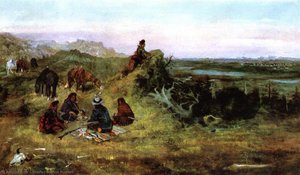
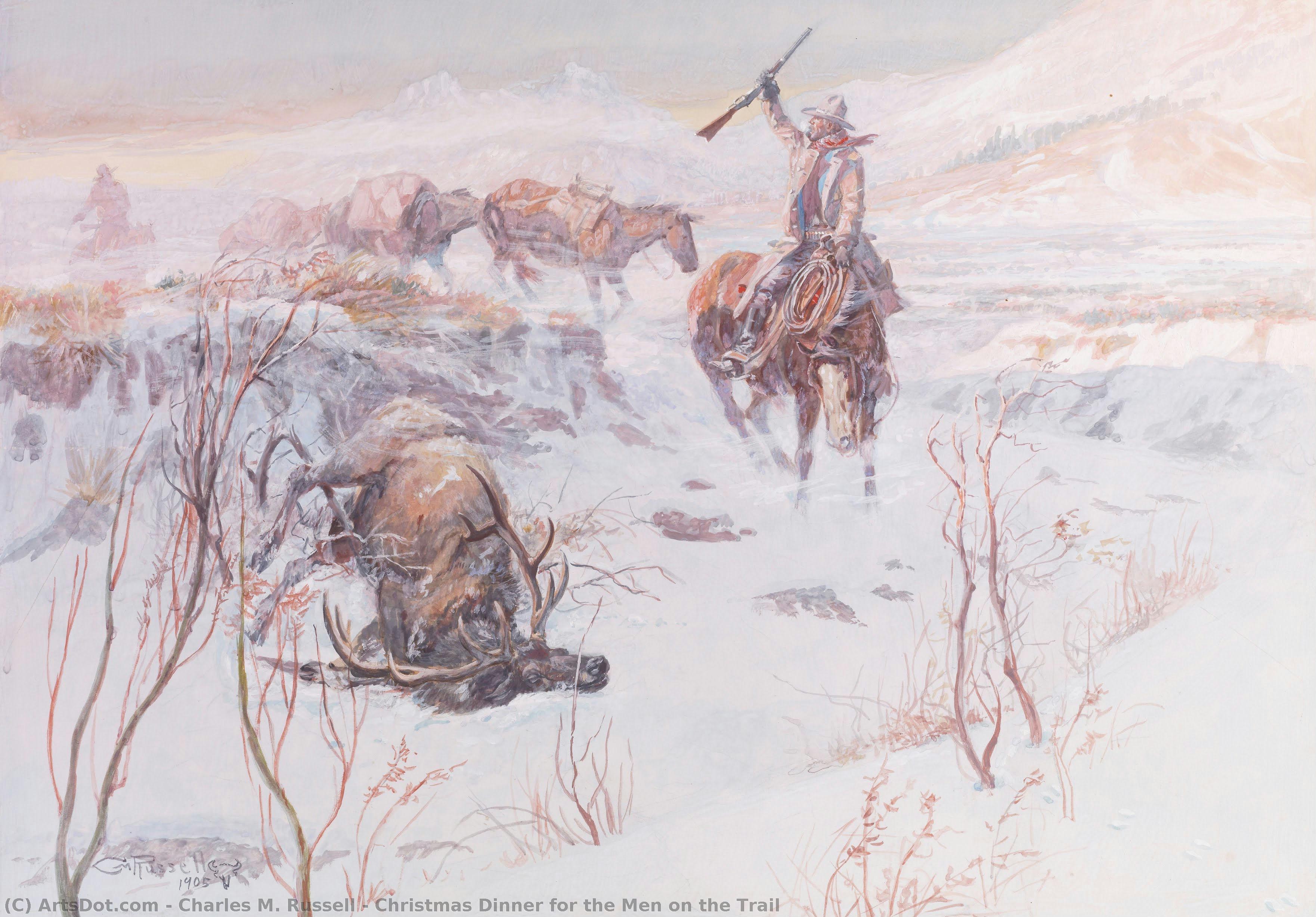
Charles Marion Russell’s 1905 painting, “Christmas Dinner for the Men on the Trail,” isn’t merely a depiction of cowboys celebrating a holiday; it’s a meticulously crafted tableau of rugged resilience and the enduring spirit of the American West. More than just a snapshot of a snowy scene, it's a narrative brimming with symbolism, reflecting Russell’s profound connection to the frontier life he so passionately portrayed. The painting immediately draws the eye into a dynamic composition centered around a recently slain bison, its massive form anchoring the lower left corner and serving as both a source of sustenance and a stark reminder of the harsh realities of survival in this unforgiving landscape.
Russell’s artistic style is distinctly Romantic Realism. He eschews idealized portrayals, opting instead for an honest, almost brutal depiction of the West's challenges. The loose brushstrokes, visible layering of paint, and a deliberate lack of smooth transitions contribute to a sense of immediacy – as if we are witnessing this moment unfold before us. The artist’s masterful use of atmospheric perspective—the subtle fading of distant mountains and the heightened detail in the foreground—creates an astonishingly convincing illusion of depth, pulling the viewer directly into the heart of the snowy expanse. The color palette is dominated by cool blues, grays, and browns, mirroring the bleakness of the winter environment, yet punctuated with warmer tones in the cowboys’ clothing and the setting sun, offering a glimmer of hope amidst the cold.
The Story Told: Cowboys, Bison, and the Spirit of the Trail
At the center of the composition stands a cowboy, his posture suggesting both weariness and determination. He gestures upwards with his rifle, seemingly directing attention to the bison carcass – a potent symbol of survival in this desolate environment. The two mules, laden with supplies, represent the arduous journey undertaken by these men, highlighting their reliance on each other and the necessities of their trade. Russell’s inclusion of Native American elements—a subtle hint of figures in the distance—underscores the complex relationship between settlers and indigenous peoples in the West, a theme frequently explored throughout his oeuvre. The painting isn't simply about a Christmas meal; it’s about the shared experience of hardship, camaraderie, and the constant struggle for existence against the elements.
Symbolism Woven into the Canvas
The bison itself carries significant symbolic weight. Beyond its practical value as a source of food and materials, it represents the untamed wilderness—a force to be respected and overcome. The act of hunting, depicted with stark realism, speaks to the settlers’ determination to tame the West, but also acknowledges the inherent violence involved in this process. The Christmas celebration, taking place within this harsh landscape, symbolizes a brief respite from hardship, a moment of connection and shared joy amidst adversity. It's a poignant reminder that even in the most challenging circumstances, humanity seeks solace and community.
A Legacy of the West: Reproduction and Artistic Impact
“Christmas Dinner for the Men on the Trail” remains one of Charles Marion Russell’s most iconic works, capturing the essence of the American West with remarkable power. Reproductions offer a beautiful way to bring this evocative scene into any home or office space, serving as a reminder of the pioneering spirit and the enduring allure of the frontier. Russell's ability to blend historical accuracy with emotional resonance continues to resonate with audiences today, solidifying his place as one of America’s greatest Western artists. The painting’s rich detail and evocative atmosphere make it a compelling addition to any art collection or a thoughtful choice for interior design, transporting viewers to the rugged beauty of the American West.
Obras relacionadas
Biografía del artista
Primeros años e inspiración
Charles Marion Russell, un renombrado artista estadounidense, dejó una huella imborrable en el mundo del arte con sus cautivadoras representaciones del oeste americano. Nacido el 19 de marzo de 1864 en St. Louis, Missouri, la vida de Russell fue un testimonio de su pasión por el arte y el salvaje oeste.Carrera artística y obras notables
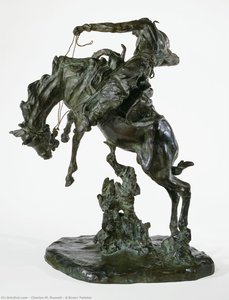
La carrera artística de Russell abarcó múltiples medios, incluyendo pintura y escultura en bronce. Sus obras se caracterizan por sus vívidas representaciones de vaqueros, nativos americanos y paisajes ubicados en los Estados Unidos occidentales y Alberta, Canadá. Algunas obras notables incluyen:- A Bad Hoss (1904) - un ejemplo esencial de la capacidad de Russell para capturar el espíritu del oeste americano. (ver obras similares en ArtsDot)
- Batalla del Río Belly River (1905) - esta pintura muestra la habilidad de Russell para representar escenas dramáticas con precisión y detalle. (explorar más arte occidental en ArtsDot)
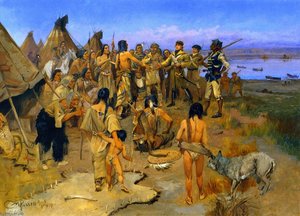
- Lewis y Clark se encuentran con los indios en Ross' Hole (1916) - un mural notable que cuelga en las cámaras de la casa del capitolio de Montana, mostrando el estilo narrativo histórico de Russell. (descubrir más arte americano en ArtsDot)
Desarrollo artístico y influencias
La fascinación de Russell por el oeste comenzó en su infancia, leyendo relatos de exploradores y comerciantes de pieles. A los 16 años, se trasladó a Montana para trabajar en una granja de ovejas, lo que le permitió experimentar la vida del oeste de primera mano. Su tiempo como vaquero y wrangler durante once años fue crucial para su desarrollo artístico, proporcionándole el material y la inspiración para sus pinturas. La cultura nativa americana también influyó profundamente en Russell, especialmente después de vivir cerca de las tribus Blackfoot, Piegan y Blood en Alberta, Canadá, en 1888. Esta experiencia se reflejó en sus detalladas representaciones de la vida de los nativos americanos.Legado y colecciones
El legado de Russell está preservado a través de varias colecciones, incluyendo:- El Complejo del Museo C. M. Russell en Great Falls, Montana, que alberga más de 2000 obras de arte de Russell, objetos personales y artefactos.
- La Sociedad Histórica de Montana en Helena, Montana, que presenta una colección significativa de las obras de Russell.
- El Centro Buffalo Bill del Oeste en Cody, Wyoming, que muestra el arte de Russell y el oeste americano.
Conclusión
El legado artístico de Charles Marion Russell continúa cautivando al público con su auténtica representación del oeste americano. A través de sus obras, experimentamos la esencia de una época pasada, preservada para siempre en el reino del arte. Explore más del arte de Russell y otras obras maestras occidentales en ArtsDot.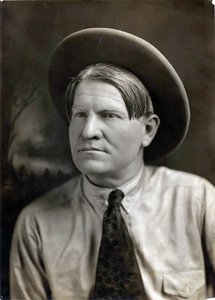
Charles Marion Russell
1864 - 1926 , Estados Unidos de América
Datos clave
- Estilo Artístico: Arte del Viejo Oeste
- Fecha De Fallecimiento: 24 de octubre de 1926
- Fecha De Nacimiento: 19 de marzo de 1864
- Lugar De Nacimiento: St. Louis, EE. UU.
- Nacionalidad: Estadounidense
- Nombre Completo: Charles Marion Russell
- Obras Notables:
- A Bad Hoss
- Battle of Belly River
- Lewis and Clark Meeting Indians
Artículos relacionados

Paisajes Románticos: 10 Obras Maestras que Definieron un Movimiento Artístico
Descubre los 10 paisajes románticos más influyentes de artistas como Caspar David Friedrich y Turner. Explora la belleza, el simbolismo y las técnicas del movimiento romántico. Reproducciones de arte exclusivas en ArtsDot.com.

John Constable: Las 25 Obras Maestras del Paisaje Inglés | ArtsDot
Descubre las 25 obras maestras de John Constable, el pintor romántico inglés que capturó la belleza del paisaje. Explora su técnica, historia y significado en ArtsDot.com. Reproducciones de arte de alta calidad para tu hogar.
Evocations of Place: A Historical Journey Through Landscape Art
Explore the rich history of landscape art with ArtsDot. Discover renowned artists, movements like Impressionism & tonalism, and expert guidance for collecting timeless pieces. Find your perfect serene escape today!
Charles Marion Russell: Capturing the American West Through a Romantic Lens
Explore the captivating world of Charles Marion Russell, 'the cowboy artist.' Discover his life, iconic paintings, advocacy for Native Americans, and investment potential. A guide for discerning art collectors.

Evocations of Place: A Historical Journey Through Landscape Art
Explore the rich history of landscape art with ArtsDot. Discover renowned artists, movements like Impressionism & Romanticism, and expert guidance for collecting timeless pieces. Find your perfect serene escape today!