

 Vista previa
 Compartir
 Compartir
 Ver detalles

 Descargar
 Ver similares
 Radiografía
 Presentación de diapositivas
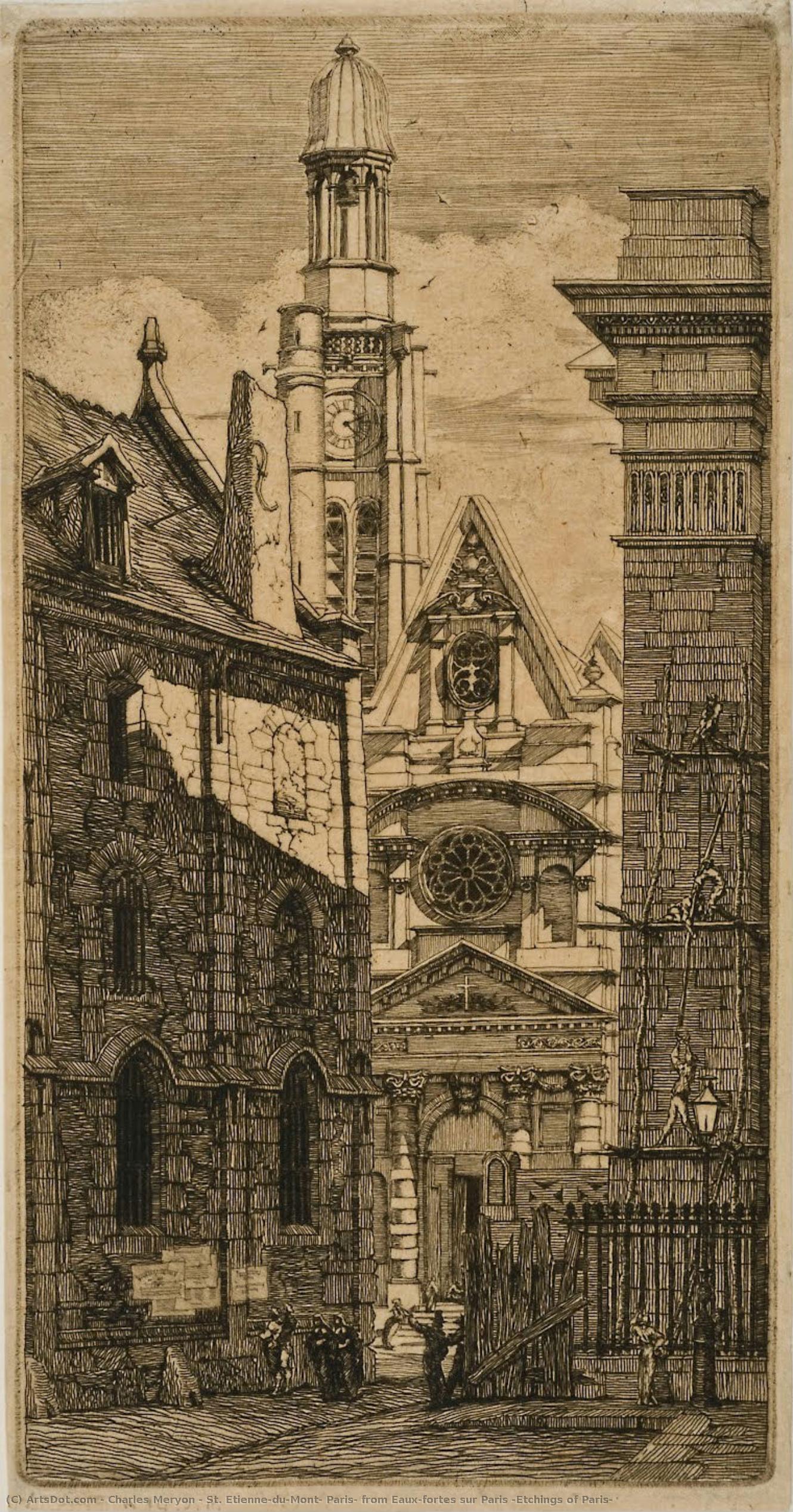
St. Etienne-du-Mont, Paris, from Eaux-fortes sur Paris (Etchings of Paris)
 Etching
- Romanticism
 1852
1852- 19th Century
 130.0 x 250.0 cm
 Toledo Museum of Art
 Leer más
Adquiera una imagen digital de alta resolución y optimizada, muy superior a la vista previa en línea.
Cada archivo es preparado meticulosamente por nuestros especialistas internos mediante el uso de herramientas avanzadas y un experto retoque manual. Nos aseguramos de que cada imagen posea una claridad excepcional, una precisión cromática impecable y un detalle minucioso.
El archivo final se entrega por correo electrónico en un plazo de 72 horas, optimizado para su uso inmediato en entornos profesionales, editoriales y de impresión. Esta es la misma calidad en la que confían los estudios de diseño, las editoriales y las galerías de primer nivel.
Imagen Digital
Descarga un archivo de alta resolución para exhibición personal, impresión y proyectos creativos. ( Pedir impresión Encargar reproducción pintada a mano)
Incluido en cada compra de imágenes digitales
Entrega digital experta, garantizada.
Al elegir ArtsDot.com, no solo está adquiriendo una imagen; está recibiendo una obra de arte digital mejorada profesionalmente, elaborada con precisión y respaldada por una garantía de satisfacción. Esto es todo lo que incluye su pedido, automáticamente:

Entrega rápida por email
Recibirá su archivo de imagen digital en alta resolución por correo electrónico en un plazo de 72 horas tras realizar su pedido, listo para su uso inmediato.

Archivo digital optimizado por IA
Su obra de arte se optimiza profesionalmente mediante herramientas avanzadas de IA y edición manual, garantizando el máximo detalle, claridad y precisión cromática.

Reenvío gratuito de por vida
¿Has borrado o perdido tu archivo por error? No te preocupes: te lo volveremos a enviar en cualquier momento, sin coste adicional.

Sin gastos de importación, siempre
Disfrute de su obra de arte al instante sin aduanas, aranceles ni gastos de envío; las descargas digitales siempre están libres de impuestos.

Garantía de precisión de color
Garantizamos que su imagen digital refleje los colores originales con la mayor fidelidad posible, mediante el uso de herramientas profesionales y gestión del color.

Garantía de satisfacción de 60 días
Si no está satisfecho con su imagen digital, la revisaremos o le reembolsaremos el 100% en un plazo de 60 días, sin preguntas.

100% Garantía de devolución de dinero
¿No está satisfecho? Obtenga un reembolso completo dentro de los 60 días posteriores a la recepción de su archivo digital, sin necesidad de explicaciones.

Descuentos por volumen
Compra 3 imágenes, ahorra 10% - Compra 5, ahorra 15% - Compra 10+, ahorra 20%. Ideal para proyectos creativos, galerías y agencias.
Descripción del coleccionable
Charles Meryon’s Gothic Vision of Paris: St. Etienne-du-Mont
Charles Meryon's "St. Etienne-du-Mont, Paris, from Eaux-fortes sur Paris" is more than a depiction of a Parisian street; it’s a haunting meditation on the city’s soul, rendered with an almost palpable sense of melancholy and gothic grandeur. Executed in 1852 as part of his seminal series, *Eaux-fortes sur Paris*, this work captures a pivotal moment in the artist's career – a transition from naval exploration to a deeply personal and intensely evocative artistic vision. The image presents St. Etienne-du-Mont church, its towering spire dominating the composition, not as a symbol of faith but as an imposing monument to time and decay. Meryon’s meticulous attention to detail, combined with his masterful manipulation of light and shadow, creates a scene that feels both familiar and profoundly unsettling.
- Subject Matter: The artwork focuses on the iconic St. Etienne-du-Mont church in Paris, a structure steeped in history and legend.
- Date: 1852 – A crucial year for Meryon’s artistic development, marking his full commitment to etching as a primary medium.
Technique and Style: The Power of Etching
Meryon's skill lies in his extraordinary command of the etching process. *Eaux-fortes sur Paris* is not simply a drawing; it’s a complex layering of techniques, achieved through multiple plates and varying degrees of line strength. He employed drypoint, a method that produces rich, velvety textures, to capture the weathered stone of the buildings and the subtle nuances of light reflecting off their surfaces. The use of cross-hatching creates an incredible sense of depth and volume, drawing the viewer into the scene with remarkable realism. Meryon’s approach was profoundly influenced by the Romantic movement's fascination with the sublime – a feeling of awe mixed with terror in the face of nature or powerful human creations. This is evident in the way he portrays the church not as a place of worship but as an imposing, almost menacing presence.
- Medium: Etching on paper
- Technique: Meryon masterfully utilized drypoint and cross-hatching to create texture and depth.
Historical Context and Symbolism
Created during a period of rapid industrialization and social change in Paris, "St. Etienne-du-Mont" reflects a growing sense of unease about the city’s future. Meryon's work can be seen as a lament for a vanishing past – a pre-industrial Paris characterized by narrow streets, crumbling buildings, and a palpable atmosphere of mystery. The church itself holds significant symbolic weight; its imposing presence represents both spiritual faith and the enduring power of tradition in the face of modernity. The inclusion of the two figures adds to the narrative, suggesting a moment of contemplation within this historical space. The potted plants offer a small, fleeting element of natural beauty amidst the urban decay, perhaps symbolizing a yearning for tranquility.
- Historical Period: Mid-19th Century Paris – A time of significant social and industrial change.
- Symbolism: The church represents tradition and faith juxtaposed against the backdrop of a changing city.
Emotional Impact and Artistic Legacy
"St. Etienne-du-Mont" possesses a profound emotional resonance, evoking feelings of nostalgia, melancholy, and perhaps even a touch of dread. Meryon’s ability to capture not just the physical appearance of Paris but also its intangible atmosphere is what elevates this work to a truly remarkable achievement. It's a testament to his artistic vision and technical prowess, solidifying his place as one of the most important etchers of the 19th century. This reproduction offers an exceptional opportunity to experience Meryon’s genius firsthand, bringing a piece of Parisian history and gothic beauty into your home or studio.
Obras relacionadas
![Leyenda De San Francisco - [23] - San Francisco Lamentado Por Santa Clara — Giotto Di Bondone, Gótico](/media/artworks/images-thumb/17/1c/171c284c41dc3ef8bca83e51c1e1e531.jpg)
Biografía del artista
early life and naval career
Charles Meryon, a french artist, was born on november 23, 1821, in paris. his mother, a dancer at the paris opera, had a significant influence on his early life. méryon's colour blindness led him to pursue a naval career, which took him on extensive voyages, including a four-year tour around the world. this experience would later inspire his etched depictions of paris. he was fascinated by gothic architecture and landscapes—a passion that would define his artistic vision for decades to come.artistic journey and notable works
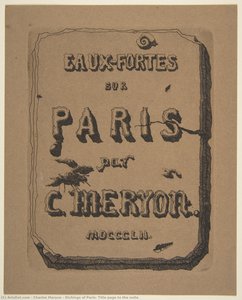
Recognizing his inability to paint due to colour blindness, Meryon decisively turned to etching in 1848. This medium allowed him to convey complex emotions and textures with remarkable precision, mirroring the atmosphere of his beloved paris. His most celebrated achievement is undoubtedly the series eaux-fortes sur paris (1850–1854), a monumental undertaking that captured the grim beauty of the city—a vision profoundly shaped by his travels and infused with a distinctive gothic sensibility. The twenty-two etchings within this suite stand as enduring symbols of Meryon’s artistic prowess and continue to captivate viewers today. Among his most iconic prints is Le Stryge (1853), a haunting portrayal of a gargoyle perched atop Notre Dame Cathedral—a masterpiece demonstrating Meryon’s mastery of the etching technique and embodying the spirit of Dark Romanticism. Furthermore, St Étienne-du-Mont (1854), a panoramic view of parisian suburbia, exemplifies Meryon’s ability to distill the essence of his surroundings into evocative imagery. These works cemented his reputation as one of the foremost printmakers of his era and secured his place in art history.museums and collections featuring charles méryon's work
Several significant artworks by Charles Meryon reside within prestigious museums worldwide. The Metropolitan Museum of Art in New York City houses a remarkable collection of his etchings, including the entirety of Eaux-fortes sur Paris—a testament to Meryon’s enduring legacy. Similarly, Harvard Art Museums showcase Le Stryge, highlighting Meryon's exceptional skill in etching and offering visitors a glimpse into his artistic vision.influence and legacy
Charles Meryon’s influence extended beyond the realm of printmaking, shaping the aesthetic sensibilities of his contemporaries and inspiring subsequent generations of artists. His meticulous attention to detail, combined with his masterful use of chiaroscuro—the dramatic interplay of light and shadow—established a new standard for artistic expression. He is considered a pivotal figure in Dark Romanticism, a movement characterized by pessimism, disillusionment, and fascination with the grotesque—themes that resonate powerfully within his oeuvre. Meryon’s work continues to captivate audiences today, serving as a poignant reminder of the beauty found in darkness and the enduring power of artistic innovation.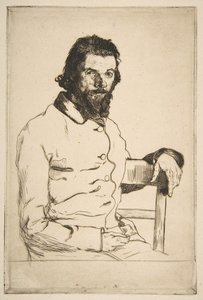
Charles Meryon
1821 - 1868 , Francia
Datos clave
- Artistic Movement Or Style: Romanticismo Gótico
- Artists Who Influenced This Artist:
- Eugène Delacroix
- Caspar David Friedrich
- Date Of Birth: Nov 23, 1821
- Date Of Death: Feb 14, 1868
- Full Name: Charles Meryon
- Nationality: Francés
- Notable Artworks:
- Eaux-fortes sur Paris
- Le Stryge
- St. Etienne-du-Mont
- Place Of Birth: Paris, France

