

 Ver en contexto
 Enviar
 Compartir
 Detalles

 Descargar
 Similares
 Radiografía
 Presentación de diapositivas
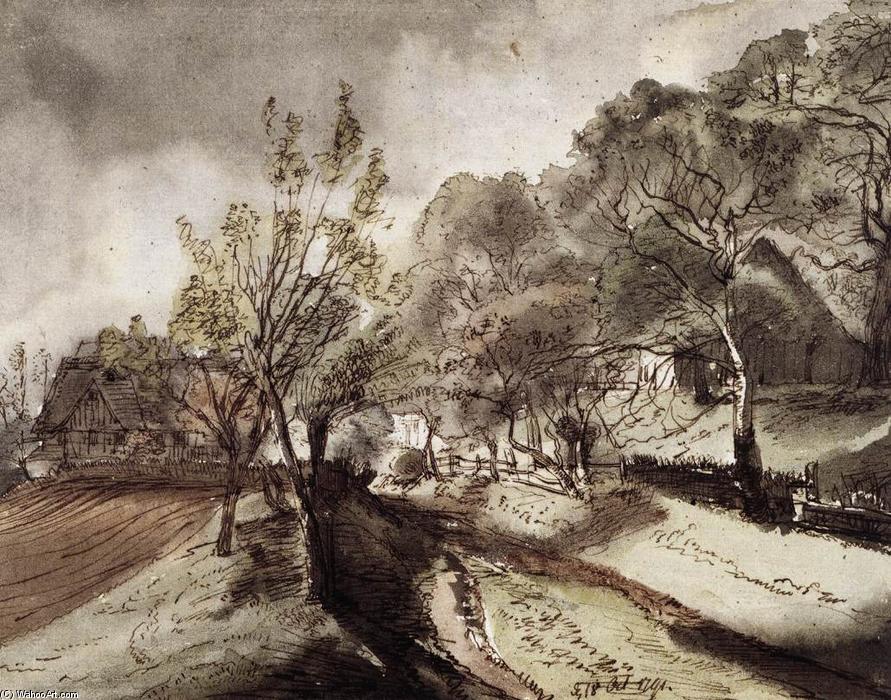
Village Street with Houses
 1791
1791 188.0 x 251.0 cm
 Staatliche Museen zu Berlin
 Ver más
Giclée / Impresión de arte
Impresiones giclée o en lienzo de calidad de museo con producción rápida y opciones de acabado flexibles. ( Comprar pintura hecha a mano Comprar imagen)




































Elija entre nuestros tamaños predefinidos que respetan las proporciones originales de la obra.

Puede introducir sus propias dimensiones para adaptarse a un marco o espacio específico. Si el tamaño seleccionado no coincide con las proporciones de la imagen original, recortaremos la obra de arte o extenderemos la imagen con un borde con efecto espejo o de color sólido. Se enviará una maqueta digital para su aprobación antes de que comience la producción.
Tenga en cuenta que la vista previa en pantalla no refleja el recorte o la extensión real. Solo la maqueta mostrará con precisión la composición final.
Aunque existen tamaños personalizados, recomendamos seleccionar una dimensión de la lista predefinida para preservar las proporciones originales.
Envío a todo el mundo () en 2 semanas en lugar de las 4/5 semanas estándar. (6 septiembre)

Envío exprés gratuito a todo el mundo

Lienzo de lino de alta calidad

Seguro de envío total

Garantía de reembolso de impuestos aduaneros

Garantía de fidelidad cromática exacta

Política de devolución de 100 días (solo por defectos)

Garantía de devolución del 100% del dinero

Descuento por cantidad
 La opción de vidrio solo está disponible en tamaños inferiores a 110 cm.

Village Street with Houses
Giclée / Impresión de arte
Dimensiones de la reproducción
-


Precio total final
$ 62
Artistic Style and Technique
The painting's fine-line quality, achieved through the use of a pen, suggests careful attention to detail. The muted colour palette, dominated by earth tones and soft grays, contributes to the peaceful mood of the scene. The bare trees in the foreground, indicating autumn or winter, add a sense of depth to the composition.Composition and Elements
The dirt road leading into the village, flanked by trees on both sides, creates a sense of perspective. The traditional European architecture of the houses in the background suggests a rural setting from the late 18th century. The closely packed buildings imply a close-knit community.- The painting's size, 188 x 251 cm, allows for a detailed and intricate composition.
- The use of pen and brown ink with watercolours creates a unique and captivating visual effect.
- The artist's ability to balance natural elements and man-made structures results in a harmonious and visually pleasing scene.
For more information on the Staatliche Museen and its collection, visit /art/list/?Filter=A@D3AMAR-The-Nationalgalerie-of-Berlin-Germany:-A-Comprehensive-Guide.
The Village Street with Houses painting is a testament to Christoph Nathe's skill and artistry, and its beauty continues to captivate audiences today.
Obras relacionadas










Biografía del artista
The Formative Years of a Prussian Talent
Born into the humble rhythms of a farming family in Nieder-Bielau, Christoph Nathe’s journey from the Prussian countryside to the heights of German art history is a testament to the transformative power of innate talent. His early education under Johann Gottfried Schultz in Görlitz provided the essential foundation for a life dedicated to the delicate stroke of a pen and the subtle wash of watercolor. This burgeoning skill eventually led him to the prestigious Academy of Fine Arts in Leipzig, where he studied under the tutered eye of Adam Friedrich Oeser. It was within these academic halls that Nathe began to absorb the rigorous principles of etching and classical composition, preparing him for a career that would bridge the gap between meticulous academic tradition and the burgeoning emotional depth of the Romantic era.As his technical proficiency grew, so did his ability to observe the world with an unparalleled sensitivity. His early training in drawing and etching allowed him to master the fine-line quality that would become his hallmark, a technique characterized by detailed hatching and shading that anticipated the expressive tendencies of later masters.
The Alpine Sublime and the Swiss Influence
A defining chapter in Nathe’s artistic evolution unfolded during his transformative expedition through Switzerland between 1782 and 1784. Traveling alongside the renowned ornithologist Karl Andreas von Meyer zu Knonow, Nathe was no longer merely a student of technique but an observer of the sublime. The sheer majesty of the Alpine landscapes—the jagged peaks, the sweeping valleys, and the intricate interplay of light and shadow—left an indelible mark on his artistic soul. This immersive encounter with nature’s grandeur instilled in him a profound appreciation for natural nuances, fostering a style that captured the very essence of the landscape with remarkable precision.This period of exploration fundamentally shifted his vision, moving away from purely academic exercises toward a more atmospheric and emotive representation of the natural world. The grandeur of the mountains and the quietude of the valleys became central themes in his work, providing him with a visual vocabulary that would later resonate with the core tenets of Romanticism.
A Legacy Etched in Light and Shadow
Upon his return to Leipzig, Nathe established himself as a pillar of the artistic community, serving as the Director of the Drawing School and furthering his own pursuits as a respected educator. His technical mastery was most evident in his unique approach to medium; he possessed an extraordinary ability to utilize pen and brown ink alongside soft watercolours to create scenes of breathtaking tranquility. In works such as Village Street with Houses, one can witness his skillful use of muted earth tones and soft grays to evoke a sense of peaceful permanence. Even as he sought classical inspiration in Rome during the early years of the nineteenth century, his heart remained tethered to the meticulous observation of the natural world.Though often overshadowed by the monumental figures of Caspar David Friedrich and Johann Christian Reinhart, Nathe’s contribution remains a vital link in the evolution of German landscape painting. His life and work represent the crucial transition from the structured precision of the late eighteenth century to the emotive landscapes of the nineteenth century.
- Pioneering Spirit: He served as a foundational figure during the formative years of the Romantic movement.
- Technical Mastery: His expertise in miniature painting, watercolor, and etching brought a unique level of detail to German landscape art.
- Historical Significance: Through his role as an educator and his Alpine-inspired vision, he helped pave the way for the expressive landscapes of the Romantic era.
christoph nathe
1753 - 1806 , Poland
Datos clave
- Artistic Movement Or Style: Landscape Painting
- Artists Or Movements Influenced By This Artist: ['Caspar David Friedrich']
- Artists Who Influenced This Artist: ['Adam Friedrich Oeser']
- Date Of Birth: January 3, 1753
- Date Of Death: December 10, 1806
- Full Name: Christoph Nathe
- Nationality: German
- Notable Artworks:
- Village Street with Houses
- Forest with Rocks with a Man by a Stream in the Foreground
- Place Of Birth: Nieder-Bielau, Poland