

 Ver en contexto
 Enviar
 Compartir
 Detalles

 Descargar
 Similares
 Radiografía
 Presentación de diapositivas
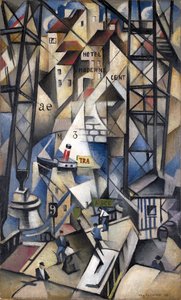
The Soul of the Soulless City (
 Oil On Canvas
- WallArt
- Cubism
 91.0 x 60.0 cm
 Tate Britain
 Ver más
Adquiera una imagen digital de alta resolución y optimizada, muy superior a la vista previa en línea.
Cada archivo es preparado meticulosamente por nuestros especialistas internos mediante el uso de herramientas avanzadas y un experto retoque manual. Nos aseguramos de que cada imagen posea una claridad excepcional, una precisión cromática impecable y un detalle minucioso.
El archivo final se entrega por correo electrónico en un plazo de 72 horas, optimizado para su uso inmediato en entornos profesionales, editoriales y de impresión. Esta es la misma calidad en la que confían los estudios de diseño, las editoriales y las galerías de primer nivel.
Imagen Digital
Descarga un archivo de alta resolución para exhibición personal, impresión y proyectos creativos. ( Comprar impresión Comprar pintura hecha a mano)
Incluido en cada pedido de imágenes digitales
Entrega digital experta, garantizada.
Al elegir ArtsDot.com, no solo está adquiriendo una imagen; está recibiendo una obra de arte digital mejorada profesionalmente, elaborada con precisión y respaldada por una garantía de satisfacción. Esto es todo lo que incluye su pedido, automáticamente:

Entrega rápida por email
Recibirá su archivo de imagen digital en alta resolución por correo electrónico en un plazo de 72 horas tras realizar su pedido, listo para su uso inmediato.

Archivo digital optimizado por IA
Su obra de arte se optimiza profesionalmente mediante herramientas avanzadas de IA y edición manual, garantizando el máximo detalle, claridad y precisión cromática.

Reenvío gratuito de por vida
¿Has borrado o perdido tu archivo por error? No te preocupes: te lo volveremos a enviar en cualquier momento, sin coste adicional.

Sin gastos de importación, siempre
Disfrute de su obra de arte al instante sin aduanas, aranceles ni gastos de envío; las descargas digitales siempre están libres de impuestos.

Garantía de fidelidad de color
Garantizamos que su imagen digital refleje los colores originales con la mayor fidelidad posible, mediante el uso de herramientas profesionales y gestión del color.

Garantía de satisfacción de 60 días
Si no está satisfecho con su imagen digital, la revisaremos o le reembolsaremos el 100% en un plazo de 60 días, sin preguntas.

100% Garantía de devolución de dinero
¿No está satisfecho? Obtenga un reembolso completo dentro de los 60 días posteriores a la recepción de su archivo digital, sin necesidad de explicaciones.

Descuentos por pedidos grandes
Compra 3 imágenes, ahorra 10% - Compra 5, ahorra 15% - Compra 10+, ahorra 20%. Ideal para proyectos creativos, galerías y agencias.
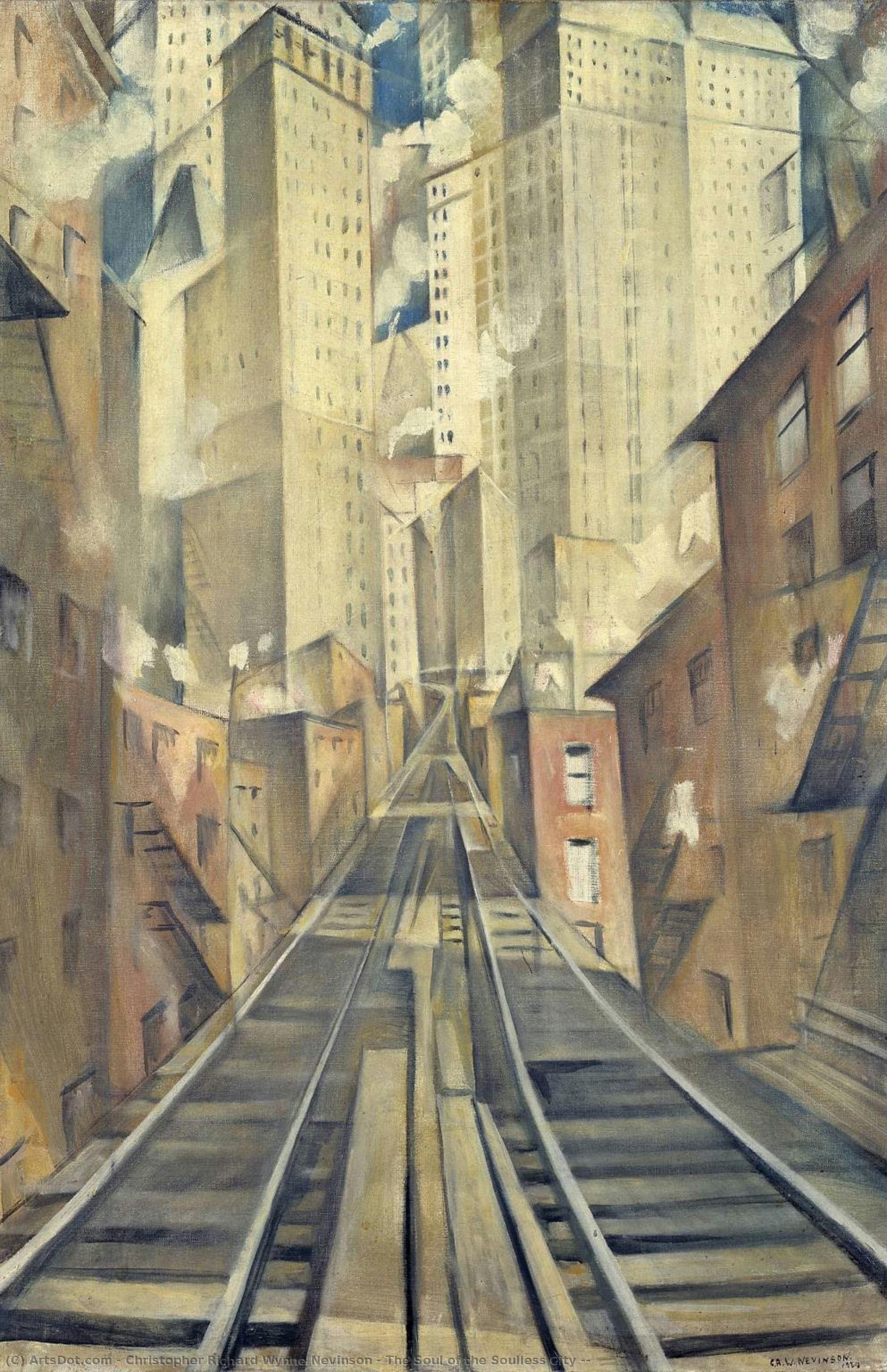
The Soul of the Soulless City (New York - an Abstraction)
Christopher Richard Wynne Nevinson’s “The Soul of the Soulless City,” painted in 1920, stands as a pivotal emblem of British avant-garde art during the tumultuous years following World War I. More than just a depiction of New York’s skyline—a city brimming with dynamism and industrial ambition—the canvas embodies a profound exploration of alienation and the unsettling beauty inherent within modernity itself. Nevinson's artistic vision, deeply influenced by Cubism and Futurism, captures not merely what was seen but how it *felt*, reflecting anxieties about societal transformation and the human condition amidst rapid technological advancement.- Subject Matter: The painting focuses on a fictionalized segment of Manhattan’s elevated railway system—a deliberate choice that underscores Nevinson's fascination with urban infrastructure as a symbol of progress, yet simultaneously highlighting its dehumanizing potential. Unlike idyllic landscapes favored by many contemporaries, this cityscape confronts viewers with an uncompromising portrayal of industrial might and the sheer scale of metropolitan life.
- Style & Technique: Nevinson’s approach leans heavily into Cubist principles—specifically the fragmentation of form and multiple perspectives—resulting in a flattened pictorial space where buildings are rendered as geometric blocks devoid of traditional shading. Simultaneously, he incorporates Futurist elements through the prominent elevated railway line, which surges diagonally across the canvas, propelling the eye towards an imagined horizon and embodying the speed and energy characteristic of the era. The artist employs oil paint applied with broad brushstrokes, creating a textured surface that contributes to the painting’s overall mood of unease and immediacy.
- Historical Context: Created in the wake of the Great War—a conflict that irrevocably altered European sensibilities—the artwork reflects the pervasive disillusionment felt by artists grappling with the horrors witnessed on the battlefield and questioning the promises of Enlightenment rationality. Nevinson’s stylistic choices align with a broader trend toward abstraction, rejecting representational accuracy in favor of conveying emotional resonance and intellectual contemplation.
- Symbolism: The stark geometric forms of the buildings serve as visual metaphors for rigidity and oppression—a deliberate contrast to the perceived fluidity and spontaneity of human experience. However, the elevated railway itself represents more than just transportation; it symbolizes relentless movement, technological advancement, and the inescapable march toward an uncertain future. Nevinson’s subtle use of muted earth tones—browns, ochres, and grays—further reinforces the painting's sombre atmosphere, mirroring the psychological landscape of a generation grappling with trauma and existential anxieties.
- Emotional Impact: “The Soul of the Soulless City” evokes a palpable sense of isolation and anonymity—a feeling intensified by the compressed perspective that diminishes depth and creates an impression of being trapped within the overwhelming expanse of the urban environment. The painting’s unsettling beauty lies in its ability to capture both the grandeur and the despair inherent in modernity, prompting viewers to confront uncomfortable truths about human vulnerability amidst technological progress.
Obras relacionadas

Biografía del artista
Vida Temprana y Educación
- Nacido: Hampstead, Reino Unido (1889)
- Fallecido: 1946
- Padres: Henry Nevinson (corresponsal de guerra/periodista), Margaret Nevinson (activista del sufragio/escritora)
- Educación: Shrewsbury School, Uppingham School, Slade School of Art
- Estudió bajo la tutela de Henry Tonks en la Slade School of Art junto con Stanley Spencer y Mark Gertler.
- Asistió brevemente a la Académie Julian en París (1912-1913).
Influencias Artísticas y Carrera Temprana
- Las primeras influencias incluyeron a Augustus John.
- Se hizo amigo de Marinetti, líder de los futuristas italianos, y Wyndham Lewis.
- Estuvo brevemente involucrado con el Rebel Art Centre y posteriormente fue excluido del movimiento Vorticista de Wyndham Lewis.
- Co-fundó el London Group en 1914.
- Publicó un manifiesto para el Futurismo inglés junto a Marinetti.
- Sus primeras obras mostraron influencias del Neo-Primitivismo, con amistad a Mark Gertler y Dora Carrington.
Primera Guerra Mundial y Artista de Guerra Oficial
- Se unió a la Friends' Ambulance Unit al estallar la Primera Guerra Mundial.
- Sirvió brevemente como conductor de ambulancias antes de que una enfermedad lo obligara a regresar a Gran Bretaña.
- Se ofreció voluntario con el Royal Army Medical Corps.
- Creó pinturas poderosas que representaban las realidades de la guerra, utilizando estéticas futuristas y cubistas.
- Obra notable: La Mitrailleuse (considerada una representación significativa de la Primera Guerra Mundial).
- Fue nombrado artista de guerra oficial en 1917.
- Las pinturas posteriores de la guerra se desplazaron hacia un estilo más realista.
Viajes Posteriores a la Guerra y Desarrollo Artístico
- Viajó a los Estados Unidos en 1920, produciendo obras inspiradas en la ciudad de Nueva York.
- Experimentó períodos de depresión y tuvo una personalidad temperamental que condujo a relaciones tensas con sus contemporáneos.
- Escribió la memoria *Paint and Prejudice* (1937), notable por imprecisiones e inconsistencias.
- Su carrera posterior a la guerra fue menos distinguida que su trabajo anterior.
Legado y Significado Histórico
- Reconocido como un artista de guerra británico significativo, particularmente por sus primeras representaciones de la Primera Guerra Mundial.
- Su uso de técnicas futuristas y cubistas para representar los horrores de la guerra moderna fue innovador.
- Contribuyó al desarrollo del arte vanguardista en Gran Bretaña.
- Su obra sigue siendo relevante por su poderosa representación del conflicto y su exploración de la modernidad.
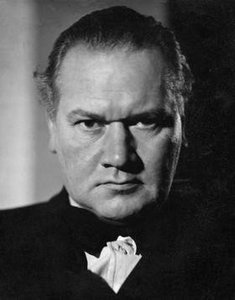
Christopher Richard Wynne Nevinson
1889 - 1946 , Reino Unido
Breves datos
- Artistas Que Influyeron:
- Augustus John
- Marinetti
- Wyndham Lewis
- Fecha De Fallecimiento: 1946-10-07
- Fecha De Nacimiento: 1889-08-13
- Lugar De Nacimiento: Hampstead, Reino Unido
- Movimiento Artístico:
- Futurismo
- Cubismo
- Expresionismo
- Nacionalidad: Británico
- Nombre Completo: Christopher Richard Wynne Nevinson
- Obras Notables:
- Le vieux port
- The Unending Cult...
- Loading Timber at...
- Notre Dame de Paris...
- Summer in the Downs
- The Arrival
- Oxford, on the Cherwell

