

 Ver en contexto
 Enviar
 Compartir
 Detalles

 Descargar
 Similares
 Radiografía
 Presentación de diapositivas
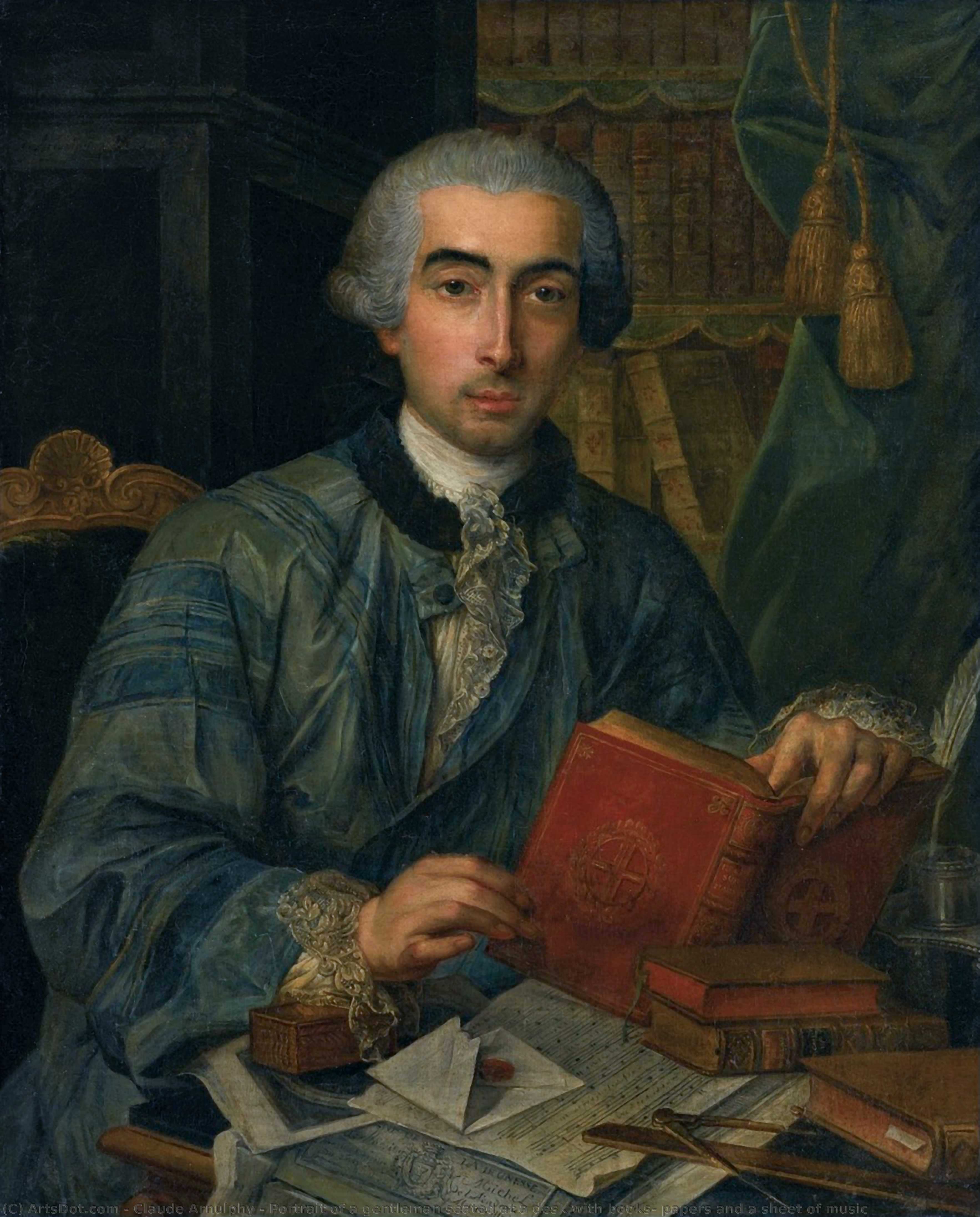
Portrait of a gentleman seated at a desk with books, papers and a sheet of music
 86.0 x 70.0 cm
 Ver más
Giclée / Impresión de arte
Impresiones giclée o en lienzo de calidad de museo con producción rápida y opciones de acabado flexibles. ( Comprar pintura hecha a mano Comprar imagen)




































Elija entre nuestros tamaños predefinidos que respetan las proporciones originales de la obra.

Puede introducir sus propias dimensiones para adaptarse a un marco o espacio específico. Si el tamaño seleccionado no coincide con las proporciones de la imagen original, recortaremos la obra de arte o extenderemos la imagen con un borde con efecto espejo o de color sólido. Se enviará una maqueta digital para su aprobación antes de que comience la producción.
Tenga en cuenta que la vista previa en pantalla no refleja el recorte o la extensión real. Solo la maqueta mostrará con precisión la composición final.
Aunque existen tamaños personalizados, recomendamos seleccionar una dimensión de la lista predefinida para preservar las proporciones originales.
Envío a todo el mundo () en 2 semanas en lugar de las 4/5 semanas estándar. (27 agosto)

Envío exprés gratuito a todo el mundo

Lienzo de lino de alta calidad

Seguro de envío total

Garantía de reembolso de impuestos aduaneros

Garantía de fidelidad cromática exacta

Política de devolución de 60 días (solo por defectos)

Garantía de devolución del 100% del dinero

Descuento por cantidad
 La opción de vidrio solo está disponible en tamaños inferiores a 110 cm.

Portrait of a gentleman seated at a desk with books, papers and a sheet of music
Giclée / Impresión de arte
Dimensiones de la reproducción
-


Precio total final
$ 62
Obras relacionadas








Biografía del artista
The Painter of Naval Dignity and Aix-en-Provence’s Artistic Legacy
Claude Arnulphy, a name synonymous with the refined elegance of the 18th century, stands as a pivotal figure in the artistic landscape of the Enlightenment. Born in 1697, his life unfolded amidst the burgeoning intellectual fervor of an era that sought to balance classical ideals with evolving human sensibilities. While historical accounts suggest his beginnings may have been rooted in Grenoble or Lyons, it was within the vibrant atmosphere of the French capital where his artistic soul first began to stir. As the son of Charles Arnulphy, a painter in Paris, Claude’s early years were steeped in the scent of oil paints and the disciplined rhythm of the studio, providing him with a foundational mastery that would later define his illustrious career.
His journey toward artistic maturity was marked by a pursuit of excellence that led him far beyond the borders of France. After honing his initial skills under his father's watchful eye, Arnully traveled to Rome, where he immersed himself in the profound classical traditions of Italy. Studying under the esteemed Benedetto Luti, he absorbed the nuances of form and the dramatic potential of light, elements that would become the hallmarks of his later work. This period of Roman training infused his style with a sophisticated grace, allowing him to bridge the gap between the robust Baroque conventions of his mentors and the more delicate, decorative sensibilities of the burgeoning Rococo movement.
A Mastery of Portraiture and the Spirit of the Sea
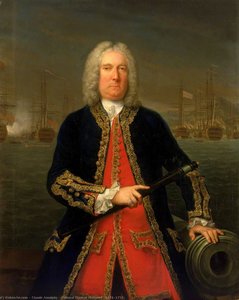
Upon establishing himself in the city of Aix-en-Provence around 1722, Arnulphy began to carve out a unique niche that would secure his historical significance. He became particularly renowned for his captivating portraits of naval officers, works that did far more than merely record a likeness; they captured the very essence of maritime authority and command. Through his brush, figures such as Admiral Thomas Mathews and Captain Henry Osborn were imbued with a sense of gravitas and psychological depth. His technique was characterized by an unwavering commitment to anatomical accuracy and a masterful use of chiaroscuro—the dramatic interplay of light and shadow—which served to sculpt the forms of his subjects and lend them an air of monumental dignity.
The artist’s ability to render the textures of military regalia, from the subtle sheen of silk to the heavy weight of gold braid, showcased a technical virtuosity that captivated his patrons. His portraits often functioned as much as symbols of status and duty as they did personal mementos. In these compositions, one can observe:
- Meticulous Detail: An exacting approach to the fine elements of uniform and insignia.
- Subtle Tonal Gradations: The use of soft transitions to create a lifelike, breathing quality in skin tones.
- Psychological Nuance: A profound ability to capture the resolute gaze and commanding presence of naval leaders.
The Architect of an Artistic Tradition
Beyond his individual triumphs as a portraitist, Arnulphy’s legacy is deeply intertwined with the institutional development of French art. He was not merely a practitioner of his craft but a guardian of artistic education. Alongside Jean-Antoine Constantin, he played a crucial role in establishing the École de dessin d'Aix-en-Provence. This institution became a sanctuary for classical principles, fostering a new generation of painters who would carry forward the rigorous standards of the Beaux-Arts style. By nurturing talent and championing formal training, Arnulphy ensured that his influence would ripple through the decades, long after his death in 1786.
As we look back upon the life of Claude Arnulphy, we see an artist who successfully navigated the transition between eras. He took the dramatic shadows of the Baroque and refined them into the luminous elegance of the Rococo, all while maintaining a steadfast devotion to the dignity of his subjects. His work remains a testament to a period when art served as both a mirror to human achievement and a window into the structured grandeur of the Enlightenment.
claude arnulphy
1697 - 1786
Datos clave
- Artistic Movement Or Style: Baroque
- Artists Or Movements Influenced By This Artist: ['Claude Lorrain']
- Artists Who Influenced This Artist: ['Nicolas de Largillière']
- Date Of Birth: 1697
- Full Name: Claude Arnulphy
- Nationality: French
- Notable Artworks:
- Captain Henry Osborn
- Admiral Thomas Mathews
- Place Of Birth: Grenoble, France

