

 Ver en contexto
 Enviar
 Compartir
 Detalles

 Descargar
 Similares
 Radiografía
 Presentación de diapositivas
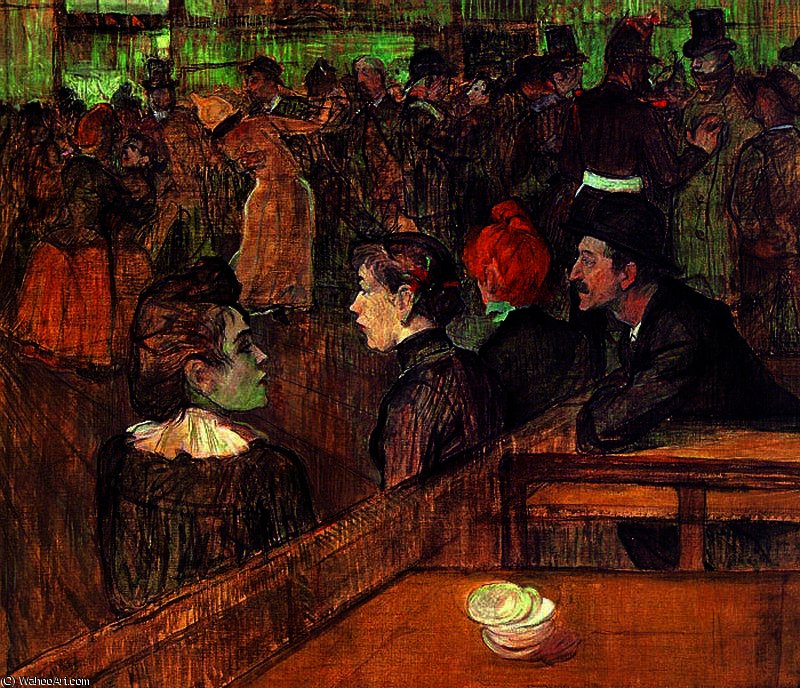
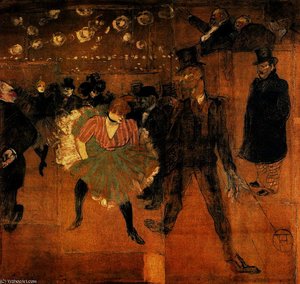
Dance in the Moulin of the Galette


 Ver más
Adquiera una imagen digital de alta resolución y optimizada, muy superior a la vista previa en línea.
Cada archivo es preparado meticulosamente por nuestros especialistas internos mediante el uso de herramientas avanzadas y un experto retoque manual. Nos aseguramos de que cada imagen posea una claridad excepcional, una precisión cromática impecable y un detalle minucioso.
El archivo final se entrega por correo electrónico en un plazo de 72 horas, optimizado para su uso inmediato en entornos profesionales, editoriales y de impresión. Esta es la misma calidad en la que confían los estudios de diseño, las editoriales y las galerías de primer nivel.
Imagen Digital
Descarga un archivo de alta resolución para exhibición personal, impresión y proyectos creativos. ( Comprar impresión Comprar pintura hecha a mano)
Incluido en cada pedido de imágenes digitales
Entrega digital experta, garantizada.
Al elegir ArtsDot.com, no solo está adquiriendo una imagen; está recibiendo una obra de arte digital mejorada profesionalmente, elaborada con precisión y respaldada por una garantía de satisfacción. Esto es todo lo que incluye su pedido, automáticamente:

Entrega rápida por email
Recibirá su archivo de imagen digital en alta resolución por correo electrónico en un plazo de 72 horas tras realizar su pedido, listo para su uso inmediato.

Archivo digital optimizado por IA
Su obra de arte se optimiza profesionalmente mediante herramientas avanzadas de IA y edición manual, garantizando el máximo detalle, claridad y precisión cromática.

Reenvío gratuito de por vida
¿Has borrado o perdido tu archivo por error? No te preocupes: te lo volveremos a enviar en cualquier momento, sin coste adicional.

Sin gastos de importación, siempre
Disfrute de su obra de arte al instante sin aduanas, aranceles ni gastos de envío; las descargas digitales siempre están libres de impuestos.

Garantía de fidelidad de color
Garantizamos que su imagen digital refleje los colores originales con la mayor fidelidad posible, mediante el uso de herramientas profesionales y gestión del color.

Garantía de satisfacción de 60 días
Si no está satisfecho con su imagen digital, la revisaremos o le reembolsaremos el 100% en un plazo de 60 días, sin preguntas.

100% Garantía de devolución de dinero
¿No está satisfecho? Obtenga un reembolso completo dentro de los 60 días posteriores a la recepción de su archivo digital, sin necesidad de explicaciones.

Descuentos por pedidos grandes
Compra 3 imágenes, ahorra 10% - Compra 5, ahorra 15% - Compra 10+, ahorra 20%. Ideal para proyectos creativos, galerías y agencias.
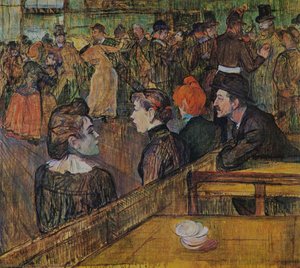
Dance in the Moulin de la Galette: A Parisian Nocturne
Henri de Toulouse-Lautrec’s “Dance in the Moulin de la Galette” isn't merely a depiction of a lively evening; it’s a vibrant, almost palpable snapshot of bohemian life at the heart of Montmartre. Completed in 1897, this iconic painting captures a quintessential Parisian scene – a Sunday afternoon at the original Moulin de la Galette, a legendary guinguette where artists, musicians, and socialites mingled amidst dancing, drinking, and spirited conversation. The work’s enduring appeal lies not just in its subject matter but also in Toulouse-Lautrec's masterful ability to distill the energy and atmosphere of this unique space onto canvas.
The scene unfolds with remarkable immediacy. A diverse crowd – young men in elegant attire, women adorned with vibrant hats, and a scattering of children – are engaged in various activities: some seated at tables, others dancing, while still others stroll through the room. The artist’s keen eye captures the fluidity of movement, the casual interactions, and the overall sense of joyous abandon. Notice the careful arrangement of bowls on the tables, likely holding refreshments, adding to the impression of a relaxed, convivial gathering. A prominent clock in the background subtly anchors the scene within the temporal flow of the afternoon.
Impressionism and the Montmartre Scene
Toulouse-Lautrec’s style is firmly rooted in Impressionism, yet he transcends simple replication. He doesn't aim for photographic realism but rather to convey a feeling, an *impression* of the scene – the dappled sunlight filtering through the windows, the shimmering reflections on the polished surfaces, and the vibrant colors that characterize Montmartre at this time. His brushstrokes are loose and expressive, creating a sense of movement and spontaneity. This is evident in the way he renders the figures, capturing not just their physical forms but also their individual personalities and gestures. The painting’s rich palette – dominated by warm yellows, reds, and browns – contributes significantly to its lively atmosphere.
The Moulin de la Galette itself holds a significant place in Parisian history. Originally a windmill used for grinding grain, it transformed into a popular entertainment venue in the 19th century. It became a hub for artists like Renoir and van Gogh, who sought inspiration in its vibrant atmosphere. Toulouse-Lautrec’s depiction of the guinguette reflects this artistic patronage, capturing not just a social gathering but also a crucial moment in the development of modern art.
Symbolism and Emotional Impact
Beyond its immediate visual appeal, “Dance in the Moulin de la Galette” is rich in symbolic meaning. The painting represents a fleeting moment of joy and freedom – a temporary escape from the constraints of Parisian society. The figures are not idealized portraits but rather representative types, embodying the spirit of Montmartre’s bohemian culture. The scene evokes a sense of nostalgia for a bygone era, a time when life moved at a slower pace and social gatherings were characterized by genuine connection and uninhibited pleasure.
Toulouse-Lautrec's own physical challenges – the stunted growth resulting from a genetic condition – undoubtedly informed his artistic perspective. He developed an empathetic understanding of marginalized figures, capturing their lives with honesty and sensitivity. This is perhaps most evident in his portrayal of the diverse group of individuals within the painting, each contributing to the overall sense of inclusivity and vitality.
A Timeless Masterpiece
"Dance in the Moulin de la Galette" remains a powerful testament to Toulouse-Lautrec’s artistic genius. It is more than just a painting; it's a window into a vibrant era, a celebration of human connection, and a poignant reflection on the artist’s own life experiences. A hand-painted reproduction offers an unparalleled opportunity to bring this iconic work into your home or office, allowing you to experience the magic of Montmartre every day.
Obras relacionadas

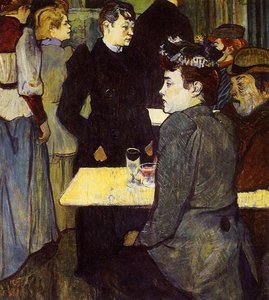
Biografía del artista
Henri de Toulouse-Lautrec: A Parisian Visionary
Henri Marie Raymond de Toulouse-Lautrec-Monfa, universally known as Toulouse-Lautrec (1864 – 1901), stands as one of the most distinctive voices in late nineteenth-century French art. Born into a noble lineage descended from the Counts of Toulouse and Odet de Foix, Vicomte de Lautrec, his childhood was marked by both privilege and profound physical adversity—a condition suspected to be pycnodysostosis that stunted his growth after adolescence. This physical difference wasn’t merely an impediment; it became a catalyst for artistic exploration, shaping his perspective and fueling his fascination with the marginalized figures inhabiting the vibrant streets of Montmartre. Rejecting academic conventions, Toulouse-Lautrec embraced a bold aesthetic rooted in Japanese woodblock prints—a burgeoning trend that captivated European artists—characterized by flattened perspectives and dynamic compositions.Early Artistic Training and Influences
His formal artistic education began in Paris under the tutelage of Léon Bonnat and Fernand Cormon, equipping him with foundational skills in drawing and painting. However, it was his encounter with Auguste Rodin that proved transformative. Rodin recognized Toulouse-Lautrec’s talent and invited him to join his studio as a draftsman, providing invaluable experience in studying the human form—a rare opportunity for a young man burdened by physical limitations. This mentorship profoundly impacted his artistic sensibilities, fostering an appreciation for anatomical accuracy combined with expressive gesture. Early influences included Eugène Delacroix and Gustave Courbet, whose emphasis on capturing fleeting moments of emotion resonated deeply within Toulouse-Lautrec’s creative spirit. He absorbed the Impressionist techniques championed by Claude Monet and Pierre-Auguste Renoir, adapting them to his own distinctive vision—a synthesis that would define his artistic style.The Montmartre Aesthetic: Capturing Parisian Life
Toulouse-Lautrec's artistic breakthrough occurred in Montmartre, a bohemian enclave teeming with artists, performers, and intellectuals. He abandoned the grand narratives of academic painting for the immediacy of everyday life—the Moulin Rouge cabaret, the cafes frequented by writers and musicians, the prostitutes of Rue Lepic—subjects that captivated him with their sensual energy and social complexities. Unlike many Impressionists who sought to capture idealized beauty, Toulouse-Lautrec unflinchingly portrayed his subjects with honesty and compassion, revealing both their allure and vulnerability. He employed a masterful technique of line drawing—characterized by bold contours and expressive hatching—to convey movement and emotion, capturing the dynamism of Montmartre’s nightlife with unparalleled precision. His lithographs—particularly those depicting scenes from the Moulin Rouge—became iconic images of the era, disseminating his vision far beyond the confines of Parisian studios.Technique and Style: Line, Color, and Lithography
Toulouse-Lautrec's artistic style is instantly recognizable for its distinctive characteristics. He prioritized line drawing above all else, utilizing it not merely to delineate form but to imbue his compositions with energy and rhythm. His color palette—often muted yet infused with vibrant hues—served as a counterpoint to the dominant black and white of lithography, enhancing the visual impact of his prints. He skillfully manipulated tonal values—creating dramatic contrasts between light and dark—to heighten emotional intensity and sculpt form. Toulouse-Lautrec’s mastery of lithography was particularly noteworthy; he recognized its potential for mass reproduction and artistic expression, elevating it beyond mere commercial printing. This medium allowed him to disseminate his vision widely, solidifying his reputation as a pioneer of modern graphic art. His prints are notable for their bold compositions and flattened perspectives—a stylistic innovation that foreshadowed developments in Cubism and Futurism.Legacy and Influence: A Lasting Impression
Toulouse-Lautrec died tragically young at the age of 36 from complications stemming from alcoholism and syphilis, leaving behind a legacy of remarkable artistic achievement. Despite his brief career, he exerted an indelible influence on subsequent generations of artists—particularly those exploring themes of psychological depth and subjective experience. He stands as one of the pivotal figures in bridging the gap between Impressionism and Modern Art, establishing himself as a champion of expressive line and color. His unflinching portrayal of human vulnerability continues to resonate today, reminding us that art can illuminate the complexities of human emotion and perception. Toulouse-Lautrec’s work remains celebrated for its stylistic innovation, its evocative imagery, and its enduring fascination with the spirit of Montmartre—a testament to his singular vision and artistic genius.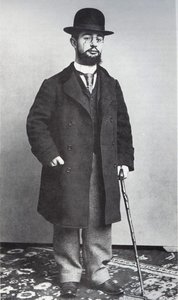
comte henri marie raymond de toulouse-lautrec-monfa
1864 - 1901 , Francia
Breves datos
- Artistic Movement Or Style: Post-Impressionismo
- Artists Or Movements Influenced By This Artist: ['Arte Nouveau']
- Artists Who Influenced This Artist: ['Léon Bonnat']
- Date Of Birth: 24 noviembre 1864
- Date Of Death: 9 septiembre 1901
- Full Name: Henri Marie Raymond de Toulouse-Lautrec Montfa
- Nationality: Francés
- Notable Artworks:
- La Blanchisseuse
- En las alas al circo
- Mujer acostada — Despertándose
- Place Of Birth: Albi, Francia

