 Ver en contexto
 Enviar
 Compartir
 Detalles

 Descargar
 Similares
 Radiografía
 Presentación de diapositivas
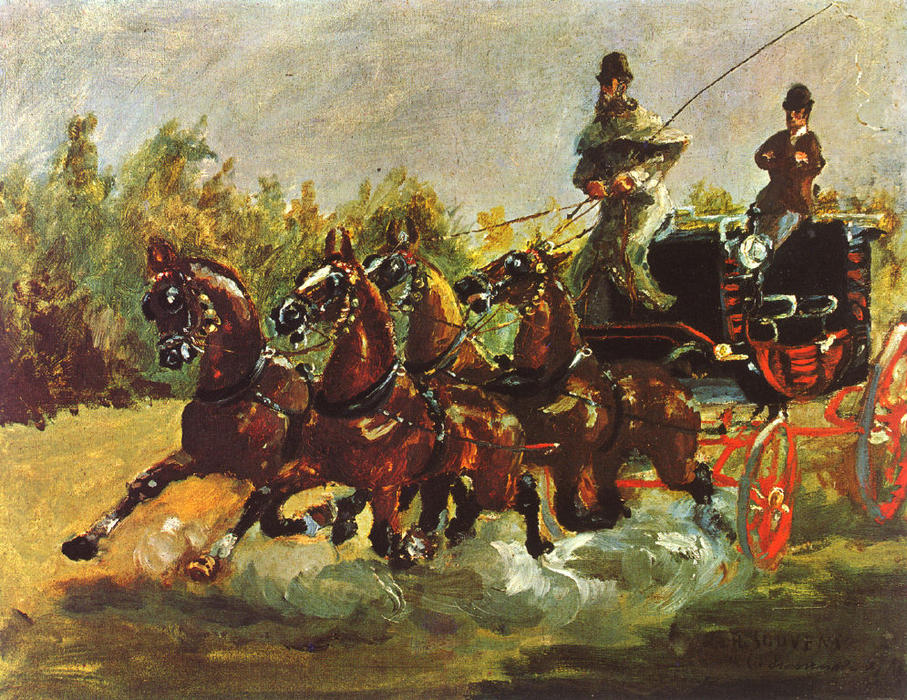
The Four-in-Hand


 Ver más
Giclée / Impresión de arte
Impresiones giclée o en lienzo de calidad de museo con producción rápida y opciones de acabado flexibles. ( Comprar pintura hecha a mano Comprar imagen)




P118B $10

P118H $10

P118W $10

P438Z $10

P508JH $12

P508YH $12

P805H $10

P805Z $10

P919BZ $10

P919G $10

P919XJ $10

P959ZH $10

P968JZ $12

W106C $8

W218G $10

W218JH $8

W218Y $10

W307PJ $10

W316G $10

W316PJ $8

W316Y $10

W398PJ $8

W4111J $10

W500HY $15

W500JH $15

W692G $12

W849H $8

W940BG $15

W953PJ $8




Elija entre nuestros tamaños predefinidos que respetan las proporciones originales de la obra.

Puede introducir sus propias dimensiones para adaptarse a un marco o espacio específico. Si el tamaño seleccionado no coincide con las proporciones de la imagen original, recortaremos la obra de arte o extenderemos la imagen con un borde con efecto espejo o de color sólido. Se enviará una maqueta digital para su aprobación antes de que comience la producción.
Tenga en cuenta que la vista previa en pantalla no refleja el recorte o la extensión real. Solo la maqueta mostrará con precisión la composición final.
Aunque existen tamaños personalizados, recomendamos seleccionar una dimensión de la lista predefinida para preservar las proporciones originales.
Envío a todo el mundo () en 2 semanas en lugar de las 4/5 semanas estándar. (1 septiembre)

Envío exprés gratuito a todo el mundo

Lienzo de lino de alta calidad

Seguro de envío total

Garantía de reembolso de impuestos aduaneros

Garantía de fidelidad cromática exacta

Política de devolución de 60 días (solo por defectos)

Garantía de devolución del 100% del dinero

Descuento por cantidad
 La opción de vidrio solo está disponible en tamaños inferiores a 110 cm.

The Four-in-Hand
Giclée / Impresión de arte
Dimensiones de la reproducción
-


Precio total final
$ 62
The Four-in-Hand: A Parisian Snapshot by Toulouse-Lautrec
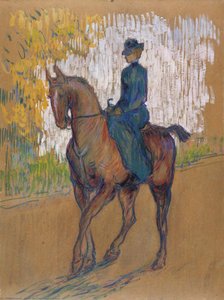
Comte Henri de Toulouse-Lautrec’s “The Four-in-Hand” offers a remarkably intimate glimpse into the vibrant, often gritty, reality of late 19th-century Paris. Completed around 1886, this painting transcends a simple depiction of a horse-drawn carriage; it's a carefully constructed tableau capturing a fleeting moment of urban life – a scene brimming with social observation and a distinctly modern sensibility. The composition immediately draws the eye to the powerful horses, their muscular forms rendered with an almost brutal honesty, pulling the elegant carriage through the bustling streets. The restrained color palette—primarily browns, reds, and blacks—reflects the atmosphere of the city itself, hinting at both wealth and the pervasive soot of industrialization.
Toulouse-Lautrec’s genius lay not just in his technical skill but in his ability to distill the essence of a place and its people. He was deeply embedded within Montmartre's bohemian circles, documenting the lives of prostitutes, artists, and performers with an unflinching eye. “The Four-in-Hand” exemplifies this approach; it’s not a romanticized vision of Parisian elegance but a raw portrayal of everyday existence. The two figures flanking the carriage – one standing, the other seated – represent the diverse social strata interacting within the city's dynamic landscape.
A Master of Observation: Toulouse-Lautrec’s Technique
The painting’s power resides significantly in Lautrec’s distinctive technique. He employed a loose, almost sketch-like brushstroke, prioritizing capturing movement and atmosphere over meticulous detail. This approach, characteristic of his style, creates a sense of immediacy and dynamism. Notice the impasto – the thick application of paint – particularly evident in the horses' musculature; this adds to their raw power and contributes significantly to the painting’s textural richness. His use of color is deliberate, emphasizing contrasts to heighten visual impact. The red and black of the carriage are sharply defined against the earthy tones of the horses and background, drawing attention to the vehicle as a symbol of status and movement.
Historical Context & Symbolism
“The Four-in-Hand” was created during a period of immense social and artistic change in Paris. The rise of industrialization, urbanization, and new forms of entertainment – like cabarets and music halls – were reshaping the city’s identity. Toulouse-Lautrec's work reflects this transformation, offering a critical commentary on the changing face of Parisian society. The carriage itself is a potent symbol; it represents both wealth and mobility within a rapidly evolving urban environment. The horses, symbols of power and status, are presented with an almost unsettling realism, hinting at the darker side of the city’s prosperity.
Emotional Impact & Legacy
Beyond its technical merits and historical significance, “The Four-in-Hand” possesses a remarkable emotional resonance. Toulouse-Lautrec's ability to capture the essence of human character – the quiet dignity of the driver, the controlled elegance of the passenger – elevates this scene beyond mere documentation. It’s a painting that invites contemplation on themes of social class, urban life, and the fleeting nature of time. Today, reproductions of “The Four-in-Hand” continue to captivate viewers with their evocative portrayal of a pivotal moment in Parisian history, solidifying Toulouse-Lautrec's place as one of the most significant artists of the late 19th century.
Obras relacionadas
Biografía del artista
Henri de Toulouse-Lautrec: A Parisian Visionary
Henri Marie Raymond de Toulouse-Lautrec-Monfa, universally known as Toulouse-Lautrec (1864 – 1901), stands as one of the most distinctive voices in late nineteenth-century French art. Born into a noble lineage descended from the Counts of Toulouse and Odet de Foix, Vicomte de Lautrec, his childhood was marked by both privilege and profound physical adversity—a condition suspected to be pycnodysostosis that stunted his growth after adolescence. This physical difference wasn’t merely an impediment; it became a catalyst for artistic exploration, shaping his perspective and fueling his fascination with the marginalized figures inhabiting the vibrant streets of Montmartre. Rejecting academic conventions, Toulouse-Lautrec embraced a bold aesthetic rooted in Japanese woodblock prints—a burgeoning trend that captivated European artists—characterized by flattened perspectives and dynamic compositions.Early Artistic Training and Influences
His formal artistic education began in Paris under the tutelage of Léon Bonnat and Fernand Cormon, equipping him with foundational skills in drawing and painting. However, it was his encounter with Auguste Rodin that proved transformative. Rodin recognized Toulouse-Lautrec’s talent and invited him to join his studio as a draftsman, providing invaluable experience in studying the human form—a rare opportunity for a young man burdened by physical limitations. This mentorship profoundly impacted his artistic sensibilities, fostering an appreciation for anatomical accuracy combined with expressive gesture. Early influences included Eugène Delacroix and Gustave Courbet, whose emphasis on capturing fleeting moments of emotion resonated deeply within Toulouse-Lautrec’s creative spirit. He absorbed the Impressionist techniques championed by Claude Monet and Pierre-Auguste Renoir, adapting them to his own distinctive vision—a synthesis that would define his artistic style.The Montmartre Aesthetic: Capturing Parisian Life
Toulouse-Lautrec's artistic breakthrough occurred in Montmartre, a bohemian enclave teeming with artists, performers, and intellectuals. He abandoned the grand narratives of academic painting for the immediacy of everyday life—the Moulin Rouge cabaret, the cafes frequented by writers and musicians, the prostitutes of Rue Lepic—subjects that captivated him with their sensual energy and social complexities. Unlike many Impressionists who sought to capture idealized beauty, Toulouse-Lautrec unflinchingly portrayed his subjects with honesty and compassion, revealing both their allure and vulnerability. He employed a masterful technique of line drawing—characterized by bold contours and expressive hatching—to convey movement and emotion, capturing the dynamism of Montmartre’s nightlife with unparalleled precision. His lithographs—particularly those depicting scenes from the Moulin Rouge—became iconic images of the era, disseminating his vision far beyond the confines of Parisian studios.Technique and Style: Line, Color, and Lithography
Toulouse-Lautrec's artistic style is instantly recognizable for its distinctive characteristics. He prioritized line drawing above all else, utilizing it not merely to delineate form but to imbue his compositions with energy and rhythm. His color palette—often muted yet infused with vibrant hues—served as a counterpoint to the dominant black and white of lithography, enhancing the visual impact of his prints. He skillfully manipulated tonal values—creating dramatic contrasts between light and dark—to heighten emotional intensity and sculpt form. Toulouse-Lautrec’s mastery of lithography was particularly noteworthy; he recognized its potential for mass reproduction and artistic expression, elevating it beyond mere commercial printing. This medium allowed him to disseminate his vision widely, solidifying his reputation as a pioneer of modern graphic art. His prints are notable for their bold compositions and flattened perspectives—a stylistic innovation that foreshadowed developments in Cubism and Futurism.Legacy and Influence: A Lasting Impression
Toulouse-Lautrec died tragically young at the age of 36 from complications stemming from alcoholism and syphilis, leaving behind a legacy of remarkable artistic achievement. Despite his brief career, he exerted an indelible influence on subsequent generations of artists—particularly those exploring themes of psychological depth and subjective experience. He stands as one of the pivotal figures in bridging the gap between Impressionism and Modern Art, establishing himself as a champion of expressive line and color. His unflinching portrayal of human vulnerability continues to resonate today, reminding us that art can illuminate the complexities of human emotion and perception. Toulouse-Lautrec’s work remains celebrated for its stylistic innovation, its evocative imagery, and its enduring fascination with the spirit of Montmartre—a testament to his singular vision and artistic genius.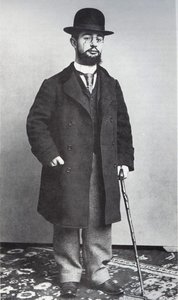
comte henri marie raymond de toulouse-lautrec-monfa
1864 - 1901 , Francia
Datos clave
- Artistic Movement Or Style: Post-Impressionismo
- Artists Or Movements Influenced By This Artist: ['Arte Nouveau']
- Artists Who Influenced This Artist: ['Léon Bonnat']
- Date Of Birth: 24 noviembre 1864
- Date Of Death: 9 septiembre 1901
- Full Name: Henri Marie Raymond de Toulouse-Lautrec Montfa
- Nationality: Francés
- Notable Artworks:
- La Blanchisseuse
- En las alas al circo
- Mujer acostada — Despertándose
- Place Of Birth: Albi, Francia
Artículos relacionados
Impresionismo: 10 Obras Maestras que Capturan la Luz y el Momento
Descubre 10 obras maestras del impresionismo de Monet, Renoir y Degas. Explora la luz, el color y las historias detrás de estos icónicos cuadros. Reproducciones de arte en ArtsDot.com para decorar tu hogar con estilo.
The Noble Steed on Canvas: A Historical & Artistic Exploration of Horse Painting Across Cultures
Explore the rich history of horse painting! Discover masterpieces from Stubbs to Munnings & learn about symbolism, techniques & artists. Find museum-quality reproductions at ArtsDot.
The Equine Muse: A Historical & Artistic Exploration of Horses in Painting
Explore the captivating history of horses in painting! Discover Renaissance masterpieces, Baroque grandeur & expert insights for collecting equestrian art. Learn about symbolism, techniques & lasting value with ArtsDot.
The Noble Steed: A Historical and Artistic Exploration of Horses in Fine Art
Explore the rich history of horses in fine art! From ancient depictions to Renaissance masterpieces & beyond, discover iconic artworks and artists. Learn about symbolism, techniques, and find museum-quality reproductions at ArtsDot.
Impresionismo y Postimpresionismo: Una Exploración de la Evolución Artística y sus Distinciones Clave
Explora la evolución del Impresionismo al Postimpresionismo. Descubre sus características, artistas clave y las diferencias esenciales en este análisis experto.