

 Ver en contexto
 Enviar
 Compartir
 Detalles

 Descargar
 Similares
 Radiografía
 Presentación de diapositivas
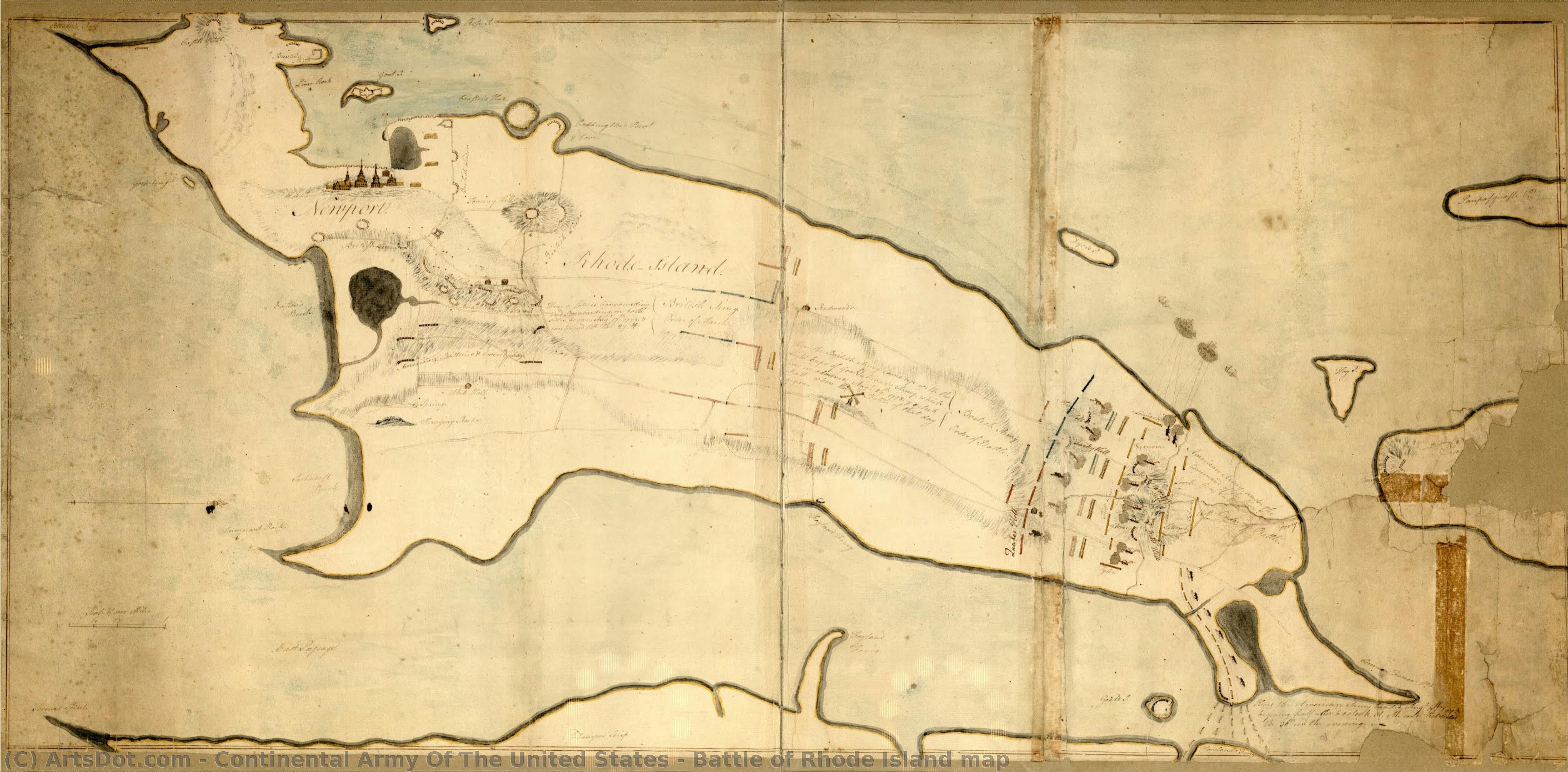
Battle of Rhode Island map


 Ver más
Giclée / Impresión de arte
Impresiones giclée o en lienzo de calidad de museo con producción rápida y opciones de acabado flexibles. ( Comprar pintura hecha a mano Comprar imagen)




































Elija entre nuestros tamaños predefinidos que respetan las proporciones originales de la obra.

Puede introducir sus propias dimensiones para adaptarse a un marco o espacio específico. Si el tamaño seleccionado no coincide con las proporciones de la imagen original, recortaremos la obra de arte o extenderemos la imagen con un borde con efecto espejo o de color sólido. Se enviará una maqueta digital para su aprobación antes de que comience la producción.
Tenga en cuenta que la vista previa en pantalla no refleja el recorte o la extensión real. Solo la maqueta mostrará con precisión la composición final.
Aunque existen tamaños personalizados, recomendamos seleccionar una dimensión de la lista predefinida para preservar las proporciones originales.
Envío a todo el mundo () en 2 semanas en lugar de las 4/5 semanas estándar. (2 septiembre)

Envío exprés gratuito a todo el mundo

Lienzo de lino de alta calidad

Seguro de envío total

Garantía de reembolso de impuestos aduaneros

Garantía de fidelidad cromática exacta

Política de devolución de 60 días (solo por defectos)

Garantía de devolución del 100% del dinero

Descuento por cantidad
 La opción de vidrio solo está disponible en tamaños inferiores a 110 cm.

Battle of Rhode Island map
Giclée / Impresión de arte
Dimensiones de la reproducción
-


Precio total final
$ 62
Obras relacionadas









Biografía del artista
The Continental Army: Forging Liberty Through Disciplined Effort
The Continental Army stands as a cornerstone of American history, representing far more than mere military might; it embodies the unwavering spirit of rebellion against tyranny and the audacious pursuit of self-goverlust. Born from necessity during the tumultuous years of 1775 to 1783, this force was not simply assembled by decree but painstakingly cultivated through a blend of idealism, pragmatism, and sheer determination. Its story is an epic narrative interwoven with the leadership of George Washington, the contributions of diverse colonial militias, and the transformative influence of European military expertise, creating a legacy that would eventually define a new nation.
The genesis of this historic force was marked by profound struggle and immediate confrontation. Recognizing the inadequacy of disorganized colonial militias against the formidable British Empire, the Second Continental Congress swiftly established the Continental Army on June 14, 1775. From its inception, the army faced daunting logistical hurdles, including chronic funding shortages, inexperienced officers, and a lack of unified command. Yet, it was within these very hardships that the character of the American soldier was forged, as disparate groups of colonists were gradually molded into a cohesive fighting force capable of challenging the world's greatest superpower.
Leadership, Strategy, and the Architecture of Victory
The appointment of George Washington as Commander-in-Chief proved to be the pivotal moment in the army's development. Drawing upon his previous military experience from the French and Indian War and imbued with an unwavering moral compass, Washington instilled a sense of discipline and fostered unity among the many factions within the colonies. His strategic brilliance—most notably demonstrated during the decisive victories at Saratoga and Yorktown—proved essential in securing American independence. Under his guidance, the army transitioned from a collection of regional militias into a professionalized instrument of war.
This evolution was further accelerated by the arrival of international influences and military innovation. Recognizing the imperative of bolstering their defenses, the Continental Congress sought vital assistance from European powers, most notably France. This alliance provided crucial naval support and financial backing, fundamentally reshaping the battlefield dynamics in favor of the Americans. Furthermore, the arrival of Friedrich Wilhelm von Steuben revolutionized army training. Through his instructional “Blue Book,” he introduced rigorous European drill regulations that instilled a level of professional discipline previously unseen in the colonial ranks, turning a ragtag assembly into a formidable disciplined unit.
A Lasting Legacy of Service and Sacrifice
The historical significance of the Continental Army extends far beyond the conclusion of the Revolutionary War. While the army itself was eventually succeeded by the permanent, professional United States Army in 1784, its spirit remains embedded in the very fabric of American identity. The structural innovations developed during this era, such as the division of units into regional departments to manage command and administration, laid the groundwork for future military organization. The triumphs achieved through the collective sacrifice of its soldiers became the foundational mythos of a burgeoning republic.
Today, the memory of the Continental Army is preserved through various institutions and historical records that honor their valor:
- The National Museum of the United States Army: A profound narrative of service and sacrifice located at Fort Belvoir, Virginia.
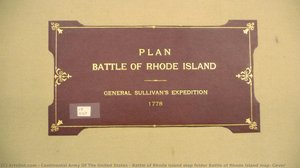
- Historical Cartography: Hand-drawn maps, such as those depicting the Battle of Rhode Island, which capture the strategic movements and troop distributions of the era.
- The Evolution of Command: The transition from the title of Commander-in-Chief to the modern administrative structures of the United States Armed Forces.
Ultimately, the Continental Army represents a period of profound transformation where the raw energy of revolution was tempered by the necessity of discipline, resulting in the birth of a sovereign nation.
continental army of the united states
1775 - , United States of America
Datos clave
- Artistic Movement Or Style: Neoclassical
- Artists Or Movements Influenced By This Artist: ['Hudson River School']
- Artists Who Influenced This Artist:
- Joshua Reynolds
- Jean-Auguste Ingres
- Date Of Birth: March 17, 1740
- Date Of Death: February 23, 1827
- Full Name: Charles Willson Peale
- Nationality: American
- Notable Artworks:
- Washington Crossing the Delaware
- Portrait of Benjamin Franklin
- Place Of Birth: Philadelphia, Pennsylvania

