

 Ver en contexto
 Enviar
 Compartir
 Detalles

 Descargar
 Similares
 Radiografía
 Presentación de diapositivas
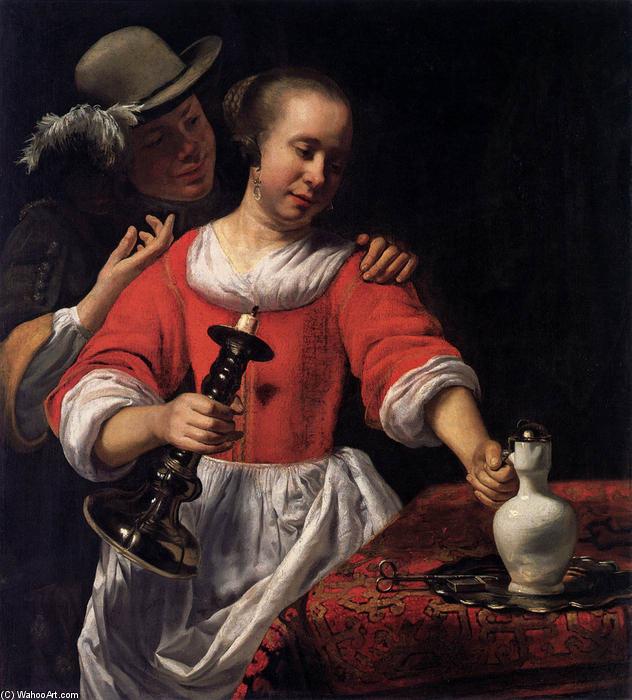
A Young Woman and a Cavalier
 Oil On Panel
- Baroque Realism
 1661
1661- Early Modern
 98.0 x 88.0 cm
 Museo Metropolitano de Arte
 Ver más
Reproducción al óleo hecha a mano
Óleo sobre lienzo pintado a mano en el tamaño y marco de su elección, realizado por encargo por nuestros artistas. ( Comprar impresión Comprar imagen)




P118B $10

P118H $10

P118W $10

P438Z $10

P508JH $12

P508YH $12

P805H $10

P805Z $10

P919BZ $10

P919G $10

P919XJ $10

P959ZH $10

P968JZ $12

W106C $8

W218G $10

W218JH $8

W218Y $10

W307PJ $10

W316G $10

W316PJ $8

W316Y $10

W398PJ $8

W4111J $10

W500HY $15

W500JH $15

W692G $12

W849H $8

W940BG $15

W953PJ $8




Elija entre nuestros tamaños predefinidos que respetan las proporciones originales de la obra.

Puede ingresar sus propias dimensiones para adaptarse a un marco o espacio específico. Si el tamaño seleccionado no coincide con las proporciones de la imagen original, recortaremos la obra o extenderemos la pintura con elementos adicionales pintados a mano. Se le enviará una maqueta digital para su aprobación antes de comenzar la producción.
Tenga en cuenta que la vista previa en pantalla no refleja el recorte o la extensión reales. Solo la maqueta mostrará con precisión la composición final.
Si bien existen tamaños personalizados, recomendamos seleccionar una dimensión de la lista predefinida para preservar las proporciones originales.
Tras realizar el pedido, el equipo de ArtsDot.com enviará un correo electrónico al cliente para solicitar instrucciones y proporcionarle una vista previa del boceto.
Envío a todo el mundo () en 3-4 semanas en lugar de las 5 semanas estándar. (6 septiembre). Sin comprometer la calidad.

Envío exprés gratuito a todo el mundo

Lienzo de lino de alta calidad

Seguro de envío total

Garantía de reembolso de impuestos aduaneros

Garantía de fidelidad cromática exacta

Política de devolución de 60 días (solo por defectos)

Garantía de devolución del 100% del dinero

Descuento por cantidad
 La opción de vidrio solo está disponible en tamaños inferiores a 110 cm.

A Young Woman and a Cavalier
Técnica de reproducción
Dimensiones de la reproducción
-


Precio total final
$ 263
A Portrait of Intimacy: Cornelis Bisschop’s “A Young Woman and a Cavalier”
Cornelis Bisschop (1630-1674), a pivotal figure in the Dutch Golden Age, gifted us with “A Young Woman and a Cavalier,” a painting that transcends mere representation to embody the spirit of its era. Executed around 1661, this artwork resides within the Spencer Collection at Althorp Estate, offering a glimpse into the refined tastes and artistic sensibilities of aristocratic society during Rembrandt’s time. The painting's allure lies not only in its visual beauty but also in the subtle complexities woven into its composition—a testament to Bisschop’s mastery of Baroque realism and his pioneering use of trompe l'oeil.The Illusion of Depth: Trompe l'Oeil Technique
Bisschop distinguishes himself as one of the foremost practitioners of trompe l'oeil, a technique that deliberately deceives the eye into perceiving three-dimensional space on a two-dimensional surface. As evidenced by the meticulous rendering of the wooden panel itself—appearing to seamlessly merge with the surrounding architectural setting—the artist skillfully employs illusionistic brushstrokes and shading to create an astonishing sense of depth. This innovative approach reflects the broader artistic currents of the period, where artists sought to elevate painting beyond mere imitation of reality, striving instead for a heightened emotional impact. The meticulous detail extends to the depiction of textures – the smooth sheen of varnished wood contrasting with the subtle folds of fabric—further reinforcing the illusionary effect.A Scene Steeped in Symbolism: Gesture and Expression
Beyond its technical brilliance, “A Young Woman and a Cavalier” resonates with symbolic significance. The woman’s posture exudes quiet contemplation, her gaze directed inward as she holds a vase – a motif frequently associated with purity and receptivity—suggesting an inner life rich in emotion and thought. Conversely, the cavalier stands behind her, engaging in animated conversation, embodying outward confidence and social engagement. These contrasting gestures contribute to the painting’s narrative power, inviting viewers to contemplate themes of courtship, affection, and intellectual discourse. The inclusion of objects like a bottle and wine glass subtly reinforces the setting as an aristocratic gathering—a space for convivial exchange and refined entertainment.Historical Context: Rembrandt's Influence
Bisschop’s artistic development was profoundly shaped by his apprenticeship under Ferdinand Bol, Rembrandt’s protégé, marking him as part of a lineage dedicated to capturing human emotion with unflinching realism. Like Rembrandt before him, Bisschop prioritized conveying psychological states over mere physical likeness, prioritizing expressive brushwork and tonal modulation to evoke feeling within the viewer. The painting's stylistic kinship with Bol’s oeuvre underscores the pervasive influence of Rembrandt’s artistic vision on Dutch painters during this period—a legacy characterized by dramatic lighting, nuanced character portrayals, and a commitment to portraying the complexities of human experience.Emotional Resonance: Capturing Transient Beauty
Ultimately, “A Young Woman and a Cavalier” succeeds in capturing a fleeting moment of intimacy—a tableau vivant that encapsulates the elegance and sophistication of its time. Bisschop’s masterful handling of color and light imbues the scene with warmth and luminosity, conveying not just visual splendor but also an underlying sense of melancholy beauty. It is precisely this ability to evoke emotion that elevates the painting beyond a mere decorative object, transforming it into a poignant reminder of human connection and the ephemeral nature of artistic expression. Reproductions of this artwork offer collectors and interior designers alike the opportunity to experience firsthand the enduring power of Baroque art—a testament to Bisschop’s genius and his contribution to Dutch cultural heritage.Obras relacionadas



Biografía del artista
Cornelis Bisschop: Una Vida en la Pintura del Siglo de Oro Neerlandés
Infancia y Educación
Cornelis Bisschop (12 de febrero de 1630 – 21 de enero de 1674) fue un pintor destacado del Siglo de Oro holandés. Nacido en Dordrecht, Países Bajos, provenía de una familia con inclinaciones artísticas, presagiando el camino creativo que seguiría. Alrededor de 1650, Bisschop viajó a Ámsterdam para estudiar bajo la tutela de Ferdinand Bol, un destacado alumno de Rembrandt. Esta formación fue crucial para moldear su estilo y técnica.
Desarrollo Artístico y Estilo
El desarrollo artístico de Bisschop se caracterizó por su versatilidad. Destacó en diversos géneros, incluyendo alegorías históricas, retratos, bodegones y escenas de género. Sin embargo, es particularmente celebrado por su maestría del trompe l'oeil – una técnica que crea la ilusión de realidad tridimensional en una superficie bidimensional. Se convirtió en reconocido como uno de los primeros en pintar paneles de madera tallada con tanta ingeniosidad, popularizando este estilo.
Obras Clave y Temas
- Alegoría del Asalto al Medway: Una pintura histórica significativa que refleja un evento contemporáneo.
- Autorretrato: Demuestra su habilidad en el retrato y proporciona información sobre su personalidad.
- Mujer Pelando Manzana: Expresa su talento para capturar la vida cotidiana con meticuloso detalle.
- Una Joven Mujer y un Caballero: Muestra su capacidad para representar figuras en entornos elegantes.
Sus obras a menudo presentan colores ricos, iluminación dramática (influenciada por Bol y Rembrandt) y una atención aguda a la textura y el detalle. Los cuadros de Bisschop exploran frecuentemente temas de moralidad, historia y la belleza de la vida cotidiana.
Influencias y Legado
Ferdinand Bol fue sin duda la influencia más significativa en el estilo artístico de Bisschop. Absorbió el uso de claroscuro – el contraste dramático entre luz y oscuridad – y sus técnicas compositivas de Bol. Sin embargo, Bisschop desarrolló una voz única dentro de este marco.
El legado de Bisschop se extiende más allá de sus propios cuadros. Se involucró activamente a sus hijos en su taller, con dos hijos (Abraham y Jacobus) y tres hijas que también se convirtieron en pintores. Esta tradición familiar artística aseguró la continuación de su estilo y técnicas.
Significado Histórico
La obra de Cornelis Bisschop proporciona una valiosa información sobre la sociedad, cultura y gustos artísticos del siglo XVII holandés. Su innovador uso del trompe l'oeil impulsó los límites del realismo en la pintura, influyendo a las generaciones posteriores de artistas. Aunque murió inesperadamente a los 43 años, dejando atrás una gran familia, sus contribuciones a la Edad de Oro holandesa siguen siendo significativas. Incluso fue invitado a pintar para la corte danesa, lo que destaca su reconocimiento internacional.
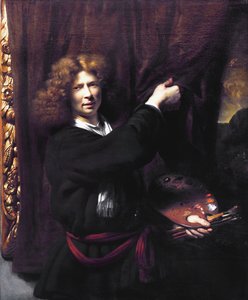
Cornelis Bisschop
1630 - 1674 , Países Bajos
Datos clave
- Artistic Movement Or Style: Dutch Golden Age painting, Baroque
- Artists Or Movements Influenced By This Artist: ['Rembrandt van Rijn']
- Artists Who Influenced This Artist: ['Ferdinand Bol']
- Date Of Birth: 1630-02-12
- Date Of Death: 1674-01-21
- Full Name: Cornelis Bisschop
- Nationality: Dutch
- Notable Artworks:
- Allegory on the Raid on the Medway
- Self-Portrait
- Woman Peeling Apple
- A Young Woman and a Cavalier
- Place Of Birth: Dordrecht, Netherlands
Artículos relacionados

Reflejos de una Época Dorada: La Pintura Barroca Holandesa y la Innovación Cultural
Descubra la riqueza y el detalle de la pintura barroca holandesa del Siglo de Oro. Explore las obras maestras de Rembrandt, Vermeer y otros artistas clave. Análisis experto e historia cultural.

Los 10 Maestros del Siglo de Oro Holandés: Arte, Historia y Decoración Exclusiva
Descubre los 10 imprescindibles del Siglo de Oro Holandés: Rembrandt, Vermeer y más. Explora la historia, técnica y belleza de estos lienzos clásicos. Encuentra reproducciones de arte exclusivas para decorar tu hogar en .

Los 10 Maestros del Barroco Holandés: Obras que Definen una Época | ArtsDot
Descubre los 10 imprescindibles del Barroco holandés: Rembrandt, Vermeer y más. Explora la historia, técnica y belleza de estas obras maestras. Reproducciones de arte en ArtsDot.com para decorar tu hogar con elegancia.

La Luz y la República: Innovación Artística en el Siglo de Oro Neerlandés
Descubra la innovación artística del Siglo de Oro Neerlandés. Explore las obras maestras de Rembrandt y Vermeer, técnicas revolucionarias y el legado perdurable de este florecimiento cultural. ¡Sumérjase en la luz y la belleza!
Illuminating Realism: Exploring the Dutch Golden Age of Painting (1600-1700)
Explore the Dutch Golden Age of painting (1600-1700) with ArtsDot. Discover Rembrandt, Vermeer & other masters. Learn about techniques, history & find museum-quality reproductions.

