

 Ver en contexto
 Enviar
 Compartir
 Detalles

 Descargar
 Similares
 Radiografía
 Presentación de diapositivas
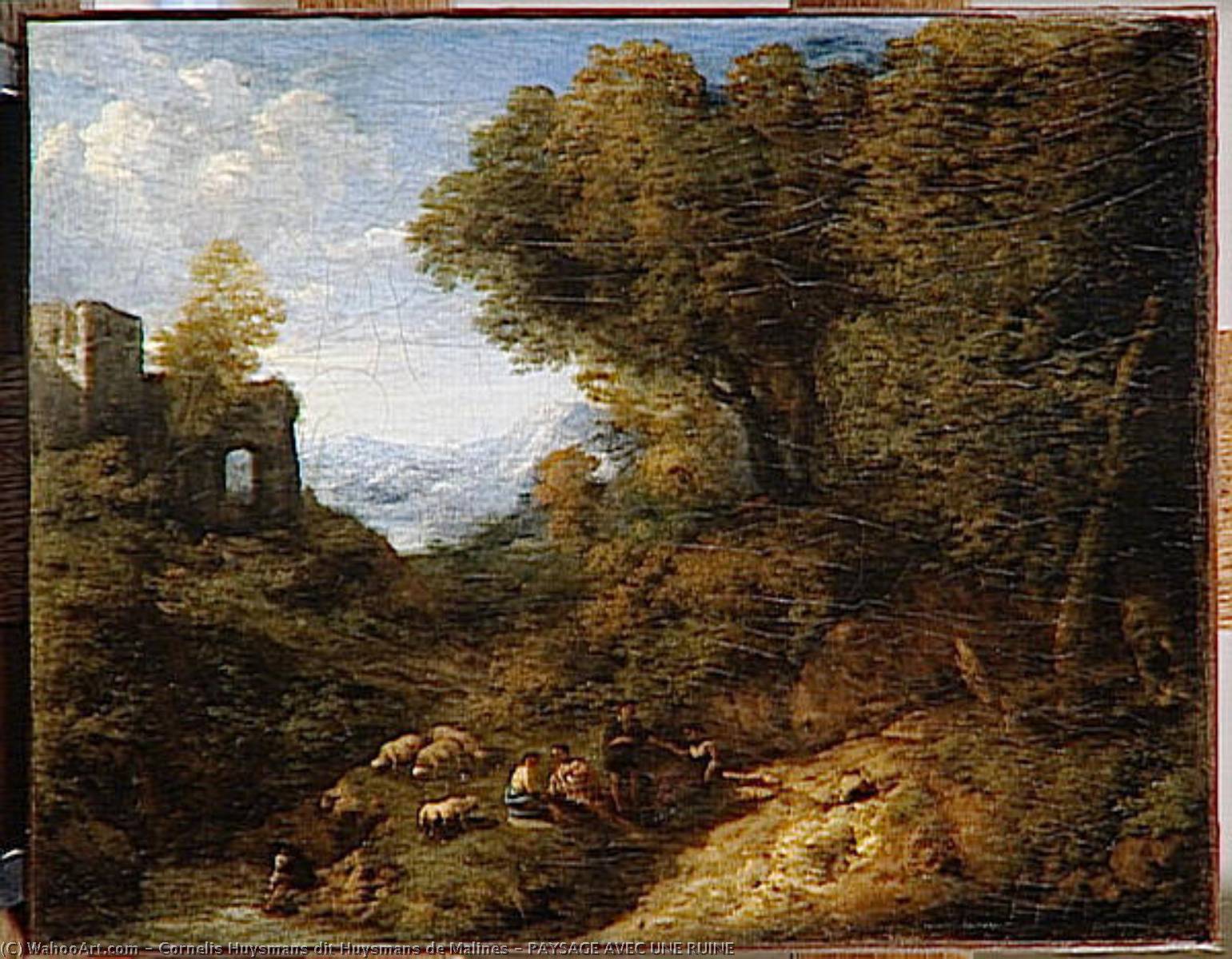
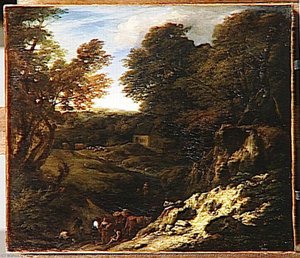
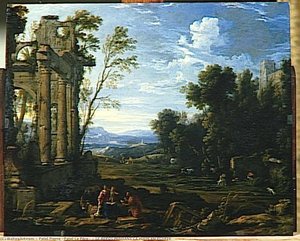
PAYSAGE AVEC UNE RUINE

 Ver más
Adquiera una imagen digital de alta resolución y optimizada, muy superior a la vista previa en línea.
Cada archivo es preparado meticulosamente por nuestros especialistas internos mediante el uso de herramientas avanzadas y un experto retoque manual. Nos aseguramos de que cada imagen posea una claridad excepcional, una precisión cromática impecable y un detalle minucioso.
El archivo final se entrega por correo electrónico en un plazo de 72 horas, optimizado para su uso inmediato en entornos profesionales, editoriales y de impresión. Esta es la misma calidad en la que confían los estudios de diseño, las editoriales y las galerías de primer nivel.
Imagen Digital
Descarga un archivo de alta resolución para exhibición personal, impresión y proyectos creativos. ( Comprar impresión Comprar pintura hecha a mano)
Incluido en cada pedido de imágenes digitales
Entrega digital experta, garantizada.
Al elegir ArtsDot.com, no solo está adquiriendo una imagen; está recibiendo una obra de arte digital mejorada profesionalmente, elaborada con precisión y respaldada por una garantía de satisfacción. Esto es todo lo que incluye su pedido, automáticamente:

Entrega rápida por email
Recibirá su archivo de imagen digital en alta resolución por correo electrónico en un plazo de 72 horas tras realizar su pedido, listo para su uso inmediato.

Archivo digital optimizado por IA
Su obra de arte se optimiza profesionalmente mediante herramientas avanzadas de IA y edición manual, garantizando el máximo detalle, claridad y precisión cromática.

Reenvío gratuito de por vida
¿Has borrado o perdido tu archivo por error? No te preocupes: te lo volveremos a enviar en cualquier momento, sin coste adicional.

Sin gastos de importación, siempre
Disfrute de su obra de arte al instante sin aduanas, aranceles ni gastos de envío; las descargas digitales siempre están libres de impuestos.

Garantía de fidelidad de color
Garantizamos que su imagen digital refleje los colores originales con la mayor fidelidad posible, mediante el uso de herramientas profesionales y gestión del color.

Garantía de satisfacción de 60 días
Si no está satisfecho con su imagen digital, la revisaremos o le reembolsaremos el 100% en un plazo de 60 días, sin preguntas.

100% Garantía de devolución de dinero
¿No está satisfecho? Obtenga un reembolso completo dentro de los 60 días posteriores a la recepción de su archivo digital, sin necesidad de explicaciones.

Descuentos por pedidos grandes
Compra 3 imágenes, ahorra 10% - Compra 5, ahorra 15% - Compra 10+, ahorra 20%. Ideal para proyectos creativos, galerías y agencias.
Obras relacionadas




Biografía del artista
Cornelis Huysmans de Malines: A Flemish Master of Pastoral Idyl
Cornelis Huysmans, a name perhaps less familiar than those of his contemporaries in the Dutch Golden Age, nevertheless stands as a significant figure in 17th-century Flemish landscape painting. Born in Antwerp in 1648 and passing away in Mechelen in 1727, Huysmans dedicated his life to capturing the serene beauty of rural scenes – idyllic landscapes populated by shepherds, livestock, and the quiet rhythms of daily life. His work, characterized by a remarkable attention to detail and a subtly evocative atmosphere, reveals a deep appreciation for nature’s tranquility and a masterful command of light and color.
Huysmans' artistic journey began under the tutelage of Gaspar de Witte, a respected Antwerp landscape painter. Following this initial training, he moved to Brussels, where he likely worked within the studio of Jacques d’Arthois, a pivotal figure in the development of Flemish landscape art. D’Arthois’s influence is particularly evident in Huysmans' early works, characterized by a decorative style and an emphasis on intricate details – a hallmark that would remain consistent throughout his career. The period between 1675 and 1682 saw him working in the Meuse valley near Dinant and Namur, further honing his skills and developing his unique artistic vision.
A Pseudo-Italianate Style: Influences and Techniques
Huysmans’s style is often described as “pseudo-Italianate,” a term that reflects his deliberate adoption of elements reminiscent of the Italian Renaissance masters. While he never traveled to Italy, Huysmans was deeply influenced by artists like Nicolas Poussin and Jacques d'Arthois, whose works featured dramatic mountainscapes and atmospheric lighting. He skillfully incorporated these influences into his own landscapes, creating scenes that evoke a sense of idealized beauty and timelessness. His compositions frequently employed diagonal lines to establish depth and perspective, drawing the viewer’s eye through the scene and emphasizing the vastness of the countryside.
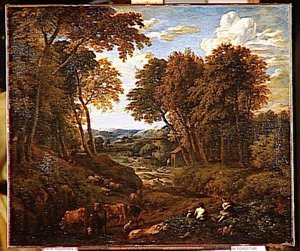
A key element of Huysmans' technique was his meticulous attention to detail. He painstakingly rendered individual trees, rocks, and patches of grass, creating a sense of realism that belied the idealized nature of his subjects. His use of light and shadow was particularly noteworthy, casting dramatic contrasts across the landscape and adding depth and dimension to his scenes. The interplay of sunlight filtering through the foliage, illuminating herds of sheep grazing in verdant pastures – these are the moments that define Huysmans’s artistic legacy.
Subjects and Themes: Pastoral Life and Rural Harmony
Huysmans' paintings predominantly depict rural landscapes, focusing on scenes of pastoral life. Shepherds tending their flocks, farmers working the land, and livestock grazing peacefully in open fields are recurring motifs. These images weren’t merely representations of the countryside; they were imbued with a sense of tranquility and harmony – a deliberate antidote to the turbulent realities of 17th-century Europe. His subjects often appear bathed in golden light, evoking a feeling of warmth and contentment.
The artist frequently depicted scenes of shepherds and their flocks, capturing the quiet dignity of rural life. These works are not simply idyllic portrayals; they also subtly comment on the relationship between humanity and nature. Huysmans’s landscapes invite contemplation and offer a respite from the complexities of urban existence.
Legacy and Historical Significance
Cornelis Huysmans' work holds a significant place in the history of Flemish landscape painting. While he may not be as widely celebrated as some of his contemporaries, his meticulous attention to detail, his skillful use of light and color, and his distinctive “pseudo-Italianate” style have earned him a devoted following among art historians and collectors. His paintings are now housed in major museums across Europe, testament to the enduring appeal of his serene and evocative landscapes.
Huysmans’s influence can be seen in the work of subsequent generations of Flemish landscape painters, who continued to draw inspiration from his masterful depictions of nature. He represents a crucial link between the more formal, courtly landscapes of earlier periods and the later, more expressive works of artists like Jan Bruegel the Elder. His legacy lies not only in his individual paintings but also in his contribution to the development of Flemish landscape art as a whole.
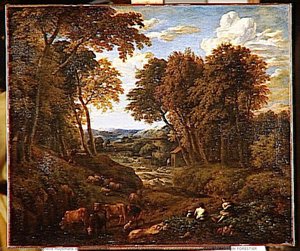
cornelis huysmans dit huysmans de malines
1648 - 1727

