 Ver en contexto
 Enviar
 Compartir
 Detalles

 Descargar
 Similares
 Radiografía
 Presentación de diapositivas
English Madonna with the Child
 Oil On Canvas
- WallArt
- Early Renaissance
 1475
1475 45.0 x 30.0 cm
 Accademia Carrara
 Ver más
Reproducción al óleo hecha a mano
Óleo sobre lienzo pintado a mano en el tamaño y marco de su elección, realizado por encargo por nuestros artistas. ( Comprar impresión Comprar imagen)




P118B $10

P118H $10

P118W $10

P438Z $10

P508JH $12

P508YH $12

P805H $10

P805Z $10

P919BZ $10

P919G $10

P919XJ $10

P959ZH $10

P968JZ $12

W106C $8

W218G $10

W218JH $8

W218Y $10

W307PJ $10

W316G $10

W316PJ $8

W316Y $10

W398PJ $8

W4111J $10

W500HY $15

W500JH $15

W692G $12

W849H $8

W940BG $15

W953PJ $8




Elija entre nuestros tamaños predefinidos que respetan las proporciones originales de la obra.

Puede ingresar sus propias dimensiones para adaptarse a un marco o espacio específico. Si el tamaño seleccionado no coincide con las proporciones de la imagen original, recortaremos la obra o extenderemos la pintura con elementos adicionales pintados a mano. Se le enviará una maqueta digital para su aprobación antes de comenzar la producción.
Tenga en cuenta que la vista previa en pantalla no refleja el recorte o la extensión reales. Solo la maqueta mostrará con precisión la composición final.
Si bien existen tamaños personalizados, recomendamos seleccionar una dimensión de la lista predefinida para preservar las proporciones originales.
Tras realizar el pedido, el equipo de ArtsDot.com enviará un correo electrónico al cliente para solicitar instrucciones y proporcionarle una vista previa del boceto.
Envío a todo el mundo () en 3-4 semanas en lugar de las 5 semanas estándar. (30 agosto). Sin comprometer la calidad.

Envío exprés gratuito a todo el mundo

Lienzo de lino de alta calidad

Seguro de envío total

Garantía de reembolso de impuestos aduaneros

Garantía de fidelidad cromática exacta

Política de devolución de 60 días (solo por defectos)

Garantía de devolución del 100% del dinero

Descuento por cantidad
 La opción de vidrio solo está disponible en tamaños inferiores a 110 cm.

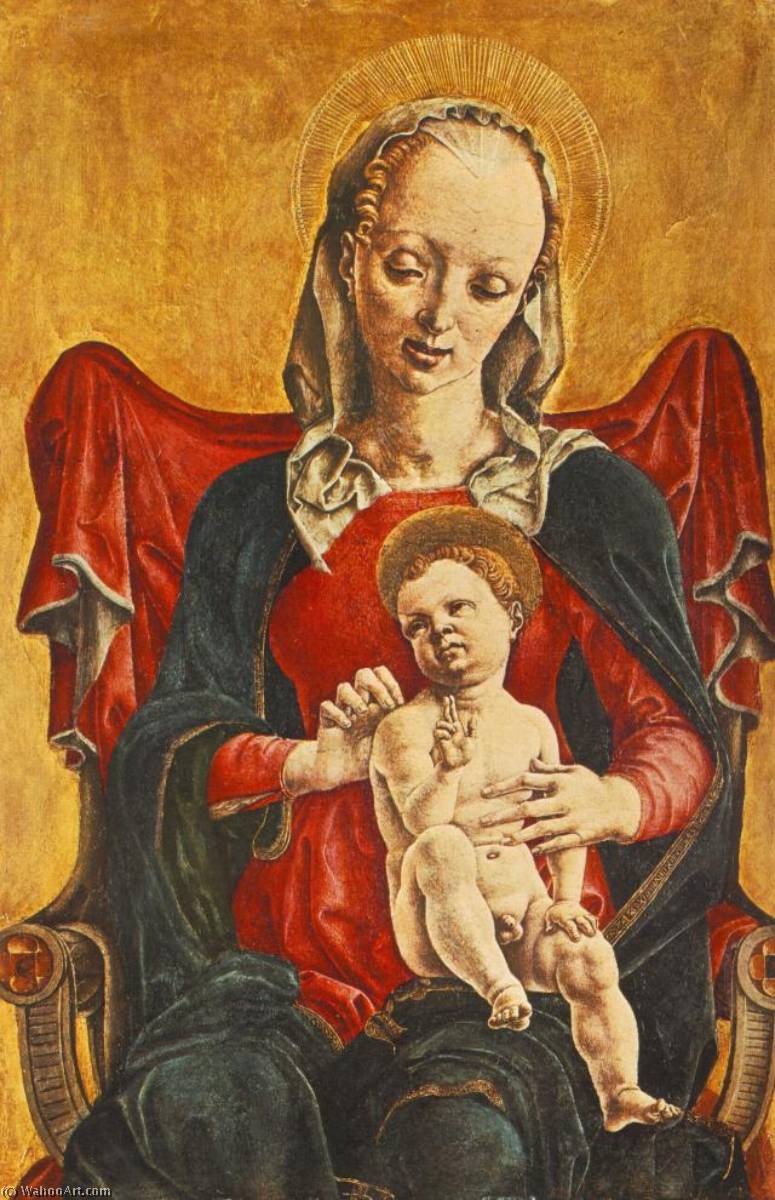
English Madonna with the Child
Técnica de reproducción
Dimensiones de la reproducción
-


Precio total final
$ 263
The Genesis of a Masterpiece: Cosmè Tura and the Early Renaissance
Within the burgeoning artistic landscape of 15th-century Ferrara, Italy, a singular voice began to emerge – that of Cosmè Tura. Born around 1430 into a modest shoemaker’s family, Tura's journey from humble beginnings to becoming one of the most distinctive figures of the Early Renaissance is a testament to his extraordinary talent and the fertile environment he encountered. His formative years were marked by a fascinating blend of influences: whispers of apprenticeship with the enigmatic Galasso Galassi, exposure to the revolutionary techniques of Francesco Squarcione in Padua – where he absorbed the dynamism of linear perspective and the vibrant expressiveness championed by Donatello – and, crucially, the profound impact of Piero della Francesca’s geometric precision and evocative use of light. This confluence of experiences shaped a distinctly Ferrarese style, characterized by sharp lines, decorative richness, and an almost palpable sense of movement.
Tura wasn't merely a painter; he was a polymath, deeply involved in the court’s visual culture. He designed elaborate stage sets for tournaments and banquets, crafted luxurious textiles adorned with intricate patterns, and even contributed to the creation of decorative objects – a testament to his versatility and the high esteem in which he was held by the ruling Este family. This multifaceted role highlights Tura's position as a central figure within the court’s artistic ecosystem, shaping not just paintings but also the very fabric of its visual identity.
A Portrait of Devotion: The English Madonna with the Child
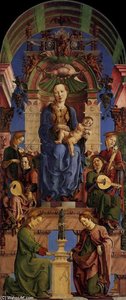
Tura’s “English Madonna with the Child,” painted around 1475, offers a poignant glimpse into this world. The image depicts Mary holding her infant Jesus in a serene garden setting – a deliberate choice that evokes the biblical paradise of Eden. The composition is remarkably balanced, drawing the eye to the central figures while subtly incorporating elements of narrative depth. Note the delicate rendering of Mary’s flowing hair and robes, the soft folds of her garments, and the gentle expression on her face—all hallmarks of Tura's refined technique. The baby Jesus, nestled securely in her arms, is presented with a quiet dignity that belies his youth.
Beyond its aesthetic beauty, the painting resonates with profound symbolism. The garden itself represents innocence and divine grace, while the presence of two angels flanking the scene suggests a sacred event unfolding—a subtle foreshadowing of Christ’s future sacrifice. The use of rich colors – particularly the vibrant reds of Mary's dress and the baby’s clothing – further emphasizes the importance of this moment. The painting is not merely a depiction of motherhood; it’s an embodiment of faith, hope, and divine love.
Technique and Legacy: A Ferrarese Innovation
Tura's mastery lies in his ability to seamlessly blend traditional iconography with innovative techniques. He employed tempera on poplar panel, a medium that allowed for vibrant colors and fine detail—a hallmark of his style. His use of linear perspective is particularly noteworthy, creating a sense of depth and realism rarely seen in contemporary works. Furthermore, Tura’s distinctive approach to rendering textures – from the shimmering surface of jewels to the soft folds of fabric – demonstrates an exceptional level of observation and skill.
Cosmè Tura's legacy extends far beyond his individual masterpieces. He is considered a founder of the Ferrarese School, a movement that profoundly influenced subsequent generations of artists in Italy. His emphasis on decorative richness, expressive figures, and innovative techniques helped to shape the trajectory of Renaissance art, leaving an indelible mark on the visual culture of Europe. Reproductions of this iconic Madonna offer a beautiful window into the heart of the Early Renaissance, capturing the spirit of a remarkable artist and his enduring vision.
Obras relacionadas
Biografía del artista
Cosmè Tura: Un Pionero de la Escuela Ferraresa
- Nacido: c. 1430 en Ferrera, Italia
- Fallecido: 1495
- Conocido por: Pintor del primer Renacimiento y fundador de la Escuela Ferraresa
Primeros Años y Formación
- Cosmè Tura nació alrededor de 1430 en Ferrara, Italia, hijo de un zapatero. Los detalles sobre su vida temprana son escasos.
- Su formación artística no está bien documentada, pero se cree que pudo haber sido influenciado por artistas como Fra Angelico, Piero della Francesca y Andrea Mantegna.
- Existe la especulación de que podría haber tenido un aprendizaje bajo Galasso Galassi, un artista algo misterioso vinculado a Piero della Francesca.
- De 1452 a 1456, la presencia de Tura en Ferrara no está documentada, lo que lleva a algunos historiadores a creer que pudo haber viajado, posiblemente a Venecia o Padua.
- Un posible viaje a Padua le expuso al taller de Francesco Squarcione, un importante centro para el arte del Renacimiento, y artistas como Carlo Crivelli, Michael Pacher y Andrea Mantegna. Esta exposición probablemente influyó en su estilo.
Estilo Artístico e Influencias
- El estilo artístico de Tura se caracteriza por líneas claras y nítidas, exuberancia decorativa y referencias a la antigüedad clásica.
- Fue un adoptante temprano de la pintura al óleo, utilizándola hábilmente para representar diferentes texturas en sus obras.
- Las influencias incluyen innovaciones toscanas traídas a Padua por Donatello, evidentes en su uso de la perspectiva lineal y las formas fuertes.
- Su estilo también muestra el impacto de los artistas flamencos que trabajaban en Ferrara.
Obras Principales y Logros
- Tura trabajó extensamente para la familia Este, Duques de Ferrara, creando decoraciones para torneos, diseñando muebles y contribuyendo a la moda.
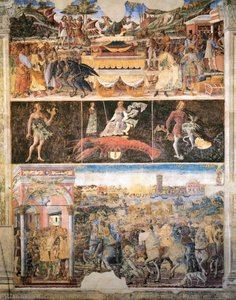
- Entre sus obras notables se incluyen los frescos en el Palazzo Schifanoia en Ferrara, que representan escenas alegóricas.
- Pintó retratos, paneles religiosos (como "San Antonio de Padua Leyendo") y otras obras de arte que muestran su estilo único.
- Su “Pietà” es un ejemplo notable del arte gótico tardío con influencias renacentistas.
Significado Histórico
- Cosmè Tura es considerado uno de los artistas más importantes del primer Renacimiento, particularmente en el norte de Italia.
- Fundó y lideró la Escuela Ferraresa, influyendo en artistas posteriores como Giovanni Andrea Ghirardoni.
- Su innovador uso de la pintura al óleo y su estilo distintivo contribuyeron significativamente al desarrollo del arte italiano.
- El legado de Tura se conserva a través de obras expuestas en museos como el Museo di Ferrara.
Cosmè Tura
1430 - 1495 , Italia
Datos clave
- Artistas Influenciados: ['Giovanni Andrea Ghirardoni']
- Artistas Que Influyeron:
- Fra Angelico
- Piero della Francesca
- Andrea Mantegna
- Fecha De Muerte: 1495
- Fecha De Nacimiento: c. 1430
- Lugar De Nacimiento: Ferrara, Italia
- Movimiento Artístico: Primer Renacimiento
- Nacionalidad: Italiana
- Nombre Completo: Cosmè Tura
- Obras Notables:
- St. Anthony of Padua Reading
- Pietà
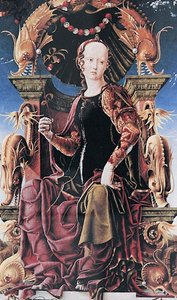
- A Muse (detail)
Artículos relacionados
Cosmè Tura: Rediscovering the Ferrarese Master & His Distinctive Style
Discover Cosmè Tura (1430-1495), founder of the Ferrara School. Explore his unique style, key artworks & lasting influence. Expert insights for collectors.

Rafael: Las 25 Obras Maestras que Definen al Genio del Renacimiento | ArtsDot
Descubre las 25 obras maestras de Rafael Sanzio, el genio del Renacimiento. Explora su historia, técnica y significado en pinturas icónicas como 'La Escuela de Atenas'. Reproducciones de arte de alta calidad para decorar tu hogar con elegancia. ¡Explora la colección completa en ArtsDot.com!
Fra Angelico: Las 25 Obras Maestras del Renacimiento para Decorar con Arte y Fe
Descubre las 25 obras maestras de Fra Angelico, el pintor renacentista que llenó el arte sacro de luz y fe. Explora su técnica, simbolismo y belleza en frescos e iconos. Encuentra reproducciones de alta calidad para decorar tu hogar con ArtsDot.com.

Los 25 Tesoros del Uffizi: Arte Renacentista para tu Hogar | ArtsDot
Descubre los 25 tesoros del Uffizi en Florencia: Botticelli, Leonardo da Vinci y más. Explora la historia, el arte renacentista y encuentra reproducciones de alta calidad para tu hogar. ¡Inspírate con ArtsDot.com!
Jacob Henricus Maris: A Master of Dutch Atmospheric Realism & the Intimate Landscape
Explore the captivating world of Jacob Henricus Maris, a leading figure of the Dutch Hague School. Discover his atmospheric landscapes, signature brushstrokes & lasting influence on 19th-century art. Learn more at ArtsDot.