

 Ver en contexto
 Enviar
 Compartir
 Detalles

 Descargar
 Similares
 Radiografía
 Presentación de diapositivas
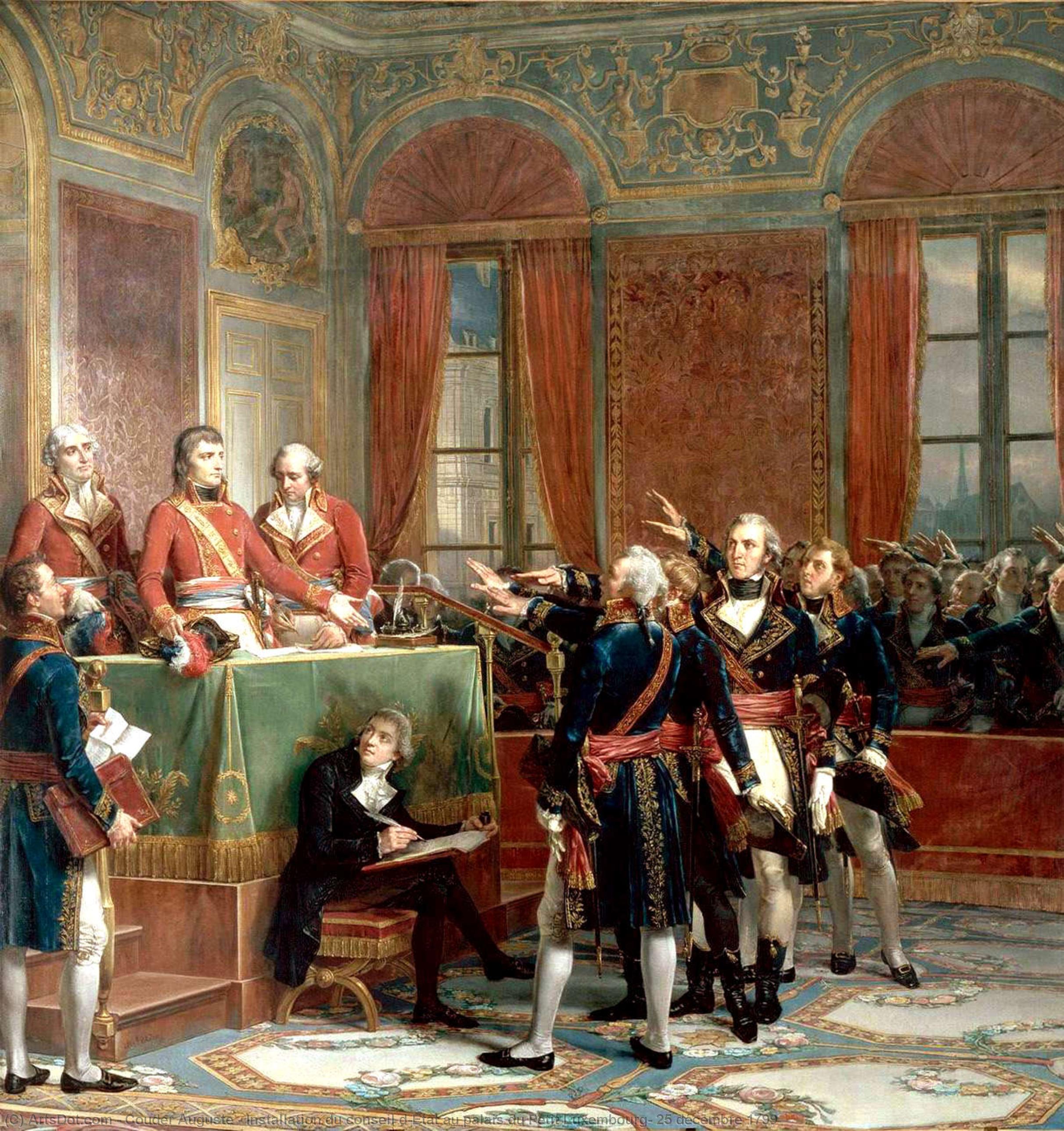
Installation du conseil d'Etat au palais du Petit Luxembourg, 25 décembre 1799


 Ver más
Reproducción al óleo hecha a mano
Óleo sobre lienzo pintado a mano en el tamaño y marco de su elección, realizado por encargo por nuestros artistas. ( Comprar impresión Comprar imagen)




P118B $10

P118H $10

P118W $10

P438Z $10

P508JH $12

P508YH $12

P805H $10

P805Z $10

P919BZ $10

P919G $10

P919XJ $10

P959ZH $10

P968JZ $12

W106C $8

W218G $10

W218JH $8

W218Y $10

W307PJ $10

W316G $10

W316PJ $8

W316Y $10

W398PJ $8

W4111J $10

W500HY $15

W500JH $15

W692G $12

W849H $8

W940BG $15

W953PJ $8




Elija entre nuestros tamaños predefinidos que respetan las proporciones originales de la obra.

Puede ingresar sus propias dimensiones para adaptarse a un marco o espacio específico. Si el tamaño seleccionado no coincide con las proporciones de la imagen original, recortaremos la obra o extenderemos la pintura con elementos adicionales pintados a mano. Se le enviará una maqueta digital para su aprobación antes de comenzar la producción.
Tenga en cuenta que la vista previa en pantalla no refleja el recorte o la extensión reales. Solo la maqueta mostrará con precisión la composición final.
Si bien existen tamaños personalizados, recomendamos seleccionar una dimensión de la lista predefinida para preservar las proporciones originales.
Tras realizar el pedido, el equipo de ArtsDot.com enviará un correo electrónico al cliente para solicitar instrucciones y proporcionarle una vista previa del boceto.
Envío a todo el mundo () en 3-4 semanas en lugar de las 5 semanas estándar. (24 agosto). Sin comprometer la calidad.

Envío exprés gratuito a todo el mundo

Lienzo de lino de alta calidad

Seguro de envío total

Garantía de reembolso de impuestos aduaneros

Garantía de fidelidad cromática exacta

Política de devolución de 60 días (solo por defectos)

Garantía de devolución del 100% del dinero

Descuento por cantidad
 La opción de vidrio solo está disponible en tamaños inferiores a 110 cm.

Installation du conseil d'Etat au palais du Petit Luxembourg, 25 décembre 1799
Técnica de reproducción
Dimensiones de la reproducción
-


Precio total final
$ 263
Descripción de la obra
A Moment Frozen in Time: The Dawn of an Era
In the grand tapestry of French history, few moments possess the gravity and transformative weight of the installation of the Conseil d'État at the Palais du Petit Luxembourg. Auguste Couder’s masterful depiction of December 25, 1799, serves as more than a mere historical record; it is a window into the very heartbeat of a nation transitioning from the chaos of revolution to the structured ambition of the Napoleonic era. As the viewer gazes upon this canvas, they are transported to a room thick with the scent of old parchment and the palpable tension of political rebirth. The central figure, Napoleon Bonaparte, sits anchored at his desk, a man poised at the precipel of destiny. Surrounded by the stoic presence of military officers and high-ranking officials, the scene captures the precise instant where authority is being codified and power is being redistributed under a new, resolute leadership.
The composition is a triumph of Neoclassical storytelling, reflecting the rigorous academic training Couder received under the legendary Jacques-Louis David. There is a profound sense of order and balance in the way the figures are arranged, mirroring the very stability the new government sought to establish. The architectural grandeur of the Petit Luxembourg—with its soaring arches, stately columns, and opulent tapestries—provides a majestic stage that elevates the political proceedings to something near-sacred. Light plays a crucial role in this narrative; natural illumination streams through large windows, not merely to brighten the room, but to act as a symbolic spotlight, illuminating the faces of those shaping history and casting a glow upon the documents that would soon dictate the fate of millions.
The Artistry of Detail and Historical Resonance
For the discerning collector or interior designer, this piece offers an unparalleled depth of texture and visual interest. Couder’s technique is characterized by an exquisite precision in draftsmanship, particularly evident in the meticulous rendering of military regalia, the heavy folds of ceremonial fabrics, and the intricate details of the room's classical ornamentation. Every brushstroke serves to reinforce the legitimacy and grandeur of the event. The interplay between the soft, diffused light and the deep, rich shadows creates a chiaroscuro effect that lends a dramatic, almost cinematic quality to the scene, making it an evocative centerpiece for any sophisticated space.
Beyond its aesthetic brilliance, the painting carries a profound emotional resonance. It evokes feelings of solemnity, ambition, and the heavy burden of command. To possess a reproduction of this work is to invite a piece of the Enlightenment’s twilight and the Empire’s dawn into one's home. It is an ideal selection for those who appreciate art that functions as a conversation starter—a piece that speaks of legacy, the cyclical nature of power, and the enduring beauty of historical truth. Whether placed in a formal study, a grand library, or a curated gallery wall, Couder’s work commands attention, offering a timeless connection to one of the most pivotal chapters in human history.
Obras relacionadas
Biografía del artista
Louis-Charles-Auguste Couder (1789 - 1873): A Life Painted in History
Born amidst the burgeoning artistic energy of London in 1789, Louis-Charles-Auguste Couder would become a significant voice in 19th-century French historical painting. Though perhaps not as celebrated today as some of his contemporaries, Couder’s canvases offer a compelling window into an era defined by revolution, empire, and the enduring power of classical ideals. His journey began with formative training under two titans of the French art world: Jean-Baptiste Regnault and Jacques-Louis David. This dual mentorship profoundly shaped his artistic sensibilities, instilling in him both a rigorous academic approach and a keen understanding of dramatic narrative. David’s influence is particularly evident in Couder's early works – a precision of draftsmanship, balanced compositions, and an unwavering commitment to historical accuracy characterize these initial explorations. Yet, Regnault’s contribution was equally vital, fostering Couder’s ability to imbue his scenes with emotional intensity and compelling storytelling. He wasn’t merely recreating history; he was breathing life into it.Early Influences and Artistic Formation
Couder’s artistic education commenced under the tutelage of Jean-Baptiste Regnault and Jacques-Louis David, two figures who epitomized the ideals of Neoclassical art. David instilled in him a meticulous attention to detail and compositional balance—principles that would permeate Couder's oeuvre throughout his career. The resulting paintings are characterized by an unwavering dedication to portraying historical events with unflinching realism and capturing the psychological complexities inherent within them. Regnault, on the other hand, nurtured Couder’s talent for dramatic expression and storytelling, encouraging him to infuse his canvases with palpable emotion and theatrical flair. This dual influence resulted in a distinctive artistic style that skillfully blended academic rigor with emotive dynamism—a hallmark of Couder's enduring legacy.A Synthesis of Classical Ideals and Dramatic Narrative
Couder’s artistic vision was firmly rooted in the principles of Neoclassicism, yet he transcended mere stylistic imitation. Drawing inspiration from classical mythology and history, he sought to explore universal human experiences through a lens of timeless elegance—a characteristic that distinguishes his work from many of its contemporaries. His canvases became stages for heroism, sacrifice, and the grandeur of past civilizations, reflecting a profound engagement with the intellectual currents of his time. He skillfully employed chiaroscuro lighting and dynamic compositions to heighten dramatic impact, capturing not only visual splendor but also conveying powerful emotional resonance. This masterful technique elevated Couder’s paintings beyond mere representations of historical events—transforming them into immersive experiences that captivated audiences and cemented his reputation as a master storyteller.Notable Achievements: Capturing Pivotal Moments in History
Couder achieved considerable renown for his depictions of significant historical occurrences, securing commissions from prominent institutions such as the Musée Historique in Versailles. Among his most celebrated works are The Siege of Yorktown (1781) and Washington, Rochambeau, La Fayette et leur état major à Yorktown—paintings that meticulously recreate the strategic complexities of the American Revolutionary War. These canvases exemplify Couder’s ability to synthesize historical research with artistic creativity—resulting in visually arresting narratives that illuminate key moments in history. Furthermore, his portrayal of events like Installation du conseil d'Etat au palais du Petit Luxembourg (1799) demonstrates his commitment to capturing the political atmosphere and intellectual debates of the Napoleonic era. His meticulous attention to detail and dramatic flair ensured that these paintings remained relevant for generations to come—establishing Couder as a pivotal figure in French art history.Legacy: An Enduring Influence on Artistic Expression
Couder’s artistic legacy extends beyond his individual masterpieces; it resides in the enduring influence of his style upon subsequent artists. His commitment to Neoclassical principles—combined with Regnault's advocacy for emotive storytelling—established a paradigm for historical painting that continues to inspire creativity today. The meticulous draftsmanship, balanced compositions, and dramatic lighting techniques he perfected remain hallmarks of artistic excellence—serving as a testament to Couder’s profound contribution to the visual arts. His paintings continue to resonate with audiences worldwide, offering invaluable insights into the intellectual and aesthetic sensibilities of 19th-century France—a legacy that secures his place among the most influential painters of his era.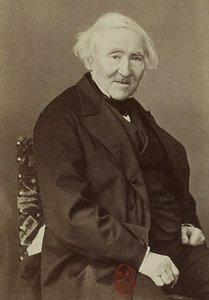
couder auguste
1789 - 1873 , Reino Unido
Datos clave
- Artistic Movement Or Style: Neoclasicismo Histórico
- Artists Who Influenced This Artist:
- Jean Baptiste Regnault
- Jacques Louis David
- Date Of Birth: Londres, 1789
- Date Of Death: París, 1873
- Full Name: Louis Charles Auguste Couder
- Nationality: Francés
- Notable Artworks:
- Sitio de Yorktown
- Instalación del consejo de Estado
- TANNEGUY DUCHATEL
- Sesión de apertura...
- Place Of Birth: Londres, Reino Unido
Artículos relacionados

Renoir: Las 25 Obras Maestras del Impresionismo para Decorar tu Hogar con Arte
Descubre las 25 obras maestras de Renoir, el rey del impresionismo. Explora su técnica, historia y significado en cada pintura. Encuentra reproducciones de arte de alta calidad para decorar tu hogar con ArtsDot.com.
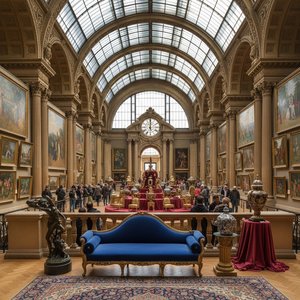
Los 25 Tesoros del Musée d'Orsay: Arte Impresionista y Decoración de Lujo
Descubre los 25 cuadros más emblemáticos del Musée d'Orsay: Monet, Renoir, Van Gogh y más. Explora la historia, técnica y belleza del impresionismo francés. Encuentra reproducciones de arte exclusivas para decorar tu hogar con ArtsDot.com.
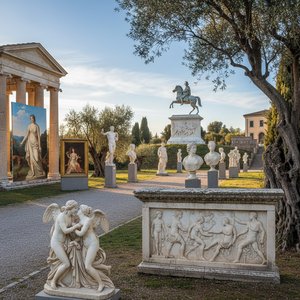
Neoclasicismo: 10 Obras Maestras que Definieron un Estilo Eterno |
Descubre las 10 obras maestras del Neoclasicismo con . Explora la historia de David, Ingres y Canova, su técnica y el legado de este estilo eterno. Reproducciones de arte de museo para tu hogar. ¡Explora la colección online!

El Renacimiento de la Antigüedad: Explorando los Ideales y el Legado Duradero del Arte Neoclásico
Descubre el Neoclasicismo: su historia, características clave y legado artístico. Explora la influencia de la antigüedad greco-romana en la pintura, escultura y arquitectura con ArtsDot.
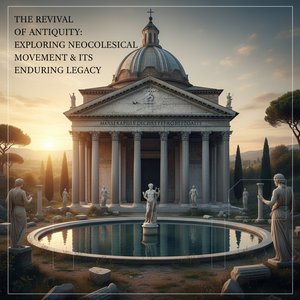
The Revival of Antiquity: Exploring the Neoclassical Movement & its Enduring Legacy
Explore the revival of classical art with our deep dive into Neoclassicism! Discover key artists like Jacques-Louis David, Enlightenment influences & lasting impact on art history. High-quality reproductions at ArtsDot.

