

 Ver en contexto
 Enviar
 Compartir
 Detalles

 Descargar
 Similares
 Radiografía
 Presentación de diapositivas
 Stats
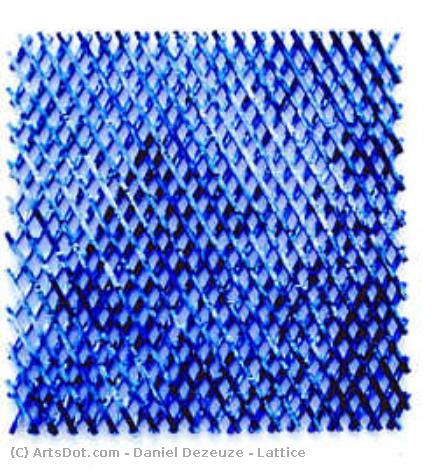
StatsLattice


 Ver más
Adquiera una imagen digital de alta resolución y optimizada, muy superior a la vista previa en línea.
Cada archivo es preparado meticulosamente por nuestros especialistas internos mediante el uso de herramientas avanzadas y un experto retoque manual. Nos aseguramos de que cada imagen posea una claridad excepcional, una precisión cromática impecable y un detalle minucioso.
El archivo final se entrega por correo electrónico en un plazo de 72 horas, optimizado para su uso inmediato en entornos profesionales, editoriales y de impresión. Esta es la misma calidad en la que confían los estudios de diseño, las editoriales y las galerías de primer nivel.
Imagen Digital
Descarga un archivo de alta resolución para exhibición personal, impresión y proyectos creativos. ( Switch to Print Comprar pintura hecha a mano)
Incluido en cada pedido de imágenes digitales
Entrega digital experta, garantizada.
Al elegir ArtsDot.com, no solo está adquiriendo una imagen; está recibiendo una obra de arte digital mejorada profesionalmente, elaborada con precisión y respaldada por una garantía de satisfacción. Esto es todo lo que incluye su pedido, automáticamente:

Entrega rápida por email
Recibirá su archivo de imagen digital en alta resolución por correo electrónico en un plazo de 72 horas tras realizar su pedido, listo para su uso inmediato.

Archivo digital optimizado por IA
Su obra de arte se optimiza profesionalmente mediante herramientas avanzadas de IA y edición manual, garantizando el máximo detalle, claridad y precisión cromática.

Reenvío gratuito de por vida
¿Has borrado o perdido tu archivo por error? No te preocupes: te lo volveremos a enviar en cualquier momento, sin coste adicional.

Sin gastos de importación, siempre
Disfrute de su obra de arte al instante sin aduanas, aranceles ni gastos de envío; las descargas digitales siempre están libres de impuestos.

Garantía de fidelidad de color
Garantizamos que su imagen digital refleje los colores originales con la mayor fidelidad posible, mediante el uso de herramientas profesionales y gestión del color.

Garantía de satisfacción de 100 días
Si no está satisfecho con su imagen digital, la revisaremos o le reembolsaremos el 100% en un plazo de 100 días, sin preguntas.

100% Garantía de devolución de dinero
¿No está satisfecho? Obtenga un reembolso completo dentro de los 100 días posteriores a la recepción de su archivo digital, sin preguntas.

Descuentos por pedidos grandes
Compra 3 imágenes, ahorra 10% - Compra 5, ahorra 15% - Compra 10+, ahorra 20%. Ideal para proyectos creativos, galerías y agencias.
Obras relacionadas

Biografía del artista
Daniel Dezeuze: Deconstructing Painting and Embracing Elemental Forms
Daniel Dezeuze (born 1942 in Alès, France) stands as a pivotal figure within the Supports/Surfaces collective—a group that fundamentally challenged conventional artistic practices during the late 1960s and early 1970s. This influential ensemble, comprised of artists like Claude Viallat, Patrick Saytour, Louis Cane, André-Pierre Arnal, Vincent Bioulès, Noêl Dolla, Jean-Pierre Pincemin, André Valensi, Marc Devade, Toni Grand, and Bernard Pagès, embarked on a radical project: to dismantle the established framework of painting itself. Their aim wasn’t merely stylistic innovation but a profound interrogation of art history and its underlying assumptions—a quest to liberate it from preconceived notions about representation and materiality. Dezeuze's artistic journey began with studies in Spanish literature at Montpellier University, concurrently attending classes at the École Supérieure des Beaux-Arts. This dual engagement fostered an intellectual curiosity that would permeate his subsequent explorations into both language and visual art. Spending formative years abroad—primarily in Spain and Mexico—further broadened his perspective and exposed him to diverse cultural traditions, shaping his artistic sensibility. He earned his doctorate in comparative literature at the Sorbonne in Paris in 1970, cementing his scholarly grounding while simultaneously nurturing his creative impulses. The genesis of Dezeuze’s distinctive style can be traced back to his early work of 1967—a piece that secured its place within the collection of Centre Pompidou and garnered recognition at the Guggenheim Museum as part of “Masters of the Centre Pompidou.” This seminal artwork signaled a decisive break from traditional painting techniques, prioritizing structural simplicity and geometric precision. The resulting wooden ladders—characterized by their austere elegance—became emblematic of Dezeuze’s aesthetic philosophy: an unwavering commitment to reducing artistic expression to its essential components. Simultaneously, he investigated the potential of gauze—a translucent material—to create ethereal surfaces that defied conventional notions of depth and texture. This exploration would become a recurring motif throughout his oeuvre, reflecting his fascination with materiality and its capacity to convey complex ideas. Dezeuze’s approach to painting was marked by an uncompromising dedication to deconstruction—a process he likened to “surgical dissection.” He meticulously disassembled familiar pictorial conventions—perspective, color palettes, brushstrokes—revealing the underlying scaffolding of representation. This intellectual rigor informed his artistic practice, prompting him to reconsider established hierarchies and questioning accepted interpretations of visual art history. His goal wasn’t to reject tradition outright but rather to liberate it from dogma—to expose its formal constraints and to explore alternative modes of expression. The Supports/Surfaces collective profoundly shaped Dezeuze's artistic trajectory. Recognizing the limitations inherent in conventional painting, these artists sought to transcend representational illusionism and engage directly with fundamental questions about art’s role in society. They experimented with unconventional materials—wood, gauze, metal—and employed techniques that challenged established sculptural conventions. This collaborative endeavor fostered a spirit of intellectual debate and propelled Dezeuze's artistic vision toward new horizons. His sculptures embody the collective’s ethos of elemental exploration—a deliberate rejection of decorative ornamentation in favor of pure geometric forms. Pieces like “Lattice” and “Armes et Scènes de guerre,” meticulously crafted from wood and metal respectively, exemplify Dezeuze’s commitment to reducing artistic expression to its most fundamental elements. These sculptures are not merely objects but meditations on spatial relationships—visual representations of conceptual ideas that transcend materiality itself. Dezeuze's influence extends beyond his own artistic output; he has served as a mentor to numerous young artists and contributed significantly to the discourse surrounding contemporary art theory. His writings explore themes ranging from Surrealism to psychoanalysis, demonstrating his intellectual breadth and his unwavering conviction in the transformative power of interdisciplinary inquiry. He continues to inspire artists and scholars alike with his pioneering approach to artistic practice—a legacy that secures his place as one of the most important figures within the Supports/Surfaces collective and a champion of radical innovation in visual art.
Daniel Dezeuze
1942 - , Francia
Breves datos
- Artistic Movement Or Style: Supports/Surfaces
- Artists Or Movements Influenced By This Artist:
- Minimalismo
- Conceptual Art
- Artists Who Influenced This Artist:
- Claude Viallat
- Georges Mathieu
- Date Of Birth: 1942
- Full Name: Daniel Dezeuze
- Nationality: Francés
- Notable Artworks:
- Lattice
- Armes et Scènes de guerre
- Place Of Birth: Alès, Francia