

 Ver en contexto
 Enviar
 Compartir
 Detalles

 Descargar
 Similares
 Radiografía
 Presentación de diapositivas
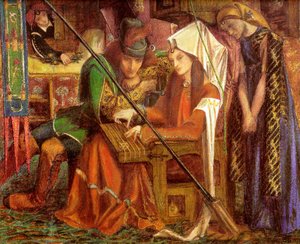
The Tune of Seven Towers


 Ver más
Adquiera una imagen digital de alta resolución y optimizada, muy superior a la vista previa en línea.
Cada archivo es preparado meticulosamente por nuestros especialistas internos mediante el uso de herramientas avanzadas y un experto retoque manual. Nos aseguramos de que cada imagen posea una claridad excepcional, una precisión cromática impecable y un detalle minucioso.
El archivo final se entrega por correo electrónico en un plazo de 72 horas, optimizado para su uso inmediato en entornos profesionales, editoriales y de impresión. Esta es la misma calidad en la que confían los estudios de diseño, las editoriales y las galerías de primer nivel.
Imagen Digital
Descarga un archivo de alta resolución para exhibición personal, impresión y proyectos creativos. ( Comprar impresión Comprar pintura hecha a mano)
Incluido en cada pedido de imágenes digitales
Entrega digital experta, garantizada.
Al elegir ArtsDot.com, no solo está adquiriendo una imagen; está recibiendo una obra de arte digital mejorada profesionalmente, elaborada con precisión y respaldada por una garantía de satisfacción. Esto es todo lo que incluye su pedido, automáticamente:

Entrega rápida por email
Recibirá su archivo de imagen digital en alta resolución por correo electrónico en un plazo de 72 horas tras realizar su pedido, listo para su uso inmediato.

Archivo digital optimizado por IA
Su obra de arte se optimiza profesionalmente mediante herramientas avanzadas de IA y edición manual, garantizando el máximo detalle, claridad y precisión cromática.

Reenvío gratuito de por vida
¿Has borrado o perdido tu archivo por error? No te preocupes: te lo volveremos a enviar en cualquier momento, sin coste adicional.

Sin gastos de importación, siempre
Disfrute de su obra de arte al instante sin aduanas, aranceles ni gastos de envío; las descargas digitales siempre están libres de impuestos.

Garantía de fidelidad de color
Garantizamos que su imagen digital refleje los colores originales con la mayor fidelidad posible, mediante el uso de herramientas profesionales y gestión del color.

Garantía de satisfacción de 60 días
Si no está satisfecho con su imagen digital, la revisaremos o le reembolsaremos el 100% en un plazo de 60 días, sin preguntas.

100% Garantía de devolución de dinero
¿No está satisfecho? Obtenga un reembolso completo dentro de los 60 días posteriores a la recepción de su archivo digital, sin necesidad de explicaciones.

Descuentos por pedidos grandes
Compra 3 imágenes, ahorra 10% - Compra 5, ahorra 15% - Compra 10+, ahorra 20%. Ideal para proyectos creativos, galerías y agencias.
The Enchanting World of “The Tune of Seven Towers”
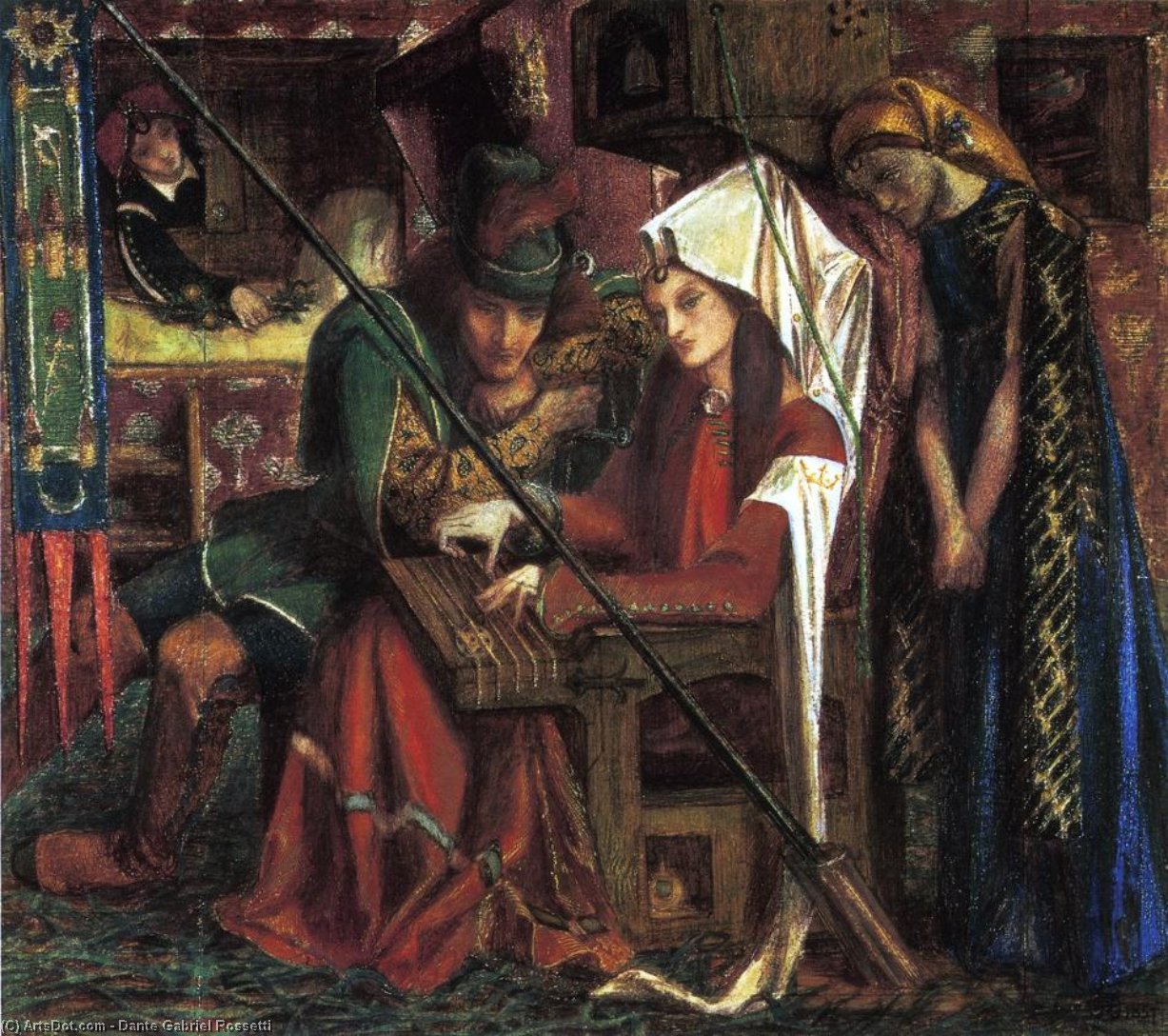
Dante Gabriel Rossetti’s "The Tune of Seven Towers," painted in 1857, is more than just a watercolor; it's a portal into a realm of heightened emotion and symbolic resonance. This captivating scene unfolds within a dimly lit interior, dominated by a central table upon which a group gathers – a tableau vivant brimming with quiet contemplation and subtle social interaction. The painting immediately draws the viewer in with its rich palette of deep blues, greens, and browns, creating an atmosphere both intimate and slightly melancholic. Rossetti’s signature Pre-Raphaelite style is evident in every brushstroke, characterized by meticulous detail, a fascination with medieval themes, and a deliberate blurring of lines between reality and dream.
The composition itself is deliberately ambiguous. A woman sits gracefully at the table, her posture suggesting both vulnerability and quiet strength. Around her are several figures – one standing near the left edge, another on the right, and a chair positioned centrally. The bowl and spoon upon the table aren’t merely props; they hint at a shared meal, a moment of convivial connection. However, the lack of overt conversation or dramatic action invites interpretation. Rossetti masterfully employs light and shadow to create depth and mystery, focusing attention on the faces of the figures while obscuring details beyond, fostering a sense of timelessness.
Pre-Raphaelite Symbolism and Romantic Sensuality
As a key work within the Pre-Raphaelite Brotherhood, “The Tune of Seven Towers” is steeped in symbolism. The title itself suggests an elusive melody, perhaps representing a secret or a forgotten memory. The seven towers alluded to could be interpreted as references to medieval architecture, evoking a sense of history and spirituality – a common theme for the movement. Rossetti’s meticulous rendering of fabrics, particularly the woman's dress, demonstrates his deep appreciation for texture and material detail, reflecting the Pre-Raphaelite emphasis on realism and naturalism. The figures are rendered with an almost sensual quality, their faces imbued with a quiet intensity that speaks to the complexities of human emotion.
Furthermore, Rossetti’s use of color is profoundly symbolic. The cool blues and greens evoke feelings of melancholy and introspection, while the warmer browns suggest comfort and domesticity. The overall effect is one of romantic yearning – a longing for something lost or unattainable. The painting's mood aligns with the broader Romantic sensibility prevalent in Victorian England, characterized by an interest in emotion, imagination, and the beauty of nature.
Rossetti’s Artistic Techniques and Historical Context
Technically, “The Tune of Seven Towers” showcases Rossetti’s exceptional watercolor skills. He expertly layered translucent washes to create a luminous effect, capturing the subtle nuances of light and shadow with remarkable precision. The painting's surface is alive with delicate brushstrokes, revealing his meticulous attention to detail. Rossetti was deeply influenced by medieval art and literature, particularly Dante Alighieri’s *Divine Comedy*, which he frequently referenced in his work.
Painted during the mid-1850s, “The Tune of Seven Towers” reflects the broader cultural context of Victorian England. The Pre-Raphaelite Brotherhood emerged as a reaction against the perceived artificiality and academicism of contemporary art, seeking to revive the spirit of early Italian painting. Rossetti’s work, along with that of his fellow Pre-Raphaelites, challenged conventional artistic norms and paved the way for new developments in art and literature. The rise of Aestheticism – an artistic movement emphasizing beauty and sensory experience – further shaped Rossetti's creative vision.
Capturing Emotion: A Reproduction’s Value
Reproductions of “The Tune of Seven Towers” offer a remarkable opportunity to bring this evocative artwork into your home or office. ArtsDot meticulously recreates the painting’s intricate details and atmospheric qualities using hand-painted techniques, ensuring that every reproduction captures the essence of Rossetti's original vision. By choosing a high-quality reproduction, you not only acquire a beautiful piece of art but also connect with a rich artistic legacy. The painting’s enduring appeal lies in its ability to evoke a sense of mystery, beauty, and emotional depth – qualities that continue to resonate with viewers today.
Obras relacionadas
Biografía del artista
**vida temprana e influencias**
Dante Gabriele Rossetti, un poeta, ilustrador, pintor, traductor y miembro de la ilustre familia Rossetti, nació el 12 de mayo de 1828 en Londres. Su vida temprana estuvo marcada por un profundo interés en el arte italiano medieval y las obras de Shakespeare, Dickens, Sir Walter Scott y Lord Byron.**el hermano mayor prerrafaelita**
En 1848, Rossetti cofundó el hermano mayor prerrafaelita junto con William Holman Hunt y John Everett Millais. Este movimiento buscaba reformar el arte inglés rechazando el enfoque mecánico del manierismo y abrazando los abundantes detalles e intensos colores del arte italiano y flamenco del Quattrocento.**estilo artístico y obras notables**
El arte de Rossetti se caracteriza por su sensualidad y revivalismo medieval. Su poesía temprana fue influenciada por John Keats y William Blake, mientras que su obra posterior mostró una compleja interconexión de pensamiento y sentimiento, como se ve en su secuencia de sonetos La casa de la vida. Obras notables incluyen:- Proserpina (1870), una pintura que muestra el uso de simbolismo y sensualidad de Rossetti.
- ¡Behold the Handmaid of the Lord! (La anunciación), una pieza que demuestra su capacidad para combinar poesía e imagen.
- Retrato de Aflaia Coronio, un retrato que destaca la habilidad de Rossetti para capturar la esencia de sus sujetos.
**legado e influencia**
El trabajo de Rossetti influyó en la próxima generación de artistas y escritores, incluidos William Morris y Edward Burne-Jones. Su arte también tuvo un impacto significativo en los simbolistas europeos y el movimiento estético. **Visualiza las obras de arte de Rossetti en ArtsDot:** [https://ArtsDot.com/@/dante-gabriele-rossetti](https://ArtsDot.com/@/dante-gabriele-rossetti) | 122 obras de arte **Explora la filosofía del hermano mayor prerrafaelita en ArtsDot:** /es/art/show/art-d3arwx-es/ **Aprende más sobre la vida y obra de Rossetti en Wikipedia:** [https://en.wikipedia.org/wiki/dante_gabriel_rossetti](https://en.wikipedia.org/wiki/dante_gabriel_rossetti)
Dante Gabriel Rossetti
1828 - 1882 , Reino Unido
Breves datos
- Artistas Influenciados:
- William Morris
- Edward Burne-Jones
- Artistas Que Influyeron:
- John Keats
- William Blake
- Shakespeare
- Dickens
- Fecha De Nacimiento: 12 de mayo de 1828
- Lugar De Nacimiento: Londres, Reino Unido
- Movimiento Artístico: Pre-Rafaelita
- Nacionalidad: Británico
- Nombre Completo: Dante Gabriel Rossetti
- Obras Notables:
- Proserpina
- La anunciación
- Retrato de Aflaia Coronio
- La Casa de la Vida

