

 Ver en contexto
 Enviar
 Compartir
 Detalles

 Descargar
 Similares
 Radiografía
 Presentación de diapositivas
 Stats
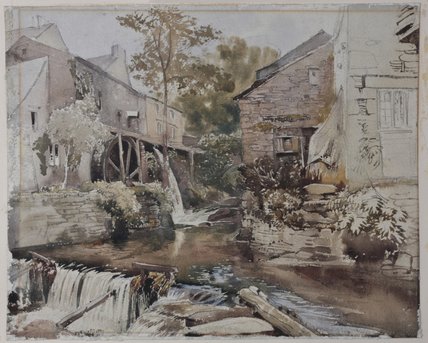
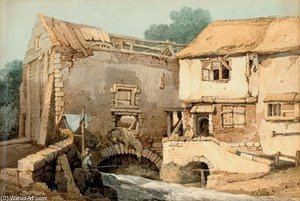
StatsAmbleside Mill

 Ver más
Reproducción al óleo hecha a mano
Óleo sobre lienzo pintado a mano en el tamaño y marco de su elección, realizado por encargo por nuestros artistas. ( Switch to Print Switch to Digital Image)




































Elija entre nuestros tamaños predefinidos que respetan las proporciones originales de la obra.

Puede ingresar sus propias dimensiones para adaptarse a un marco o espacio específico. Si el tamaño seleccionado no coincide con las proporciones de la imagen original, recortaremos la obra o extenderemos la pintura con elementos adicionales pintados a mano. Se le enviará una maqueta digital para su aprobación antes de comenzar la producción.
Tenga en cuenta que la vista previa en pantalla no refleja el recorte o la extensión reales. Solo la maqueta mostrará con precisión la composición final.
Si bien existen tamaños personalizados, recomendamos seleccionar una dimensión de la lista predefinida para preservar las proporciones originales.
Tras realizar el pedido, el equipo de ArtsDot.com enviará un correo electrónico al cliente para solicitar instrucciones y proporcionarle una vista previa del boceto.
Envío a todo el mundo () en 3-4 semanas en lugar de las 5 semanas estándar. (7 septiembre). Sin comprometer la calidad.

Envío exprés gratuito a todo el mundo

Lienzo de lino de alta calidad

Seguro de envío total

Garantía de reembolso de impuestos aduaneros

Garantía de fidelidad cromática exacta

Política de devolución de 100 días (solo por defectos)

Garantía de devolución del 100% del dinero

Descuento por cantidad
 La opción de vidrio solo está disponible en tamaños inferiores a 110 cm.

Ambleside Mill
Técnica de reproducción
Dimensiones de la reproducción
-


Precio total final
$ 263
Obras relacionadas
Biografía del artista
A Romantic Vision of the British Landscape
In the heart of the Victorian era, a period defined by both industrial expansion and a profound longing for the untouched natural world, David Hall McKewan emerged as a master of atmospheric watercolor. Born in London on February 16, 1816, to David McKewan and Matilda, his early life was steeped in the burgeoning artistic energy of the British capital. As a student under the legendary David Cox the Elder, McKewan did not merely learn a technique; he inherited a philosophy of light and movement. This lineage placed him at the very center of the Cox School of Art, a movement that prioritized the emotional resonance of a landscape over the cold, clinical precision of topographical mapping.
McKewan’s brushwork became a bridge between reality and romanticism. He possessed a rare ability to capture the ephemeral qualities of the English countryside—the way mist clings to a valley or how sunlight pierces through a heavy canopy. His early explorations were deeply rooted in the Kentish landscape, where he produced evocative views of Pembury Castle and Chartwell House. Through these works, he demonstrated a profound mastery of the "brown wash" technique, using layered tones to create an ethereal, almost dreamlike depth that invited the viewer to step into his tranquil, often melancholic, vistas.
Mastery of Texture and Interior Grandeur
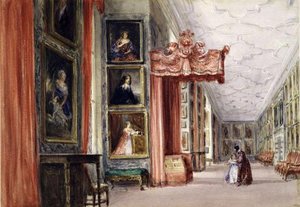
While many of his contemporaries focused solely on wide-reaching horizons, McKewan found equal inspiration in the rugged textures of the earth and the silent dignity of historical architecture. He gained significant acclaim for his ability to render rocky scenes, where the interplay of shadow and stone felt tactile and permanent. Yet, this fascination with the physical world extended inward; he was equally adept at capturing the somber, majestic atmosphere of old mansion interiors. His depictions of legendary estates such as Knole and Haddon Hall showcased a unique talent for portraying the weight of history through light filtering into grand, silent halls.
His artistic journey was not confined to the borders of England. Driven by a desire to document the diverse character of the British Isles, his travels took him through the rugged terrains of Wales, the sweeping highlands of Scotland, and the lush landscapes of Ireland. Each region offered a new palette for his watercolor studies, allowing him to expand his repertoire from tranquil woodlands to dramatic mountain ranges. This breadth of subject matter ensured that his work remained dynamic, reflecting a deep psychological connection to the varying moods of the natural world.
Legacy of a Pedagogue and Artist
Beyond his contributions to the Royal Academy and his election as a full member of the Royal Institute of Painters in Water-colours in 1850, McKewan left an enduring mark on the art community through his dedication to teaching. He was not content to keep his mastery a secret; rather, he sought to elevate the standards of watercolor painting for future generations. In 1869, he published Lessons on Trees in Water Colours, a seminal manual that provided aspiring artists with essential guidance on color theory and compositional structure. This publication solidified his reputation as a pedagogue who understood the delicate balance between technical skill and artistic expression.
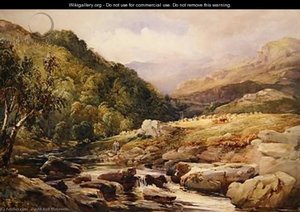
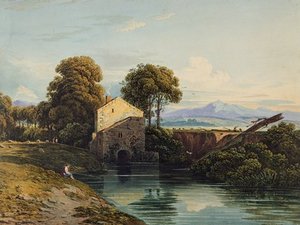
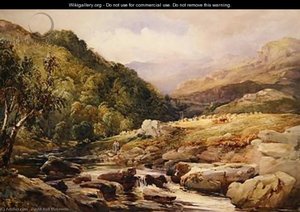
The life of David Hall McKewan concluded in August 1873, but his influence persists in the works that continue to evoke the spirit of the Romantic movement. His ability to blend the sublime with the serene remains a hallmark of his oeuvre. Today, when we look upon his notable works, such as Ambleside Mill or Landscape With Stream And Haymakers, we see more than just scenery; we witness a profound meditation on the beauty and fragility of the natural world, captured through the delicate, enduring medium of watercolor.
david hall mckewan
1816 - 1873
Datos clave
- Artistic Movement Or Style: Romantic
- Artists Or Movements Influenced By This Artist: ['Cox School of Art']
- Artists Who Influenced This Artist: ['David Cox']
- Date Of Birth: 1816/1817
- Date Of Death: 1873
- Full Name: David Hall McKewan
- Nationality: British
- Notable Artworks:
- Landscape With Stream And Haymakers
- Ambleside Mill
- Mountain Rocks
- Place Of Birth: London
Artículos relacionados

Visiones Efímeras: Historia y Resonancia Emocional de la Pintura Acuarela
Descubre la fascinante historia de la acuarela, desde sus orígenes hasta su expresión contemporánea. Explora técnicas, artistas clave como Paul Klee y encuentra reproducciones de alta calidad en ArtsDot.

John Constable: Las 25 Obras Maestras del Paisaje Inglés | ArtsDot
Descubre las 25 obras maestras de John Constable, el pintor romántico inglés que capturó la belleza del paisaje. Explora su técnica, historia y significado en ArtsDot.com. Reproducciones de arte de alta calidad para tu hogar.

Acuarelas Legendarias: 10 Obras Maestras que Transformaron el Arte | ArtsDot
Descubre 10 acuarelas legendarias de Turner, Monet y Sargent que revolucionaron el arte. Explora la historia, técnica y belleza de estas obras maestras impresionistas y románticas. Reproducciones de museo en ArtsDot.com.

Ephemeral Visions: Exploring the Artistic Legacy & Contemporary Practice of Watercolor Painting
Explore the captivating world of watercolor painting! Discover its rich history, essential techniques, influential artists & collecting tips. A comprehensive guide for art enthusiasts from ArtsDot.

Paisajes Románticos: 10 Obras Maestras que Definieron un Movimiento Artístico
Descubre los 10 paisajes románticos más influyentes de artistas como Caspar David Friedrich y Turner. Explora la belleza, el simbolismo y las técnicas del movimiento romántico. Reproducciones de arte exclusivas en ArtsDot.com.