 Ver en contexto
 Enviar
 Compartir
 Detalles

 Descargar
 Similares
 Radiografía
 Presentación de diapositivas
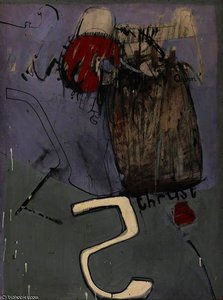
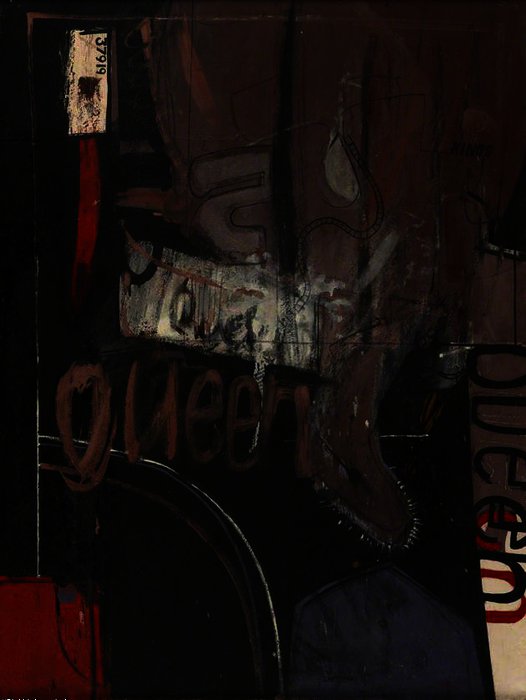
Going to be a Queen for Tonight


 Ver más
Giclée / Impresión de arte
Impresiones giclée o en lienzo de calidad de museo con producción rápida y opciones de acabado flexibles. ( Comprar pintura hecha a mano Comprar imagen)




P118B $10

P118H $10

P118W $10

P438Z $10

P508JH $12

P508YH $12

P805H $10

P805Z $10

P919BZ $10

P919G $10

P919XJ $10

P959ZH $10

P968JZ $12

W106C $8

W218G $10

W218JH $8

W218Y $10

W307PJ $10

W316G $10

W316PJ $8

W316Y $10

W398PJ $8

W4111J $10

W500HY $15

W500JH $15

W692G $12

W849H $8

W940BG $15

W953PJ $8




Elija entre nuestros tamaños predefinidos que respetan las proporciones originales de la obra.

Puede introducir sus propias dimensiones para adaptarse a un marco o espacio específico. Si el tamaño seleccionado no coincide con las proporciones de la imagen original, recortaremos la obra de arte o extenderemos la imagen con un borde con efecto espejo o de color sólido. Se enviará una maqueta digital para su aprobación antes de que comience la producción.
Tenga en cuenta que la vista previa en pantalla no refleja el recorte o la extensión real. Solo la maqueta mostrará con precisión la composición final.
Aunque existen tamaños personalizados, recomendamos seleccionar una dimensión de la lista predefinida para preservar las proporciones originales.
Envío a todo el mundo () en 2 semanas en lugar de las 4/5 semanas estándar. (6 septiembre)

Envío exprés gratuito a todo el mundo

Lienzo de lino de alta calidad

Seguro de envío total

Garantía de reembolso de impuestos aduaneros

Garantía de fidelidad cromática exacta

Política de devolución de 100 días (solo por defectos)

Garantía de devolución del 100% del dinero

Descuento por cantidad
 La opción de vidrio solo está disponible en tamaños inferiores a 110 cm.

Going to be a Queen for Tonight
Giclée / Impresión de arte
Dimensiones de la reproducción
-


Precio total final
$ 62
David Hockney’s ‘Queen’, A Fragmented Portrait of Power
David Hockney's “Queen,” painted in 1961, is more than just a portrait; it’s a carefully constructed meditation on identity, authority, and the very nature of representation. Executed in stark monochrome – a deliberate choice that amplifies the work’s graphic intensity – the piece immediately confronts the viewer with a fragmented image of a woman whose face is dominated by the bold declaration of “Queen.” This isn't a conventional depiction of royalty; instead, Hockney presents a figure fractured and layered, hinting at vulnerability beneath an imposed title. The painting’s power resides not in its realism but in its evocative exploration of symbolic weight.
Style and Technique: Pop Art’s Expressive Edge
“Queen” firmly establishes Hockney's place within the burgeoning British Pop Art movement, though with a distinctly personal twist. The work showcases his mastery of etching and aquatint on paper, utilizing a technique that allows for incredible tonal variation and textural depth – despite the limited color palette. Notice the deliberate roughness of the surface, achieved through multiple layers of ink and paint. This isn’t about smooth perfection; it's about capturing an immediate, almost visceral impression. The gestural lines defining the face are bold and expressive, reminiscent of Francis Bacon’s distorted figures but imbued with Hockney’s own playful sensibility. The overlapping rectangular forms add to the sense of dynamism and deconstruction, further emphasizing the fragmented nature of the subject.
Symbolism: Deconstructing the Monarchy
The central motif – the word “Queen” – is laden with symbolic meaning. It immediately evokes notions of power, control, and societal expectation. However, Hockney subverts this traditional association by presenting the word not as a solid declaration but as an overlaid element, partially obscuring the woman’s face. This suggests a questioning of authority, perhaps even a critique of the performative nature of identity itself. The fragmented composition reinforces this idea – the subject is broken down, reassembled, and ultimately presented as something incomplete. The painting's ambiguity invites viewers to contemplate the complexities of power dynamics and the illusionary nature of appearances.
Historical Context: A Moment of Change
Created in 1961, “Queen” emerged during a period of significant social and cultural upheaval. Britain was grappling with the aftermath of World War II, experiencing rapid urbanization, and witnessing the rise of youth culture. Hockney’s work reflects this atmosphere of change, challenging traditional artistic conventions and exploring new ways of representing the human figure. The painting's bold style and fragmented composition align with the broader trends of Pop Art, which sought to engage with popular imagery and challenge notions of high art. The piece is a key example of Hockney’s early experimentation and his willingness to push boundaries, solidifying his position as one of Britain’s most innovative artists.
Emotional Impact: A Portrait of Uncertainty
Despite its graphic style, “Queen” possesses a profound emotional resonance. The painting evokes a sense of unease and uncertainty, mirroring the fragmented nature of the subject itself. The stark monochrome palette contributes to this feeling, creating a dramatic and unsettling effect. It’s a portrait that doesn't offer easy answers; instead, it invites viewers to confront questions about identity, power, and the human condition. The work’s enduring appeal lies in its ability to capture a moment of vulnerability and ambiguity – a reminder that even those who hold positions of authority are ultimately subject to the forces of change and uncertainty.
Obras relacionadas


Biografía del artista
Primeros años y educación
David Hockney, un renombrado pintor, dibujante, grabador, diseñador de escenarios y fotógrafo inglés, nació el 9 de julio de 1937 en Bradford, Inglaterra. Fue el cuarto de cinco hijos de Laura y Kenneth Hockney, este último un objetor de conciencia durante la Segunda Guerra Mundial. Su educación temprana tuvo lugar en la escuela primaria Wellington, seguida por la Escuela Gramática de Bradford y, posteriormente, asistió al Colegio de Arte de Bradford.Carrera y contribuciones
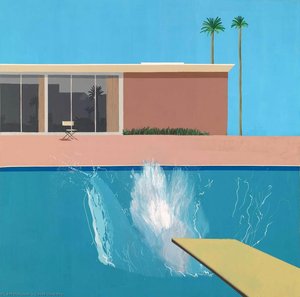
La carrera artística de Hockney floreció en la década de 1960 como una figura destacada del movimiento Pop Art. Su obra a menudo presentaba colores vibrantes, líneas audaces e imágenes reconocibles, convirtiéndolo en uno de los artistas británicos más influyentes del siglo XX.- A Bigger Splash (1966), una pintura que muestra el estilo único de Hockney, es una pieza ejemplar del Pop Art.
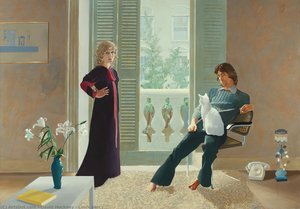
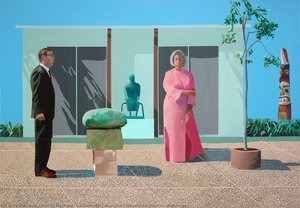
- Sus retratos dobles, como American Collectors (Fred and Marcia Weisman), demuestran su habilidad para capturar la esencia de sus sujetos.
- La exploración del amor gay en su retrato, como se ve en We Two Boys Together Clinging (1961), muestra su apertura y disposición a desafiar las normas sociales.
Evolución artística e influencias
Hockney experimentó con diversos medios y estilos a lo largo de su carrera. Inicialmente asociado al Pop Art, evolucionó hacia la exploración de la fotografía, el dibujo y la pintura paisajística. Sus viajes a California en la década de 1970 influyeron profundamente en su obra, llevando a una serie de pinturas vibrantes que capturan la luz y los colores del sur de California. Su interés por la perspectiva y la representación del espacio se evidencia en sus paisajes, donde experimentó con diferentes técnicas para transmitir la profundidad y el movimiento. La influencia de artistas como Henri Matisse y Pablo Picasso es palpable en su enfoque innovador de la forma y el color.Logros y reconocimiento
A lo largo de su ilustre carrera, Hockney ha recibido numerosos reconocimientos:- Fue nombrado Order of the Companion of Honour (CH) en 2018.
- Fue elegido Fellow of the Royal Society (FRS) en 2003.
- Recibió la Laureate of the Praemium Imperiale para pintura en el año 2000.
Legado e impacto histórico
El profundo impacto de David Hockney en el mundo del arte, particularmente en el ámbito del Pop Art, es innegable. Su estilo innovador y su disposición a explorar diversos temas han consolidado su posición como uno de los artistas británicos más influyentes del siglo XX. Su capacidad para capturar la esencia de la vida moderna, ya sea a través de sus vibrantes pinturas de piscinas o sus retratos íntimos, ha dejado una huella imborrable en la historia del arte. Su continua experimentación con nuevos medios y tecnologías lo mantiene como un artista relevante e influyente en el siglo XXI.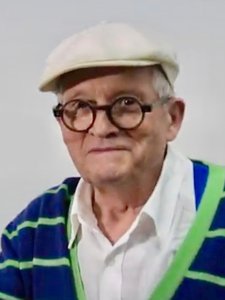
David Hockney
1937 - , Reino Unido
Datos clave
- Fecha De Nacimiento: 9 de julio de 1937
- Lugar De Nacimiento: Bradford, Reino Unido
- Movimiento Artístico: Pop Art
- Nacionalidad: Británico
- Nombre Completo: David Hockney
- Obras Notables:
- A Bigger Splash
- American Collectors
- We Two Boys Together Clinging
Artículos relacionados

Blanco Sublime: Los 10 Cuadros Más Famosos Dominados por la Luz y el Color
Descubre los 10 cuadros blancos más emblemáticos de la historia del arte. Explora Monet, Van Gogh y Klimt, y su magistral uso de la luz y el color. Encuentra reproducciones de alta calidad e inspírate para tu decoración en .

Las 10 Pinturas Más Famosas Dominadas por el Negro | Arte y Decoración
Descubre las 10 pinturas más impactantes dominadas por el negro. Explora obras maestras de Rembrandt, Goya y Rothko, su historia y significado. Encuentra reproducciones de arte exclusivas para transformar tu hogar en .
La Elegancia del Blanco y Negro: Transformando Fotografías en Obras de Arte Clásicas Atemporales
Transforme sus fotos en obras de arte clásicas con ArtsDot. Reproducciones artesanales de alta calidad, retratos personalizados y un legado visual atemporal. Confíe en nuestros artistas expertos para crear una pieza única e inolvidable.
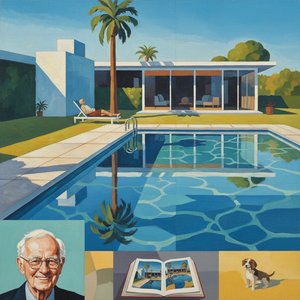
David Hockney: A Retrospective on Pop Art's Chronicler of Light, Space, and the Everyday
Explore the life & work of David Hockney, Pop Art's master chronicler. Discover his iconic paintings, Californian landscapes, and lasting influence on modern art. Expert analysis for collectors.

Monochrome Visions: Exploring the Aesthetic & Historical Significance of Black & White Photography
Explore the rich history & artistic power of black and white photography. From early techniques to iconic masters like Ansel Adams, discover why monochrome continues to captivate art lovers today. Expert insights for collectors.