

 Ver en contexto
 Enviar
 Compartir
 Detalles

 Descargar
 Similares
 Radiografía
 Presentación de diapositivas
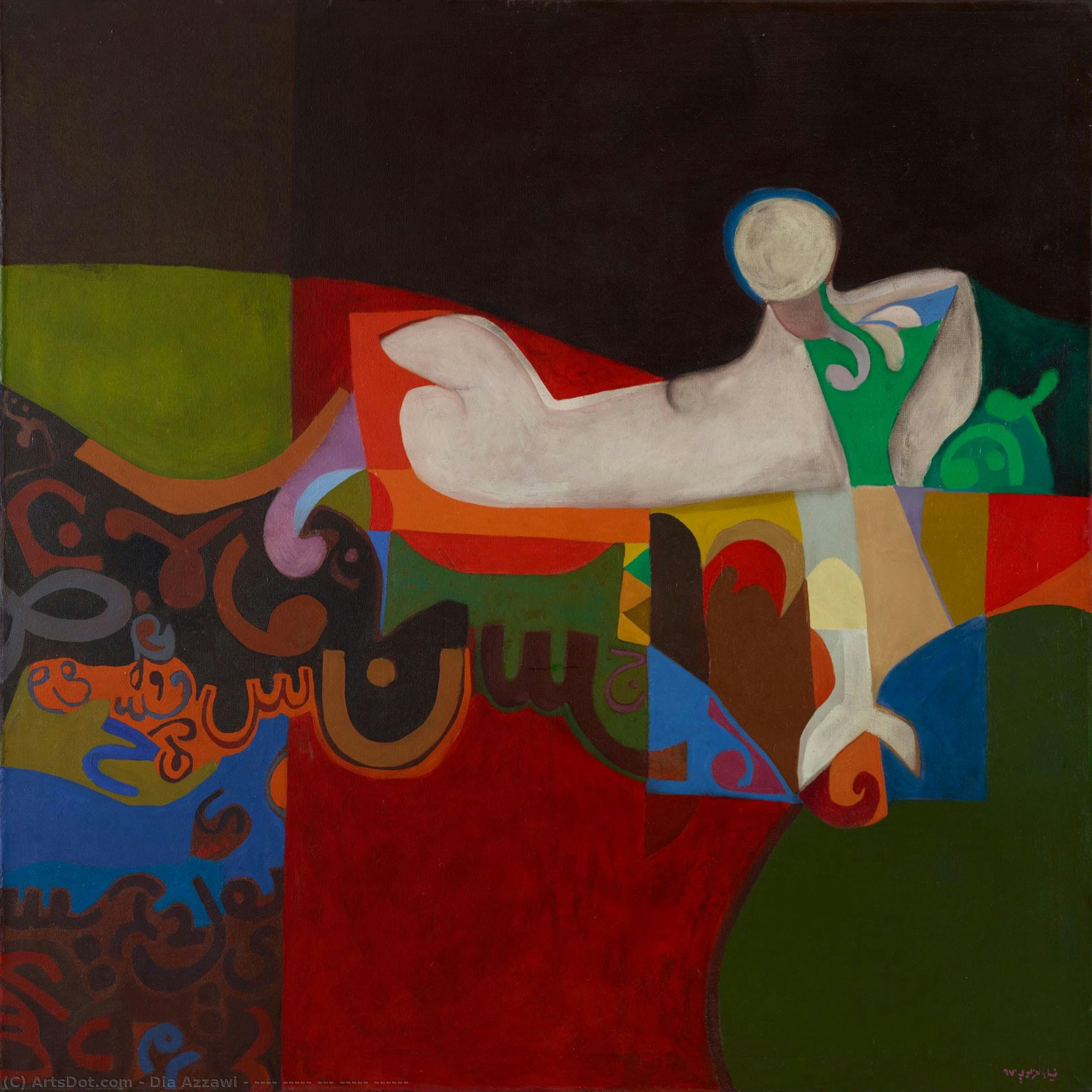
قامة العشق إذا أصابه الحزن
 Oil On Canvas
- WallArt
- Abstract Expressionism
 1970
1970- Contemporary
 134.0 x 134.0 cm
 La Fundación Ramzi y Saeda Dalloul de Arte
 Ver más
Adquiera una imagen digital de alta resolución y optimizada, muy superior a la vista previa en línea.
Cada archivo es preparado meticulosamente por nuestros especialistas internos mediante el uso de herramientas avanzadas y un experto retoque manual. Nos aseguramos de que cada imagen posea una claridad excepcional, una precisión cromática impecable y un detalle minucioso.
El archivo final se entrega por correo electrónico en un plazo de 72 horas, optimizado para su uso inmediato en entornos profesionales, editoriales y de impresión. Esta es la misma calidad en la que confían los estudios de diseño, las editoriales y las galerías de primer nivel.
Imagen Digital
Descarga un archivo de alta resolución para exhibición personal, impresión y proyectos creativos. ( Comprar impresión Comprar pintura hecha a mano)
Incluido en cada pedido de imágenes digitales
Entrega digital experta, garantizada.
Al elegir ArtsDot.com, no solo está adquiriendo una imagen; está recibiendo una obra de arte digital mejorada profesionalmente, elaborada con precisión y respaldada por una garantía de satisfacción. Esto es todo lo que incluye su pedido, automáticamente:

Entrega rápida por email
Recibirá su archivo de imagen digital en alta resolución por correo electrónico en un plazo de 72 horas tras realizar su pedido, listo para su uso inmediato.

Archivo digital optimizado por IA
Su obra de arte se optimiza profesionalmente mediante herramientas avanzadas de IA y edición manual, garantizando el máximo detalle, claridad y precisión cromática.

Reenvío gratuito de por vida
¿Has borrado o perdido tu archivo por error? No te preocupes: te lo volveremos a enviar en cualquier momento, sin coste adicional.

Sin gastos de importación, siempre
Disfrute de su obra de arte al instante sin aduanas, aranceles ni gastos de envío; las descargas digitales siempre están libres de impuestos.

Garantía de fidelidad de color
Garantizamos que su imagen digital refleje los colores originales con la mayor fidelidad posible, mediante el uso de herramientas profesionales y gestión del color.

Garantía de satisfacción de 60 días
Si no está satisfecho con su imagen digital, la revisaremos o le reembolsaremos el 100% en un plazo de 60 días, sin preguntas.

100% Garantía de devolución de dinero
¿No está satisfecho? Obtenga un reembolso completo dentro de los 60 días posteriores a la recepción de su archivo digital, sin necesidad de explicaciones.

Descuentos por pedidos grandes
Compra 3 imágenes, ahorra 10% - Compra 5, ahorra 15% - Compra 10+, ahorra 20%. Ideal para proyectos creativos, galerías y agencias.
Descripción del coleccionable
Dia al-Azzawi’s “Qāmat al-‘Iṣḥaq iḍā Aṣabah al-Ḥuzn” – A Fragmented Echo of Trauma and Longing
Dia al-Azzawi's "Qāmat al-'Iṣḥaq iḍā Aṣabah al-Ḥuzn" (literally, “The Form of Yearning When Afflicted”) is a powerfully evocative work born from the crucible of 1970s Iraq. Painted on canvas measuring 134 x 134 cm, this piece transcends mere representation, offering instead a visceral exploration of displacement, grief, and the enduring weight of cultural memory. Al-Azzawi, deeply rooted in the Mesopotamian landscape and its ancient narratives – as evidenced by his biography – masterfully employs abstraction to convey profound emotional states, creating an artwork that resonates with both formal sophistication and raw psychological intensity.
- Composition & Style: The composition immediately arrests the viewer with a deliberately fractured aesthetic. Large, irregularly shaped blocks of color dominate the canvas, arranged in a seemingly chaotic yet meticulously controlled manner. A pale-skinned female figure, rendered in fragmented abstraction, reclines diagonally, her form echoing the instability and disruption at the heart of the work. This fusion of abstract expressionism with Cubist principles – evident in the geometric simplification and deliberate fragmentation – creates a dynamic tension between order and chaos, mirroring the psychological turmoil suggested by the subject matter.
- Color & Technique: The artist’s bold use of color is central to the artwork's impact. Deep reds, greens, blues, yellows, and browns clash dramatically, applied in distinct blocks rather than blended smoothly. This mosaic-like technique, achieved through the careful application of oil paint, amplifies the sense of fragmentation and adds a layer of visual complexity. The absence of impasto or heavy brushstrokes contributes to the artwork’s polished, almost unsettling surface.
- Symbolism & Narrative: Beyond its formal qualities, “Qāmat al-'Iṣḥaq” is rich in symbolic meaning. The Arabic calligraphy interwoven throughout the composition – swirling patterns reminiscent of calligraphic scripts – likely represents language, cultural identity, or perhaps a lament for lost heritage. The fragmented figure itself speaks to themes of trauma and psychological disruption, while the overall arrangement evokes a sense of confinement and instability. Al-Azzawi’s background in Iraqi folklore and his sensitivity to Mesopotamian symbolism are clearly at play here.
Deconstructing Form: A Study in Fragmentation
Al-Azzawi's technical mastery is immediately apparent in the artwork’s construction. The dominant use of geometric shapes – squares, rectangles – is deliberately disrupted by the organic curves of the central figure and the swirling patterns within the background. This juxtaposition creates a compelling visual dialogue, highlighting the tension between rational order (represented by the geometry) and emotional chaos. The absence of traditional perspective further contributes to this sense of disorientation, flattening the space and reinforcing the feeling of being trapped within a fragmented reality.
- Lines & Shapes: Sharp, defined lines delineate the geometric shapes, providing a structural framework that is constantly undermined by the fluidity of the calligraphic elements. The interplay between angularity and curvilinear forms generates a dynamic visual tension, reflecting the emotional complexity of the subject matter.
- Texture: The surface texture is remarkably smooth, indicative of meticulous oil painting technique. This polished finish enhances the artwork’s impact, creating a sense of detachment and amplifying its formal qualities.
Historical Context & Al-Azzawi's Vision
Created in 1970, “Qāmat al-'Iṣḥaq iḍā Aṣabah al-Ḥuzn” reflects the socio-political climate of Iraq at the time. Al-Azzawi’s work is deeply rooted in his experiences growing up amidst significant political and social change, a period that profoundly shaped his artistic vision. His ability to synthesize formal influences – Cubism, Abstract Expressionism – with deeply personal symbolism speaks to a uniquely Iraqi sensibility, one attuned to both the grandeur of ancient history and the anxieties of the modern era.
Emotional Resonance & Artistic Value
"Qāmat al-'Iṣḥaq iḍā Aṣabah al-Ḥuzn" is more than just an artwork; it’s a powerful emotional statement. Its fragmented composition, bold color palette, and rich symbolism invite viewers to confront themes of displacement, grief, and the enduring human struggle for meaning. A hand-painted reproduction of this significant piece by Dia al-Azzawi offers a unique opportunity to own a work of art that is both intellectually stimulating and deeply moving – a testament to the artist’s vision and technical skill.
Obras relacionadas
Biografía del artista
A Life Painted in the Echoes of Mesopotamia
Dia al-Azzawi, born in Baghdad in 1939, isn’t merely an artist; he's a visual storyteller deeply rooted in the ancient heart of Iraq. His life and work are inextricably linked to the country’s turbulent history, its rich cultural heritage, and the enduring power of its artistic traditions. From his earliest years, immersed in the evocative remnants of Mesopotamian civilizations – the towering ziggurats, the intricate cylinder seals, the whispers of forgotten myths – al-Azzawi developed a profound sensitivity to symbolism, narrative, and the very essence of visual communication. This formative experience led him to the College of Arts in Baghdad, where he honed his technical skills while simultaneously absorbing the breadth of art history, a knowledge base that would later inform his distinctive artistic language. It was clear even then that al-Azzawi wasn’t simply replicating established styles; he sought to excavate and revitalize the visual memory of his ancestors, breathing new life into ancient forms and narratives.The Birth of a Distinctive Vision: Calligraphy and Rebellion
Al-Azzawi's artistic journey truly began with an exploration of abstract expressionism, but this proved merely a stepping stone towards something far more singular. He quickly gravitated toward a bold and innovative style that seamlessly integrated Arabic calligraphy into his compositions. This wasn’t mere decorative embellishment; it was a deliberate act of reclamation – a powerful assertion of Arab identity within the global art landscape. Al-Azzawi became a central figure in the *Hurufiyya* movement, a collective endeavor dedicated to liberating Arabic letters from their traditional linguistic function and exploring their inherent aesthetic potential as independent forms. His canvases began to pulsate with the energy of ancient scripts, transformed into dynamic shapes and patterns that resonated with both historical weight and contemporary relevance. The palette he employed was often vibrant and emotionally charged, reflecting not only his personal intensity but also a deep engagement with the political realities surrounding him. He didn’t shy away from confronting difficult themes; instead, he channeled them into works of profound beauty and unsettling power. This approach marked a clear departure from conventional artistic practices and established a unique visual vocabulary that would define his career.Forging New Paths: The New Vision Group
Recognizing the need for a more progressive artistic voice in Iraq during a period of significant political upheaval, al-Azzawi co-founded the New Vision group (Jama’at al-Ru’ya al-Jadida) in 1963. This collective of Iraqi artists aimed to break free from conventional norms and modernize Arab art, challenging established institutions and advocating for experimentation. Al-Azzawi’s leadership within the group proved instrumental in fostering a vibrant artistic community and inspiring a new generation of creatives. The New Vision wasn't simply about stylistic innovation; it was about redefining what it meant to be an Arab artist in a rapidly changing world, forging a path toward greater cultural autonomy and self-expression. Through exhibitions, publications, and collaborative projects, they sought to elevate the profile of modern Iraqi art both domestically and internationally.Themes of Heritage, Conflict, and Exile
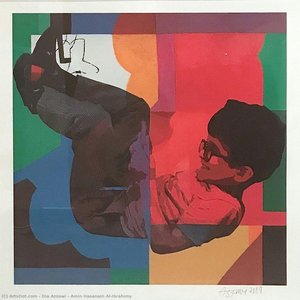
Throughout his prolific career, Dia al-Azzawi has consistently addressed themes of heritage, identity, conflict, and exile – subjects deeply resonant with the experiences of the Arab world. His work serves as a poignant reflection of the political turmoil and social upheaval that have marked Iraq’s history and continue to shape its present. He masterfully navigates diverse media—painting, sculpture, printmaking, and digital art—demonstrating an unwavering commitment to artistic innovation. Notable works like “Amin Hasanain Al-Ibrahimy,” a moving tribute to the renowned Iraqi poet, and the harrowing “Nasheed Al Jassad (Bodily Anthem) Tel el Zaatar” series, commemorating the victims of the Tel al-Zaatar refugee camp massacre in Lebanon, stand as powerful testaments to his artistic conscience. His collaborative spirit is also evident in projects like the Nabu Museum in Lebanon, a testament to his dedication to preserving and promoting Arab art and culture for future generations.A Legacy Etched in Calligraphy and Courage
Today, Dia al-Azzawi is rightfully regarded as one of the most important and influential artists of the modern Arab world. His pioneering use of Arabic calligraphy, coupled with his unflinching exploration of complex socio-political themes, has left an indelible mark on subsequent generations of artists. Though he now resides in London, he remains a vital voice in contemporary art, continuing to advocate for Arab artistic expression on a global stage. His work is exhibited internationally and held in numerous prestigious collections, solidifying his place as a significant figure not only within the context of Middle Eastern art but also within the broader narrative of global art history. *Dia al-Azzawi’s legacy isn't just about aesthetic innovation; it’s about courage—the courage to confront difficult truths, to reclaim cultural identity, and to use art as a powerful tool for social change.*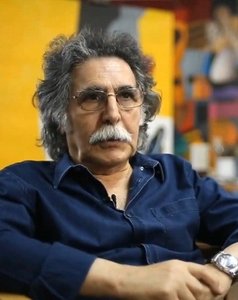
dia al-azzawi
1939 - , Irak
Breves datos
- Artistic Movement Or Style: Hurufiyya, Abstract
- Artists Or Movements Influenced By This Artist: ['Modern Arab artists']
- Artists Who Influenced This Artist: ['Hafidh al-Droubi']
- Date Of Birth: 1939
- Full Name: Dia al-Azzawi
- Nationality: Iraquí
- Notable Artworks:
- Amin Hasanain Al-Ibrahimy
- Nasheed Al Jassad
- Place Of Birth: Bagdad, Irak

